Showing posts with label two points of view. Show all posts

Thursday, December 7, 2023

THE DOUBLE CROSSING by Sylvia Patience: A Middle Grade Historical Fiction Review, Author Interview, & Giveaway

 Sylvia Patience, the author of The Double Crossing (Paper Angel Press, 2023), reached out to me with a request to review her historical middle-grade book. She suspected that it was a book that would interest me and she was right.


REVIEW


I first learned about the ocean liner, the St. Louis in Barbara Krasner's picture book, Liesl's Ocean Rescue. One of Alan Gratz's characters in Refugee was a boy on board the luxury ocean liner. This novel is a unique in-depth story of the ocean crossing told from alternating points of view of thirteen-year-olds, Hannah Coen and David Jantzen. Like the other books, it takes place in 1939 and the 937 passengers are escaping Nazi Germany in hopes of finding a safe haven in Cuba. 

Quickly the reader learns that Hannah's father was arrested during Kristallnacht and sent to a concentration camp. Her mother promises to join her as soon as possible but Hannah is distraught over leaving her. She meets David who is traveling with his family. David's father is Jewish and his mother is Aryan.  Although their backgrounds and personalities are different, Hannah and David bond over bird watching.  

Early in the book, there are hints of problems to come. David's father hears a rumor that there might be problems landing in Cuba. Leo, a friend who is a steward for the pro-Jewish Captain Schroeder, tells them that the Nazi propagandists have been trying to get Cubans to change their minds about admitting the Jews. Hannah worries about why they would get sent back; if Hitler is starting a war, and if she'll ever see her parents again.

Hannah and David overhear conversations among the Nazis on board. Specifically, they learn of Gestapo official Otto Schiendick's plan to gather secret documents from Robert Hoffman. Although both kids are nervous about what to do with the information, Hannah is determined to stop Schiendick from carrying out his plan--no matter how dangerous that is. It is at this point in the story, that their different perspectives become very interesting. Hannah concludes that they must do something; David thinks they have no options. The following is from Hannah's POV.

As we descended the stairway from the bridge deck, David whispered, "See? If even Captain Schroeder can't do anything, what can we do?"

"If the captain can't do anything we have to. Whatever he says. Even if we get in trouble. Because we know about it. And it's wrong. It could mean war!"

And from David's POV: 

Since our talk with the captain and my argument with Hannah, I'd been going around and around in my head. If you know something is wrong, do you have to try to stop it? Even if you don't have much of a chance? Even if it's dangerous? And even if the grown-ups in charge tell you not to?

Together, they face the disappointment of not landing in Cuba and the hardships on the return voyage. Although separated once they return to Europe, the ending suggests that are reunited. It's a sweet conclusion that leaves the reader wanting to know more.

                                                ****                                 

I enjoyed the role that birds played in the book. In the beginning, Hannah and David rescue an injured petrel. They hide him in a lifeboat whey they push small bits of food down his throat. When Leo asks what it was like to be Jewish in Germany she answers, "Kind of like what's happening to Peter," she said. "He's trapped and can't get out. He probably feels scared and helpless."  After the ship is prohibited from landing in Cuba David observes, "Like the birds flying over the ocean, rumors flew on board." 

Even if you have read other accounts of the St. Louis, you will find this touching, suspenseful story a worthwhile read. 


MINI-INTERVIEW

Carol: What was the inspiration for this story?

Sylvia: I first saw an article in a news publication that talked about the St. Louis' 1939 voyage. It caught my interest. I'd never heard about it. This was probably around eight years ago. I immediately thought it would make an interesting story to write, started doing research, and read some other books about it and the time period in Germany. The story grew in my mind.  

Carol: What was your path to publication?

Sylvia: As far as publication, as you probably know it's very difficult to find an agent these days, let alone a publisher. I sent out a lot of queries. I was very lucky to hear of Paper Angel Press, as they had published works of another local author. They are an independent publisher and have done an excellent job with the book, and my other book, The Weaver's Daughter

BACK MATTER


I appreciate how Sylvia pulled together so many facts when she wrote The Double Crossing. As soon as I finished it, I read her Author's Note and Glossary. The Author's Note provided all the factual information about the important secondary characters who were real people. I hope you'll take the time to look at the links I provided in this review; you'll see how Sylvia's impeccable research was woven into this fictional story. It almost goes without saying that this would be a great curriculum resource when studying WWII. 

GIVEAWAY 


I'm giving away my copy to one fortunate reader. Please leave a comment by December 13 along with your email address if you are new to my blog. I'll do my best to get it into the mail ASAP so you can give it to your favorite middle-grade reader or add it to your library's shelves. Share this on social media or sign up for my blog and you'll get an extra chance. As usual, if you are a teacher, home-school educator, or librarian, you'll get an extra chance. If you prefer, email me to enter. U.S. addresses only. 

                                                    ***

Congratulations to one of my teen bloggers, Janelle Epko, who won the Ebook of A Study in Terminal. 

Monday, November 25, 2019

We are All That's Left: A Review and a Great Audio CD for You

Congratulations to Danielle Hammelef who won BLACK GIRLS LIKE ME from last week's blog.

********

always enjoy sharing amazing books and a young adult author who I'm unfamiliar with. That's what you'll find if you read, or listen to, Carrie Arcos' book, We Are All That's Left (Philomel, 2018).  Both narrators, Laura Knight Keating and Elisabeth Rodgers, perform the book with clarity, fervor, and excellence. (Please keep in mind that quotes may not be exact; I took notes as I  did other tasks.)


REVIEW


Told in dual points of view, Ms. Arcos provides readers with an intimate look at the effects of the Bosnian War as well as a very personal experience with modern day terrorism. If you're not familiar with this civil war, you might want to read about it first.

The book opens with a view of the River Drina and the bridge that crosses it. The bridge plays an important part in the story and also symbolizes the connection between Zara and her mother, Nadja. 


Quickly, the reader discovers that Zara feels shut out from her mother's life. Although Zara knows that her mother lived through the Bosnian War and she hears the screams from her nightmares, Nadja never speaks about it. Zara doesn't go anywhere without her camera, but her mother can't stand the sound of a camera clicking. Zara concludes, We have nothing in common except our sea green eyes.


Then, a terrorist attacks.

On a summer day, Zara and her brother Benny are at a farmer's market with their mother. Without warning, a bomb goes off, their lives are shattered, and Zara is left holding her mother's yellow ballet slipper.


At that point, the novel switches to Nadja's story in 1992. She's a teenager in love with a Serb teen photographer, Marco. They both plans to study in Sarajevo. And even though they are different ethnically, who cares? They are both Bosnians.


Then, war breaks out


The story flits back and forth between the present in which Zara deals with severe physical, emotional, spiritual, and psychological wounds, and Nadja's heart-rending, horrific story. Nadja is in a coma as a result of the attack and Zara experiences a wide range of emotions. Their silence seems no different than what is normal between them, but Zara fears that her mother will die and they'll never truly know each her. 

Before the attack, Zara had enrolled in a photography class. Although she feels like a freak with bandages across her face, she decides to attend. Each student must create a photo story. The instructor prompts: "What do you want the viewer to feel? Look for stories around you. What story are you in?"

Zara finds a box full of old letters and photos that Marco took. She feels like she's discovered a treasure which leads her to anger and grief over the grandparents (and uncle) she never knew. I’ve peaked over an abyss I didn’t know existed.

The book holds a sense of timelessness. The events are different in time and place, but Zara grapples with the violence her mother experienced and the ISIS attack against her community haunt her day and night. My emptiness is all that's left. 

Zara meets Joseph who is also searching for meaning in suffering. Zara wonders how God allows terrorist attacks. Joseph shares his spiritual journey, but more than anything, becomes a friend with whom Zara can unburden herself. By listening and understanding he helps Zara put back together the pieces of her broken self and her shattered life. 

I listened to this at the same time that I was reading For Black Girls Like Me. Mother abandonment is a theme in both books and both fathers are overwhelmed and not quite sure how to help their daughters. At one point Zara's father tells her: "People fear what they do not know." Even though it is true, that hardly satisfies her emotionally.  

Zara's photography teacher asks the class to consider their photo stories and ask, "What is the character’s narrative and is it true?" Her photography project bridges the gap between mother and daughter and brings healing to their relationship. 

When Nadja comes out of the coma, Zara spends hours in the hospital talking to her and hearing her mother's story. Zara concludes, "Maybe God is love. I have no choice but to use the suffering. Love and forgiveness go hand in hand. I survived and am still surviving." 

Here is an audio snippet so you can sample this powerful book. 


GIVEAWAY

I'm going to give away this book in conjunction with the January issue of Talking Story on Eastern Europe. Leave me a comment (with your email address if you are new to my blog) and I'll add your name to the list. Hang in there--this book is worth waiting for. But if you don't want to wait until then, get a copy now for yourself or the young adult reader in your life! (Continental United States only.) Giveaway ends January 20.

Wednesday, December 27, 2017

You Heard it Here First: Cover Reveal for DRIVE by Joyce Hostetter

I am honored to share the cover reveal for DRIVE, Joyce Hostetter's newest middle grade book that will be released in September by Calkins Creek. In this interview she gives you a glimpse of the backstory behind the latest in the Bakers Mountain Stories as well as the nitty gritty research she did. Take it away, Joyce!
Photo credit: Wendy Hostetter Davis

Synopsis

Ida and Ellie Honeycutt are identical twins whose personalities and internal drives are quite different. Ellie likes action and loves going to the local stock car speedway with its thrilling competitions. Ida, who hates the noise, dirt, and danger of racing, prefers quiet evenings at home pursuing her love of art.
Ellie tends to lead and Ida is mostly content to let her do so. They find security in their expected roles but entering high school gives them more separate experiences and forces them to function independently of each other. However nothing can stop them from falling for the same charming boy and finding themselves at increasing odds with each other.
Then a car accident forces them into new roles, affirms their unique identities, and leads them back to their deep loyalties to each other.

Carol: How did you arrive at the concept for DRIVE? 

Joyce: After my publisher suggested a prequel to BLUE (which eventually became AIM), I decided to create a series which is now known as the Bakers Mountain Stories. Five books seemed like a satisfactory number of volumes and would give each of the neighborhood youngsters a chance to tell his or her story.  (Ann Fay Honeycutt narrates two books, BLUE and COMFORT since she unknowingly kicked off the series!)   
Next in line were the twins. Of course I could have given them each their own separate books to narrate but being lumped together was also a twin dilemma I could utilize.  Mostly I wanted to explore their individuality in the context of the same story line. So I decided to write DRIVE from both of their voices and let their differing viewpoints create the conflict.  My goal was to have the reader pull for both of them even when they were at odds with each other.

Carol: Why did you call the book DRIVE?

I’ve always thought that, if I wrote a sequel to COMFORT, I’d want to share a bit of North Carolina’s NASCAR history.  The Hickory Motor Speedway opened in 1952, the year my story takes place, and we’ve had a number of exceptional drivers emerge from our area. Ned Jarrett grew up in the community and ran his first race at our speedway on the night that it opened. Jarrett represented racing so well via his competitive drive, his deep integrity, and his trailblazing career in NASCAR broadcasting. Including him as a character in the story was a real honor for me.
The historical backdrop for DRIVE is The Cold War, The Korean Conflict, and the presidential race between Dwight Eisenhower and Adlai Stevenson. Ultimately, I see this book as being about competition, the drive to succeed, and what it means to win. 
In any competition, we tend to see winners and losers. But one person or party taking first place doesn’t have to mean loss for others. Winning is the result of facing challenges with integrity, admitting our mistakes, and learning more about ourselves and what makes us valuable—no matter what the outcome of the contest. In DRIVE Ida and Ellie discover what makes them each unique and a winner in her own right.

Carol: What challenges did you encounter while writing DRIVE?

Writing from two viewpoints is always more complicated than I imagine it will be. Each character’s story must be fully fleshed out while complementing the other’s.  There’s so much to cover— scenes they share, separate scenes, more characters to flesh out, and interior monologue and a story arc for each protagonist. My biggest challenge was getting it all in and making it work together without bogging the story down. Based on editor feedback I did some major rewriting which changed the story a lot. The heart of the story was unchanged but the narrative for reaching resolution was quite different.
Also regarding challenges—I have to say that securing a contract to write a novel before it’s actually fleshed out sounds like a writer’s dream. But this presents its own struggle.  Deadlines always arrive more quickly than I like!

Carol: What kind of research did you do?

I read about the twin experience, of course, but conversations with multiple sets of twins were the most helpful in understanding the complicated mix of deep love and intense competition that exists between many of them. I also interviewed local NASCAR legend, Ned Jarrett and spent lots of time at the library reading our local newspaper from 1952 & 1953.
YouTube was great for giving me glimpses of the 1952 presidential election and aspects of the Cold War. I also watched quite a few NASCAR documentaries and attended my first stock car race at Hickory Motor Speedway.
Hickory Motor Speedway

Carol: You mentioned five books in Bakers Mountain Stories.  So far you have AIM, BLUE, COMFORT and DRIVE. What’s next?

Something that starts with an E, of course. I anticipate the title to be EQUALITY since that was a big theme of the sixties. The youngest Honeycutt child, Jackie (a boy) will turn fourteen in 1960 and will experience some history making moments. I can’t wait to see the storyline evolve as I discover ideas while researching. Just getting started on that now!
Thanks so much Carol for listening and sharing DRIVE with your readers!

And without further ado, take a look at this beautiful cover!

One of the ways we can support our favorite authors is by pre-ordering their books. Guess what? DRIVE is now available on Amazon and Barnes and Noble for pre-order! In 2018 you'll have the opportunity to win the ARC off my blog when I review it--but why wait? Order your copy now!

Wednesday, March 18, 2015

You Heard it Here First: Introducing "Like a River" by Kathy Cannon Wiechman

One of my blogging joys is introducing an author or illustrator who is making her debut. It is my pleasure to review Like A River by Kathy Cannon Weichman which makes its official debut in April. At the end of this blog you'll find directions on how you can win my ARC (Advanced Reader Copy). 


Doc said, "he's not the same as the Leander who marched off. War changes folks."
"Like a river," Polly said. "My pap al'ys said folks is like rivers, ever a-changin' and ever a-changin' others."(p. 310)

******
Although this interchange between Polly (alias Paul Settles) and a trusted doctor comes at the end of this middle grade civil war book, it's a marvelous summary. Told from the perspectives of both protagonists, this well-researched work will entertain and educate both girls and boys.  

Part One, Leander Jordan's story, opens with this 15-year-old boy longing to be recognized as a man by his parents and Lila, the girl he pines after. He decides that the best way to do that will be to enlist and gain their approval. It's not as simple as that. Wiechman portrays his dilemma on the sleepless night before Leander leaves his Ohio home: "Doubts crowded into bed beside him, and he tried to push them out." (p.51)

His life as a soldier isn't easy and his small stature makes him a brunt of frequent jokes. As much as he desires to be brave and show that he is equal to the task, early in his enlistment he accidentally causes his gun to explode. He injures himself and his best friend, Given; the pain of his humiliation is almost as great as his physical pain. Wiechman depicts his agony well: 
"Army life went on without him while he lay on a cot, alone and one-armed. There were no other cots because no one else was injured. There hadn't been a battle. Leander wasn't a casualty of war. He was a casualty of carelessness. He had dishonored his uniform…" (p. 79)
Leander is full of self-loathing while he is recuperating in a makeshift army hospital. Paul Settles, a young, gentle steward nurses him and other wounded soldiers back to health. When Leander dictates a letter home, he finally accepts his injury. 
"He had lost his arm. It was time to reconcile himself to that. And now he had confessed his carelessness to his folks. He had to accept his new life, one without Lila or his right arm. At least it was a life." (p.118)

Leander guesses that "Paul" is a girl but hesitates to disclose his knowledge. "He knew she was a girl, and maybe she suspected he knew, but he had to treat her like the soldier she pretended to be. She deserved that." (p.127)

When Leander wakes up one day and Paul has left the hospital with other Union soldiers, Leander "is stabbed through the heart." Part I ends with his realization that when he'd left his parents, he hadn't been a man at all. "I need to be a man, he thought. I can't let that girl-pretending-to-be-a-boy be more of a man than I am."


Part Two opens with Polly's difficult decision to leave Leander and the hospital. Stuffing her emotions inside she realizes, "The army had no place for a girl. And an orphaned girl had no place in the world. She had to remain a boy." (p. 138)

As part of a foraging mission, she is caught by a group of Rebs and her need to continue pretending she is a boy becomes more and more acute. Along with her three companions she is forced onto a train that brings them to Andersonville Prison. Wiechman does an excellent job showing what life was like in this stinking, dirty, fearful place:
The stockade was good-sized, close to twenty acres by Polly's guess, but its high walls managed to hold in every foul odor she could imagine. The filthy stench of human waste, disease, and rotting flesh pressed against her, while outside the walls those tall trees hoarded their piney scent.
Tents and makeshift shelters clustered nearly every inch of the camp, even two low hillsides that straddled a scummed-over stream. Thousands of shelters, some mere blankets on poles.
Polly hoped the nasty stream wasn't their drinking water. In the midst of a swamp, it was putrid green and reeked of human waste. A narrow channel at one end formed board "sinks," an open place for prisoners to answer nature's call. Alive with flies, the stream flowed through to catch the droppings. 
Since she worked in the hospital, Polly possesses rudimentary knowledge of disease and infection control. She finds purpose and meaning in her life by taking care of her companions. Along the way she finds friendship and shelter from a young man, Given, who guesses her secret, but promises not to tell anyone.  

Polly combats hunger, exhaustion, her own fears of being discovered, and sadness when her companions die. Throughout the story she yearns for Leander, wishing she had stayed with him months earlier. The last straw is when Given succumbs to scurvy and dysentery.  She nurses  him back to health and chooses to stay with him after Sherman takes Atlanta and a prison exchange occurs. 

I've already told you too much about this heart-warming story so I won't reveal the beautiful ending. But you can bet that bravery, courage, and determination are the victors--and that you will want the story to keep on going even after "the end."
*******
Joyce Hostetter and I are featuring an interview with Kathy Wiechman in our March issue of Talking Story. If you leave a comment on this blog I'll enter your name once to receive this ARC. Or, click here and send an email through the newsletter and I'll enter your name that way. Do both and your name is entered twice to win a great book you can use in your classroom, homeschool, or for your own enjoyment curriculum. Hurry! Giveaway ends on March 21. Make sure you leave me your email address if you're new to my blog.

Kathy is part of a group blog, Swagger. If you type in "Like a River" in the search function (top left) you'll find a list of posts she's written about her book. It's always inspiring to read other writers' book journeys.

Monday, August 11, 2014

Turning On a Dime- A Review and a Giveaway!

Time travel. The Civil War. Multi-cultural. Horses. Romance. There aren't many books that fit such a wide variety of categories--but Turning on a Dime by Maggie Dana does just that.

Samantha DeVries' father is Lucas DeVries, a third-generation American of Dutch descent and master horseman; her mother, Gretchen, is an African American and a history buff who has traced her family's lineage back to 1875.


Caroline Chandler is the daughter of a plantation owner in Mississippi who prefers her brother’s riding breeches to petticoats and pantalettes. But in spite of her tomboyish interests, she has lived within the boundaries of privilege and mid-19th century decorum. Soon after the story begins, Caroline is sent to a neighboring plantation for a dreaded social visit. While there, she learns that her family has fled their farm after Union soldiers commandeered it. 


Samantha (Sam) and Caroline’s worlds intersect when Sam visits her father’s friend’s antebellum home to look at horses. Sam picks up what appears to be a dime from her bedroom floor and falls asleep listening to Lady Gaga on her Iphone.  When she wakes up, Caroline is staring at her and wondering what a slave is doing sleeping in her bed.

Sam gradually convinces Caroline of who she is, although she admits that she doesn’t know how she got there. Caroline is barely prepared for her guest from the future: she has read about a man who travels to the future and sees horseless carriages and flying machines. But she is even less prepared to see a black girl who speaks, acts, and thinks as independently as Sam does. Fortunately, their mutual love for horses helps ease them over their initial discomforts. Or as Sam says, “No matter who you’re talking to, if they love horses you can get beyond whatever barriers you think are out there...” (p. 45)

Told from both girls’ points of view, the reader watches as Sam and Caroline experience slavery’s painful effects. I particularly enjoyed their “ah ha” moments.  When Sam first realizes she must act like a slave in order not to be detected she thinks,
“I am in a nineteenth-century horse barn facing a man with a whip—a mean looking thing with a knotted leather thong—and I can tell he’s dying to use it on me.
“Yes, mister,” I mumble.
He raises the whip. “Go.”
So I shuffle off trying to look as dejected as possible, but inside I am raging with fury. How did my people live like this? (p. 83)

Later, after Sam is mistaken for a runaway slave and is captured, Caroline thinks,
My fists curl into balls. Angry tears stream down my face. All I can think of is Sam huddled on the dirt floor of a slave cabin, being kicked and whipped. Without Papa to curtail him, Zeke Tuner will be brutal. He’ll unleash all his vicious fury on my dearest friend.
How did I not see this before?
Shame joins my angry tears. I’m angry with myself, and I’m ashamed of the world I’ve inhabited all my life without seeing it for what it really is.” (p. 137-8)

The author does a great job of showing the girls overcoming their initial distrust and forming their surprising friendship. In the process, each girl learns about the other girl's seemingly foreign world. Their wit and strengths are tested after Sam is captured; but working together they find a way of escape—and a way for both of them to return to their families. 

Maggie Dana’s love for all things equestrian is neatly woven into the narrative and the plot. Although separated by 150 years, from the moment that Sam asks Caroline,  “What is your horse’s name?”  they have a common bond. From the saddles, tack, to horse quirks and mannerisms, this novel is a great example of an author using what she knows to build a believable, fictional world.

I would recommend this book to girls from 6th-10th grade, as well as to adults who want to use their own life experiences as a springboard into fiction. And while you’re at it, it’s a terrific example of interlacing multiple genres into one novel. Read it. Enjoy it. Learn from it.
 ********
To enter the giveaway for an autographed copy of Turning on A Dime, please leave a comment by 8 AM Friday, August 15. If I don't have your email address, make sure you leave that too. If you post this on your social media of choice or become a new follower to my blog, I'll enter your name twice. Thanks! 

My review of this novel originally appeared on LitChat on August 7, 2014.

Monday, September 9, 2013

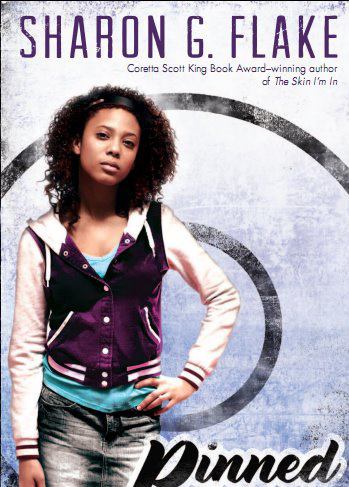
Character + Plot = Pinned

Congratulations to Jeannie Smith who won Deanna Klingel's book, "Cracks in the Ice."

Writers have ongoing debates as to which is better, a character-driven story or one that is plot-driven. Obviously, both well developed characters and engaging plots are vital for a successful novel. As Rebecca Petruck said in a recent post, "Character and plot are Siamese twins. We must have plot to navigate so that we can experience how it would feel, but we only care about plot in how it reveals a character’s experience and feelings (her reactions)." 

I've been working on my two protagonists' character arcs for Half- Truthsdeepening my knowledge of who they are, and asking them each about what they want and why (yes, novelists do "talk" to their characters!).  In the process, I am discovering just how much character influences plot and visa versa.

So, when I read (or listen) to a book, I am trying to figure out how the author has brought her characters to life and what their journey--or character arcs--are. 

Enter the latest book I have listened to:  Pinned by Sharon Flake. I thought as an exercise for me and to give you a taste of this excellent young adult book, I'd give a brief description of the characters and their arcs. But don't worry, I'll try hard not to include any spoilers. 


Adonis Miller is a brilliant 9th-grader who manages the school's wrestling team, tutors fellow students, and volunteers at the library--all from his wheelchair. He values honesty, hard work, and has little patience for students who don't apply themselves in school. 

Autumn Knight is the only girl wrestler on the school team, reads below her grade level, hates math, dreams of opening a restaurant, and loves Adonis. She is attractive, friendly, and brutally honest. 

The book opens by showing each character's normal: Adonis is busy with school work and managing the wrestling team and is annoyed by Autumn who will not leave him alone. Although Adonis detests girls who aren't smart, Autumn plagues his dreams. Adonis wants to do well in high school so he will be admitted to an excellent college. 

Autumn lives to wrestle; she is good at it and knows it. She dismisses her academic struggles although in the background, her parents (who also have difficulty reading) are beginning to pressure her to bring up her grades. Autumn wants to excel at wrestling, get Adonis to like her, and wishes that her failing grades wouldn't matter. 

Told from alternating points-of-view, Flake shows how both Adonis and Autumn seek to obtain their goals and are frustrated either by themselves (Autumn's inability to focus on her work leads to poorer grades and removal from the wrestling  team) or by each other (Adonis wants not to like/be seen with a girl like Autumn but is drawn to her). 

Although Adonis feels as if he is perfectly adjusted to the fact that he was born without legs, memories of a time when he was totally helpless plague him. Autumn matter-of-factly accepts his disability and texts him,

"Disabled is me not being able to read. And you with out legs. So (u+me) = perfect. Right?"

Her honest observations about how they are both "stuck" in their predicaments helps Adonis get out of his friendless world. Flake avoids the simple solution of Adonis becoming Autumn's tutor, but allows Autumn to figure out how (and why) she will learn how to read.  

Read this book to enjoy a powerful novel with wonderful, authentic voices. And after you do, you'll understand the title of this blog.

THE NIGHT WAR: A MG Historical Novel Review

  By now you should have received an email from my new website about my review of THE NIGHT WAR by Kimberly Brubaker Bradley. (It'll com...