Wednesday, May 7, 2008

IRA, 2008- Part One


Even for a writer, it is hard to describe the energy and enthusiasm of 20,000 reading teachers, principals, and literacy coaches who came together to learn the latest methods to teach reading and writing. The World Congress Center in Atlanta, Ga. was packed this week with educators to whom "Reading Matters"- as the pin, which I acquired from a vendor selling Teaching the Story proudly, proclaimed. As Linda Gambrell, outgoing IRA president said at the Keynote on Monday morning, "We want our students to be readers, writers, and critical thinkers. Through reading, we become better at understanding ourselves and the world around us." Highlights from this conference were:

  • Close to 100 people at my session…and every single educator enthusiastically involved in creating an original character. Together we looked at three mentor texts: Peter Pan in Scarlet, Blue, and Brian's Return
    and how the authors showed their memorable characters FAST- through their feelings, actions, speech, and thoughts.
  • Selling my book to a woman from the Philippines who started her own K-6 school. To my knowledge, that is the furthest away that Teaching the Story has travelled. (Imagine the stories that those students will write!)
  • Sharing a room with Margriet Ruurs, author of over 10 picture books as well as several Maupin House books on writing poetry. Sitting on her bed, Julie Graddy (Maupin House's publisher) and I had the privilege of previewing Margriet's presentation on My Librarian is a Camel
    and hearing some of the amazing stories behind the book. Winner of the Silver IRA award for Global awareness, I would recommend this book for children as a window into seeing how children in other countries value books and some very unique "book mobiles" around the world. By the way, Margriet is also the editor for Kids Write—an online magazine where students can publish their stories- a resource which I recommend in my book!
  • And as pictured here, having dinner with Margriet and part of the Maupin House team: Julie Graddy, Rita Beck, and Laura Lok.


    Stay tuned. More on the conference in my next blog.

Technorati Tags:
, , , , , , ,

Sunday, May 4, 2008

Blogging Benefits Teen Writers

A recent report featured in E-School News, indicated that teens who blog write more frequently both online and offline, according to a study by Pew Internet and American Life Project with support from the College Board and its National Commission on Writing.

In fact, "Forty-seven percent of teen bloggers write outside of school for personal reasons several times a week or more, compared with 33 percent of teens without blogs. Sixty-five percent of teen bloggers believe that writing is essential to later success in life; 53 percent of non-bloggers say the same thing."

The report goes on to quote Bradley A. Hammer, who teaches in Duke University's writing program. "In real ways, blogging and other forms of virtual debate actually foster the very types of intellectual exchange, analysis, and argumentative writing that universities value," he wrote in an op-ed piece last August." Be sure to read his full article in which he defends the use of blogs and other alternative forms of written expression in his university classroom.

I know as an avid blogger myself, that I feel a responsibility to organize my thoughts in a well-written format before hitting the "publish" button. One has to take the responsibility of writing to an audience very seriously. Similarly, blogging is not only a way for teens and young adults to use their writing skills for a specific task for a specific audience, but appears to be a promising new tool for language arts teachers as well.

I am writing this from Atlanta, where tomorrow I will be presenting a session at the IRA on, "Learn from the Masters: How Creating a Fictional Character Enhances Reading Instruction." Hopefully, afterwards I'll have the opportunity to talk to lots of teachers about the benefits of writing short fiction as well as the benefits of blogging!

Technorati Tags:
, , ,

Wednesday, April 23, 2008

Teaching Tutors


This year I initiated a tutoring program at the high school my children attended. Several student volunteers from Covenant Day High School as well as adults from Christ Covenant Church have been meeting weekly with 12 elementary school students to provide homework assistance. The children have required help with a variety of academic needs and flexibility has been an indispensable part of making the program work. Along the way I have learned the art of training individuals who cared enough to give up an afternoon a week, but weren't sure how to translate that concern into effective tutoring. With an emphasis on helping students learn how to solve problems themselves, here are some strategies which we improvised as needs surfaced:

  • When a kindergarten student didn't bring in a book to read or homework to complete, I encouraged his tutor, a high school freshman, to help the student compose a simple story. With that idea, the kindergartner enjoyed dictating and helping to write several sentences.
  • Creating math drawings supplemented flash cards and helped students to "get" multiplication tables.
  • Tutors needed to learn how to stretch their students' writing. For example, an adult sat and watched a child write a simple paragraph about a book he had read without providing any input. Although the sentences were adequate, words were misspelled, sentence syntax needed improvement, and there was a repetitious overuse of pronouns. The adult needed to see these problems herself in order to provide correction and instruction.
  • Tutors frequently needed to be reminded to let their students read (and to not read for them!). Similarly, tutors needed to make sure the students comprehended what they had read. Reluctant readers can be coaxed to read aloud by taking turns—the student one page, the tutor the next. Readers also took turns reading different characters' dialogue.
  • When reviewing spelling words tutors needed to find out if the student knew the word's meaning.


    For more information on training tutors, see:

    http://www.nwrel.org/learns/trainingopps/training/index.html

    http://www.educ.uidaho.edu/bestpractices/training.html

Technorati Tags:
, , ,

Wednesday, April 16, 2008

Wikis, Word Choice, & Red Fonts—the Revision Wave of the Future


“Maryanne walked into the room and looked around. She was surprised that no one noticed her.” Steve Johnson (pictured here) read the sentences that were projected on the screen and turned to the 6th-grade class. “Pretty boring, isn’t it?” Everyone in the class nodded their agreement. “I wouldn’t want to keep reading, would you?”
A chorus of voices concurred with his analysis. “Can you help me make it better?” he asked. “Let’s see if we can jazz it up.”
With that introduction, Steve Johnson, technology facilitator at Washington Street School in Rockingham, NC, hooked his students into the fun process of digital revision. I was there observing him pilot the technology mini-lessons he wrote, which will be incorporated into the next edition of Teaching the Story. Five hours later, 75 students had learned about a wiki, practiced word-processing skills, discovered the nuances associated with word choice, worked collaboratively, and started on their way to becoming better writers—and had fun every minute.
First, Johnson projected a page from Wikipedia on the screen and discussed how these were Internet sites which could be edited by anyone. Opening the Wiki page, he projected the boring sentence about Maryanne onto the screen and invited students to edit it. With sometimes-comic attempts to outdo one another, students tried out different action verbs while Mr. Johnson egged them on. (“Did she stroll? Saunter? Creep? Smash?) As the students played with replacing vague pronouns and nouns, (the room, no one) with specific nouns (Her bedroom? Her parent’s bedroom? Who didn’t notice her? Her younger twin brothers? Her parents?) and by asking, “Why didn’t anyone notice her?” Johnson prompted the class to picture what Maryanne was doing and where she was doing it. While he demonstrated how to line through a word and add a new word in red, he engaged students in a running dialogue about how word changes take stories in different directions.
The students got the picture and were ready to play with sentences themselves. Johnson directed the class to go to the Washington Street Wiki and gave them their password for access purposes. On separate pages, he had already written six boring sentences. Working in small groups, students were each assigned a sentence to revise. As Johnson and I walked around the room, we encouraged the students to “show, not tell” through vivid verbs, specific nouns, and figurative language. Asking them, “Can you see it? Hear it? Feel it? Touch it?” (some of Nancy Atwell’s favorite questions) helped them become more concrete and specific with their descriptions
Before the end of the 70 minute period, each group had the opportunity to read their revised sentences to the class. By the end of the day, three groups of students had worked in Johnson’s computer lab. The final group was able to view how other classes had revised the same sentences, further illustrating that there wasn’t one “right” answer. When you visit the site, click on “Sidebar” and then on one of the teacher’s names, such as “McInnis-Red Pencil.” You’ll see how these engaged 6th graders revised, played with words and red fonts, and came up with original ideas. As Johnson said, “One good sentence is a story waiting to happen.”
So, where was Miss Maryanne and who didn’t notice her? Check out this class’s revision:
Maryanne went stomped into the room The Oval Office. She looked around and was surprised that the Secret Service didn't notice her. A thick, green ooze wound its way out the open office window.
Red Font. The revision wave of the future.

Monday, April 14, 2008

Check this out!

A friend notified me that Teaching the Story received a great review on the Education Book Review website. And while you're surfing around, check out this write-up of my February visit at Holy Family University in the Tri-Lite newspaper. Technorati Tags:
, ,

Monday, April 7, 2008

Is the cup half-empty or half-full?

On April 4th The Charlotte Observer ran an article with the headline, "Students score well in writing" reporting better than average scores for local eighth graders on the 2007 national writing test. When you look closely, the statistics aren't as exciting as the headline indicates. At closer inspection, you'll find that if all races and income levels are included, only 31% of local eighth-graders were rated proficient on the exam —this matches the national rate. Although 52 % of white students in Charlotte-Mecklenburg schools were rated proficient as compared to less than 40% of their white public-school peers nationwide and in the Carolinas, I'm not celebrating. (For the full report, go to The Nation's Report Card.)

Perhaps this is (relatively) good news for our local school district, but I'm sorry, I don't find these statistics anything to be jumping for joy about. What about the 69% of eighth grade students across the country who aren't meeting this level of proficiency? What about the remaining 48% in Charlotte Mecklenburg?

The "basic" rating, earned by a solid majority of students regardless of location, race, or income, indicates only a partial mastery of grade-level writing. As the Observer reported and the statistics indicate, "proficient writing, defined as solid performance and competency on challenging subjects, was much rarer."

What's the problem here? As an educator involved in teaching writing skills, I speak with lots of teachers around the country. I think there are several weak links in the educational chain. First, I find that almost all teachers feel a great pressure to "teach to the test." So although an argument can be made that at least class time is being devoted to writing, I wonder how much of this preparation (with its concomitant pressure on teachers whose salaries can be tied to their students' performance), is rote or truly teaches the craft of writing. (See the International Reading Association's position paper for more information.)

I believe that writing skills should be developed from a strong foundation of reading and from analytical thinking. Reading has been replaced with playing video games, surfing the Internet (which at least involves more reading skills than video games) watching movies and TV, or competing in sports, than they do reading. Reading MUST be encouraged, supported, and reinforced by parents and educators. Second, I think we don't adequately challenge kids to think critically. Writing involves thinking. Whether fiction or nonfiction, every piece of solid writing requires the author to generate original thoughts. As much as possible, teachers need to be supported in encouraging students of all ages to think for themselves. This doesn't need to be fancy. An author friend of mine, who is a former teacher, said that when students brought a paper for her to read and asked, "What do you think of this?" she'd turn the question around and ask, "What do you think about it?" Critical thinking isn't an educational quick fix; it starts with engaging students mind's rather than being satisfied with rote responses.

Here's my word for the day: metacognition- the ability to reflect on one's own learning experience. Let's teach it. Let's model it. Let's do it ourselves.

Saturday, April 5, 2008

For All Writers & Writers-to-Be

My Saturday mornings are incomplete without reading James J. Kilpatrick's column, "The Writer's Art." I just found his on-line column, "Covering the Courts & The Writer's Art." No waiting around for Saturday anymore! If you're a writer, you'll appreciate Kilpatrick's succinct style. If you're a middle school or high school teacher, assign this column as required reading. His humor and knowledge of the English language won't disappoint you.

Friday, April 4, 2008

Things that Make a Writer’s Heart Race

I had sat just down at my computer on Tuesday afternoon when I heard a "plunk" at my front door. I opened it to find a package with the familiar Honesdale, Pa. return address. I couldn't imagine what it could be. I had already received the article of the month award from Highlights magazine for "Paperweight Magic," my piece about internationally acclaimed artist, Paul Stankard. Trembling, I opened the package. When I saw that it was another pewter plaque I first thought that the editors must have made a mistake and sent me a duplicate award. Surprised is too small a word to convey how I felt when I realized that my article had also received the "Arts Feature of the Year" award for 2007.

Believe me, it took a long time for my heart rate to come back to normal.

Check out Stankard's work on his website and you'll see why I concluded the article with: "Paul Stankard has two mottoes: 'Make it well' and 'Never stop learning.' Following those mottoes has allowed Paul Stankard to make magic from colored-glass rods—it's a magic you must see to believe."

It was an honor to communicate that magic to children through the pages of one of my childhood favorites, Highlights Magazine.Technorati Tags:
, ,

Monday, March 31, 2008

Brian’s Return


It's been a long time since I read Hatchet by Gary Paulsen, but I can still remember the eloquent detail Paulsen used to show Brian's survival in the wilderness. Since he first published that book in 1987, Paulsen continued the series with The River and Brian's Winter. I was not disappointed with the sharp account of Brian's return to the bush—authentic detail abound. The conflicts that Brian faces in trying to return to civilization are acutely captured in this short 2-CD audio book from Listening Library, but I kept thinking—how can this book end so quickly? I admit, I was hoping for a different ending. But after listening to the author's note at the end in which Paulsen talks about his own life and his difficulties coming back into "real life" as you and I know it, I realized that Paulsen wrote the only ending that would truly fit who Brian was (and who Paulsen himself is.) This series of books are unabashedly autobiographical and I would recommend them as stellar examples of an author mining his own life to create realistic fiction—an element which I talk about in Teaching the Story and in my workshop, Mining Your Students' Lives: Writing Rich Short Stories. Brian's Return
was released as Hatchet: The Call by Macmillan Children's Books in the UK on January 8, 1999.

Technorati Tags:
, , , ,

Wednesday, March 26, 2008

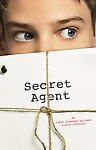
Secret Agent


I don't know if Robyn Freedman Spizman, or Mark Johnston, or the two of them together realized it would be fun to play with the words "secret agent," but as a team they have penned a fun, clever middle grade novel. I don't want to give away the story of Secret Agent
(Simon & Schuster, 2005), but suffice to say there is mystery, a touch of romance, and a bunch of very smart kids who work hard to help the main character, Kyle Parker, find a way to get his dad's much-rejected manuscript published. I enjoyed the clues which the authors dropped along the way, the red herrings, and the unique ways they described what was going on inside the characters. Check out this description of how Kyle's father feels when he meets a big time editor who wants his book: "Well, you can imagine the craziness going on inside Kyle's dad's body. It was like all of his organs decided to switch jobs. His belly was beating. His heart was hungry. His lungs felt like they might die of thirst. Something was up. Something big." p. 219

I'd recommend that teachers use this book to teach voice since the narrator has a very distinctive way of telling the story. It may be a quick read for some students, but both boys and girls will enjoy the plot twists and humor. Writers of all ages will enjoy the inside references to the publishing world. I look forward to reading Spizman and Johnston's next collaboration, Secret Agents Strike Back (Atheneum, January, 2008).

Technorati Tags:
,

THE NIGHT WAR: A MG Historical Novel Review

  By now you should have received an email from my new website about my review of THE NIGHT WAR by Kimberly Brubaker Bradley. (It'll com...