Showing posts with label Covid-19. Show all posts

Wednesday, May 13, 2020

What Do Your Eyes Communicate? Answers and a Winner!


Image by Sumanley xulx
Following up on last week's blog showing 21 people in their Covid-19 masks, here is what the subjects self-reported they were thinking or feeling:

#1 Barbara Federlin: Overwhelmed.

#2 Becca Puglisi: Irritation.

#3 Brenda Covert: Shock.

#4 Barbara Lee Bryant: Foolish.

#5 Annonymous Male: Be Positive!

#6 Donna Earnhardt: Happy to have a mask.

#7 Jarm Del Boccio: Peaceful.

#8 Jean Hall: Tired.

#9 Joan Edwards: Surprise.

#10 Laurie Foote: "I must open my eyes wide enough so my droopy eyelids don't make me look 100 years old, while not enough that I look terrified!"  

#11 Melodye Shore: "I felt seen. I felt loved. I felt more protected, of course, but in some ways I felt more vulnerable. And I saw more clearly the vulnerabilities of those with whom I came in contact."

#12 Wendell and Linda Phillips: Glad to have masks.

#13 Mary Ellen Stack Pike: Exasperation.

#14 Virginia and Tom O'Malley: "I was thinking that no one knows I am smiling. Virginia was most likely thinking, 'What a wonderful, loving, and caring husband I have.' or, 'What will we do for dinner?'" 

#15 Kathleen Burkinshaw: "I'm at high risk."

#16 John Craig: "Disappointed in cancellations. I wonder who I would have met."

#17 Pat Baldwin: "I'm the oldest person you know who is wearing a mask!"

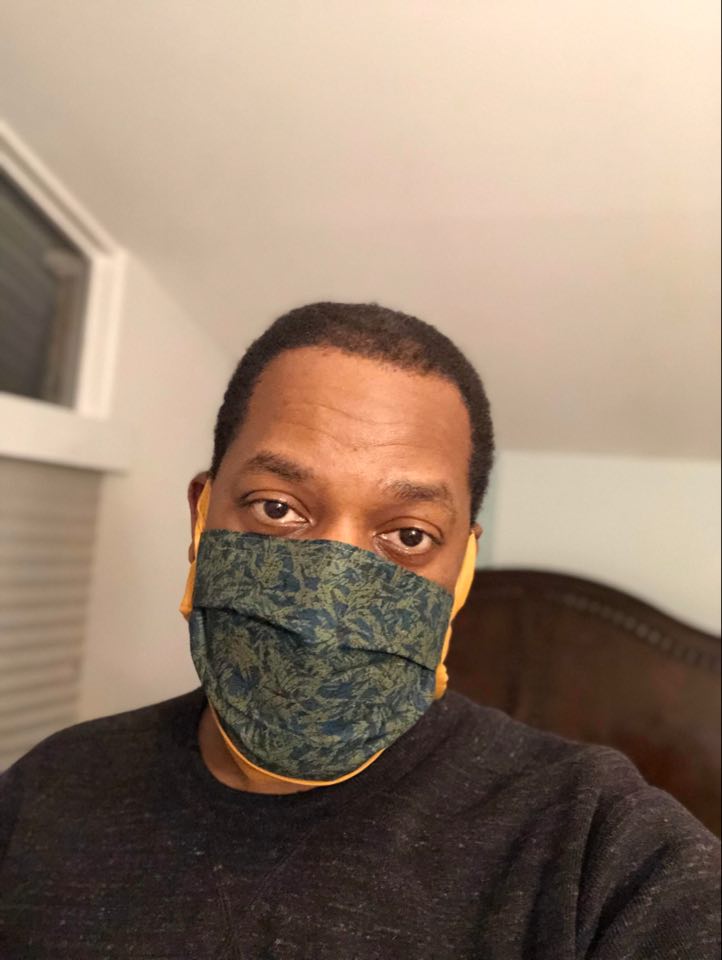
#18 Tony Reames: "Thankful to have an appealing mask that my neighbor made." 

#19  Kathy Wiechman: Amused.

#20 Jim Wiechman: "This mask doesn't fit right."

#21 Barry Schifreen: "I hope my hair looks OK."


Photo by  neelam279 / 523 images 

Only three brave souls played the game; synonyms were allowed.

First place: Goes to Joan Edwards who guessed seven correct answers (not including her own).

Second place: Goes to Angela Ackerman who guessed six correctly.

Third place: Goes to Barry Schifreen with four correct answers. 

For those of you who were pictured, you may want to look at the comments on last week's blog to see what these three readers thought your eyes communicated.

Angela Ackerman wrote in a Facebook message, "It was tough, lol, but it really made me think!" She and I went back and forth on how writers need to use more than eye expressions to show what a character is feeling. Hopefully, that will be the topic of another blog.

Cathy Biggerstaff commented: "My daughter is a nurse in a Covid-19 unit and one of her patients wrote an article for his local newspaper when he got well. He said he came to know his nurses through their eyes because that's all he could see. I thought that was a powerful statement."


 Anestiev / 1182 images 


Wednesday, May 6, 2020

What Do Your Eyes Communicate?

Congratulations to Linda Phillips for winning THE HEART CHANGER from last week's blog.


******

This week I have something different for you. The first time I went out in public with my Covid mask and saw other people in their masks, I thought about how as a writer, I try to capture nonverbal expressions to show (rather than tell) how my characters are feeling. Many times, that is through their eye expressions. It also made me think of One Stop for Writers and all of their helpful tools for writers. Like this one from the Eye entry of their Physical Feature thesaurus:


Then, my sister, Barbara Federlin, texted me a selfie in her mask:


#1 Barbara Federlin

From there, this post and a "game" was born.

RULES: 

Starting with the picture of my sister Barbara, leave me a comment with the feeling you think the person was experiencing (or what you imagine they were thinking) when the picture was taken. Synonyms are OK. Surprise and shock, for example, would be considered acceptable synonyms. Likewise fear, anxiety, or worry. Let's see who can read eye expressions the best. If an emotion isn't obvious, just guess!

Next week I'll share the answers and who read the eyes the best. 

Note: The last person pictured doesn't have a number because all he was concerned about was that the picture came out OK! But I thought it was the most unique mask of all--his wife made it for him out of a yarmulke


BONUS FOR WRITERS: At the end of this blog I have two diagrams I have on my Pinterest board and lengthier quotes from a few of my FB friends. 


#2 - Becca Puglisi 


#4 Barbara Lee Bryant


#5 Annonymous male


#6 Donna Earnhardt 

#7 Jarm Del Boccio 


#8 Jean Hall


#9 Joan Edwards


#10 Laurie Foote


#11 Melodye Shore


#12 Wendell and Linda Phillips 


#13 Mary Ellen Stack Pike


#14 Virginia and Tom O'Malley

#15 Kathleen Burkinshaw


#16  John Craig


#17 Pat Baldwin


#18 Tony Reames


#20 Jim Wiechman


Barry Schifreen 


NEXT:

In the comments write the number of the photo and the emotion or thought that you think was going through the subject's mind or what he or she was feeling. 

WRITING HELPS


writerswrite.co.za


From Melodye Shore: "I felt seen. I felt loved. I felt more protected, of course, but in some ways I felt more vulnerable. And I saw more clearly the vulnerabilities of those with whom I came in contact. Even though most of our faces aren’t visible, we can still make eye contact. That’s important and a critical difference to how things usually are. Our eyes reveal so much about who we are and how we are feeling! They truly are the windows to our souls." 4/23/20

From Tony Reames: "I was thinking that wearing masks in public may become the new normal as some states rush to “open back up.” 4/21/20


Tuesday, April 14, 2020

LIVING--and WRITING and ILLUSTRATING--in the Time of COVID-19: A Guest Post by Melissa Cole Essig

Congratulations to Theresa Milstein who won ILLUSIONS and Sandra Warren who won STONES from last week's blog. 
Today, I'm bringing you a guest post by a fellow North Carolina children's writer, Melissa Cole Essig. This article first appeared on the SCBWI-Carolinas blog, PEN & PALETTE. Melissa graciously allowed me to share it with you.

A Moment of Gratitude for Our Relative Good Fortune


My son and I were walking the dog the other day when a jogger bumped into him.
I was outraged, in a way that would have been totally unreasonable a few weeks ago. What was this woman thinking? Why didn’t she run around us at a safe distance? How could she so selfishly squeeze onto the sidewalk beside my child, close enough to breathe on him?
It was a moment that encapsulated the exhausting reality of living in the time of COVID-19. On the one hand, I was outside in the sunshine, taking a walk with my son—a rarity in the “normal” world crammed so full of soccer practices and music lessons and homework that we are left with little time to just be together in no hurry. All these long walks I’m taking give me a chance to connect with other people as well, to shout hello to them across the street and check in with neighbors sitting on their front porches. To be more firmly and consciously in community. 
On the other hand, I expect a distance. I write blog posts about poor, thoughtless joggers who fail to observe it. 
It’s this apparent contradiction—connection yet distance—that, I think, makes writers and illustrators better equipped to handle sheltering in place than many. And that gives us a crucial role to play in bringing a little bit of peace and sanity to a world that so desperately needs it.
No matter how we approach our craft, at some point we have to sit down, alone, and tell a story in words or images. We know how to appreciate the solitude, even as we now fret about the very frightening consequences that come from so much of it for so many people all at once.
At the same time, we are uniquely able to bridge the gap between solitude and connection. In “What Writers Really Do When They Write,” George Saunders offers this bit of brilliance (and a great many other bits as well): “We often think that the empathetic function in fiction is accomplished via the writer’s relation to his characters, but it’s also accomplished via the writer’s relation to his reader. You make a rarefied place ... and then welcome the reader in.” 
Think about this (and apply it, as well, to nonfiction and illustration). We create worlds and we welcome our readers in.
We can do this, even now. Even when we can’t invite our readers into our homes or our offices or bookstores or libraries or, for the vast majority of school-aged children in the U.S. right now, their schools. 
We can, in our own shelters-in-place, make something that COVID-19 can’t touch. That doesn’t require frequent hand-washing or worrying about how to get to the food distribution site or whether that person coming toward us on the sidewalk is coughing. Something we don’t have to leave on the floor untouched for 24 hours when we bring in the mail or spray down with disinfectant when we brave the grocery store. 
We—writers and illustrators for young people—have the power to connect, at a deep and intimate level, with readers who need connection in the midst of their isolation.
Yes, the manuscript I’m working on at this moment won’t make it into readers’ hands for years, if at all. But that’s true of everything we do as artists, every day. 
Every day we hope our work will find its audience.
And in this time of fear and confusion and anxiety, we can offer that same hope—the kind we’re so good at harnessing—to the people who need it. All we have to do is continue to create worlds where young people now separated from their friends and communities can find a connection. And invite them in.


Melissa Cole Essig writes middle-grade and YA fiction and holds an MFA in Writing for Children and Young Adults from the Vermont College of Fine Arts. She lives in Asheville, North Carolina with her spouse, two kids, and a hound dog who always needs walking. She would love to connect with you on Twitter @MColeEssig

THE NIGHT WAR: A MG Historical Novel Review

  By now you should have received an email from my new website about my review of THE NIGHT WAR by Kimberly Brubaker Bradley. (It'll com...