Showing posts with label One Stop for Writers. Show all posts

Monday, July 20, 2020

Writers, Have You Heard? Angela and Becca have ANOTHER Thesaurus + Giveaway

Congratulations to Erin Ellison who won WOOD, WIRE and WINGS from last week's blog. For those of you who didn't win--you'll get a second chance when I feature Kirsten Larson's publication journey in an upcoming blog.


******

As many of you know, I am a HUGE fan of One Stop for Writers  and Writers Helping Writers, the brainchild of Angela Ackerman and Becca Puglisi. (Click here for my behind-the-scenes interview with them.)

You might have thought that seven thesauri would be enough. But not for them! They realized that your character's choice of occupation speaks volumes about him or her. So, of course, they decided to do something about it. The Occupation Thesaurus is releasing TODAY and boy, does it have a lot to offer!


Let's say you are working on developing your protagonist, antagonist, or an important secondary character. A part of what you want to figure out is what your character does to support herself or her family. Their choice of employment will say a lot about who that person is. Here is the list of jobs detailed in this thesaurus; please click on the link and be impressed with the 124 entries! 


Angela and Becca provided a sneak peak into one of those occupations: firefighter


You'll see that each occupation includes training, necessary skills and abilities, useful skills or talents, helpful character traits, sources of friction, people they interact with, how the occupation meets the character's internal needs, how to switch the stereotype, and considerations about why a character would choose that job. Just reading through one entry could give you dozens of ideas for a story as well as insight into your character. 

In addition, amazing writers in our community have put together additional career profiles for you, based on jobs they have done in the past. (Shout out to my friend, Jarm Del Boccio who contributed "Children's author"!) This is a great way to access accurate information so you can better describe the roles and responsibilities that go with a specific job, right? To access this list, GO HERE

If you're like me, you might like all this information at your fingertips. If you join One Stop for Writers, then this thesaurus-- along with all seven others is right there--waiting for you to browse, brainstorm, and create.  

If you'd rather purchase a print or digital copy of the book, here is a list of e-tailers who have it.

GIVEAWAY


To celebrate the release of their new book, Writers Helping Writers has a giveaway happening July 20th to July 23rd. You can win some great prizes, including gift certificates that can be spent on writing services within our Writer’s Showcase. Stop by this site to enter! FYI, although I love your comments on my blog, this is Angela and Becca's giveaway. So leaving me a comment won't qualify you for entering their contest. 


Wednesday, May 6, 2020

What Do Your Eyes Communicate?

Congratulations to Linda Phillips for winning THE HEART CHANGER from last week's blog.


******

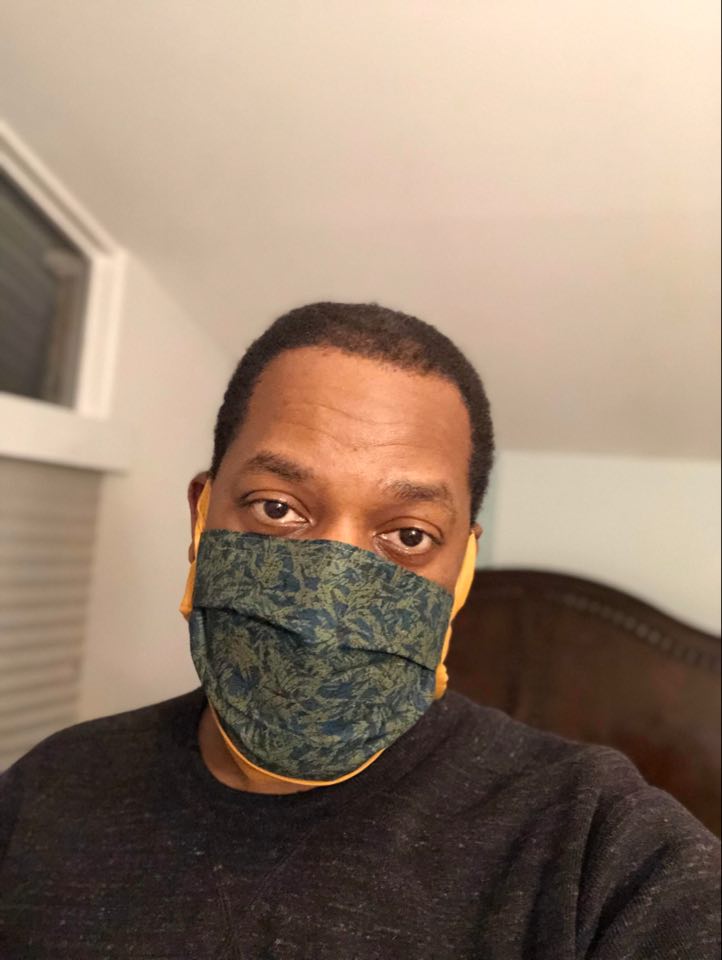
This week I have something different for you. The first time I went out in public with my Covid mask and saw other people in their masks, I thought about how as a writer, I try to capture nonverbal expressions to show (rather than tell) how my characters are feeling. Many times, that is through their eye expressions. It also made me think of One Stop for Writers and all of their helpful tools for writers. Like this one from the Eye entry of their Physical Feature thesaurus:


Then, my sister, Barbara Federlin, texted me a selfie in her mask:


#1 Barbara Federlin

From there, this post and a "game" was born.

RULES: 

Starting with the picture of my sister Barbara, leave me a comment with the feeling you think the person was experiencing (or what you imagine they were thinking) when the picture was taken. Synonyms are OK. Surprise and shock, for example, would be considered acceptable synonyms. Likewise fear, anxiety, or worry. Let's see who can read eye expressions the best. If an emotion isn't obvious, just guess!

Next week I'll share the answers and who read the eyes the best. 

Note: The last person pictured doesn't have a number because all he was concerned about was that the picture came out OK! But I thought it was the most unique mask of all--his wife made it for him out of a yarmulke


BONUS FOR WRITERS: At the end of this blog I have two diagrams I have on my Pinterest board and lengthier quotes from a few of my FB friends. 


#2 - Becca Puglisi 


#4 Barbara Lee Bryant


#5 Annonymous male


#6 Donna Earnhardt 

#7 Jarm Del Boccio 


#8 Jean Hall


#9 Joan Edwards


#10 Laurie Foote


#11 Melodye Shore


#12 Wendell and Linda Phillips 


#13 Mary Ellen Stack Pike


#14 Virginia and Tom O'Malley

#15 Kathleen Burkinshaw


#16  John Craig


#17 Pat Baldwin


#18 Tony Reames


#20 Jim Wiechman


Barry Schifreen 


NEXT:

In the comments write the number of the photo and the emotion or thought that you think was going through the subject's mind or what he or she was feeling. 

WRITING HELPS


writerswrite.co.za


From Melodye Shore: "I felt seen. I felt loved. I felt more protected, of course, but in some ways I felt more vulnerable. And I saw more clearly the vulnerabilities of those with whom I came in contact. Even though most of our faces aren’t visible, we can still make eye contact. That’s important and a critical difference to how things usually are. Our eyes reveal so much about who we are and how we are feeling! They truly are the windows to our souls." 4/23/20

From Tony Reames: "I was thinking that wearing masks in public may become the new normal as some states rush to “open back up.” 4/21/20


Monday, November 11, 2019

Meet My New Experts: Four Korean War Veterans

Congratulations to Jo Lynn Worden who won an autographed copy of "God's Blessings of Fall." Thanks to everyone who entered this popular giveaway.

*******

I've been plotting and thinking about my next book, which is tentatively titled, TOXIC. It will be a sequel to HALF-TRUTHS with Kate's younger brother, Woody, as the main character. In the beginning of HALF-TRUTHS, Kate and Woody's father (Ben) leave for the Korean conflict. One of the ways that Kate connects with Lillian, her grandmother's housemaid, is that Lillian's brother, Isaac, is also in Korea. 

TOXIC take places a year after the Korean War ends, after Ben and Isaac return home. I realized that I needed to better understand what Korean soldiers experienced during the war and when they returned. Following Joyce Hostetter's apt advice, I went looking for some Korean vets. Here are my new experts who generously shared their experiences.


DICK RIDLEY

Dick Ridley, October, 2019

When I contacted Dick, he told me that his story was boring and that he had it "soft."  He was in the artillery and helped man a howitzer that was 4-7 miles away from the front line. 

As the picture below shows, it wasn't easy work and the noise was intense and caused hearing loss in later years. But, as Dick said, "We didn't feel a sense of danger. We were young and stupid. I never saw any wounded." 


Dick Ridley, 1951

One of the eight men in his gun crew refused to pull the lanyard. He would load and aim it, but never fire it. 


This was a letter which Dick received many years later, along with the medal hanging around his neck in the top picture. 

Dick worked as a senior designer for Ford and Pontiac in Michigan and then at Freightliner Trucks in Charlotte, NC. In his retirement Dick volunteers in the Carolina Room at the main library. He enjoys scanning documents, maps and pictures and wonders what the story is behind the images. 


JOE CURTIS GLOVER


Joe had hoped to go into the Army because he'd heard the Marines were rough and tough and he wanted accounting training. But when he enlisted, they needed more men to fill a Marine platoon and the decision was made for him.  

Although he reported that he was generally treated equally as whites, he could tell by the way in which the drill instructors spoke to him and the four blacks (out of 64 men in the platoon), that they were prejudiced. He was assigned to the Motor Transport along with many other black soldiers. His job was to bring men, ammunition, troops, and supplies to the front and take back the wounded or the dead. 

"When I wasn't driving, I was in a fox hole." Joe told me about a time in which he hid in a fox hole when the enemy was attacking, along with another soldier. Like other accounts I have read, much of the fighting took place at night. "There were explosions of light. I couldn't see anything and would just shoot towards the sound. I didn't know if I hit somebody or not."

Later, he realized that his fellow Marine in the fox hole got shot. "I didn't know he was dead until I felt his blood."


This letter of commendation hangs on the wall in his den.

Joe stayed in the Marines and was in the Motor pool for several years. He kept pushing to take accounting classes but was often told that the classes were full. His wife Dorothy added that he was not treated with respect when he returned to the States. Joe's persistence paid off. He received the training he wanted, worked his way up, and became a fiscal officer in charge of a large budget, reporting to a Major. 
Dorothy and Joe Glover, October, 2019
Joe retired from the Marines, worked for the Postal Service, and is now retired in Travares, Florida. He and his wife have 27 great grandchildren.


PRESTON WOODWARD

Preston Woodward, November, 2019
Preston Woodward's family estimated that he had 100 pieces of shrapnel in his body--many of which were never removed because the surgery would have damaged his body. Unashamed, Preston told me to feel the 2-inch bump in his arm and showed me scars on his legs. 

Preston joined the Marines right out of high school. "It was the right thing to do," he said. "They needed people and the Marines was the roughest outfit."

When he was unloaded off the ship in Korea, the men were marched straight to the front. It was the middle of the night, the men were hungry, and the terrain was difficult. He was a part of a nine men fire team; he carried the BAR (Browning automatic rifle).

"They wanted us to confront civilians and jump off to take a small hill. It took so many casualties to accomplish what we were supposed to [do]. It was all mixed up with people coming and going. Wounded going out and new Marines coming in. We weren't trained right, we thought we were ready, but we weren't. Seeing the real Marine Corps changes you."

When Preston got hit in his leg from an explosion, he bandaged it himself. "Small fragments would scatter and hurt you. The corpsmen were busy and I was no wimp. I kept going  and prayed it would cease." As far as he could see, the war had grown on either side of him. "I used to think, 'Why do people line up on two sides and kill each other?'"

As we talked, Preston's shoulders, neck, and legs jerked and twisted. He still has a lot of pain from the shrapnel and some of his memories were jumbled. As far as I could tell, after a severe bombing, he laid out on the field wounded for 4-5 days. If he moved, the enemy would lob more grenades. The force of the explosions from the concussion grenades flipped him over. 

Preston was captured and taken to a Chinese medical station.  After that he was a prisoner-of-war for "one year, ten months, and sixteen days" until the war ended. Although Preston doesn't remember much about that imprisonment, he relayed that he was interrogated and threatened with death. He didn't have the information they were looking for, but they attempted to brainwash him. 

After the war, Preston returned to Florida and had multiple operations. "I was fearful of loud noises like a shotgun. I'd jump up and think someone was coming at me." He had nightmares and drank too much. His parents taught him to be courageous, his father told him that his anxiety would end, and his friends advised him to go back into fearful situations. Seeing what alcohol did to his buddies helped him to quit; he did resume hunting and got over his fear of loud noises. 

Preston had difficulty staying on the job because of his physical limitations due to his injuries. He was widowed three times and now lives in an assisted living facility in central Florida. Parked out front is his Ford black pick-up truck that he would love to drive. 


After we talked, Preston carefully tucked his cap inside his belt. "That's what we used to do," he told me with a smile. 


CURTIS KOJO MORROW


My last expert to highlight in this post is not someone who I have interviewed. Rather, I "met" Curtis Morrow in the pages of his memoir, What's a Commie Ever Done to Black People? (McFarland & Co., 1997). 

Curtis was 17 when he enlisted in the Army and joined the 24th Infantry Regiment Combat Team. This unit, originally known as the Buffalo Soldiers, was the Army's last all Negro unit; it was deactivated in 1951 when black soldiers were officially integrated into the other units in Korea. 


I will most likely review this book, so let me just say that it is raw, authentic, gritty, and memorable. It is not for the faint of heart, but it illuminates the Korean conflict through a young, vulnerable, and courageous black teenager. The word pictures that Mr. Morrow painted have stayed with me long after I read them. 

Photo from Facebook, taken in 2014

Mr. Morrow is an author, artist, and freelance photographer who lives in Chicago.

********

These men sacrificed more than I can imagine. Now, their stories will inform mine. As I write TOXIC, I'm thinking about the horrors which Woody's father, Ben Dinsmore, saw in Korea and how that will shape Woody's life.  What did Isaac Harris see and experience? When he comes back to Charlotte, what will his life be like, and how will he influence Woody?

I'm using One Stop for Writers to explore these characters' backstories. I hope you hang in there with me as I build a new story. 

Stay tuned. 

Monday, March 25, 2019

Behind the Scenes with The Thesauri Queens: An Interview with Angela Ackerman and Rebecca Puglisi

Congratulations to Sandra Warren who won the 15 minute Zoom Author Interview with Marsha Diane Arnold from last week's blog. She donated it to West Marion Elementary School in Marion, NC.

*********

Many of you have heard me extol the virtues of ONE STOP FOR WRITERS a rich, on-line writing tool. I've also frequently mentioned the creators of the site, Angela Ackerman and Becca Puglisi, who have co-written and published seven ThesauriI teased them that they are the Thesauri Queens--but you probably know them as two smart, generous women who are being exactly what their website proclaims: Writers Helping Writers.

I bet many of you have used their resources and that's why you're here today--because like me, you're a nosey writer and want to hear how these two women have successfully collaborated for fifteen years.

But first, if you don't know about how Angela and Becca met online, please see Natalie Aguirre's interview. You'll also find out how they developed their unique brand. 


This was taken the first time Angela and Becca met in Disney World!

Now, without further ado-- let's get this interview going!


CAROL: What was it like when you met in person three years after only knowing each other online? 

ANGELA: Because we live in different countries, 99% of our communication is online. However, many years ago I took my family to Disney World, and as Becca lived close by, she agreed to meet us at the Magic Kingdom for the day, just outside Cinderella’s castle. We had traded pictures of one another of course, but as we pulled into the parking lot that day it hit me that a) I’d forgotten my phone at the hotel, and b) MK was huge, and c) 32,000 people entered the park every day that time of year. As this was my debut visit to the park, I began imagining scenarios where Becca would be at one part of the castle and I’d be at another, endlessly waiting for the other to arrive. So, I did what any desperate person might do…I made a sign with her name on it. 

Ironically, I never needed to use it. Somehow despite Magic Kingdom having several ferries and a sky train that transported people to and from the park, Becca and I ended up on the same packed ferry about ten feet from one another. This type of crazy coincidence was only the first of many for us; Becca and I are convinced the universe wants us to be together!

BECCA: One of the things I liked best about this day was the absence of the expected awkwardness that comes when you finally meet an online friend in person. (Well, except for that moment when I realized my car key had fallen out of my pocket on Space Mountain, and I thought we might be spending a huge portion of the day in the parking lot. Luckily, my key was sitting there in the seat, not wedged into a coaster track somewhere, so that was good.) We just picked things right up and enjoyed our day. It was a really good feeling to meet in person and confirm that she was the wonderful, kind, generous, and freaky person I’d always thought she was.

CAROL: How do you work together as a team? How do you figure out who does what?

ANGELA: Luckily Becca and I have writing styles that mesh quite well, but we have different strengths when it comes to business skills. She’s terrific at organization and tracking the million little things that keep us up and running as a business, like knowing book production processes, managing our accounts, making sure bills are paid, and working with third parties (formatters, designers, distributors, etc.). I handle the marketing side of things, our outreach, and steer business strategy. I think our partnership works so well because we trust each other’s knowledge in areas where we are not subject matter experts, and whenever we need to come to a consensus on something, we can talk it through.

BECCA: We assign duties based on individual strengths, which is a pretty simple process because we’re very compatible in our giftedness (or lack thereof). And the rest of it, we just divvy up between us. It’s a simple system, but because we’re each able to look at ourselves realistically and put the ego aside, it’s easy to say, You’re better at this, why don’t you handle it? or You’ve got a ton going on, so I’ll do this one.

CAROL: What have been the bumps in the road to successful collaboration? Do you have advice to other writers who are considering collaborating on a book or project? 

ANGELA: I won’t lie, there are some things we disagree on. For example, Becca hates pickle chips. It’s hard for me to overlook this horrifying flaw, but that’s what you have to do sometimes to keep the peace. Okay, that’s frivolous…but it illustrates the nature of most of the friction between us: superficial. 

However, we have different backgrounds, life views, and comfort zones, so we aren’t twins. Certain content we’re not comfortable writing about might be a sticky point and when this happens, we talk it through and come to a consensus. Another way we differ is that Becca and I have different comfort zones when it comes to risk. But again, it’s fine because we discuss it and challenge the other to convey their point of view better so we can reach an understanding. I love this because it means we always move ahead on the same page, or “on the same page for now,” leaving things open for reassessment down the road. 

My advice for collaborating is to make sure each person is in alignment before jumping into a project. Not only does there need to be a huge amount of trust and respect, collaborators should have complementary communication styles, the same vision and goals, and a strong work ethic. 

BECCA: Yes, to all of this, except the bit about my dislike of pickle chips being a flaw. That’s just a result of having functional taste buds. I would add that potential partners should go into the collaboration with eyes wide open, knowing that, no matter how well you get along, there will be conflict and disagreements. Ironically, this becomes more pronounced if you find success, because success leads to increased complexity, requiring the business to grow and change. Recognizing that choppy waters are ahead can be really helpful in navigating them.

CAROL: What have been the high points of your collaborative work? 

ANGELA: Honestly the best part for me is our friendship; Becca is my better half. I have such tremendous love and respect for her and am eternally grateful for how she helps me grow as a writer and a human being. She’s an advocate for me and everything I do (and I for her), and that’s pretty powerful stuff! 

Another high for me is how we took an idea on how to help writers in a more practical way and helped shape the industry’s ideas of what a writing guide is and isn’t, and what a thesaurus is and is not. This, I believe, has opened the box a bit for all creators as now there are many books-slash-tools called thesauruses (or something similar) that incorporate lists to help writers in some way. Another thing I love is how Becca and I continually innovate, even to the point where we think beyond a book format. Creating One Stop for Writers with Becca and Lee is one of the coolest, most rewarding things I’ve done. In many ways I feel we’ve only scratched the surface of what we can do there, and that’s exciting. Our ability to be more open-minded about what is possible is a direct result of hearing from readers about the impact our books have made. Knowing we’re making a difference is a feeling that can’t be beat. 

BECCA: My gosh, there are so many high points. There’s this exponential thing that happens when we put our heads together; the results are typically way bigger than we originally planned. For instance, I came up with a very basic version of the Emotion Thesaurus back when we were critique partners, but it was Angela’s idea to turn it into blog material. And of course, that ended up becoming such a successful book. We’ve achieved so much more together than I believe either of us would have on our own. There are many, many examples of this throughout our journey together. It’s a beautiful thing.

CAROL: Have you always had the same vision? Do you invest equal amounts of time and energy as the Thesauri Queens? 

ANGELA: I think so--mostly? I’ll have to wait for Becca’s answer to know for sure, haha! I guess maybe a better way to phrase my answer is to say that we each have a huge desire to help others and it drives us. We may have our own ideas on how to best accomplish this but the magic between us is we are very good communicators. Because we discuss everything and make it a practice to incorporate the other’s insight before moving forward, we become flexible thinkers. This helps us choose a path that feels right for us both, one that means we’re helping writers and running a sustainable business. And when we don’t quite agree, if it’s important to the other, we compromise because we have such a strong bond of trust. Resentment or negativity is not part of our relationship.  

BECCA: I think it’s truthful to say that we want the same things and we each give as much as we can in pursuit of those goals. It helps that we also see ourselves with a certain duality: we are individuals with many and varying responsibilities outside of work, and we’re also two parts to a professional whole. Real life happens, and there are times when we each have personal stuff going on. In those moments, the other person steps in to fill the gap. I know that Angela has my back, and she knows that I have hers—both personally and professionally. I thank God regularly for bringing the two of us together.

CAROL: Thank you so much, ladies, for sharing your working relationship and your encouragement to all of the men and women who are becoming more skilled writers because of you!

For those of you who haven't used any of Angela's or Becca's Thesauri, you can begin by reading my blog about their latest book, The  Emotional Thesaurus, Second Edition


No matter what genre you are writing or if you write for adults, children, or young adults, ONE STOP FOR WRITERS is the writing resource you need. It's the first place I go when I'm stuck writing a scene. I haven't begun to plummet the depth of writing helps that are included. By the way, their Pinterest board is pretty amazing too!


Thursday, January 24, 2019

A NEW Emotional Thesaurus Book is Coming!

As many of you know, I am a big fan of Angela Ackerman's and Becca Puglisi's blog, Writer's Helping Writers, their Emotional Thesauri, and their incredible online tool, One Stop for Writers. Not only is this dynamic duo dedicated to helping other writers--their materials are excellent. (See their Pinterest board for a simple of their resources.)

Their new book is coming out on February 19!


This is the Amazon blurb:
The bestselling Emotion Thesaurus: A Writer's Guide to Character Expression (Second Edition), often hailed as "the gold standard for writers" and credited with transforming how writers craft emotion, has now been expanded to include 55 new entries!  
One of the biggest struggles for writers is how to convey emotion to readers in a unique and compelling way. When showing our characters' feelings, we often use the first idea that comes to mind, and they end up smiling, nodding, and frowning too much.  
If you need inspiration for creating characters' emotional responses that are personalized and evocative, this ultimate show-don't-tell guide for emotion can help. It includes:  
  • Body language cues, thoughts, and visceral responses for 130 emotions that cover a range of intensity from mild to severe, providing innumerable options for individualizing a character's reactions.
  • A breakdown of the biggest emotion-related writing problems and how to overcome them.
  • Advice on what should be done before drafting to make sure your characters' emotions will be realistic and consistent.
  • Instruction for how to show hidden feelings and emotional subtext through dialogue and nonverbal cues.
  • And much more!

The Emotion Thesaurus, in its easy-to-navigate list format, will inspire you to create stronger, fresher character expressions and engage readers from your first page to your last. Use The Emotion Thesaurus to go deeper to craft compelling descriptions that match each character’s personality and emotional range.
If that's not enough, here's more:

  • Euphoriavindicated, and schadenfreude are just a few of the new entries. You can also browse the Table of Contents to see all 130 emotions in this volume.
  • If you already subscribe to One Stop for Writers this thesaurus will be available to you in February.
  • Angela and Becca are celebrating their new EMOTION THESAURUS (Second Edition) with FREE EDUCATION! Stop in to grab the link to a recorded webinar on showing emotionhttps://writershelpingwriters.net/2019/01/announcing-the-emotion-thesaurus-second-edition/ 
  • The instructive portion of the book has more than doubled and includes new material on how to power up dialogue with emotion, use subtext and other techniques to show hidden emotions, what character development is necessary to determine emotional range so actions are authentic to each person's nature, and more.
You can pre-order on AmazonKobo, Apple Books, and Indiebound. Get read to add it to your stack of Thesauri! 
     
                  No photo description available.

If you preorder, send a screenshot of the order to this special email address and you’ll receive a bonus PDF of entries that Angela and Becca completed but chose not to add to the 2nd edition.


The dynamic duo, Angela and Becca, presented together at
the CARWA workshop in 2016.


Monday, April 9, 2018

Men Who Hate Women and the Women Who Love Them: An Audio Book Review

As most of you know, I generally review books for children or teens. But every once in awhile I share books for adults. This time, I'm tackling a serious topic in a book by psychologist, Dr. Susan ForwardMen Who Hate Women and the Women Who Love Them.


Before listening to this book, I had never heard the word misogynistic and had no idea that it meant "reflecting a distrust, hatred, or mistreatment of women." Nor did I have any idea how prevalent this syndrome is today.

Originally published in 1986, it was re-released as a paper back in 2002 and is now available in audio format through Tantor Media. The narration by Randye Kaye was clear and easy to follow. 

REVIEW

In Part I, Dr. Forward describes the symptoms of a misogynist relationship through family histories of her patients as well as stories she heard time and again as a talk show host. The women find themselves the recipients of ridicule, are always seen at fault if conflicts arise (and what marriage doesn't have conflict?), and are frequently afraid of the men in their lives because they are threatened either verbally or physically. As a result, these women walk on eggs; not wanting to upset their partner, and often give up important relationships, activities or even their jobs in order to not rock the boat.


Many women ignore early warnings that their relationship has serious problems and fantasize about how they can make things better. Not wanting to ruin romantic dreams, the reality of the trouble these women experience frequently gets shoved into the background. It takes great courage and strength to face these problems--or if the problems go on long enough, the woman becomes desperate to receive help. 

The second part of the book is devoted to advice to women who are in these types of relationships. This comprehensive section includes
clarifying relationships to remove oneself from self-blame, recognizing when a man is emotionally unstable and wanting a woman to be dependent on him (and why), understanding how a woman can't change a man's basic personality but how she can set limits and respond to his threats. It also included reflections on what leads a man to becoming a misogynist. Questionnaires and visualization exercises give the reader opportunities to examine herself, her relationship, and how to create new responses to the man in her life. Dr. Forward handles many tough topics, including how to handle physical threats to the woman or her children.

As a Christian, I thought Dr. Forward made many valid points about setting boundaries and parameters. Her advice to women not to try to fix the other person but instead to acknowledge her own emotions, negative thoughts, and behaviors, frees a woman to take responsibility for herself. I disagreed with Forward's negative use of the word submissive. Although the concept can easily be misused, within the contest of a Biblical and loving marriage submission takes on a positive meaning and direction. 

A NOTE TO WRITERS

As I was listening to the book, I thought how it would be a great resource for writers who are exploring the effects of abuse on men and women. As I have mentioned before, One Stop for Writers, the brainchild of Becca Puglisi and Angela Ackerman, is a collection of helps for writers including all of their thesauri. I thought particularly of The Emotional Wound Thesaurus, and how it digs deep into many wounds related to destructive female/male relationships. If you are writing a book that includes a misogynistic relationship, I would encourage you to read this book to deepen your understanding of what your characters have experienced.

RECOMMENDATION 

This is a must read for anyone who is involved in a relationship with a man who is very controlling and threatening. No giveaway this time; my copy went to a friend.


AUDIO SNIPPET

To hear a snippet from the book, click here.


THE NIGHT WAR: A MG Historical Novel Review

  By now you should have received an email from my new website about my review of THE NIGHT WAR by Kimberly Brubaker Bradley. (It'll com...