Showing posts with label interviews. Show all posts

Friday, March 18, 2022

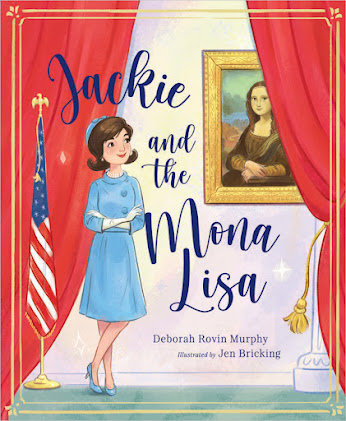
JACKIE AND THE MONA LISA- PART II: An Interview with the Author and Illustrator

 Thanks for returning to my blog for this second post featuring JACKIE AND THE MONA LISA. (Click here if you missed Part I). Deborah Robin Murphy graciously agreed to answering a few questions about her debut picture book, and I'm happy to also have illustrator Jen Bricking join the conversation. 

Deborah Rovin Murphy, Author

Carol: How did you get interested in Jackie and the Mona Lisa

Deborah: I have always been a fan of art, history, and museums. I read an adult book about Jackie Kennedy and the Mona Lisa, and I was so fascinated and surprised when no one I talked to about it really knew about the story…even those old enough to have possibly seen it in a newspaper or heard about it on TV. I love stories that have “fallen through the cracks” and aren’t well known. The Mona Lisa is so iconic and famous, and I couldn’t believe that it was actually in the United States. I have also always admired Jackie Kennedy and all she did as First Lady and beyond. 

Carol: What was your path to publication?

Deborah: I wrote the first draft of this story about seven years ago. It looked a lot different than the final story you see in the book today. I submitted to many publishers using the Children’s Writers and Illustrators Guide and connections I made from being a member of the Society of Children’s Book Writers and Illustrators (SCBWI) as a guide.  Five years and multiple rejections later, my awesome editor at Sleeping Bear Press liked the story and offered me a contract. I literally screamed when I saw the email… to a writer that is like winning the lottery-especially with years and years of trying with this and other stories I have written.

Carol: What went into researching the text? Do you have any personal connection to Jackie? 

Deborah: I love research! For me, the library still remains one of the best places to look for information. I like to be able to find books that explore my topic and make use of the traditional tools such as using the index and exploring the chapters of the book myself because I may find a piece of information that wouldn’t have come up on an internet search. Of course, the internet is definitely a great tool for research; however, like any tool, I think you have to know how to use it efficiently and effectively. I believe that you want to approach your research with a plan. Where will you find the best and most accurate information? For me, finding the John F. Kennedy Presidential Library website was invaluable. I could access their archives and see actual documents, speeches and photographs that tied in with Jackie and the planning that went into Mona Lisa’s visit to America. I researched Mona Lisa’s background as well. I like to get all of the information I can and start to whittle it down to the important parts I want to include in the book.

I guess my personal connection to Jackie would be that I remember my mom telling me how much she admired her when she was First Lady in the 1960’s and how she herself had outfits modeled after Jackie’s style. My mom even had a pillbox hat with her wedding veil! As I grew older and read more about her, I loved that Jackie was such an amazing mother who made raising her children her number one priority. As a mother myself, I value that.  My favorite Jackie quote is, “If you bungle raising your children, I don’t think whatever else you do matters much.”
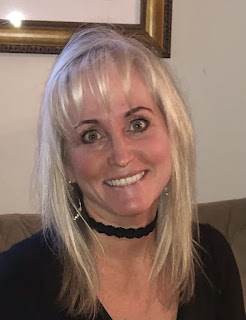
 

Debbie has loved visiting museums since her class trip to the Philadelphia Museum of Art when she was in elementary school. An elementary school teacher herself, she even considered becoming an art teacher because of her love of art. She was so inspired by Jackie Kennedy when she read about what she did to promote the arts in America and amazed when she found out Jackie was responsible for getting the Mona Lisa to come to the USA. She lives in Bucks County, Pennsylvania and was lucky enough to have seen the Mona Lisa on her trip to France.  

 
Jen Bricking, Illustrator

Carol: What went into researching the illustrations? Do you have any personal connection to Jackie?

Jen: Researching and the early sketch phase are two of my favorite parts of the picture book making process, and I love to doodle while I collect reference! Once I received the manuscript, I basically did a deep dive into all things Jackie. I researched historical photos, watched videos and movies, and read everything I could find about Jackie, the time period and, of course, the Mona Lisa. I wanted to make sure my illustrations were historically accurate (aside from minor details to pump up the charm), so I combed through the JFK Library and The National Archives. They have a comprehensive collection of resources from Jackie’s time as First Lady, her White House restoration, and when she brought the Mona Lisa to the United States. I relied heavily on these collections, along with other websites and blogs dedicated to Jackie’s life. I collected around a thousand reference images and even made a Jackie Pinterest page. 

Other than what I learned in history classes or saw on TV as a kid, I didn’t know too much about her life before or after being First Lady. I especially didn’t know about some of the fun and interesting facts this book reveals. I remember both of my grandmothers having a great fondness for her, and I’ve always admired her for her contribution to the arts and her pursuit in making it accessible for everyone.

Carol: What was your medium and what influenced your choice of that medium and your choice of the color palette?

Jen: I used pencil and digital to create the illustrations. I sketched some of the initial character designs and layouts with pencil on paper, but I primarily used my iPad and computer to sketch and paint all of the illustrations. I painted digitally in the same manner as using watercolor to give it a soft, traditional, and timeless look, perfect for Jackie! Because Jackie was also known as a very influential fashion icon, I referenced a lot of 1960’s fashion illustrations, magazines, catalogues, and advertisements. I wanted to evoke a nostalgic yet modern visual style, and so the color palettes of the fashion of that era, especially Jackie’s colorful dresses and pillbox hats, were a big influence. It was all very vibrant but soft, and I wanted that to come through in my illustrations.



Jen has seen the Mona Lisa twice and, like Jackie, loves everything French. She works as an illustrator and artist for video games and animation. Her other books include Ten Magic Butterflies, Jane and Me series for the Jane Goodall Institute and various illustrated novels. When she isn’t drawing, she likes to travel, ride her bicycle and skateboard. You can follow her on Instagram at jenbricking or visit her at jbricking.com.

GIVEAWAY

For a chance to win this book, leave a comment with your email address, or send me an email if you prefer. If you follow my blog you get another chance. Giveaway ends Monday, March 21. U.S. addresses only. 

Monday, November 11, 2019

Meet My New Experts: Four Korean War Veterans

Congratulations to Jo Lynn Worden who won an autographed copy of "God's Blessings of Fall." Thanks to everyone who entered this popular giveaway.

*******

I've been plotting and thinking about my next book, which is tentatively titled, TOXIC. It will be a sequel to HALF-TRUTHS with Kate's younger brother, Woody, as the main character. In the beginning of HALF-TRUTHS, Kate and Woody's father (Ben) leave for the Korean conflict. One of the ways that Kate connects with Lillian, her grandmother's housemaid, is that Lillian's brother, Isaac, is also in Korea. 

TOXIC take places a year after the Korean War ends, after Ben and Isaac return home. I realized that I needed to better understand what Korean soldiers experienced during the war and when they returned. Following Joyce Hostetter's apt advice, I went looking for some Korean vets. Here are my new experts who generously shared their experiences.


DICK RIDLEY

Dick Ridley, October, 2019

When I contacted Dick, he told me that his story was boring and that he had it "soft."  He was in the artillery and helped man a howitzer that was 4-7 miles away from the front line. 

As the picture below shows, it wasn't easy work and the noise was intense and caused hearing loss in later years. But, as Dick said, "We didn't feel a sense of danger. We were young and stupid. I never saw any wounded." 


Dick Ridley, 1951

One of the eight men in his gun crew refused to pull the lanyard. He would load and aim it, but never fire it. 


This was a letter which Dick received many years later, along with the medal hanging around his neck in the top picture. 

Dick worked as a senior designer for Ford and Pontiac in Michigan and then at Freightliner Trucks in Charlotte, NC. In his retirement Dick volunteers in the Carolina Room at the main library. He enjoys scanning documents, maps and pictures and wonders what the story is behind the images. 


JOE CURTIS GLOVER


Joe had hoped to go into the Army because he'd heard the Marines were rough and tough and he wanted accounting training. But when he enlisted, they needed more men to fill a Marine platoon and the decision was made for him.  

Although he reported that he was generally treated equally as whites, he could tell by the way in which the drill instructors spoke to him and the four blacks (out of 64 men in the platoon), that they were prejudiced. He was assigned to the Motor Transport along with many other black soldiers. His job was to bring men, ammunition, troops, and supplies to the front and take back the wounded or the dead. 

"When I wasn't driving, I was in a fox hole." Joe told me about a time in which he hid in a fox hole when the enemy was attacking, along with another soldier. Like other accounts I have read, much of the fighting took place at night. "There were explosions of light. I couldn't see anything and would just shoot towards the sound. I didn't know if I hit somebody or not."

Later, he realized that his fellow Marine in the fox hole got shot. "I didn't know he was dead until I felt his blood."


This letter of commendation hangs on the wall in his den.

Joe stayed in the Marines and was in the Motor pool for several years. He kept pushing to take accounting classes but was often told that the classes were full. His wife Dorothy added that he was not treated with respect when he returned to the States. Joe's persistence paid off. He received the training he wanted, worked his way up, and became a fiscal officer in charge of a large budget, reporting to a Major. 
Dorothy and Joe Glover, October, 2019
Joe retired from the Marines, worked for the Postal Service, and is now retired in Travares, Florida. He and his wife have 27 great grandchildren.


PRESTON WOODWARD

Preston Woodward, November, 2019
Preston Woodward's family estimated that he had 100 pieces of shrapnel in his body--many of which were never removed because the surgery would have damaged his body. Unashamed, Preston told me to feel the 2-inch bump in his arm and showed me scars on his legs. 

Preston joined the Marines right out of high school. "It was the right thing to do," he said. "They needed people and the Marines was the roughest outfit."

When he was unloaded off the ship in Korea, the men were marched straight to the front. It was the middle of the night, the men were hungry, and the terrain was difficult. He was a part of a nine men fire team; he carried the BAR (Browning automatic rifle).

"They wanted us to confront civilians and jump off to take a small hill. It took so many casualties to accomplish what we were supposed to [do]. It was all mixed up with people coming and going. Wounded going out and new Marines coming in. We weren't trained right, we thought we were ready, but we weren't. Seeing the real Marine Corps changes you."

When Preston got hit in his leg from an explosion, he bandaged it himself. "Small fragments would scatter and hurt you. The corpsmen were busy and I was no wimp. I kept going  and prayed it would cease." As far as he could see, the war had grown on either side of him. "I used to think, 'Why do people line up on two sides and kill each other?'"

As we talked, Preston's shoulders, neck, and legs jerked and twisted. He still has a lot of pain from the shrapnel and some of his memories were jumbled. As far as I could tell, after a severe bombing, he laid out on the field wounded for 4-5 days. If he moved, the enemy would lob more grenades. The force of the explosions from the concussion grenades flipped him over. 

Preston was captured and taken to a Chinese medical station.  After that he was a prisoner-of-war for "one year, ten months, and sixteen days" until the war ended. Although Preston doesn't remember much about that imprisonment, he relayed that he was interrogated and threatened with death. He didn't have the information they were looking for, but they attempted to brainwash him. 

After the war, Preston returned to Florida and had multiple operations. "I was fearful of loud noises like a shotgun. I'd jump up and think someone was coming at me." He had nightmares and drank too much. His parents taught him to be courageous, his father told him that his anxiety would end, and his friends advised him to go back into fearful situations. Seeing what alcohol did to his buddies helped him to quit; he did resume hunting and got over his fear of loud noises. 

Preston had difficulty staying on the job because of his physical limitations due to his injuries. He was widowed three times and now lives in an assisted living facility in central Florida. Parked out front is his Ford black pick-up truck that he would love to drive. 


After we talked, Preston carefully tucked his cap inside his belt. "That's what we used to do," he told me with a smile. 


CURTIS KOJO MORROW


My last expert to highlight in this post is not someone who I have interviewed. Rather, I "met" Curtis Morrow in the pages of his memoir, What's a Commie Ever Done to Black People? (McFarland & Co., 1997). 

Curtis was 17 when he enlisted in the Army and joined the 24th Infantry Regiment Combat Team. This unit, originally known as the Buffalo Soldiers, was the Army's last all Negro unit; it was deactivated in 1951 when black soldiers were officially integrated into the other units in Korea. 


I will most likely review this book, so let me just say that it is raw, authentic, gritty, and memorable. It is not for the faint of heart, but it illuminates the Korean conflict through a young, vulnerable, and courageous black teenager. The word pictures that Mr. Morrow painted have stayed with me long after I read them. 

Photo from Facebook, taken in 2014

Mr. Morrow is an author, artist, and freelance photographer who lives in Chicago.

********

These men sacrificed more than I can imagine. Now, their stories will inform mine. As I write TOXIC, I'm thinking about the horrors which Woody's father, Ben Dinsmore, saw in Korea and how that will shape Woody's life.  What did Isaac Harris see and experience? When he comes back to Charlotte, what will his life be like, and how will he influence Woody?

I'm using One Stop for Writers to explore these characters' backstories. I hope you hang in there with me as I build a new story. 

Stay tuned. 

THE NIGHT WAR: A MG Historical Novel Review

  By now you should have received an email from my new website about my review of THE NIGHT WAR by Kimberly Brubaker Bradley. (It'll com...