Saturday, January 17, 2009

Polishing Your Prose

A fellow Charlotte, NC writer Jean Hall posted this on her blog Jean's Encouraging Words for Writers. I thought it was worth passing along to fellow writers and she graciously allowed me to quote her.

"If you're even vaguely interested in writing non-fiction (in any form) you need to get your FREE copy of Marilyn C. Hilton's ebook Polishing Your Prose. I'm one of those nutty detail-oriented people who wants every comma to be in exactly the right place. Polishing Your Prose is a goldmine for me.

"Don't let the subtitle scare you off [Tech-Writing for NonFiction That Shines]. The info contained in this 35 page book will give every author a secret weapon for making manuscripts stand out as professional and near perfect-regardless of the genre.

"Chapters include the following:

"Audience, Scope, and Chunks (foundational work before you start typing)

"Organization With Lists, Steps, and Tables (how to make them reader-friendly)

"Using Art Effectively (charts, diagrams, graphs)

"Creating a Leak-Proof Index (I didn't know that Word and other processors will make an index for me! Shows how computer illiterate I am.)

"Editing Down to the Bones (A check-list for fool-proof editing. If I follow these steps I'll never again turn in a manuscript with an error in it.)

"Careers in Writing (You know, the kind you actually get paid for.)

"So, how in the world do you get your hands on a FREE copy of Marliyn's book? Click on the link to visit her website, then send her an email requesting your copy of Polishing Your Prose."

Jean said it was simple and she was right. Marilyn is quick to respond and will be happy to send you your own copy of this small, helpful e-book.


Technorati Tags:
, , ,

Thursday, January 15, 2009

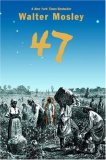
47


I was initially attracted to 47
since I thought that it might inform the historical fiction which I am working on. Unfortunately, I was seriously disappointed. I found Walter Mosley's strange mixture of historical fiction and speculative fiction confusing and an obstacle in depicting the serious theme of slavery in the antebellum South.

Originally I was drawn into the narrator's story of how he, Forty-seven, (the number with which he is branded with which becomes his name) meets Tall John, a young man who develops into his best friend. Although portrayed as an escaped slave from a nearby plantation, the reader and Forty-seven slowly discover that Tall John is no ordinary human being. His extraordinary powers include being able to fly between galaxies, heal people with vials of medicine which he has hidden away, inexplicably transport people over miles of land, and read dreams. None of these extraordinary talents are fully explained in the text and in fact, some "facts" such as Tall John arriving in a "sonship" are revealed late into the story. Mosley does not provide enough textual clues to make this alien super-hero, his former world, or his mission, make sense to the reader. Although Tall John has a wonderful message to 47: "No nigger or master be," this message is diluted as the reader tries to figure out the convulsions of a science fantasy world that never makes sense juxtaposed against a Southern plantation.

When I teach the science fiction or fantasy genre I always emphasize that the world which the author creates must make sense to the reader. If a reader has to stop reading to try and figure out what is going on in the story, then the author has not adequately done his job. Unfortunately, I feel as if Mr. Mosley's book for young adults falls into this category. In addition, I listened to the book on AudioBooks and found Ossie Davie's (the narrator) voice difficult to understand; I think middle grade students probably would not persevere and return the book to the library without listening to it. (Little, Brown and Company, 2005)


Technorati Tags:
, , , ,

Thursday, January 8, 2009

Haiti Relief Update


On December 16 I blogged about a Haiti Relief project that Christ Covenant Church in Matthews, NC sponsored. Yesterday, I received the following e-mail from Diane Dworek, of the co-coordinators:

"So what all did God send to Haiti through your generosity and giving spirits? Well would you believe…..?

"1469 full size bars of soap, 16 boxes girls clothing, 10 boxes boys clothing, 137 underwear/training pants, 16 boxes women clothing, 14 boxes men’s clothing, 5 boxes misc kids shoes, 4 boxes adult shoes, 3,000 pairs of Crocs, 850 back packs, 1916 washcloths, 1737 toothbrushes, 737 toothpaste tubes, 449 full size shampoo + conditioner and hair products, 5 boxes other toiletry items, 60 enamelware mugs, 1182 rolls of toilet paper, 163 gallons Clorox, 100 first aid kits for each orphanage room, 1,200 pounds + medical supplies, 5 boxes misc. hygiene items, 117 Igloo coolers, 100 pre-cut cooler stands w/nails, 2 dry erase boards, 9 boxes towels & sheets, 3 boxes school supplies, extra lumber, 1 TV, ! new sewing machine, cloth, 2 stainless steel industrial tables, a 6 ft. folding table." Diane Dworek

It's wonderful to be a part of a community who has reached across cultures to help people recovering from hurricanes and floods. Image courtesy of Endeavor to Develop Education. Technorati Tags:
, ,

Monday, January 5, 2009

Newbery Point and Counterpoint

For those of you who have taken exception to past choices of Newbery winners, you might enjoy reading "Has the Newbery Lost Its Way?" an article in the October issue of The School Library Journal by Anita Silvey on recent Newbery choices.

If you're interested in reading a different opinion on the topic, read Erica Perl's thoughtful article, "Captain Underpants Doesn't Need a Newbery Medal".

Which side of the fence do you sit on?

If you ask me, I'm not sure. I've read some terrific Newbery winners such as Bridge to Terabithia (Crowell, 1977) or A Single Shard (Clarion, 2001); and others that I have wondered why they were selected, such as Kira-Kira (Simon and Schuster, 2004) and The Higher Power of Lucky (Simon and Schuster, 2006).

If you're a teacher or librarian with an opinion on Newbery choices, e-mail me and I'll share your thoughts and experiences with others.

As for me, I just put several other Newbery winners on hold at my library; it never hurts to learn from those who have been chosen to exemplify quality childrens literature.
Technorati Tags:
, , , , , , ,

Monday, December 29, 2008

Aleutian Sparrow


Karen Hesse, known for the award-winning free verse book, Out of the Dust, used the same poetic style to write this poignant description of the effects of World War II on the Aleutian Islands. As a fan of historical fiction, I probably wouldn't have considered using poetry to tell the story of the displaced Aleut people. But Hesse, using the voice of the young girl Vera, paints a complete picture of displacement, suffering, and homelessness with sparse language and beautiful imagery.

Her poems speak for themselves:

"Leveling the World of the Aleut"

We hear the white people at the Institute talk. They say

whenever the fog clears over Attu and Kiska,

American fighter planes race out to the very end of the

Aleutians, releasing their bombs on the Japanese

intruders.

I tremble beside Eva, imagining American bombs dropping

like deadly seeds on our emerald earth.

"Oh, Eva," I say, "the bombs are taking root in our place."


"The Value of an Aleut"

Pari and I want to go out and gather the dead grass,

To light a cooking fire outside the tent.

This is the Aleut way. On the chain there are no trees,

Driftwood is scarce:

We make fires from bundles of dry grass.


The man from Indian Affairs

Stitches his net around us:

Aleuts go nowhere without permission, he says.

Aleuts go nowhere.


And we submit.

We stay in a bundle at the Institute.

But our dreams are ravens

Flying west over Shoemaker Bay.


Aleutian Sparrow would be a great supplement for upper elementary and middle school students who are studying the Pacific Theater of Operations in World War II or the Aleutian Islands. This would be an opportunity for Social Studies teachers, who want to integrate literacy practices into their classrooms, to point out Hesse's use of figurative language. The disconcerting image of bombs planting seeds in the first poem, and the metaphors of bundles and nets in the second, are examples of topics that could promote discussion and prompt poetry writing in the history classroom. Recommended for ages 10-14, this book is also available through Listening Library. Although I enjoyed listening to it, students who are studying Hesse's poetic devices should read the hard copy. (Simon & Schuster Children's Books, 2003)

Technorati Tags:
, , , , ,

Wednesday, December 24, 2008

Food for Thought for 2009

Posting this blog on Christmas will be too late for this shopping season, but it may influence your shopping choices in 2009. My daughter Lori who is a communications major at the University of North Carolina at Chapel Hill, composed this video after reading, The Better World Shopping Guide. The book is a “comprehensive, up-to-date, reliable set of rankings on the social and environmental responsibility of businesses and corporations” (p.2).

Lori and I had an interesting discussion about her thoughts and intent in creating the video. “This is a purposeful message,” Lori said. “These are real problems and without the images, the words are just facts. Without the emotional impact that these images have, people will be less likely to take the message seriously and act on it.”

An article in the September, 2008 issue of Journal of Adolescent & Adult Literacy, “Remix: The Art and Craft of Endless Hybridization” defines remix: “To take cultural artifacts and combine and manipulate them into new kinds of creative blends. “ Although remix originally referred to using audio-editing techniques to produce a new mix of a recorded song, recently it has been “expanded to include music and sound as well as moving and static images taken from films, television, the Internet, personal archives, and elsewhere” (p. 22).

The authors note that “we remix language every time we take an idea, artifact, or a particular stretch of language and integrate it into what we are saying and doing at the time” (p.23). The article explores several remix practices and the art and craft of remix. The implications for literacy education are enormous. As you view the video, consider not only the facts that Lori presents, but also the literacy skills she needed to create it. Food for thought for 2009.

Lori recommends that you purchase a copy of the book yourself; it is compact and travels easily. But if you don’t want to purchase it, you could e-mail me at cbaldwin6@carolina.rr.com and I will send you a spreadsheet that she and two friends created condensing the information from the book.

Images for this video were taken from Google images; the text is from The Better World Shopping Guide, music is Love Come Down by The War.

Technorati Tags:
, , , ,

Monday, December 22, 2008

Ideas and Images


"I write as a participant, to see what will happen." Patricia MacLachlan

Many of the recent quotes which headline this blog have come from SCBWI's journal, Ideas and Images. I thought MacLachlan's words were worth their own separate blog since she expresses my feelings as I write my first novel. Although I have a broad outline in my mind of the adventures Kate Dinsmore and Lillie Harris, my two main characters, will experience together--how their story will play itself out has yet to be determined. I have a feeling that these two girls will have a lot to say about their story - how it is written and how it will end.

For those of you who are either shopping for a last minute present for a friend who wants to write for children, or contemplating a new year's resolution of your own--consider this journal or a year's membership to the Society of Children's Book Writers & Illustrators. The journal is inspirational; the membership is a gift of encouragement and instruction.
Technorati Tags:
, , , ,

Tuesday, December 16, 2008

Help for Haiti

“Cupboards were nearly bare before the winds started whipping, the skies opened, and this seaside city filled like a cauldron with thick, brown, smelly muck.”- Marc Lacey

Storms heighten Haiti’s suffering, Charlotte Observer, September 12, 2008.

I used that quote this fall to demonstrate to teachers how image-driven writing should include specific nouns ("cupboards, seaside city, cauldron"); image driven adjectives ("thick, brown, smelly muck"); and figurative language ("winds whipped") to grab a reader's attention.

I didn't know then that I would be able to participate in an opportunity to help the people of Haiti. As followers of this blog know, I generally blog about issues related to literacy. Today I'm taking a detour to let you know what I did yesterday instead of write.

Covenant Day School, a ministry of Christ Covenant Church, announced last week that they were working with the church to provide volunteers, medical goods, and clothing to help fill up a 53-foot trailer. The school specifically helps a school in Gonaives and some of the Crocs, medical supplies, and school supplies were going directly to orphans there.

When I arrived yesterday afternoon, this is what the trailer looked like on the inside:

I had the opportunity to not only interview Della and her father, but I also spoke with Susie Austin who has traveled to Haiti several times. She is returning in February to give hygiene training in three areas: hair care (so they don't get scabies), oral hygiene, and using Clorox to disinfect the children's bedding. Bed wetting is a big problem because there is no indoor plumbing and the children are afraid to go outside at night (tarantulas and the dark are two common enemies). Shoes are extremely important because without them, the children frequently get worms (intestinal parasites) and sand fleas.

A high point of the afternoon was the delivery of donated Crocs. Volunteers of all ages helped to unload the FedEx truck.

The shoes came in lots of colors and sizes, and the volunteers who had been to Haiti were excited about seeing the children's faces when they received them.


By the end of the afternoon, the trailer looked a lot different than when I had arrived.


Click here for more information about ministry to the Haitians or here for specific information about helping orphans worldwide.Technorati Tags:
, , , , , , ,

Tuesday, December 9, 2008

The First Tech Guy Ever

Take a minute to relax with this video. It's a fun way to start your day!
Technorati Tags:
, ,

Friday, December 5, 2008

After the Wreck, I Picked Myself Up, Spread My Wings, and Flew Away


If you have ever known a teenager who sullenly withdraws into herself, begins doing poorly at school, denies cutting classes, drinks, lies, steals, and "accidentally" OD's on Christmas Eve—then you might recognize Jennifer Abbot, the 15-year-old protagonist in Joyce Carol Oates' young adult novel, After the Wreck, I Picked Myself Up, Spread My Wings, and Flew Away.

After Jenna's mother is killed in a freak car accident in which Jenna is severely injured, she is left feeling guilty (the accident must have been her fault) and angry (rehab is painful, her house is sold to pay for the medical bills, her teachers and friends feels sorry for her) and powerless (she has to move to New Hampshire to live with her aunt- there is nowhere else for her to go). Her father, who abandoned the family years earlier for a new wife and family, is of no help and Jenna's bitterness towards him fuels the flame of her anger and despair.

In her loneliness, Jenna finds acceptance from 'Trina, a bulimic teen who befriends Jenna, but also uses her. A dramatic scene at a party gone bad shows Jenna the direction in which she is heading. Although the reader only sees him briefly, Jenna's one true friend is a young man nicknamed "Crow" who speaks words of truth that resonate in Jenna's heart. His own traumatic experiences (including his brother's death, living with a father who is an injured Vietnam vet, and his own accidents) enable him to come alongside of her and provides the exact help that she needs—a firm hand that pulls her out of her fears and self-incrimination and pushes her to move on with her life.

Oates use of symbolism is powerful. When you read this book, be aware of how birds and bridges are important in the story. I would recommend this to older teens (there are some sexual references in the book, although nothing explicit) and adults. Parents who are struggling to understand their own teen or the effects of peer pressure might better appreciate the iceberg underneath the surface of a teen's "whatever" façade after reading this book. (Harper Tempest, 2006. Recorded Books)


Technorati Tags:
, , , , , , ,

Monday, December 1, 2008

The Voice that Challenged a Nation


Award winning author Russell Freedman published this biography of African American vocalist Marian Anderson in 2004. I selected it as background to the novel that I'm working on and was not disappointed.

Anderson was born in 1897 and grew up in the ethnic neighborhoods of south Philadelphia. Her mother was widowed when she and her two sisters were young; her father was injured in an accident at the Reading Terminal Market where he worked as a front loader. (On a personal note, my German grandmother would take me and my brother and sister to the market once a year to buy delicacies from home. I can still remember the crammed rows of stands that sold sausages, chocolates, breads, and cheeses.) Anderson's church recognized her talents as a contralto when she was only 8 years old and helped raise the money that she needed for lessons. Her instructors included Guiseppe Boghetti who was moved to tears after hearing her sing, "Deep River."

In the 1920's Anderson began touring the country singing at black churches and colleges. She received a boost in her career when she beat 300 rivals and won the prestigious the Lewisohn Stadium competition in 1925. But her performances in the United States were mostly to fellow African Americans; and she knew that her career would never advance unless she had a wider audience. She decided to go to Europe to study Italian and German so that she could be better equipped to sing operas. During the 1930's Anderson was enthusiastically received by heads of state and famous composers in Scandinavia, Germany, Austria, and Russia. Arturo Toscanini, a very well-known conductor, heard her sing and said, "Yours is a voice such as one hears once in a hundred years."

But when Anderson returned home racism and prejudice still haunted her. She frequently received third or fourth class hotel and travel accommodations and even into the mid 1950's was blocked from walking unto a "Whites only" train platform in the Deep South. The pinnacle of her fight against racism occurred in 1939 when her manager wanted to arrange for a concert at Constitution Hall in Washington, D.C. The hall was operated by the DAR (Daughters of the American Republic) who had initiated a "white artists only" policy in 1935. First lady Eleanor Roosevelt resigned her DAR membership and public outrage followed this act of outright racism. As a result, Anderson performed for 75,000 people in front of the Lincoln Memorial: establishing the Memorial as the "moral high ground" for protest rights. You can view a short video of this event at: http://www.youtube.com/watch?v=wQnzb0Jj074 . From that website you will find links to other historical videos, including her reminiscing about her hero, Roland Hayes .

Although Anderson did not begin her singing career in order to combat racial injustice, she tenaciously conquered many racial barriers. In recollecting the 1939 concert she said: "I said yes, but the yes did not come easily or quickly. I don't like a lot of show, and one could not tell in advance what direction the affair would take. I studied my conscience. …. As I thought further, I could see that my significance as an individual was small in this affair. I had become, whether I like it or not, a symbol, representing my people."

When I listened to this book on CD, I wished an audio clip of her singing had been included. Middle school and high school students will appreciate reading this book and teachers should consider using it as a resource for Black History Month. I. Go to http://www.lkwdpl.org/wihohio/ande-mar.htm or http://www.afrovoices.com/anderson.html for more details about Marian Anderson and her contribution to American history.

Technorati Tags:
, , , , , , ,

THE NIGHT WAR: A MG Historical Novel Review

  By now you should have received an email from my new website about my review of THE NIGHT WAR by Kimberly Brubaker Bradley. (It'll com...