![]() |
|
Linda Davies next to Maen Lila, the Neolithic standing stone
that guides Merry.
|
Monday, November 28, 2016
Longbow Girl: A Review and Audio CD Giveaway
Monday, April 4, 2016
SCAR: A Review and an ARC Giveaway
Sixteen-year-old Noah Daniels is a patriot with a problem. Lame since childhood, Noah wants nothing more than to take arms up against the British as his father did. But his childhood injury holds him back--both mentally and physically--until the day in which all of his abilities are tested and proved.
SCAR: A Revolutionary Tale (Calkins Creek, 2016), J. Albert Mann's first young adult historical novel, is short but powerful. Spanning the course of just three days, Mann artfully alternates between Noah's present predicament--he is wounded and is caring for a young wounded Indian--and the events leading up to it.
The reader is immediately drawn into the story in the first lines:
Their screams blind me. I run. Fast. So fast that I run right through my limp. There is nothing I can do for them now--not for Dr. Tusten, nor for Mr. Jones or Jon Haskell, not for any of them. Even as I dodge a blur of trees and rocks and branches, the scene under the ledge replays in my mind, Dr. Tusten shouting at me to run, that hatchet...
My lame foot catches a rock and I meet the ground. Hard. The musket ball in my stomach shoots searing pain straight up into my teeth.
This can't be happening.
I dig my forehead into the hemlock needles and suck in the familiar smell of soil--I wish I could go back three days in my life, just three days... (p.7).Even though the reader doesn't know the protagonist's name, there are enough clues in these opening paragraphs to set up the story and provoke questions: "Why is this boy running? What happened three days ago?" And even more importantly, "What's going to happen next?"
Through the use of alternating chapters (present story and events that happened three days prior) the reader slowly understands the backstory: Noah's father's patriotic fervor before he died; his mother's reluctance to let Noah become a part of the Continental Army; Noah's self-assessment as a "crippled farm boy;" Noah's longing to have his own farm; his infatuation with the new girl in the settlement, Eliza Little; and his fear and hatred of the Iroquois Indians who recently joined forces with the British.
After he is wounded, Noah stumbles upon a young injured warrior:
The brightness of the stars has always seemed cold to me. I frown and look back at the boy who has become my patient. The white light of the moon catches on the shiny scar running down his cheek....Scar. I will think of him as Scar.
My father named everyone. (p. 21)Faced with the choice of helping him or abandoning him, Noah uses his newly-acquired "medical" training to try and help him.
Without thinking, I pick up his hand in mind and look up at the sky between the branches of the hemlock trees. Why is it that when we want answers we know we can't have, we turn our faces to the sky? Maybe it's all those stars. Maybe just comparing our concerns to their twinkling masses shrinks our problems.
Scar squeezes my hand.
I'm afraid to look at him. I know that he knows he's dying.
He squeezes my hand again.
I look down. His eyes are like the stars, full of twinkle. (p.45)Earlier in the story, Noah faced another choice: Was he going to join the men going to battle, or would he use his lame foot as an excuse not to go? Despite knowing that his mother would want him to stay, he remembers her admonition: "Don't let others shoulder a responsibility that is yours." (p. 82)
Later when Dr. Tusten, who has observed his lame foot, questions his decision to join the militia, Noah responds:
If I were to ask these men sweating in the hot sun right now, each of them would own a good reason to stay behind, just as you believe I do." I wave over at Mr. Jacobson. "That men has six children to feed. And the Reverend has a portion of his flock to put to rest after yesterday. And Jon Haskell's wife is sick with fever." There is no shortage of pain and suffering in the lives of poor farmers, and I could have gone on, but instead I turn back to him. "And you, sir, you're standing before me, even though I'm sure that you must have a wife and children to think about. I will follow this militia, Dr. Tusten, whether you agree with my decision or not." (p. 93)The book ends on an ambiguous note. In an email exchange Jennifer Mann said, "Every reader brings their own ideas to that end." You'll have to read SCAR, which launches tomorrow, to find out for yourself. An Epilogue and "About the Characters" provide more information about the battle and the combatants on both sides.
From the Author
Since I'm always interested in how authors get their ideas (particularly when it comes to historical fiction!) I asked Jennifer how she became interested in the Battle of Minisink Ford. She responded:To be entered in the drawing for this ARC, leave me a comment by Friday, April 8. If I don't have your contact information, PLEASE include that also. This book would be a great classroom resource for grades 4-7 or as an addition to a home or school library.
This review originally appeared on LitChat.
Wednesday, April 10, 2013
Zane's Trace
In some ways, that was the genesis of Zane's Trace, a poetic coming of age novel that combines elements of historical fiction, free verse, and fantasy.
Using a combination of powerful images, prose, real places, events and people, this book documents Zane Guesswind's journey as he wrestles with his painful past which includes his mother's suicide, an abusive grandfather, and his father's desertion. If that wasn't enough baggage for any teenager to carry around, Zane also has epilepsy.
Up until the story's opening Zane has dealt with his pain by writing on any non-conventional surface imaginable including his bedroom walls and ceiling. Translating his thoughts and feelings this way sometimes has a therapeutic effect on Zane:
Whatever it was, the simple act of writing
on my wall had strengthened me somehow. (p.9)
.............
A red Sharpie made the men bleed.
And I wrote and I wrote and I wrote.
The worse Mom got, the more I wrote.
The more the old man nagged her,
the more I wrote.
And the more empty spaces I filled,
the better I felt. (p. 12)
But, as a not untypical adolescent, it also gives him more power than he truly has. So, when his grandfather dies in his sleep, Zane thinks,
I did not kill him directly, yet I
was certainly the cause.
Last night--
the Zane-atopia scene on my ceiling,
the flash of light at the top of Mount Guesswind
the heaven holding Mom, Stanley, Zach, me
and Grandpa?
I smudged the old man out
with a fat, black marker--king size.
Last night I erased the old man from the light. (p. 30)
This book is a quick read, but not a simple one. It is full of powerful metaphors and layers of images--even as the writing on Zane's walls and his thoughts are layered with meaning. The line, "One straight shot" is repeated over and over again with various meanings and nuances.
Zane's physical journey back to his mother's grave is also his emotional journey as he deals with his own deep grief. In the end, Wolff brings together the disparate elements of this poignant story as Zane reconciles the branches of his family tree. After his grandfather's funeral Zane says:
And all of us there--living or dead, crazy or sane,
friend or foe, black or white, family or stranger--
we all crowd around and add our own names
to the twisted, crazy-beautiful family branches. (p.177)
Friday, November 30, 2012
In Her Own Words
And so I am super-abundantly happy to celebrate Linda Phillips' news. Two years ago I shared how she landed an agent. Now, I'm going to let her share, in her own words, her 18-year saga that culminated in signing with a publisher.
I hope you'll click on over to her blog and enjoy her journey. She's two years out from seeing her young adult novel actually in print, but we're praising the Lord that she's on her way.
| Usually Linda and I walk, talk about writing, and pray together. This summer we tried our hand at making peach jam. Tasty! |
Friday, October 23, 2009
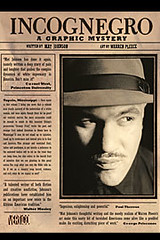
Incognegro
Researching an historical novel can take you many different places. Looking to expand my understanding of my young, light-skinned African American character, I searched my local library for books on multi-racial issues. One of the books which popped up was Incognegro, a graphic novel written by Mat Johnson and illustrated by Warren Pleece (DC Comics, 2008).
I am new to this genre, and admittedly brought a dose of skepticism to the book. I wondered if it would really be anything more than a glorified comic book. My embarrassment aside, I can now unequivocally say that yes, this illustrated novel is far different than the Archie comic books of my elementary school years.
Johnson tells the story of a light-skinned Harlem journalist, Zane Pinchback, who reports on lynchings. Zane can easily “pass” and publishes under his pseudonym, Incognegro . But he longs to “come out” and be a part of the Harlem Renaissance. Before he has a chance to do that, his boss asks him to investigate the arrest of a black man in Tupelo, Mississippi, accused of murdering a white woman. The black man is his dark-skinned brother Alonzo, and Zane has no choice but to go undercover again.
The short novel portrays the dangers he and his light-skinned friend Carl experience as they fool the “crackers” they meet in Mississippi. There are multiple twists and turns in this short 134-page book which surprise and confront the reader. Through realistic dialogue and vivid pictures, the time period is explicitly portrayed--including sub-plots depicting rural southern white prejudice.
Since Johnson did not hold back on time and race appropriate language or on his portrayal of violence and sexual liaisons, I would recommend this book for mature teens. My main issue with the book is that I found transitions between events difficult to follow; I had to reread sections to totally understand what was happening.
Incognegro’s portrayal of historical events will be an asset in the social studies and American history classrooms.
Technorati Tags:
ncognegro, Harlem Renaissance, graphic novels, Mat Johnson, Warren Pleece, teaching history through literature, lynchings
Add to: | Technorati | Digg | del.icio.us | Yahoo | BlinkList | Spurl | reddit | Furl |
Friday, December 5, 2008
After the Wreck, I Picked Myself Up, Spread My Wings, and Flew Away
If you have ever known a teenager who sullenly withdraws into herself, begins doing poorly at school, denies cutting classes, drinks, lies, steals, and "accidentally" OD's on Christmas Eve—then you might recognize Jennifer Abbot, the 15-year-old protagonist in Joyce Carol Oates' young adult novel, After the Wreck, I Picked Myself Up, Spread My Wings, and Flew Away.
After Jenna's mother is killed in a freak car accident in which Jenna is severely injured, she is left feeling guilty (the accident must have been her fault) and angry (rehab is painful, her house is sold to pay for the medical bills, her teachers and friends feels sorry for her) and powerless (she has to move to New Hampshire to live with her aunt- there is nowhere else for her to go). Her father, who abandoned the family years earlier for a new wife and family, is of no help and Jenna's bitterness towards him fuels the flame of her anger and despair.
In her loneliness, Jenna finds acceptance from 'Trina, a bulimic teen who befriends Jenna, but also uses her. A dramatic scene at a party gone bad shows Jenna the direction in which she is heading. Although the reader only sees him briefly, Jenna's one true friend is a young man nicknamed "Crow" who speaks words of truth that resonate in Jenna's heart. His own traumatic experiences (including his brother's death, living with a father who is an injured Vietnam vet, and his own accidents) enable him to come alongside of her and provides the exact help that she needs—a firm hand that pulls her out of her fears and self-incrimination and pushes her to move on with her life.
Oates use of symbolism is powerful. When you read this book, be aware of how birds and bridges are important in the story. I would recommend this to older teens (there are some sexual references in the book, although nothing explicit) and adults. Parents who are struggling to understand their own teen or the effects of peer pressure might better appreciate the iceberg underneath the surface of a teen's "whatever" façade after reading this book. (Harper Tempest, 2006. Recorded Books)
Joyce Carol Oates, After the Wreck, I picked myself up, spread my wings, and flew away, Vietnam Veteran, young adult book, contemporary fiction
Add to: | Technorati | Digg | del.icio.us | Yahoo | BlinkList | Spurl | reddit | Furl |
Friday, February 29, 2008
A Small White Scar
If boys can keep reading beyond the first few chapters which tell the back story of "A Small White Scar", they will find rattlesnake bites, a dangerous flash flood, and a rodeo that is so real you can hear the calves bawling in their pens. Boys who like action from the first paragraph will have to wait for the story to unfold. But, it’s worth it. Readers will identify with Will, the 15-year-old protagonist who itches to carve a life out for himself separate from Denny, his mentally retarded twin brother. Both characters are well developed; Will’s anger is consistent with his life experiences and Denny’s thoughtful yet child-like responses are consistent with a person who has Down Syndrome.
My favorite line is towards the end of the book when their father reveals that although Will sees himself as Denny’s surrogate parent, Denny is the one who has taught Will about self-sacrifice, responsibility, and love. K.A.Nuzum
uses beautiful figurative language to describe Colorado in the 1940’s; teachers could use this book as a mentor text and ask students to find the similes and metaphors, as well as to identify the various types of conflicts which confront Will and Denny. Recommended for boys and girls from 6th grade and upwards. (Harper Collins, 2006).Technorati Tags:
books for boys, young adult literature, colorado, historical fiction, mentor texts, record books
Add to: | Technorati | Digg | del.icio.us | Yahoo | BlinkList | Spurl | reddit | Furl |
Tuesday, January 22, 2008
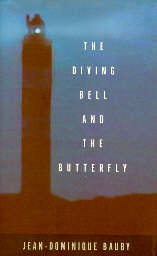
The Diving Bell and the Butterfly
Poignant and powerful, Jean-Dominique Bauby's memoir of the last months of his life make The Diving Bell and The Butterfly a recommended read for mature young adults. In his mid-40's, Bauby suffered a severe stroke to his brain stem leaving him a paraplegic able only to communicate his thoughts, fantasies, desires, or memories by blinking his left eyelid. Written by this former editor of Elle, Bauby's book is a testimony to the power of the written word. In 130 short pages, the reader is invited into a world that we would choose not to experience: a world defined by a respirator (the diving bell), a wheel chair, and helplessness. But from within this powerless condition, Bauby records fond memories of his children, his loves, and even his favorite foods.
Bauby spent a summer working with a young woman who painstakingly read his eyelid blinks by going through the frequency order of the French alphabet. At the end of the summer he dictated the following closing paragraph: "Does the cosmos contain keys for opening up my diving bell? A subway line with no terminus? A currency strong enough to buy my freedom back? We must keep looking. I'll be off now."
He died two days after the French publication of this book.
(Alfred A. Knopf, 1997)
Technorati Tags:
young adult book
Add to: | Technorati | Digg | del.icio.us | Yahoo | BlinkList | Spurl | reddit | Furl |
Monday, December 24, 2007
Snow Flower and the Secret Fan
I love it when my 16-year-old daughter Lydia, recommends a book to me. As she predicted, Snow Flower and the Secret Fan by Lisa See (Random House Inc., 2005) is a compelling, and at times disturbing, story about Chinese women in the 19th century. Unlike other popular young adult novels, this book is written as a personal narrative as the main character, Lily, tells her story directly to the reader. In this way the reader accompanies Lily on her journey as she is paired to another seven-year-old girl who becomes her laotong, her soul mate; undergoes the painful rite of footbinding; learns nushu the secret written language of women; is betrothed, married, and raises children---all within the strict rules of Chinese society.
In the course of the book, the reader learns about the shame, fears, superstitions, and traditions that ruled Chinese families as tightly as a seven-year-olds' bound foot. But it is also a book about love, asking the reader: what is true, unconditional love between friends that accepts without question a beloved's barbs and attacks? At the end, Lily confesses that her pride prevented her from loving rightly and gives the reader much to think about.
Technorati Tags:
books for girls, young adult books
Add to: | Technorati | Digg | del.icio.us | Yahoo | BlinkList | Spurl | reddit | Furl |
Friday, November 23, 2007
Eggs
What happens when a 13-year-old girl who invents a non-existent father and lives with a palm-reading wacky mother befriends a 9-year-old boy who is mourning his mother's death? You end up with a sometimes explosive, rocky friendship that bonds two lonely children together in their need for love and acceptance. In this another "I-read-this-because-I love-the-author" book, Jerry Spinnelli's new book, Eggs, will not disappoint readers from 4th grade through middle school. Teachers can use Eggs to begin a discussion of how these young characters say "I hate you" to one another, but just like people in real life, their actions really say, "I want to be your friend." I am impressed with Spinnelli's consistent ability to paint a visual image and show characters through their dialogue and actions. I regularly use Misha from Milkweed in seminars where I show teachers how an author "shows" rather than "tells about" a character—another way in which teachers can also use this book. I may just have to add Primrose, a main character in Eggs, to my teaching repertoire. (Little, Brown, and Young Readers, 2007)
Thursday, October 4, 2007
Keturah and Lord Death
Can someone love death? This is one of my questions as I listened to this skillfully-written medieval fantasy.
Within a picture frame of the quintessential struggle of a young woman searching for her "true love" and the universal conflict of good vs. evil (or in this case, love vs. death), author Martine Leavitt has created a story that is worthy of Scheherezade. Like Crispin: At the Edge of the World, this book also demonstrates how superstitions governed life in the Middle Ages. But Leavitt has successfully woven humor into this book so the reader laughs when Keturah realizes that after all, she really doesn't need a charmed eye rolling around in her apron pocket to show who she truly loves.
Leavitt's use of personification in the person of Lord Death is outstanding, and I loved her use of the "story within a story" theme. Language arts students can learn a lot by looking at these literary elements as well as characterization, setting, and plot. Although the book starts out with Keturah promising her male listeners a story that is full of death and adventure, I think that adolescent girls will gravitate to this book more than boys.
Can someone love death? Leavitt makes an interesting argument for it. Keturah and Lord Death could lead to some interesting theological debates as well as discussions about love and self-sacrifice. (Front Street Books, 2006)
Sunday, September 23, 2007
Evidence Not Seen
This remarkable first person account of Darlene's Diebler's life as a missionary to New Guinea and then the four years she spent as a Japanese POW is a worthwhile read for young adults and adults. I moved from skepticism (no one can really have faith like that) to being deeply moved by her profound trust in the Lord Jesus Christ. I highly recommend Evidence Not Seen for mature readers; parts are explicit and parents need to discern when it is appropriate for their children to read this graphic portrayal of the effects of sin. At the same time, Diebler's remarkable ability to forgive and pray for her enemies is a challenge all Christians.
Monday, August 6, 2007
Reaching for Sun
I recommended this book to a friend who is writing a story through poetry and she recommended it back to me; now I'll recommend it to all of you. This is Tracie Vaughn Zimmer's second book of poetry (Sketches from a Spy Tree is for a younger audience) and both show a great grasp of language through terrific imagery and word choice. I can't help it. I'm a sucker for word pictures and this book is full of them! Savor this segment from the final poem, "reaching:"
"Even after summer
packs her bags,
the garden blooms:
holly drips berries
for the birds;
the river birch
peels back
to show its pale heart."
Although this is a story of a young teen coming to grips with cerebral palsy, Zimmer doesn't hit the reader over the head with that theme. Instead, the main character grapples with all of the normal angst which middle school students face: acceptance (or the lack thereof) from peers, gaining and then feeling like she has lost a new best friend, disappointment in a mother who doesn't seem to understand her, and fear over losing her beloved grandmother, to name a few. I highly recommend this book for readers in 5-7th grade.
Saturday, August 4, 2007
Harlem Summer
Since I'm in the middle of working the kinks out of writing a juvenile historical fiction novel, I'm impressed with Walter Dean Myers' ability to convey a sense of history and place, through a believable character living in Harlem in 1925. Both boys and girls will enjoy reading about the "life of crime" that Mark Purvis inadvertently slips into—and will cheer along with him when he finds his way out. I would recommend this Newberry Honor Winner for students in grades 5-8. Check out this interview with him for background information on where he gets ideas for his stories, his feelings about poetry, his relationship to his family, and more. (Scholastic, 2007)
P.S. The back of the book includes a pictorial directory to the "real" people and places in Harlem Summer. This is an added bonus for kids (like mine) who always want to know what "really" happened.
Tuesday, July 24, 2007
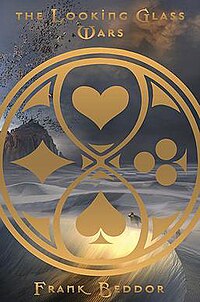
The Looking Glass Wars
If you're looking for an entertaining, incredibly clever, and thought provoking book for boys and girls from age 11 and up, then check out The Looking Glass Wars by Frank Beddor (Dial Books, 2006). Falling into the category of "Why couldn't I have thought of that?" Beddor's book is built on the premise that Alice Liddell "fell" into this world from her world of Wonderland. Alyss's world (her "real" name) is full of castle intrigue, power politics, cards that are soldiers with amazingly effective weapons (I was partial to the AD52 that carried quite a punch), battles between good and evil, and even a hint of romance (but not so much that boys will gag!). Adult and young adult readers will enjoy the wordplay which Beddor threads throughout the book: both card and chess metaphors are seamlessly interwoven into the plot. The author does such a good job of creating this fantasy world, that by the end you will wonder which world is truly real. And in fact, the chronology at the end of the book comes as a surprise. There are so many more layers built into this book then I first realized, that readers may have to start all over again. Fortunately, this is the first book in a trilogy and I am hooked. I can't wait to get my hands unto Seeing Redd which is due out in August, 2007.
Monday, July 9, 2007
Blood Red Horse
I haven't been deliberately picking out books with colors in the title, but I'm always excited when my local library adds new YA books on CD's to their collection. I picked up Blood Red Horse by K.M. Grant and was not disappointed to listen to a book that would appeal to both boys and girls. (The SCBWI-Carolinas listserve has been having a lively discussion on what types of books appeal to boys and whether we as writers write to their interests, or write what we feel passionately about. Interesting dilemma for writers!)
This first book in the de Granville Trilogy recounts (in vivid, gory detail- thus the boy interest!) is written from the perspective of two young men during the 12th century Crusade. One, a Christian knight, the other a Muslim emir. Through the events which are shown in remarkable, historic detail, they both end up loving the same "blood red horse." The valued animal ends up being a catalyst for partial reconciliation between the two enemies. The author not only portrays the conflicts and experiences of both young men, but it is also an eye-opening account of the Crusades. I highly recommend it for readers in middle school and high school. Younger mature readers might also appreciate it, although given the nature of the subject, there is quite a bit of violence.
Sunday, July 1, 2007
Blue
Thursday, June 14, 2007
Some Recent Reads
I recently finished listening to Rash by Peter Hautman. Although the language might offend some readers, the plot, story, and writing are excellent. Fast forward the calendar about 70 years and you'll see Hautman's view of the future. In this way, Rash provides a clever commentary on our present society which is preoccupied with health and safety. In addition, the manner in which Bo Marsten, the main character, handles conflicts with his family, peers, school, and government are true to life and lead to a satisfying resolution. I believe this book will appeal to boys and girls from ages to 11-15.
Copper Sun by Sharon Draper was the winner of the Coretta Scott King Literary Award in 2007. It is told from the perspectives of an African slave girl and an indentured girl whose lives intersect in a South Carolina rice plantation in the early 1700's. Although I found some of the story predictable, the vivid horrors of slavery and the cruelty of slave owners definitely made this book a worthwhile read. In addition, the girls' journey south to Florida and to Fort Mose was a departure from the stories of slaves escaping to the north. The girls' emotions, interactions, and the development of their friendship are portrayed well. There are several references to sexuality as the main character is bought as a 16th birthday present for the masters' son, so parents should use discernment in recommending this book for younger readers.
THE NIGHT WAR: A MG Historical Novel Review
By now you should have received an email from my new website about my review of THE NIGHT WAR by Kimberly Brubaker Bradley. (It'll com...
-
Congratulations to Janet Davis-Castro who won HER FEARLESS RUN on last week's blog. No giveaway this week, but I hope you...
-
This is a busy week on my blog. TWO giveaways running concurrently! WARNING : Reading this book will make you stay up late and the chara...