Showing posts with label Linda Phillips. Show all posts

Friday, March 29, 2024

YOU CAN SEE IT HERE FIRST -- A COVER REVEAL of the RE-RELEASE OF CRAZY by Linda Phillips

 It is always an honor for me when an author allows me the privilege of sharing the cover of their book with the world. This time, I'm giving you a first peek at my friend Linda Phillips' new cover for the re-release of her YA novel, CRAZY


Isn't it stunning?

It's hard to believe that this poignant novel about mental health, family relationships, and art has been out for ten years.  Here is the review that I posted in June 2014. 

Recently I chatted with Linda on why Eerdmans decided to re-release CRAZY and her hopes for the book.


GIVEAWAY & PREORDERS

CRAZY won't be coming out until July but I'm starting the giveaway today. Linda will send a copy of her book to one fortunate reader when it comes out. Leave me a comment by March 27 and I'll enter your name. If you are new to my blog, please leave your email address; U.S. address only. Teachers, librarians, and home educators get two chances. 

If you want to make sure you get your own copy of this gut-wrenching peek into what life is like living with a bipolar parent, you can preorder CRAZY here:


Friday, June 2, 2023

BEHIND THESE HANDS: A Review and Giveaway

I am blessed with amazing writer friends whose stories inspire my writing. This week I am pleased to share BEHIND THESE HANDS by my writing buddy, Linda Phillips. Some of you may remember the cover reveal and when I blogged about Linda's unique path to publication for this book, which is her second novel in verse. Now you can glimpse inside this beautifully written upper-middle grade/young adult novel. 

But first, an update from Linda:

"Since the publication of BEHIND THESE HANDS in 2018, I have had the opportunity to share the keynote address at the National BDSRA (Batton Disease Support and Research Association) along with Laura King Edwards, whose younger sister, Taylor, partly inspired this story. Sadly, both Taylor and the other inspiring student whom I taught, Brandon Hawkins, have succumbed to this dreadful disease. Their legacy lives on through the work of the foundation, Taylor's Tale, and other foundations supported by BDSRA. Many thanks to my publisher, Light Messages, for keeping the fire going through this opportunity for my ebook to be selected as a Kindle Monthly deal through the month of June.  I hope you enjoy the read, and I always love hearing your feedback:  https://www.lindavigenphillips.com/contact/"


REVIEW

Fourteen-year-old music prodigy, Claire Fairchild, is headed toward a music competition. Her only worry is if she takes first place over her best friend Juan--who is actually proving to be more than "just a friend." The book opens with Claire's piano practice interrupted by her younger brother Davy who is visually impaired and recently diagnosed with a learning disorder. He smiles a lot and Claire thinks, 
It bothers me that he smiles so much, 
maybe because it doesn't seem normal; 
maybe because I know for sure  
if I were in his shoes 
my smile would be the first to go.  (p.6)

This is her first attempt to write down the music she has composed for the competition:
"The Kite" takes off 
in the dead silent stillness 
of this tiny room 
as if the breezes were driving  
through these walls, 
and I chase it with the melody 
that has gelled in my brain 
these weeks of practice, 
experimentation, 
frustration, 
doubts, 


and now 


certainty 
and  
exhilaration. 


I slide on the bench  
to the little table, 
and begin the task of setting down the notes 
that are strung across my brain, 
ready to pluck down 
like washing on a clothesline. (p. 15)
Into the middle of her preparation she is constantly interrupted by her parents' worries about Davy, his medical tests, her need to watch both brothers while her parents work, and her own self-doubts, comes devastating news: 
The suspense is over. 
Our house feels like 
those pictures you see 
after a tornado levels        
              everything 
but the victims are alive, 
shuffling around the debris 
in a daze. 
It's called Batten disease. 
.....
and  
it's going to get worse.  (pp. 31-32)


In heart-wrenching verse Linda leaves nothing to the imagination as Claire and her family reel from the news that truly does get worse: Davy will die from the disease, Claire is unable to concentrate on practice, she wants to give up music altogether because it feels meaningless, she is pummeled with guilt, her father won't talk about the diagnosis within the family, everyone acts like their family is normal when it is anything but, her mother is coming unraveled from lack of sleep and worry, and a cooling off with Juan that she can't explain--these are all more than Claire can bear.
Batten has rearranged our family 
like pieces of familiar furniture 
placed awkwardly in a new setting. (p.72)

When genetic testing reveals that her other brother, Trent, also has Batten, Claire finds out devastating news about herself:

What does that mean          
what she just said?                        
                      Carrier? 
What does that mean? 

I put my head in my hands 
seriously feeling faint now, 
nauseous, 
miles away as if I had just stepped          
                    out
of my own body. (pp 96-97)
Into the middle of this devastation steps Claire's best friend, Mia, who drags her along on a journalism assignment. Together, they befriend  Mrs. Shepherd, an elderly woman who shares her past sorrows as well as her wish that she had celebrated life more. This, along with attending the Batten Disease conference with her father, gives Claire the tools and drive to regain purpose and a plan to combat "the beast." 

I know I'll find a way to help my brothers. 
I know that wasting my time feeling sorry for myself                 
                       needs to be a feather      
                       not a rock.
I know that celebrating life needs to be a rock      
                       not a feather.
I know it might not be a bad day after all      
                       if I keep this up. (p.199)

BEHIND THESE HANDS doesn't cut corners or pretend something is pretty when it isn't. Batten Disease cuts short the life of young people and leaves families devastated by pain and loss. But it is the story of a brave young woman who faces it head-on and learns to celebrate the life of her two young brothers. In the end, she, Juan, and Mia meet with her parents to plan a fundraiser for Batten research. Other friends come to the house singing one of Mrs. Shepherd's favorite songs, "This Land is Your Land."
We all join in. 
Out of the corner of my eye 
I see Davy and Trent sitting at the top 
of the stairs, 
smiling and clapping. 
Mom brings them down and we finish the song.


"Are we having a party?" 
Davy says.


"Yeah," Trent says, rubbing his eyes, 
"How come you didn't invite us?"


All eyes fall on me.  
"This is just a preview, guys, 
the first of many

          and you will be invited

       to every single one of them.

I promise." (p. 288-9)


***********

GIVEAWAY


This book belongs in the classroom and will help readers gain empathy for those facing severe medical difficulties.  As Linda demonstrates in two scenes where bullies tease her brothers; it is often easy to pick on those who are weak. If you are a librarian or teacher let me know in the comments; I'll put your name in twice. I will pick a winner on June 7 and Linda will autograph a copy of the book. Please, U.S. addresses only.  

Make sure you check out Greg Pattridge's wonderful ALWAYS IN THE MIDDLE blog with other middle grade recommendations.


Friday, January 27, 2023

On Submission


This post has been a long time coming. About 16 years long. There have been times when I thought I was ready to submit my middle-grade novel, HALF-TRUTHS. But now I KNOW it. 

IN THE BEGINNING

From the beginning, I imagined a story about a white girl and a light-skinned Black girl discovering that they were second cousins. That premise, which consistently elicits a "WOW!" response, has remained the same throughout my book journey.  

Having written dozens of articles and two nonfiction books, (Friendship Counseling, Teaching the Story: Fiction Writing in Grades 4-8)  I had confidence in my writing skills. But I knew nothing about writing fiction. It felt like jumping into deep water without knowing where I'd find the bottom. 


I wanted it to be a pre-civil rights story but Harold Underdown, my mentor at a Highlights Foundation workshop in 2009, informed me that was only the setting. For years I wrestled to answer the question he posed: What does your character want

EVERYONE HAS A STORY 

In the summer of 2007, I started thinking about my story and began interviewing "experts." My friend and mentor, Joyce Hostetter, encouraged me to research far and wide. What was happening in the world? In North Carolina? In Charlotte? She suggested that I find people who lived in the area and listen to their histories. Since I was just discovering my story, those initial interviews were broad. It's funny to reread them and see some of the questions I asked. 

Even though I often got off track and wanted to include every story I heard--I absorbed a time and place that was new to me. (In a future post I'll share some of the stories that I wanted to include but didn't.) 

I'm working on my 20+ page bibliography which includes 100 expert interviews. Some interview notes are less than a page. One of my experts is a man who graduated high school the same year my protagonist was in middle school. His notes are over 90 pages. Skimming through these interviews, I found details that made it into my story. I'd forgotten where and how I learned things such as what was served for lunch in the school cafeteria, the Black help's relationship with their employers, what it felt like to sit at the back of the bus, the used books and sports uniforms passed to the Black schools, the discussions about school integration, the peasant dresses worn to dances. You name it. It's one thing to read about these things in history books. It's another thing to have someone tell you how they felt as they experienced Jim Crow and/or chose not to become a debutante. 


Dorothy Counts, one of my experts, walking to Harding High School in 1957.
She was the first Black to attend the school.  
The photo originally appeared in The Charlotte Observer. 

People often wonder how I found these experts. I learned to ask everyone, "Who else should I talk to?". Tom Hanchett, Charlotte's local historian recommended several individuals. Others were patients of my dentist husband who were long-time Charlotteans. Others were parents of friends. These became my experts whose stories were woven together to create Half-Truths.

WHERE DID I FIND THIS STORY?

As the (working) title indicates, this book is about secrets and "white lies." Ben Franklin wrote in the Farmer's Almanac in 1758, "Half a truth is often a great lie." Over the years, I've thought about the secrets that people choose to conceal or at least, not talk about. I've often wondered what effect that has on the following generations.  As a Christian, I'm committed to telling the truth as commanded in the ninth commandment: "Thou shalt not bear false witness." As I wrote this novel, I had to think about my own "little" half-truths that I tell, and the reasons for them.

One elderly woman, a former debutante, suggested that I not pry into Charlotte in the 1950s and instead, write about my own life. (Who would want to read about growing up in South Jersey? Boring!) I was fascinated by my adopted new hometown and walked and biked around South Park and Myers Park thinking, "What is the story that could have happened here?" When I visited the former Rosenwald School in Grier Heights and saw the picture of a light-skinned Black principal, I found a key part of my story.

Billingsville School in Grier Heights. 
Now a community center. 

JOURNEY HIGHLIGHTS 

 INovember 2008, following Joyce's advice, I joined NaNoWriMo for the first time. I didn't feel ready, but it helped me create a first draft.

Pretty soon I realized that I didn't know what I didn't know. I attended workshops and webinars, conferences, and classes. I read books and blogs on plotting, conflict, and character; participated in several critique groups, and received critiques from industry professionals. Throughout this time, my best writing buddy, Linda Phillips, and Joyce encouraged me, asked me pointed questions, and provided feedback.


From the left: Joyce Hostetter, myself, and Linda Phillips
 at a writer's retreat in 2011.


But why did it take 16 years? First, I spent a long time trying to figure out where the story began. HALF-TRUTHS takes place in 1950, but at one point I started it with the protagonist's father in WWII. Not even close to the inciting event--which I didn't know a novel needed! 

Despite the fact that I wrote several outlines, I kept getting off track. Whenever I heard a feasible suggestion, "Someone should die," or, "Write it from the points of view of both girls," or, "Include romance," I spent time incorporating these ideas and going down rabbit holes of research. Combine that with going back and forth on whether or not this was a young adult or middle-grade book, I often strayed from my original vision: two girls--one white, one Black, discovering they are related. 

Enter Rebecca Petruck.  Rebecca critiqued several drafts and offered great insight into character arcs, plot points, and internalization. After I had spent a lot of time writing boyfriends for each main character (when I was thinking HALF-TRUTHS was a young adult book), Rebecca told it to me straight. I had lost the essence of the story--the girls' relationship.  


Rebecca helped me construct a plot chart in October 2013. 
I learned about Save the Cat! for the first time.

Since all of my readers were saying the book sounded more middle-grade, I ditched the boyfriends and the young adult genre. Along the way, I continued to interview folks and read and review middle-grade books. I particularly enjoyed Kathy Weichman's historical novels. Winner of the first Grateful American Book Prize, Kathy used to joke that she is the poster child for perseverance. I think I might be tying her for that distinction. 

Joyce Hostetter and I have swapped manuscripts over the years. Last February she suggested that I hire an editor to bring the book to the next level. I asked several trusted professionals in the Kidlit community for recommendations and found Deborah Halverson. She is a treasure.

In June 2022, I shared one page from Deborah's comprehensive editorial letter. For the next six months, I worked on incorporating her suggestions. I took out Kate's free verse poetry and changed it to journal-type entries in her steno pad. This fits Kate's goal of becoming a journalist. I worked on more youthful language, made Kate the instigator for the major change in her life, tightened the ending, and strengthened the City Girl vs. Country Girl motif as Rebecca had suggested years ago--but I'd forgotten!

In other words, I revised. A few weeks ago I was rewarded with these words from Deborah: 

In this revision, I feel you have accomplished your goals with this project, creating an entertaining, enlightening, compelling, and satisfying story for middle graders. I believe young readers will connect with Katie immediately and root for her throughout. Her growth is inspirational, showing the triumph of a flawed but earnest young person. 


Deborah's words gave me a boost of confidence that finally brought me to the...


of this stage. But it is also the beginning of an exciting time--being on submission!

WHAT'S NEXT?

For my friends and family who are reading this and aren't writers, you may be wondering what happens next. Remember those conferences and webinars I mentioned? At each one, I collected the names of agents and editors who expressed interest in the manuscript. Many said they didn't care how long it took. They just wanted to see it when it was the best I could make it. 

Now I take out that list, organize it through Query Tracker, and start sending out the manuscript.

If you are a writer, how did you feel when you began submitting your work? Please share your experiences in the comments. 

GIVEAWAY

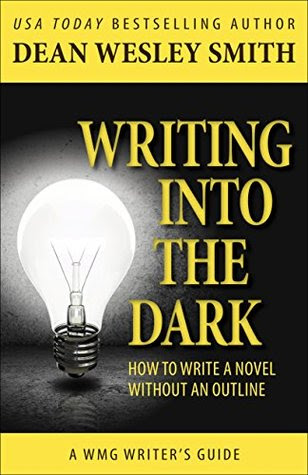
Obviously, I don't have a copy of Half-Truths to give away, but I'm cleaning off my bookshelves to make room for the books I'll need for my next project. Over the last 16 years, I learned that I'm definitely a plotter, rather than a panster. For those of you who abhor outlines, I'm giving away my (slightly marked-up) copy of WRITING INTO THE DARK. Leave me a comment with your email address by February 1 and it could be yours.


Congratulations to Emily Weitz who won MY SCHOOL IN THE RAIN FOREST.

Please take a minute to see views about other middle-grade books on Greg Pattridge's Always in the Middle blog.


Saturday, June 4, 2022

The Next Step: The Editorial Letter

A few weeks ago I posted my You're Almost in Labor! blog. I shared that the next step in my publishing journey was engaging Deborah Halverson to help get my "baby" ready to send to agents and/or publishers. 

As I waited for her feedback and editorial letter, I got nervous. What if she didn't like HALF-TRUTHS? Or worse, what if she liked the concept but suggested a major overhaul? I've been there a few times and didn't want to go back. 

When I told Deborah how I felt, she tried to reassure me. "Don’t feel worried. It’s a great story. My job is to help it to its best incarnation, so readers can get the most enjoyment from it. This is about moving it forward!"

My good friend Linda Phillips tried to reason with me. "You want Deborah to be tough; that’s what you paid her for, and it will only make it better.  And since this is a one-time deal, you want her to give you as many suggestions as possible and then you can spend the time making the corrections.

I knew Linda was right and I reread Deborah's email a few times. But still, "what if's" plagued me the whole night before I anticipated receiving Deborah's letter. I literally tossed and turned that night in bed.

But guess what? The next day, when I received Deborah's editorial letter, I teared up. Deborah not only deeply understood what I was trying to accomplish, but she also called my characters sweet and said it was easy to root for their dreams and for their friendship! 

As I read through her letter I knew that every single one of her points were what she had promised--editorial suggestions that would move Half-Truths forward. 


That night I couldn't sleep because I was so excited that her suggestions were ones I could implement!!

Some of you are readers and curious about the steps involved in writing and publishing a book. Others of you are also writers. For both groups of blog readers, I thought I'd share some of Deborah's points that resonated with me. 

First point:

  • This story is Katie’s first-person POV narration. The narrative sensibility absolutely feels like a thirteen-year-old. That is, her level of wisdom, her manner of viewing the world, the things she cares about, and the way she evaluates others’ needs and motives all feel right for someone her age. My concern is that sometimes the language and phrasing feel a bit too sophisticated, sounding “adulty.” 

I was happy to hear that the way Kate sees the world was consistent for a thirteen-year-old. But when I started looking through the manuscript, I was surprised at the many examples of "adulty" language that Deborah found! Descriptions like "grim eyes" or "his furrowed brow" or an action like, "I inhale a whiff of lavender" all take readers out of a young teen's POV. It'll be fun to track down these words and translate them into more teen-like vocabulary. 

Second point:

One of the things I'd included in the manuscript were Kate's poems. For me, they were exercises in getting more in touch with Kate's thoughts and emotions. They had been my side writing technique, as Mary Jane Nirdlinger wrote about in a recent Carolinas-SCBWI blog. But as Deborah observed, 

  • Katie doesn’t read poetry. She doesn’t talk about poetry. She doesn’t talk about the world like a poet, and doesn’t talk about becoming a professional poet. She talks about the world like a reporter, and wants to become a professional reporter. She reads newspapers. The books she does read are novels, not poetry collections. In my estimation, the poetry and journalism elements don’t sync. Simply put, I don’t see the point for the poetry.
When I wailed to Linda that I didn't know how I could take out my beloved poems, Linda (who IS a poet and wasn't impressed with my poems but was too nice to say that) excitedly pointed out ways in which those poems could be recycled as narrative or -- maybe even articles which Kate writes. Stay tuned. 

Third Point:

I was concerned I didn't have enough stakes in the story. In a stroke of genius, Deborah showed me how to empower Kate, give her more skin in the game, and solve a sub-plot point problem. Sorry, I don't have a quote to substantiate this third point. As they say, you'll have to read the book!

Deborah made several other observations which will strengthen the story. By the time you get to hold HALF-TRUTHS in your hand (as so many of you said you wanted to do-thank you!) those changes (and others) will be integrated into the final product. 

I appreciate sharing my story-behind-my story with all of you. As Elliot Kurta said after I sent him the editorial letter, "Writing a book is a complicated business!"

                                                    ****
Congratulations to Janet Sheets who won SOUNDS ALL AROUND. 

Wednesday, February 26, 2020

Rare Disease Day and SIX Giveaways!

Like me, you might never have heard of Rare Disease Day. The following three authors have intimate acquaintance with rare diseases. Giveaway details below.

Linda Phillips 

Linda Phillips Skyping with a class in International School of Nanshan Shenzhen, P.R. China (Hong Kong)
Linda is no stranger to my blog. Here is her story:

My involvement with rare disease began during my teaching career when I met two students at two different schools with Batten disease.  While I never taught either of them directly, the schools were small enough for faculty to know many students outside their classroom. I watched with concern as 8-year-old Brandon Hawkins' cognitive and motor skills began to decline instead of thrive as they typically might at a school designed to address learning differences. Concern heightened when his vision began to fail and after extensive testing, his parents shared the diagnosis none of us had heard before: Batten, a rare neurodegenerative disease that has no cure and is often fatal by the early twenties. Not far away at another specialized school, Taylor King, the same age as Brandon, was diagnosed by the same doctor with a form of the same disease.  Brandon moved out of the area, but the crowning blow came when we learned that his younger brother, Jeremy, received the same diagnosis, a phenomenon that's not uncommon when both parents are carrying the defective gene.  

My first book, Crazy, is an autobiographical account of my coming to terms with a mother with bipolar disorder. Watching the unfolding tragedies of the Hawkins brothers and Taylor evoked emotional issues similar to those I had experienced growing up with mental illness in my family. I wanted to explore how a gifted and highly motivated teen would deal with her brothers' physical debilitation and probable early death.  In both Crazy and Behind These Hands, the teen protagonist has no control over the devastation happening before her eyes.  She must find a way to accept a new reality and to react with compassion and love.  I didn't realize how closely related the two books are until I began making presentations through Skype in the Classroom.  My topic is "Compassion:  The Key to Understanding Mental and Physical Disabilities." I'm finding it extremely fulfilling to advocate for compassion towards those with mental illness and rare physical disabilities with teenage classrooms all around the world. 

You can find Linda online at: Skype in the Classroom:  https://education.skype.com/u/1216c5b4-63a7-4f75-6e57-08d777fe2482


Laura King Edwards

Laura and Taylor
I featured Laura and her book on my blog also. Here is more of her story:

Each year on the last day of February, Rare Disease Day raises awareness of rare diseases and their impact on 400 million people worldwide. It's a day to celebrate not only progress toward treatments and improved quality of life, but also what's special about each of those patients and the people who love them. People battle rare diseases year-round (and not just on a single day set aside to recognize them).  

I lost my little sister to a rare disease called Batten disease in 2018, so Rare Disease Day hits especially close to home. Since the devastating and shocking diagnosis in 2006, I've worked hard to save first her life and, later, the lives of other children like her. Taylor had a special kind of courage. She inspired everyone who knew her (and many strangers) in her too-short 20 years on Earth. Watching her overcome incredible obstacles to learn braille, run 5Ks and more pushed me to be the best version of myself, and it pushed me to fight for change. In 2013, I ran a half marathon blindfolded to bring attention to the cause. The race achieved that goal but also saved my life at a time when I wasn't sure I had the will to keep going. 

Run to the Light is the story behind the race, but more than that, it's about how to find hope and meaning in the face of life's biggest challenges. It's Taylor's story, but it's also a universal tale of courage and faith. My sister showed others how to dig deep and persevere, no matter what they were facing. On Rare Disease Day and every day, I hope Run to the Light does the same.  For more information please go to Taylors Tale

You can connect with Laura on Twitter.com/lkedwards11instagram.com/laurakingedwards, or Facebook.com/laurakingedwards.


Kathleen Burkinshaw


You may have already met Kathleen on my blog. Here is her story:

Nineteen years ago, instead of enjoying a candlelit dinner with my husband to celebrate Valentine’s day we sat in a dimly lit room by the low lights of an ultrasound in the ER. The ultrasound revealed that I had a deep vein thrombosis (DVT). What started out as a routine three- day hospital stay to treat the blood clot turned into over a month in the hospital from complications that nearly killed me. My souvenir from my stay- a diagnosis of ReflexSympathetic Dystrophy (RSD) (also known as Complex Regional Pain Syndrome (CRPS)) as a result of nerve damage from the blood clots. Definitely would’ve preferred one of those ‘All I got was just the lousy t-shirt souvenir’ instead! ðŸ˜Š
RSD is a chronic, progressive pain syndrome caused by damage/malfunction of the peripheral/ sympathetic nervous system as well as the immune system. (Which is why doctors have said that my mother's exposure to radiation from the atomic bomb on August 6th has played a role in my RSD). Over the years RSD pain crept in taking over my legs and hands. Although, it has taken a lot from me, I’m not ready to give up everything. It did give me time with my mom when she opened up and shared the horrific memories and awful loss she dealt with on August 6th. And I learned that even though I couldn't be the active mom to my 4-year-old daughter(at the time) as I had been or continue in my past career as an executive in the health care field; I found my own ways to be a dedicated/involved mom and realized my brain could still work/be creative through writing. I'm so grateful for the support and love from my family, friends, doctors, and now readers of The Last Cherry Blossom. Their past and continued encouragement, along with my faith keeps me from giving up emotionally or physically.

Connect with Kathleen on Twitter @klburkinshaw1,  Instagram @kathleenburkinshaw,  Facebook @authorkathleenburkinshaw, and her  website www.kathleenburkinshaw.com

GIVEAWAYS


Each author is giving away TWO copies of her book. To enter this super-giveaway, please comment with your email address including your email address if you are new to my blog. Books will be drawn randomly and will be personally autographed to the winners by the author. Enter soon! Giveaway ends on February 29.  

Monday, April 22, 2019

Literacy Around the World -- Featuring Guest blogger, LInda Phillips


Congratulations to Dorothy Price for winning Mine. Yours. on my blog last week. 

********
Today, I welcome my close friend and writing buddy, Linda Phillips. Many of you know her through SCBWI-Carolinas but others of you have read about her on my blog. Either way, I expect you will enjoy this post about facilitating literacy around the world. Take it away, Linda!


In the past four months, I have traveled 32,365 miles, spanning three continents, four countries, and eleven classrooms.  It cost me zero dollars and only on a few occasions did I incur the slight inconvenience of a predawn or late night "flight." I never had to stand in a line or pass through security, and most of the time, the "connections" were smooth.  Oh, and I had the pleasure of bringing my two books, Crazy and Behind These Hands, into classrooms and talking about them at every stop.  In fact, the books were my ticket, and that's what I'm excited to tell you about.

Two years ago, I signed on to participate in World Read Aloud Day in February, but through my own cyber-ineptness, I dropped the ball and promptly forgot about it.  Last year when I received an email again reminding me about WRAD and Literacy Month, I paid attention and grew excited as I learned:

World Read Aloud Day is just one piece of Literacy Month (February) which is part of Skype in the Classroom, a Microsoft in Education program.

Authors can become a guest speaker by completing a profile. This enables teachers from around the world to invite them to Skype with their students or faculty.  For more information see https://education.microsoft.com/applygs.

Authors can set their own schedule of availability here:  https://education.microsoft.com/availability.

Skype in the Classroom team members will help authors create a Skype Lesson if they send a request to  support@skypeintheclassroom.com.

For a sample lesson, visit my page https://education.microsoft.com/LindaPhillips.

By the time I finally connected to this fascinating opportunity through Microsoft in Education, I had missed an offer for free training sessions in January. I muddled through the registration process on my own. After nearly two years, I finally put the whole picture together and had my first Skype in the Classroom experience in Dubai on January 31, 2019.  

I have travelled abroad extensively, but nothing matches this virtual trip to places such as Bahrain, New Delhi, Ontario, Alberta, Albania, as well as stops across America. Each visit has been unique. While I have sometimes encountered poor Skype connectivity and limited English, I most often experienced appreciation that I bothered to "drop in" from so far away. 

One visit to a small, under-developed corner of eastern Europe touched me the most. It was by far the least prosperous looking school that I visited, so much so that I interrupted my spiel to begin asking the teacher questions.  Did they have pleasure books to read?  Was there a library? Were the books she was trying to use to teach English age-appropriate and adequate?  She answered "no" to every question.  I told her I was going to see what I could do about getting some books to her. After we disconnected, the stark image of the tiny, cramped room with a rusty-looking pipe in the corner--most likely the heating system--brought tears to my eyes. 

Here's the serendipitous part. I have a friend who is a missionary in a larger town a couple hours' drive from that tiny school. When I described my Skype visit to him, he put me in touch with another missionary in that same village.  And when I contacted her, she told me she had been this teacher's walking partner for four years! Through further conversations with both missionaries, I learned that the concept of lending libraries doesn't exist in this corner of the world. In addition, the tightly controlled corrupt politics almost guarantees that a box of books would likely be held up for payment in the hundreds of dollars at the post office. 

The idea of a country where children have no access to books is driving me crazy, and I'm not going to let a little political corruption stop me. When I learned that the missionaries will both be in the United States this summer, we came up with a viable plan to load a couple of old suitcases for them to return with.  Now I'm determined to fill those suitcases, and that's where you come in.  If you have new or gently used books, preferably picture and chapbooks, that you would like to donate, please email me and I will figure out a way to obtain them.

Linda is packing her first suitcase!

Obviously, my world-wide journey through Skype in the Classroom has made a difference in my life as a writer, but more importantly, as a citizen of the global community. No one can argue the merits of getting your books around the globe at no cost without leaving your house.  And if you aren't a writer but love books, you already know the joy of sharing them with others.    

Linda Vigen Phillips has a passion for realistic fiction that offers hope and encouragement to young adults and families facing mental or physical health crises.  Her debut book, Crazy, depicts the struggles of a teenage girl in the 1960’s coming to terms with her mother’s bipolar disorder. Like Crazy, Behind These Hands is a Young Adult verse novel. In its starred review Kirkus said, “Free verse evokes the myriad emotions brought up by the story's numerous well-balanced themes. The result is a richly woven, unforgettable symphony of feelings and words.”    

THE NIGHT WAR: A MG Historical Novel Review

  By now you should have received an email from my new website about my review of THE NIGHT WAR by Kimberly Brubaker Bradley. (It'll com...