Showing posts with label young adult. Show all posts

Saturday, November 4, 2023

WHISPERING THROUGH WATER: Two Reviews of Rebecca Wheeler's Debut Young Adult Novel


In this blog post, I'm trying something new. Teen reviewer Mara Scudder and I both read Rebecca Wheeler's book, Whispering Through Water (Monarch Educational Services, 2023) and we each wanted to share our thoughts about it. Today you get a teen's and a senior's take on a book that is obviously for all ages!


MARA'S REVIEW


Whispering Through Water is a YA summer romance wrapped up in a mystery. The protagonist, Gwyneth Madison, is a high school senior with her eyes set on a college in the far-away city of Boston. Desperate to escape her monotonous small-town life, Gwyn would risk almost anything to get to art school. Her wealthy Aunt Delia, who once promised to pay for her college, is disappointed in her decision and determined to keep her from attending school out of state. When Gwyn finds a mysteriously personal letter addressed to her aunt, she decides to investigate.

The mystery sends her on a series of hunts as she digs through family secrets to discover what really motivates her seemingly pedantic and entitled aunt. Along the way, she meets and falls in love with Isaac, a college sophomore, and grows to understand that there is much more to her family history than she ever thought.

The character arcs throughout this work were well done. Few characters were two-dimensional or static, and many relationships changed and evolved over the course of the novel. These dynamics brought a deeper level of meaning to the themes drawn throughout the book and overall turned the book from a rather dull summer romance into an exploration of what makes a family and what it is worth.

The mystery was also well-written, with the leap from an average high school senior to a teenage detective an understandable one. None of her adventures seemed unattainable or particularly incredible, which made for a more realistic mystery. Her drive to get to the bottom of the family mystery was also understandable, and aside from the romance (which was rushed along a bit too quickly), the plot was well-paced. The character arcs, mystery, and plot were all very well done. Overall, it made for a pleasant read with tangible characters, strong values, and meaningful themes.
Illustration by Terri Moore


CAROL'S REVIEW  (Warning: Spoiler alerts)

As some of you know, Rebecca is my new partner for the Talking Story newsletter. We've gotten to know each other since working together. But as I was reading her manuscript, I kept texting her: "You're not going to believe the similarities between your book and Half-Truths!" In both our books older female foils hold the purse strings to the college education that the protagonists want. Each girl must tolerate tables with fine china, clothes that don't fit their style or taste, and a special luncheon. But most of all--there are family secrets that both teens decide must be brought to light--with serious consequences for the older women. Our stories are separated in time by about 40 years, but both our protagonists learn the difficulties involved in speaking the truth--especially with people they love. 

I particularly enjoyed how authentically vulnerable the characters were portrayed. They made mistakes and sought forgiveness. Even the sweet romance includes conflict as Gwyn and her boyfriend realize that relationships have ups and downs. 

Here are some of my favorite lines from the book:
When Gwyn first confides in Isaac about her struggles with her aunt, she says: 
"It's like in my mind, I feel as if I'm dreaming for her to understand what I want, what I need, but then when the words leave my mouth, I feel as if--"I paused to gather my thoughts--"as if I'm just whispering through water."  (p. 79)
In a very touching moment, Isaac's mother, Brenda, becomes Gwyn's confidant. After Gwyn shares what she has discovered, Brenda says,
"Even the deepest hidden secrets find their way to the surface." (p. 167)
In a soul-revealing conversation when they talk about the child Aunt Delia was forced to abandon, Aunt Delia says: 

"They told me I would forget about him. They promised I would...They were the ones who lied, Gwyn. Because I could never forget." (p. 180)

One of the first times I heard about objective correlatives was from Christine Kohler. I still have our email correspondence about it from seven years ago. When I read this last conversation with Aunt Delia, I thought about how Rebecca skillfully showed Gwyn's emotions. 

My gaze followed a ladybug as she pulled herself over the window ledge and disappeared. A sudden feeling of peace passed through me.
      "So, you're letting me go," I said softly.
      "Yes, dear. I'm letting you go."

Gorgeously written, this story will stay with you long after you've finished reading it.

GIVEAWAY

Please leave a comment by November 8 if you are interested in winning an EPUB of Whispering Through Water, courtesy of Monarch Educational Services. No limitations on who can win it! IN ADDITION: Rebecca is giving away an autographed copy of the paperback!

Please leave me your email address if you are new to my blog. If you are more comfortable, you can email me to enter. 


Saturday, August 5, 2023

TWO JAPANESE INTERNMENT GRAPHIC NOVEL REVIEWS

 In my search for graphic novels to help me understand the genre, I came across these two books in my local library. Although totally different from each other, they both share the common element of Japanese internment camps during WWII.

DISPLACEMENT by kiku hughes


The first page of this YA time travel novel provides a backstory to equip the reader for the coming story. Written in first person, the character Kiku, explains that it is 2016 and she's been trapped in the past for over a year.

She's in San Francisco with her mother who is searching for the house where her mother grew up in. They didn't find the house.


Instead, Kiku found displacement.


She is taken back to the 1940s to the Japanese internment camp to which her grandmother, Earnestina and her parents, were taken. The story interweaves Earnestina's story with fictional elements of Kiku's time travel.

Through expressive images and dialogue, the author shows Kiku's loneliness, confusion, helplessness, and gratitude when she makes a few friends. She overhears Earnestina speaking Japanese in the rooms next to hers, but can't understand the language. Her roommate, Aiko, doesn't encourage her to learn Japanese. Kiku thinks,

But seeing how she and other Nisei (second generation) shied away from the Issei's (first generation) outdated traditions made me understand a little more just why there was almost no connection to Japan left by the time I was born. (p. 96)

Life is physically and emotionally difficult in the camp and Kiku vacillates between waiting to return home and making the best of the situation. When a neighbor gives her a small carving with her name on it, she recognizes a similar item that her mother had that belonged to Earnestina. I felt an intense connection to my grandmother in that moment. We were linked through this community, and I held the proof in my hand." (p. 128)

She moves to the Topaz relocation center in Utah and hears that a friend's father was taken to an army camp. They fear that they might not hear from him because they took his books and maps which made the government suspicious. Being from the future meant very little when my education on the past was so limited. (p. 154)

The illustrations are drawn with clean lines and the character's emotions are clearly portrayed. A palette of aqua and brown provide a calming effect for the turbulent story that unfolds.

I thought that the author depicted the conflicts of this time and place extremely well. Although the time travel aspects and resolution to the story were also well constructed,  I didn't like that the protagonist fell in love with another girl. As a conservative Christian, that aspect of the book detracted from the book's overall appeal. After googling kiku hughes, I realized that the protagonist reflects the author's orientation. 

TAKE WHAT YOU CAN CARRY  by Kevin C. Pyle


Although this is also a graphic novel about the Japanese internment camps (with a surprisingly similar palette to Displacement), it is handled in a totally different manner. As you might assume from the cover, this is two stories in one book. The brown illustrations show the life of Mr. Himitsu as a young man in the Tanforan Assembly Center and then later in the internment camp in Manzanar, California in 1942. The blue illustrations depict six months in the life of Kyle, a young teen who recently moved into a Chicago suburb in 1978. Both stories progress through the book. Sometimes several pages are given to the Japanese internment camp, and sometimes several pages show Kyle choosing to go deeper and deeper into vandalism and shoplifting. 

At first, I didn't like that there was no dialogue in Mr. Himitsu's story, only illustrations. But the second time through I was able to "read" the illustrations better and saw how Kevin Pyle showed parallels between the two stories--thirty-five years apart. 
  • Each boy was in his own type of prison. 
  • Each boy faced teasing and ridicule.
  • Each boy faced unwelcome relocation.
  • Each boy experienced trauma that left them feeling powerless.
But, there are a lot of differences too.

In Mr. Himitsu's story, a mentor provides an opportunity for him to vent his anger--on a piece of wood. He carves and carves and by the time he leaves the camp, his suitcase is full of wooden birds. 

In Kyle's story, he has moved into a brand new neighborhood. He starts hanging out with some other boys they are a negative influence on each other. Kyle ends up destroying property and shoplifting--just for the thrill it gives him. The ending perfectly brings the two stories together.

Here are some pages that show you how the author juxtaposed the two stories.


I asked Kevin what his connection was to this story. Here is his answer:

"The most obvious is that I was caught for shoplifting when I was 11 or 12 and I worked for the storeowner as restitution. It really made me see the consequences of my actions. As an adult I did illustrations for the national law journal and once did one on alternatives to sentencing for youth and it made me think back on the experience. I realized I never knew if it was my father’s idea or the storeowner’s that I work off my debt and that sent my imagination rolling.

My other connection is that I had a painting teacher in college who was interned as a child. I wrote him while I was working on the book and he gave some good leads on research. He also read it before it was published and his comments were very inspiring and reassuring as to the accuracy. While the book was not intended as a straight history, I of course wanted to make sure it rang true."

Both authors drew from personal life events when writing and illustrating their graphic novels. As I plot Nightmare in Nuremberg, I'm aware that I'm doing the very same thing.

If you are interested, here is my review of Gaijin, another graphic novel about the Japanese internment camps. And my review of Red Berries, White Clouds, and Blue Sky. 

****

Congratulations to Sarah Johnson who won Southpaw Sully from last week's blog.

Don't forget to check out Greg Pattridge's MMGM blog with lots of other middle-grade book reviews!


Friday, June 2, 2023

BEHIND THESE HANDS: A Review and Giveaway

I am blessed with amazing writer friends whose stories inspire my writing. This week I am pleased to share BEHIND THESE HANDS by my writing buddy, Linda Phillips. Some of you may remember the cover reveal and when I blogged about Linda's unique path to publication for this book, which is her second novel in verse. Now you can glimpse inside this beautifully written upper-middle grade/young adult novel. 

But first, an update from Linda:

"Since the publication of BEHIND THESE HANDS in 2018, I have had the opportunity to share the keynote address at the National BDSRA (Batton Disease Support and Research Association) along with Laura King Edwards, whose younger sister, Taylor, partly inspired this story. Sadly, both Taylor and the other inspiring student whom I taught, Brandon Hawkins, have succumbed to this dreadful disease. Their legacy lives on through the work of the foundation, Taylor's Tale, and other foundations supported by BDSRA. Many thanks to my publisher, Light Messages, for keeping the fire going through this opportunity for my ebook to be selected as a Kindle Monthly deal through the month of June.  I hope you enjoy the read, and I always love hearing your feedback:  https://www.lindavigenphillips.com/contact/"


REVIEW

Fourteen-year-old music prodigy, Claire Fairchild, is headed toward a music competition. Her only worry is if she takes first place over her best friend Juan--who is actually proving to be more than "just a friend." The book opens with Claire's piano practice interrupted by her younger brother Davy who is visually impaired and recently diagnosed with a learning disorder. He smiles a lot and Claire thinks, 
It bothers me that he smiles so much, 
maybe because it doesn't seem normal; 
maybe because I know for sure  
if I were in his shoes 
my smile would be the first to go.  (p.6)

This is her first attempt to write down the music she has composed for the competition:
"The Kite" takes off 
in the dead silent stillness 
of this tiny room 
as if the breezes were driving  
through these walls, 
and I chase it with the melody 
that has gelled in my brain 
these weeks of practice, 
experimentation, 
frustration, 
doubts, 


and now 


certainty 
and  
exhilaration. 


I slide on the bench  
to the little table, 
and begin the task of setting down the notes 
that are strung across my brain, 
ready to pluck down 
like washing on a clothesline. (p. 15)
Into the middle of her preparation she is constantly interrupted by her parents' worries about Davy, his medical tests, her need to watch both brothers while her parents work, and her own self-doubts, comes devastating news: 
The suspense is over. 
Our house feels like 
those pictures you see 
after a tornado levels        
              everything 
but the victims are alive, 
shuffling around the debris 
in a daze. 
It's called Batten disease. 
.....
and  
it's going to get worse.  (pp. 31-32)


In heart-wrenching verse Linda leaves nothing to the imagination as Claire and her family reel from the news that truly does get worse: Davy will die from the disease, Claire is unable to concentrate on practice, she wants to give up music altogether because it feels meaningless, she is pummeled with guilt, her father won't talk about the diagnosis within the family, everyone acts like their family is normal when it is anything but, her mother is coming unraveled from lack of sleep and worry, and a cooling off with Juan that she can't explain--these are all more than Claire can bear.
Batten has rearranged our family 
like pieces of familiar furniture 
placed awkwardly in a new setting. (p.72)

When genetic testing reveals that her other brother, Trent, also has Batten, Claire finds out devastating news about herself:

What does that mean          
what she just said?                        
                      Carrier? 
What does that mean? 

I put my head in my hands 
seriously feeling faint now, 
nauseous, 
miles away as if I had just stepped          
                    out
of my own body. (pp 96-97)
Into the middle of this devastation steps Claire's best friend, Mia, who drags her along on a journalism assignment. Together, they befriend  Mrs. Shepherd, an elderly woman who shares her past sorrows as well as her wish that she had celebrated life more. This, along with attending the Batten Disease conference with her father, gives Claire the tools and drive to regain purpose and a plan to combat "the beast." 

I know I'll find a way to help my brothers. 
I know that wasting my time feeling sorry for myself                 
                       needs to be a feather      
                       not a rock.
I know that celebrating life needs to be a rock      
                       not a feather.
I know it might not be a bad day after all      
                       if I keep this up. (p.199)

BEHIND THESE HANDS doesn't cut corners or pretend something is pretty when it isn't. Batten Disease cuts short the life of young people and leaves families devastated by pain and loss. But it is the story of a brave young woman who faces it head-on and learns to celebrate the life of her two young brothers. In the end, she, Juan, and Mia meet with her parents to plan a fundraiser for Batten research. Other friends come to the house singing one of Mrs. Shepherd's favorite songs, "This Land is Your Land."
We all join in. 
Out of the corner of my eye 
I see Davy and Trent sitting at the top 
of the stairs, 
smiling and clapping. 
Mom brings them down and we finish the song.


"Are we having a party?" 
Davy says.


"Yeah," Trent says, rubbing his eyes, 
"How come you didn't invite us?"


All eyes fall on me.  
"This is just a preview, guys, 
the first of many

          and you will be invited

       to every single one of them.

I promise." (p. 288-9)


***********

GIVEAWAY


This book belongs in the classroom and will help readers gain empathy for those facing severe medical difficulties.  As Linda demonstrates in two scenes where bullies tease her brothers; it is often easy to pick on those who are weak. If you are a librarian or teacher let me know in the comments; I'll put your name in twice. I will pick a winner on June 7 and Linda will autograph a copy of the book. Please, U.S. addresses only.  

Make sure you check out Greg Pattridge's wonderful ALWAYS IN THE MIDDLE blog with other middle grade recommendations.


Wednesday, March 23, 2022

PICTURING A NATION: A Book Review by Guest Blogger, Elliott Kurta

     A front-seat view of America during the Great Depression, Picturing a Nation by Martin Sandler (Candlewick Press, 2021) presents over one hundred and thirty photographs that give life to our past in a way that appeals to anyone, age notwithstanding . Using photos taken by the Historical Records department of the Farm Security Association, this photographical memoir contains the greatest works of Jack Delano, Dorothea Lange, Marion Post Wolcott, Walker Evans, and many more.

            Divided by region, (Midwest, Northeast, South, and West) each of the four sections of Picturing a Nation focus on the people impacted by the Great Depression, not the economics or statistics. Subtitles and text enhance each page, with a caption and perhaps a relevant quote from the photographer besides the photographs. Additionally, a short history of the Farm Security Administration and the people behind it as well as a brief background on the Great Depression introduce the book. These first few pages bring meaning to each of these carefully curated photographs. The only shortcoming of this format is that page numbers have been excluded, making it difficult to revisit favorite photos.

            Each of the photos displayed seems to have at least one out of three purposes; to reveal the humanity of each of the victims of the Great Depression, to show the devastation delt by the Great Depression or finally, to reveal the disparity of the nation’s wealth throughout this challenging time. Below, you can see a photo that serves this last purpose.


 https://www.loc.gov/pictures/collection/fsa/item/2017754300/


Taken by Marion Post Wolcott, this photo was shot at a poolside in Miami, Florida, and illustrates that a small, privileged population of the nation was not aware of the suffering of their neighbors. Picturing a Nation’s candid approach to life during our worst economic depression makes the reality of this event even harsher.


https://www.loc.gov/pictures/item/2017762891/         

          On the other side of the spectrum is this Dorothea Lange photograph, Migrant Mother, which was originally taken for the Historical Section of the FSA and is now widely regarded as the face of the great depression. Migrant Mother represents with unflinching clarity what life was like for the fifteen percent of the U.S. unable to find jobs.

          Don’t open this book if you don’t want to learn about the past. Don’t open this book if you want a timeline or a list of people and places to memorize. Don’t open this book if you’re in a hurry. If you want to look into the eyes of migrants and orphans, aristocrats and struggling families, farmers and their fieldhands, and see their soul staring back… then turn the page.


GIVEAWAY (with a caveat)

Leave me a comment by March 30 if you are interested in entering this giveaway. The copy which Elliott read is an ARC and in black and white, and the binding isn't as secure as the final version of the book. As a result, the Introduction's pages are no longer attached to the binding. In addition, the first few pages are out of order and upside down. But, as Elliott said, this is a tremendous pictorial display that chronicles our nation during a difficult time. U.S. addresses only. 

Saturday, March 5, 2022

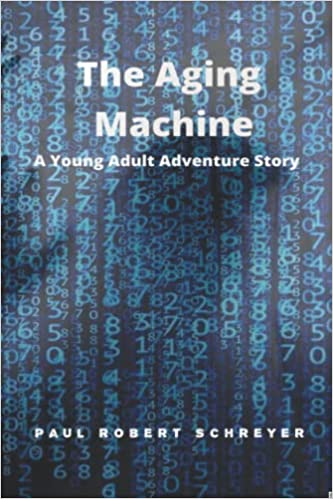
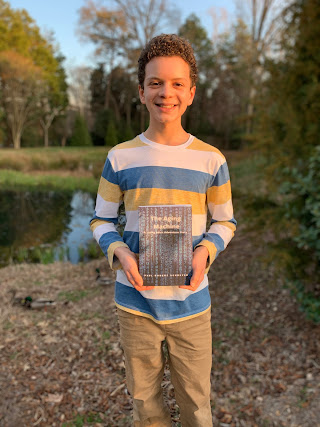
THE AGING MACHINE: A Young Adult Book Review by Guest Blogger, Elliott Kurta, and a Giveaway


 Paul Schreyer’s second young adult novel, The Aging Machine, is a science fiction novel exploring the use of the eponymous Aging Machine. Elmore Fishbein, a greedy inventor, has just invented a machine that uses artificial radiation, which mimics the wear and tear of daily life to age its victims. In exchange for fame and a large sum of money, Elmore has signed his project over to Governor Tom Willis, who has promised to use the dangerous device to fix the justice system.


The first subjects of the Aging Machine are unlikely and unwilling. John and Taylor are two orphaned fifteen-year-olds who are currently living in the Surrogate Care Facility, an industrialized orphanage. After John and Taylor are wrongfully convicted of murdering the superintendent of the facility, they are put into the aging machine and emerge as seventy-five-year-old men.  While they try to readjust to their new lives, young journalist Amy Wilson is uncovering the full story behind the machine. Meanwhile, Quincy Nash, a police officer with a savage streak, believes the boys-turned-men deserve to have their lives ended, not shortened, and is willing to do the job himself. Each of the four characters collide on the path to find a researcher whose name is suddenly on the tip of everyone’s tongues: Doctor Scott—a mysterious figure who is hiding a secret about the Aging Machine that could change the world.

            While the premise of this adventure story seems promising, the concept is ultimately undermined by sub-par writing. Most of the dialogue feels forced as contractions are rarely utilized. Conversations are hard to follow due to a lack of names and surplus of pronouns. Despite often unusually talkative characters, there’s a lack of meaningful or revealing dialogue.

Finally, Paul Schreyer’s tendency to avoid the use of adjectives leave most of his descriptions confusing. Additionally, his scenes are often repetitive and his characters illogical. Take for instance, young reporter Amy Wilson. In the below excerpt, found on page 178, she’s driving a car next to train tracks where Quincy Nash, John and Taylor are engaged in a fight to the death.

            “Amy regained control of the steering wheel after colliding with the train. She pounded the dashboard in frustration.

            Twice, she thought, I missed him (Quincy) twice.”

            By page 182, Amy’s made three passes at Quincy with her car and has given up. Her dubious ethics and even more questionable driving skills make an already prolonged scene even worse.

            It’s also worth mentioning that a chapter earlier, there’s a scene in which Amy hurls herself against a door with enough force to throw a man nearby to the ground. This is obviously impossible and another example of frequently illogical action sequences. The exact quote is below and can be found on page 166 of The Aging Machine.

            “He started to form the word fire when the door exploded inward, smashing into his back and knocking him off his feet. He flew through the air face-first…

            From the hallway, Amy Wilson had seen Quincy Nash… She knew she didn’t have much time. She backed up and ran full speed at the door, throwing her weight against it. She ricocheted off the door and landed in a crouch, fists tightly clenched and leveled in front of her…”

Ignoring the shallow characters and stiff interactions, this young adult adventure can be mildly entertaining. Governor Willis and Elmore Fishbein share the stage with John and Taylor, and the story switches between political tension and tense business meetings, to learning how to drive and juvenile antics. The idea of an ‘aging machine’ isn’t uncharted territory, but the way Paul Schreyer approaches this concept is. In order to read this book, the reader must puzzle out confusing scenes and muddle through bland descriptions. Still, The Aging Machine has its moments. The message behind the book, that youth is our most valuable resource—as well as the questions you’ll ask yourself after the last page—means that perhaps this novel deserves a chance to be read.


Elliott is a prolific reader of various genres 
who is more than happy to share his opinions on books.
 In his free time, he enjoys writing, reading, and running. 
He is an 8th grade homeschool student in Charlotte, NC. 


GIVEAWAY

To enter this giveaway, please leave a comment with your email address by March 10. U.S. postal addresses only. 

You'll find this review and other recommended books on Greg Pattridge's marvelous blog, Marvelous Middle Grade Monday!


Wednesday, April 21, 2021

LIST OF TEN: A YA Book Review and TWO Autographed Giveaways!

Congratulations to Connie Saunders who won THE LITTLE THIEVES audio book from last week's blog and to Rosi Hollinbeck who won DIVA DELORES AND THE OPERA HOUSE MOUSE. 

                                                                                ***** 

Tourette (too-RET) syndrome: a disorder that involves repetitive movements or unwanted sounds (tics) that can't be easily controlled. For instance, you might repeatedly blink your eyes, shrug your shoulders or blurt out unusual sounds or offensive words. 

(From: https://www.mayoclinic.org/diseases-conditions/tourette-syndrome/symptoms-causes/syc-20350465)

REVIEW

If you've never heard of Tourette syndrome and you're interested in reading a remarkable young adult book which conveys the physical, mental, and psychological pain associated with this disorder, the List of Ten by my friend Halli Gomez is a book for you.


For ten years, sixteen-year-old Troy Hayes has lived with the diagnosis that he shares with his estranged mother: Tourette syndrome. Troy not only suffers from uncontrollable muscle twitches that are accompanied by severe pain, he also has obsessive compulsive disorder. The two together make his academic and social life unbearable. Troy decides that the only way out of his pain is to kill himself.

By page two the reader knows it is only a matter of Troy getting through the other nine items on his "to do" list that he keeps on his phone, before he will take his own life which is #10 on his list. 

So, how did Halli Gomez write a 353-page book and keep the reader interested since the ending has already been revealed?

By raising the question--does he do it? And by hooking every reader into hoping and believing that he doesn't. 

By using deep point of view, Troy's conflicting thoughts and torturous emotions are shown on the first pages. Through his eyes we meet Khory Price, a girl imprisoned in her own life of pain. She is someone who is able to look beyond his compulsion to touch a dirty floor multiple times as he walks down the school hallway, a girl who finds him cute and smart, and a girl who he becomes afraid to hurt.

The novel is full of teenage angst as Troy moves from just being Khory's math tutor, to being a friend, to becoming her boyfriend. He finally wins her protective parents' trust only to blow it when he tries to drive and his erratic behavior on the road attracts police attention. He's busted for driving without a license and his friend is busted for having marijuana papers in the car. But Troy is no normal teenager. The shadow of his list of ten things to do before he kills himself pervades all of his thoughts and drives many of his choices.

Khory is a well-developed, authentic secondary character. She has struggles with her own parents, guilt over being a surviving twin, and gives Troy reasons to think about his purpose in life. 

Beyond amazing "showing not telling" what it feels like to be a person with Tourette, my other favorite parts of the book are when Troy begins wrestling with his decision to kill himself. When his science teacher tells him he has potential, when he is an inspiration to another family whose son has Tourette, when he realizes how Khory will feel when she realizes he lied to her--these were all very authentic and compelling conflicts. 

My least favorite part of the book was when Troy's father attempts to have a discussion about sex and ends the conversation by giving his son condoms. I know I'm in the minority,  but I don't believe literature for young adults should include frank permissiveness toward sex.

So, how does List of Ten end? I won't tell you! But, it is satisfying and it is hopeful. And that should be enough to make you want to read it!


ABOUT THE AUTHOR

As Halli explains in the author's note, when she was eight-years-old, she told her mother she wanted to die. That was when she learned that she had Tourette syndrome; medications and doctors visits became a normal part of her life. A #myownvoices book, Halli wanted others "who have neurological disorders, or who are contemplating suicide, know they are not alone." She has accomplished this in a BIG way. Teens with neurological problems will see themselves and those who don't have similar issues will grow in empathy for someone who faces these challenges. I applaud Halli's transparency in writing a book so close to her emotional home. 

For an in-depth author interview, please see The Winged Pen. In this other post, Halli and some other debut authors provide ideas on launching and marketing their books.

Here is a downloadable pdf of discussion questions and resources.

GIVEAWAY

I have two copies of List of Ten to give away and Halli has agreed to personally autograph each one! Please leave me a comment by April 23 with your email address if you are new to my blog. Share this on social media or decide to follow my blog and I'll give you an extra chance to win a copy--just tell me what you do. 

Wednesday, June 24, 2020

FREE LUNCH: An Audiobook Review


Congratulations to Connie Saunders for winning THROUGH THE WARDROBE from last week's blog. Here's a tip to win a book. Whenever Connie enters my giveaway, she ALWAYS shares it on social media. This earns her more chances to win a book--and it works!

"This book is for every kid. Whether they pay for their lunch or not."  FREE LUNCH by Rex Ogle. 


REVIEW


"Why can’t I get what I want at the grocery store?" Rex asks his mother. Unfortunately, he knows the answer.  It’s been like this all his life. He hates seeing all of the chips, candy, and ice cream that other kids eat that he doesn't; he hates watching his mother try to stretch every dollar and use food stamps; he hates his constantly empty stomach; he hates having cashiers looking at him like he might steal something because his clothes come from the thrift store. 

Told in first person POV, this nonfiction autobiography is Rex's own story growing up in a dysfunctional family. He's angry that his family--including Sam, his mother's stuttering live-in boyfriend; and Ford, his toddler half-brother that Rex takes care of--are all poor. 

And he hates the helplessness and fighting in their home that poverty creates. Rex wants to blame his mother for not working but he also realizes that without a job, "all of the love goes out of Mom." Over and over she tells him how hard it is for her to get a decent job and blames him for being ungrateful.

The ultimate humiliation is when Rex enters middle school and discovers that his mother registered him for the free lunch program. Every day he feels like a beggar while he waits for the lunch lady to check his name off the free lunch checklist.  


Ogle doesn't hold back from painting the realistic but ugly picture of his childhood. The family moves frequently as the adults look for jobs. The lack of money leads to tension, arguing, and fighting. His mother gives him a black eye on more than one occasion. Rex's clothes are stashed in cardboard boxes and he sleeps on the floor--along with the cockroaches. 

The one bright light in his life is his abuela, his Mexican grandmother. She is his cheerleader. "You are smart and handsome. Life is not always fair," she tells him. "I lived in a one-room house without indoor plumbing and dirt floor with my13 brothers and sisters. We made it work. You will too." 


As hungry, poor, and angry Rex is, he tries to control his emotions, to not be rude, and to not hit back. But his own anger makes him feel evil. He has to remind himself that "being poor is not a disease."

In the cauldron of poverty and abuse, Rex experiences problems at school and with his peers. Despite worrying about how he can keep his poverty a secret so that his friends won't turn on him he thinks, "School feels safer than home." 

But things get worse. His friends reject him. He wears a monster costume on Halloween and starts worrying that he is a monster-- just like Sam or his mother. His family moves to public housing which is the last straw. He lashes out and tells his mother, "I hate you." She slaps him. Hard. He is constantly on edge wondering when she will strike back him and how could their lives get worse. Would they be homeless? Would they starve? Would he die? 

He develops a friendship with Ethan, a boy who he sits with at lunch. Ethan's point-of-view -- that his life isn't as perfect as it seems even though he his parents have lots of money--is eye-opening. "Come on, no one has a perfect life!" Ethan says... "Money isn't everything. Trust me."  

Towards the end, his mother gets a good waitressing job and the family takes some steps towards healing. Sam goes out of his way to give Rex an unexpected Christmas gift and the book ends on a hopeful note.  


FREE LUNCH tells it like it was for young Rex Ogle. A few readers might object to some crude language. To me, it was a brutally honest book. As Rex says at one point, "I don’t trust the word free. Look what it’s cost me." 

The audiobook is narrated by Ramon de Ocampo, who performs all of the voices excellently. I was particularly impressed with how well he showed Sam's stuttering. 

In a Facebook exchange, Rex told me this was the hardest book he's ever written--until the one he's writing now which is the sequel. But he's "glad it's helping some kiddos out there."

This is not an easy read; there were times I had to stop listening. I would recommend that middle-grade students read or listen to it with their parents or teacher so they can discuss it together. Although Rex is entering sixth grade in the book, the tough content might indicate it is more for young adults. 

GIVEAWAY 

If you're interested in adding this book to your home or school library, please leave me a comment by 9 AM on June 26. The winner will receive an audio code and instructions on downloading the book. As always, if you decide to follow my blog or share this on social media, let me know what you do in the comments. PLEASE leave your email address if you are new to my blog. This giveaway is courtesy of Recorded Books. 

THE NIGHT WAR: A MG Historical Novel Review

  By now you should have received an email from my new website about my review of THE NIGHT WAR by Kimberly Brubaker Bradley. (It'll com...