Showing posts with label abuse. Show all posts

Saturday, February 24, 2024

RAT: A Book Review by Tween Guest Blogger, Brooke White

The book RAT by Jan Cheripko is an upper middle-grade/young adult novel offering a unique, first-person perspective of Jeremy, a disabled boy in high school. I would recommend this book for readers 11+ who can comprehend the use of mature language, suggestive dialogue, violence, abuse, and swear words. 


We start in a courtroom, with Jeremy a witness in a trial, stating what he saw when his basketball coach, Coach Stennard, physically abused a cheerleader, Cassandra Diaz. He explains that the coach was trying to kiss Cassandra and physically disrespect her boundaries.


He explains his passion for basketball, expressing that he’s not too good, but that doesn’t change how he likes the sport. He then tells the judge that his nickname is Rat because his “friends” always call him a gym rat! 


Jeremy states that the coach threatened to cut a slit in his throat if he told anyone about what he saw. Jeremy also stated that he saw Cassandra crying, with her blouse ripped.


Jeremy and his “friends” talk about the incident. Jeremy learns that his “friends” are only concerned about getting a new coach and are mad at him for testifying against Coach Stennard.  Jeremy thinks about how his injury at birth to his right arm affects his life. He says the reason he’s good at basketball is because he concentrates and doesn’t miss the hoop. In the gym, Simpson bullies Jeremy, and then Josh, another “friend” says, “Leave it alone”. 


In a basketball game, Simpson chooses Felipe and Josh, while Mr. O’Connor chooses two girls, Katie and Megan. Jeremy is hurt that he hasn’t been chosen, but he still watches the game. In the end, Mr. O’Connor and the girls win!


For Jeremy, it feels good to see Simpson defeated, but that ends quickly. Jeremy attempts to shoot the basketball in the hoop, but then Simpson steals the ball and pins him down using the basketball. Simpson pushes the basketball into Jeremy’s right arm and into his back. Jeremy wiggles on the floor and the kids laugh at him. I found this part of the story a great visual and a good example of what Jeremy experiences.


Mr. O’Connor, the new basketball coach, tells the team that Jeremy is the new assistant manager. No one responds. Mr. O’Connor gives the team a basketball handbook and discusses the principles with the players.


Once Simpson bullies Jeremy again, Coach O’Connor meets with Jeremy in his office. He talks about honesty and reminds him that honesty is the first principle in the handbook. Jeremy thinks about Coach Stennard and reflects on the terrible experience, then decides to reassess. My favorite character is Mr. O’Connor.  I look up to his encouraging, rule-following, and empathetic personality.


Once I started reading this book I couldn’t stop turning the pages! This story guides us through many of Jeremy’s real-life experiences, which we can learn from. Some lessons that stuck out to me were the importance of understanding how to be comfortable in your own skin, and the special perspective of how a relationship with God can be strengthened through trials. In the climax of the story, Jeremy starts to pray to help find his way. 


There are multiple plots in this story, which may be hard for some readers to follow along with, but the subplots lead to the adrenaline-pumping and fast-paced novel that it is.


The reader is left asking questions. Will Jeremy get into more trouble with his team? Will Coach Stennard get out of jail?  Will Jeremy ever find a real friend?     


In conclusion, I would recommend this young adult novel, Rat for ages 11+ or anyone who can process imperfect behavior, violence, and bullying.
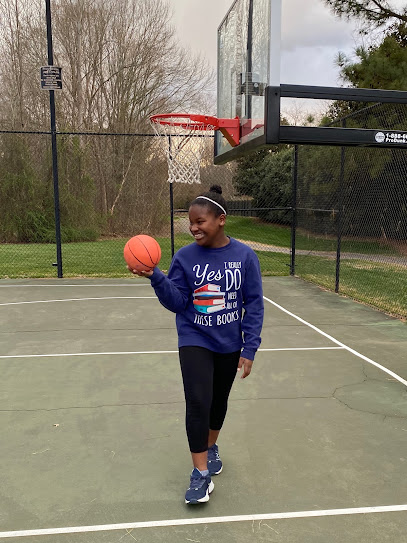
 

Brooke loves books and basketball!


Read Brooke's last review of Hidden Truths on my blog here


Wednesday, June 24, 2020

FREE LUNCH: An Audiobook Review


Congratulations to Connie Saunders for winning THROUGH THE WARDROBE from last week's blog. Here's a tip to win a book. Whenever Connie enters my giveaway, she ALWAYS shares it on social media. This earns her more chances to win a book--and it works!

"This book is for every kid. Whether they pay for their lunch or not."  FREE LUNCH by Rex Ogle


REVIEW


"Why can’t I get what I want at the grocery store?" Rex asks his mother. Unfortunately, he knows the answer.  It’s been like this all his life. He hates seeing all of the chips, candy, and ice cream that other kids eat that he doesn't; he hates watching his mother try to stretch every dollar and use food stamps; he hates his constantly empty stomach; he hates having cashiers looking at him like he might steal something because his clothes come from the thrift store. 

Told in first person POV, this nonfiction autobiography is Rex's own story growing up in a dysfunctional family. He's angry that his family--including Sam, his mother's stuttering live-in boyfriend; and Ford, his toddler half-brother that Rex takes care of--are all poor. 

And he hates the helplessness and fighting in their home that poverty creates. Rex wants to blame his mother for not working but he also realizes that without a job, "all of the love goes out of Mom." Over and over she tells him how hard it is for her to get a decent job and blames him for being ungrateful.

The ultimate humiliation is when Rex enters middle school and discovers that his mother registered him for the free lunch program. Every day he feels like a beggar while he waits for the lunch lady to check his name off the free lunch checklist.  


Ogle doesn't hold back from painting the realistic but ugly picture of his childhood. The family moves frequently as the adults look for jobs. The lack of money leads to tension, arguing, and fighting. His mother gives him a black eye on more than one occasion. Rex's clothes are stashed in cardboard boxes and he sleeps on the floor--along with the cockroaches. 

The one bright light in his life is his abuela, his Mexican grandmother. She is his cheerleader. "You are smart and handsome. Life is not always fair," she tells him. "I lived in a one-room house without indoor plumbing and dirt floor with my13 brothers and sisters. We made it work. You will too." 


As hungry, poor, and angry Rex is, he tries to control his emotions, to not be rude, and to not hit back. But his own anger makes him feel evil. He has to remind himself that "being poor is not a disease."

In the cauldron of poverty and abuse, Rex experiences problems at school and with his peers. Despite worrying about how he can keep his poverty a secret so that his friends won't turn on him he thinks, "School feels safer than home." 

But things get worse. His friends reject him. He wears a monster costume on Halloween and starts worrying that he is a monster-- just like Sam or his mother. His family moves to public housing which is the last straw. He lashes out and tells his mother, "I hate you." She slaps him. Hard. He is constantly on edge wondering when she will strike back him and how could their lives get worse. Would they be homeless? Would they starve? Would he die? 

He develops a friendship with Ethan, a boy who he sits with at lunch. Ethan's point-of-view -- that his life isn't as perfect as it seems even though he his parents have lots of money--is eye-opening. "Come on, no one has a perfect life!" Ethan says... "Money isn't everything. Trust me."  

Towards the end, his mother gets a good waitressing job and the family takes some steps towards healing. Sam goes out of his way to give Rex an unexpected Christmas gift and the book ends on a hopeful note.  


FREE LUNCH tells it like it was for young Rex Ogle. A few readers might object to some crude language. To me, it was a brutally honest book. As Rex says at one point, "I don’t trust the word free. Look what it’s cost me." 

The audiobook is narrated by Ramon de Ocampo, who performs all of the voices excellently. I was particularly impressed with how well he showed Sam's stuttering. 

In a Facebook exchange, Rex told me this was the hardest book he's ever written--until the one he's writing now which is the sequel. But he's "glad it's helping some kiddos out there."

This is not an easy read; there were times I had to stop listening. I would recommend that middle-grade students read or listen to it with their parents or teacher so they can discuss it together. Although Rex is entering sixth grade in the book, the tough content might indicate it is more for young adults. 

GIVEAWAY 

If you're interested in adding this book to your home or school library, please leave me a comment by 9 AM on June 26. The winner will receive an audio code and instructions on downloading the book. As always, if you decide to follow my blog or share this on social media, let me know what you do in the comments. PLEASE leave your email address if you are new to my blog. This giveaway is courtesy of Recorded Books. 

Wednesday, June 10, 2020

Ordinary Hazards: An Audio Book Review and Giveaway

Congratulations to Barbara Younger for winning CAVE DADA from last week's blog.


Nikki Grimes writes powerful young adult books in verse. You'll find my reviews of Between the Lines and Words with Wings on previous posts. Now I know why she is able to write such authentic poetry. It comes from the depth of her soul and the pain from her past. 


Note: since this is a review of the audiobook, I did my best to capture quotes from the book. 

REVIEW


Nikki narrates the book and begins with this definition:

Memoir: A work of imperfect memory in which you meticulously capture all that you can recall and use informed imagination to fill in what remains. As she says later in the book, Trauma is a memory hog.

Quickly, the reader learns about Nikki's schizophrenic, alcoholic mother; her musician father who feels incapable of raising children; and a childhood full of instability, fears, and abuse. Her only constant was her older sister, Carol, who she adored.

“I have a Ph.D. in avoidance 
We’re all masters of selective memory 
We’re all allergic to pain."

*****

Home was never a safe place.
Forget the guns. 
I was put in a dresser drawer away from the rats.

As a child she realized her mother had a secret life since she talked to invisible people. "Mommy who are you talking to?” was met with,  "Shhh!" and a finger to her lips. 

After her father left, the family temporarily lived with a relative but her sons shot heroin. They moved out, her mother went to work, and the girls were left in the care of a person who locked them in a closet during the day. Nikki was 3, Carol was 8. 

A demon lived inside of us for years in fear of the dark.

When neighbors reported that her mother neglected them, social services took them away. That began a series of foster homes. Some she remembered; she forgot several. One foster mother whipped her and her sister. She and her sister ran away to their grandmother's house; she refused to take them in. 

Did we do something wrong? Is that why no one wants us? 
Anger and I stood together on the train. 

When she was six, she found an oasis of love and peace with the Buchanan's foster family. Although she didn't talk for several days, the family's welcome broke down her distrust. She went to church, started school, and took dance lessons. But she was terrified of the night's darkness. She discovered Psalm 18:28: "You, Lord, keep my lamp burning; my God turns my darkness into light," and realized, 

Grace! Outstrips the dark every time.


Early on, she started pouring out her feelings in notebooks; the blank page was her safety.

The writing thing was some kind of magic. 
But magicians rarely share their secrets.

Although she grew to love the Buchanan family, she yearned for Carol and wrestled with not hearing from her parents.

Why did mom love liquor more than us? 
Why didn’t they love us?

When someone explained that her mother had a nervous breakdown she asks, How can nerves break? She is told that her mother doesn't know what's real and what's not, and Nikki remembered her mother's imaginary friends. 

When she overheard a relative at a picnic say that Mr. and Mrs. B always took in strays, Nikki realized, This beautiful family was only borrowed.

She found a picture of herself in the Buchanan family album when she was nine.  She had settled in and let her guard down. Then her mother called. She was remarried and wanted Nikki to join them. 

I had to go. How could I say no? One mother is all that you get. I wasn’t ready to give up on her yet."


The city scared her, it was difficult always changing schools mid-term. This time, her mother deliberately kept her father away and spent more time in politics and civil rights than with her. But Nikki moved in any way--what choice did she have? She quickly learned that in Brooklyn you have to join a gang for protection. When she is singed with a cigarette butt, her mother doesn't ask about the bandage. Nikki writes,


Why does she avoid dark and painful things? 
Who taught her to pretend? 

There were gangs on every corner, danger her mother refused to see, and the Brooklyn Library became her refuge. 

My life is like musical chairs. 
Every time the music plays, I have to move. 

When her mother started talking to herself again, she feared that “this stuff” was in her. 

God, please don’t let insanity be my inheritance.
Both her father and stepfather were useless. Nikkie took the situation into her hands; she was a kid who had to get her mother hospitalized. 

Every damn episode wore another hole in my soul.

She entered puberty and was alarmed when boys and her stepfather eyed her funny. She hated the changes in her body. Her sister moved in but didn't stay; Nikki didn't realize why Carol left until after “my mother’s monster” raped her. No amount of showers or notebook entries could take her pain away. In the same way that her mother didn't want to hear the truth about the neighborhood gangs, Nikki knew her mother would be no help against her step-father's abuse.

Her pent up anger terrified her. She learned to vocalize and to translate her feelings into words on the page.

I knew writing could take me places. 
But writing was a lonely place. 

Although her mother discounted her writing talent, at thirteen Nikki performed her first reading with Harlem poets. She was nervous, but her father affirmed her talent. He said, 

Explore every art form. You can be whatever you want.
......


My father fed me books and art by blacks. 
It left me dreaming of what books I might bring into the world.


After going to the Copacabana with her father she thinks, Not all stars in the firmament are white.

Nikki's faith does not break in spite of the many difficulties she faces. At one point she writes,

How can I not believe in God? 
If it weren’t for Him I’d be in prison or the grave.


As I mentioned, Nikki narrates the book herself. The only time her voice wavered was when she read about the car accident in which her father lost his life. He had promised to see her Easter morning and she blamed herself for him driving too late at night to get home in time. She felt powerless in the face of death.

Why did the one parent who knew my heart have to die? 

Here is an audio snippet to give you a flavor of the book.

*****

This is a powerful memoir that I recommend for mature teens as well as for adults. Nikki Grimes has taken the fragments of her life-- "scattered memories"--and pieced them together into an amazing volume of poetry. Teens who have known abuse will find comfort in reading this book and knowing that they are not alone. Teens who have grown up in safety should gain empathy by reading or listening to Ordinary Hazards


GIVEAWAY

I have a code that you can use to download this book for one of you. Leave me a comment by 6 PM on June 13th to enter the giveaway; please make sure to leave your email address if you are new to my blog. Share this on social media or start following my blog and I'll enter your name twice. 


Monday, April 29, 2019

The Forgiving Kind: A Review and Audio Book Giveaway


Donna Everhart warned me that her newest book, The Forgiving Kind (Kensington, 2019) had some tough parts.

She was right. 


Like her previous book, The Road to Bittersweet, The Forgiving Kind  also features a young woman coming of age in rural North Carolina. The time is the 1950's and the place is 300 acres of Jones County--cotton territory. Although both books have young protagonists, the serious content of each novel lends themselves more to an adult rather than teen audience. 


REVIEW


Twelve-year-old Sonny Creech loves the land as much as her father and like him, has the ability to dowse water. Although her two brothers Ross (16) and Trent (14) work the farm alongside their father, Sonny's passion runs deepest and Donna Everhart brings this to life through a deep point of view showing Sonny as she runs through the soft mud, inhales the smells of the fields, and experiences the woods like an extension of herself. 

Tragedy strikes early in the book. Sonny father dies unexpectedly and her mother is "layered with sadness" as she and the children shoulder the burden of struggling to keep their cotton farm financially afloat. 

A wealthy neighbor, Frank Fowler, shows up and worms his way into the family by lending them money. From the start, Sonny distrusts him: "Mr. Fowler's work clothes were spotless and pressed. He was the type who lifted a finger only to say, do this, do that." Repeatedly Sonny observed that Mr. Fowler was nice to her mother, but spoke and acted as if she wasn’t there.


Before his sudden death, Sonny's father gave her his willow branch that he used to dowse water. Everhart describes it as, "Tugging on my lower leg muscles. The willow branch dipping to water. She couldn’t have pulled it up if she tried." The branch is a deep connection to her father but Mr. Fowler, and her peers at school make fun of her ability. When Sunny finds the burnt branch in the trash bin outside, Mr. Fowler denies his actions. 
Along the way, Mr. Fowler meets Sonny's close friend, Daniel. He reacts strongly to him and is verbally abusive. Sonny finds herself attracted to Daniel, but her attraction is not reciprocated. The two end up meeting secretly to avoid Mr. Fowler's fury.

Sonny worries about her mother not seeing Mr. Fowler's intentions: "I couldn't explain my worry anymore than I could explain how the dowsing stick worked." When they marry, Sonny's fears and unhappiness increase as she feels like her mother has betrayed her and the memory of their father. 

Through the use of deep point of view, the reader is privy to Sonny's anger, fear, conflicts, and pain. Sonny hears and sees the results of Mr. Fowler's abusing her mother. "Mama's life is getting eaten up." Her hatred towards Mr. Fowler grows when she realizes he and his friends are members of an evil white supremacist group. She and her brothers are forced to observe his gross mistreatment of Daniel and fear what might happen to any of them if they speak of it. Everhart paints a picture of a deeply disturbed antagonist that is gripping and unforgettable. Readers who are in an abusive relationship might resonate with how Sonny's mother tries to be the peacemaker and placate her new husband. 


Some readers will find the way in which Sonny's mother resolves her situation to be satisfactory and they may also be sympathetic to Daniel's plight as a homosexual. Although I thought that The Forgiving Kind is written extremely well, as a committed Christian I am uncomfortable with these aspects of this book. 

Donna was right. This is a tough book to read and digest. But a book worth reading, thinking, and talking about. 
  

GIVEAWAY


I am giving away my Audio CD, which is narrated beautifully by Tiffany Morgan, courtesy of Tantor AudioLeave me a comment by May 2 and I'll enter your name in the giveaway. 

Here is an audio snippet from the book that will give you a flavor of the book and the narration. 

Monday, February 15, 2016

Of Better Blood: A Review and TWO Giveaways

Last April I reviewed Susan Moger's book, Teaching the Diary of Anne Frank. When she contacted me and asked if I would read and review her debut novel, OF BETTER BLOOD (Albert Whitman and Co. 2016), I agreed. After reading it I can tell you one thing for sure: Susan used all of her research about Hitler and the events leading up to World War II in order to write this young adult historical novel.

Teenage polio survivor Rowan Collier is caught in the crossfire of a secret war against “the unfit.” It’s 1922, and eugenics—the movement dedicated to racial purity and good breeding—has taken hold in America. State laws allow institutions to sterilize minorities, the “feeble-minded,” and the poor, while local eugenics councils set up exhibits at county fairs with “fitter family” contests and propaganda. - Albert Whitman and Co.


Four times a day I drop the baby.
It's not a real baby, but for a stunned heartbeat the audience believes it is. That's enough to get some of them on their feet, screaming, Stupid, clumsy, gimp. The words slide into my skin and stay there.
When I ask Mr. Ogilvie, the director, if just once I can catch the baby before it hits the stage, he frowns and puts his hands on my shoulders. I squirm away, but he holds on. "I love your sensitivity, Ruthie," he says, showing corn-yellow teeth. "But sadly a cripple like you can't be a hero."  (p. 1)
Thus the reader is thrust into the life of Rowan Collier, an unwilling actress in a "fitter family" drama reenacted four times a day at the Springfield, Massachusetts county fair. In the beginning of the novel Moger uses alternating chapters to show Rowan's life before this humiliating summer. In these flashbacks the reader meets her father, an engineering consultant for the Navy, and an advocate for the Betterment fight. He and Rowan's older sister, Julia, are dedicated to the proposition that society is best advanced having the fittest people marry and produce large families. The unfit, those who are physically, emotionally, or intellectually substandard, should be eliminated from society. 

In one of these flashbacks Rowan recalls how one of her doctors wanted her to be sterilized.  Rowan refuses but is shaken afterwards:
Father believed, as Dr. Pynchon did, that a weakness inherited from Mother caused me to get polio. But would he want me to be sterilized? (p. 51)
Rowan's world--already dramatically changed due to polio--continues to fall apart when she is forced to do "educational work" for the New England Betterment Council at the Expo. There she develops a friendship with a fellow worker, orphaned Dorchy, whose parents worked county fairs. In these simple explanation to Rowan, Dorchy shares one of the underlying themes of the book:
Rubes are ignoramuses; carnies know everything. Rubes come to the fair with their eyes starry and their pockets full; carnies take them for what they're worth.....
Your Unfit Family Show does the same thing. You trick rubes into paying money under false pretenses. (p. 33)
 As Rowan hears the stories of her fellow "actors" and how they were tricked into being sterilized, Rowan starts questioning what she had believed to be true about her father. Dorchy is a major catalyst in Rowan's increasing self-awareness.
When I left Bellevue and went to the Home, all thoughts of Dr. Friedlander and nursing school were driven out of my head by the effort of surviving. But here at the Expo, the memories are starting to come back. Dorchy is bringing me back to life. (p.64)

Following a dramatic escape from the Expo, Dorchy forces Rowan to question her assumption that her mother's bloodline was weaker since she died giving birth to Rowan:
Dorchy jumps up. "Listen to yourself," she shouts, angrier than I have ever seen her. "How can you sit there and say that about your own mother? After weeks with the awful Ogilvies and the Council cows you still don't question that 'better blood' garbage? she punches her fist against her palm. "You still think people are fit or unfit because of their family bloodlines? You know as well as I do that Gar and Jimmy and Minne are as fit as you and your precious father. (p. 117) 
Despite Dorchy's misgivings, she considers working at the Camp for Unfortunates in Maine with Rowan.  
"I'll bet you anything the camp is a con," she says stubbornly. "Miss Latigue is the carney; you and me the unfortunates are the rubes. You'll see." (p. 136)
Sadly, Dorchy's predictions prove to be true. I don't want to spoil the rest of the book, but the girls' lives become painfully difficult when they realize the camp is a facade for weeding out the "unfit."

Although the ending is triumphant as Rowan begins her journey towards nursing school, it is not without great personal loss. But she has matured from a dependent "cripple" to a young woman who has purpose, resolve, and determination.  
This is not an easy book to read. But as Susan Moger relates in her Notes, "Eugenics was a popular pseudo-science in the United States from the early 1900's to the late 1930s. The double aim of eugenics was (1) to keep Americans with a "strong" heredity (family backgound) having children and (2) to prevent those with a "weak heredity" from having children....The popular method of preventing reproduction among the unfit was to sterilize men and women." Necessary Lies, which I previously reviewed has a similar theme. 

As you may know, American eugenics principles were adopted in other countries, most notably Germany before and during WWII. Adolf Hitler praised American eugenics in his book, Mein Kampf and thus laid groundwork for a master race. 

Although the Unfit Family show and the New England Betterment Council are fiction, "Fitter Families" exhibits and contests were a popular feature at state fairs starting in 1920. This book would be an excellent supplement in high school classrooms studying WWII. 
********
If you are interested in winning my ARC, please leave me a comment by 6 PM on February 18. If you are new to my blog, please leave me your contact information. If you join my blog or share this on social media, please let me know what you do and I'll add your name twice. Susan also offered to giveaway an autographed copy of the hardback edition, so this time around I'll have TWO winners to announce next week! PLUS-- Susan is willing to send a book overseas, making this my first giveaway open outside the U.S.!


THE NIGHT WAR: A MG Historical Novel Review

  By now you should have received an email from my new website about my review of THE NIGHT WAR by Kimberly Brubaker Bradley. (It'll com...