Showing posts with label nonfiction. Show all posts

Friday, March 22, 2024

PUSH-PULL MORNING: Dog Powered Poems About Matter and Energy

I wouldn't have believed that a book about matter and energy would be read by the picture book crowd, except that my third-grade and kindergarten grandkids are studying physics at school right now. Go figure. At their age, I would have had no idea that a catapult uses a fulcrum---or even what a fulcrum was--let alone build one for a class project! 


Eleanor's 3rd-grade catapult
(with some help from her dad).


Her younger brother, Caleb,
enjoyed the catapult too.

But I digress. PUSH-PULL MORNING (Astra Books for Young Readers, 2023) written by Lisa Westberg Peters and illustrated by Serge Bloch is a fun-filled exploration of physics for young readers. And because the narrator's new dog is the star of the show, even kids who might not gravitate to science will be won over too. After all, who can resist a book with a dog that is physics-friendly? 


REVIEW

Using the unique vehicle of poetry, Lisa Westberg Peters tackles ideas that aren't easy to explain. 

Take the concept of Matter that is shown in the first poem, "Stuff in Common." The narrator comments on the fact that although he is different than his new pet, his dog's wet nose, floppy ears, and clicky claws are all made of

zillions of wiggly molecules and

jillions of jiggly atoms.

Me too!

My new dog and I 

are made of the SAME

wiggly-jiggly stuff.


From there, the reader discovers the Phases of Matter.


A dog is the perfect way to illustrate the concept of Motion. Whether she is chasing a squirrel, running back and forth, or panting and pretending not to care about the squirrel, the "Dog in Motion" poem says it all. 

Similarly, a dog clearly demonstrates the concept of Force in "Push-Pull Morning."  How?  Think about how your dog pulls on her leash to go outside or to greet another dog; how your dog has to be pushed inside the vet's office and how she pushes against your leg when she wants attention.

Clever, huh? 

There are poems about inertia (picture a dog who'd rather nap than go for a walk); gravity (will a dog go down a playground slide?); magnetism (a dog contemplates how a bone can be stuck to the refrigerator door); energy, friction, and electricity.


My generous dog

gives me electrons 

on cool, dry days.

She rolls around on the carpet

Her fur picks up electrons

until she is extremely negative.


Using activities that are familiar to young children and with the help of a super-smart, friendly dog, Lisa Westberg Peters brings physics into the realm of common everyday experiences. 

All I can say is that I would have liked my high school Chemistry and Physics classes if I'd had this book as a youngster. I'm thankful--and a bit jealous--of my grandkids!

CURRICULUM RESOURCE

It probably goes without saying that PUSH-PULL MORNING will be a fantastic STEM supplement in kindergarten through third-grade classrooms. In addition, Lisa has ideas for combining science with poetry on her website. Since the concepts are not the easiest ones to master, the book would also be useful in middle school classrooms. Thanks to my friend, Linda Phillips, a former middle school teacher for pointing that out!

I am sorry but there's no giveaway this time. As you might have predicted, this book found a home in my grandkids' growing library.

Congratulations to Emily Weitz who won The Human Body: An Alien's Guide.

Don't forget to check out the other MMGM books featured on Greg Pattridge's blog!


Friday, March 15, 2024

THE HUMAN BODY: AN ALIEN'S GUIDE: A Graphic Novel Review by Guest Blogger Brooke Leela-Ann White

The human body… more like the heroic body!


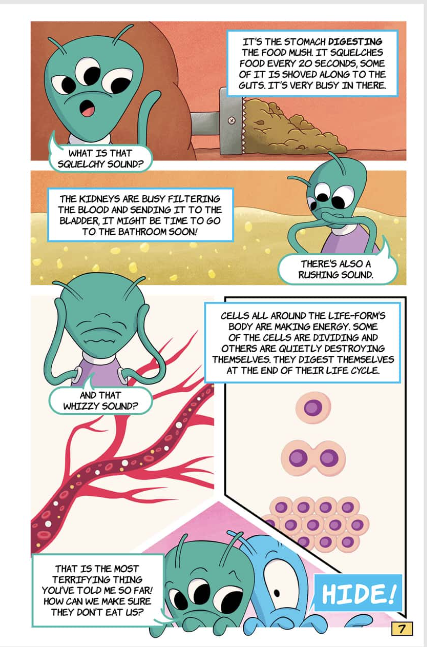
The Human Body: An Alien’s Guide, written by Ruth Redford and illustrated by Leandro Cunha, is a graphic novel about human biology. This book features two aliens, Zag and Zog, who go on an adventurous mission to learn about the human body. 

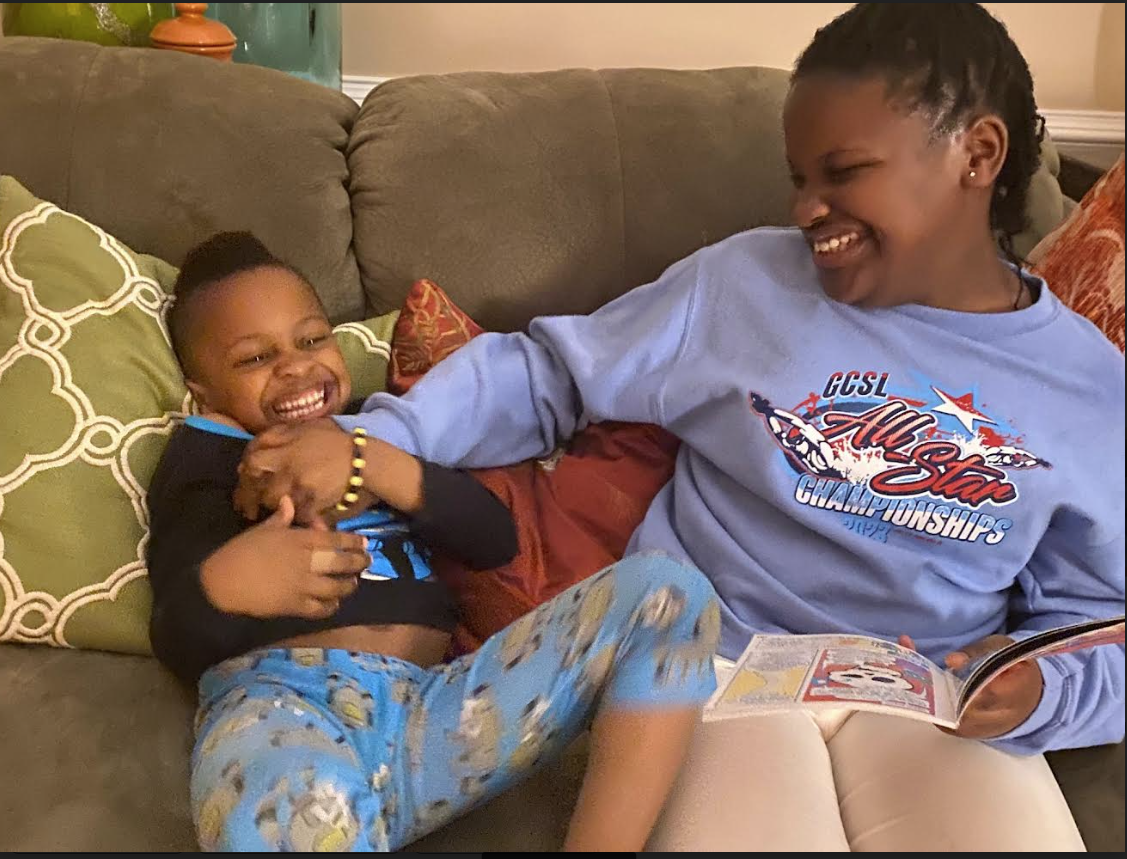
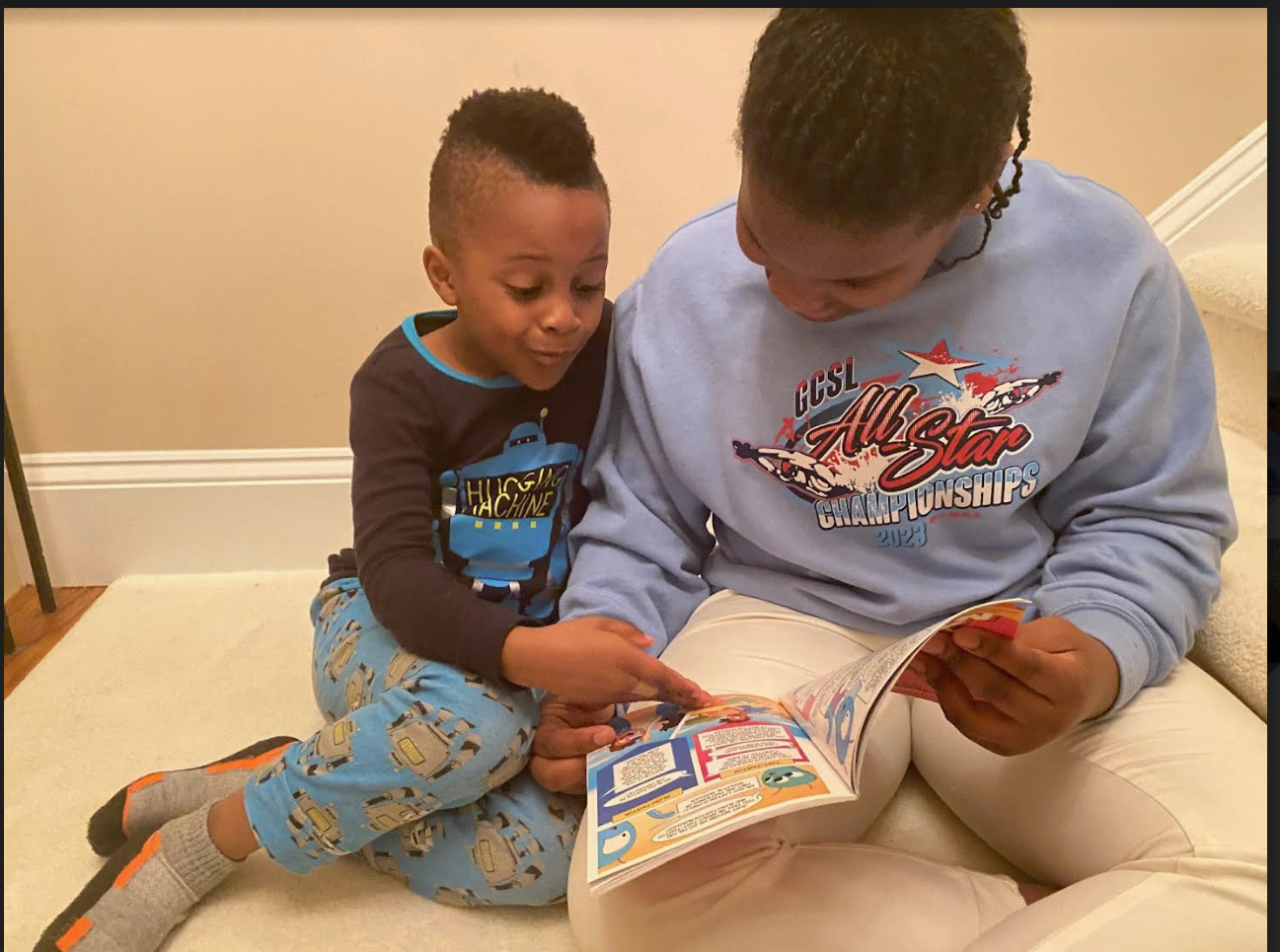
I read it to my 5-year-old brother, Noah-Austin.


 REVIEW


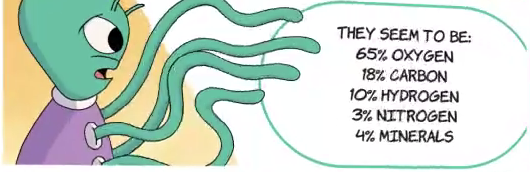
I recommend this book for kids in grades 3-4 since it is interesting, fun, and an easy read. Zag and Zog break down the human body into percentages:


“The alien has three big eyes and the other guy looks like an oval!”- Noah-Austin White

The aliens fly through seven systems of the body on their spaceship.

In the skeletal system, the curious aliens learn about the bones of the body, cartilage, how bones can heal themselves, and the joints' functions. 

I taught Noah-Austin about his funny bone.


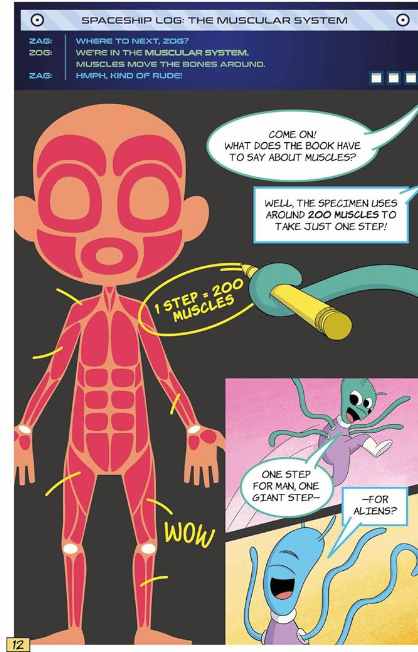
In the muscular system, Zag and Zog learn about the different types of muscles and their location.


“Why is an alien in the body? They should be on the moon right now!”

- Noah-Austin White


Zog talks like an alien: "That’s it? Do they ever just feel zorpy?” he says when the two learn how many muscles the face uses.

The two aliens discover the nervous system and learn about electric signals sent to the brain notifying the brain what action it needs to perform. They also discuss how nerves are needed in different places for different movements.

In the circulatory system, these cool little monsters learn about blood, blood cells, germs, blood vessels, arteries, the heart, and blood clots.


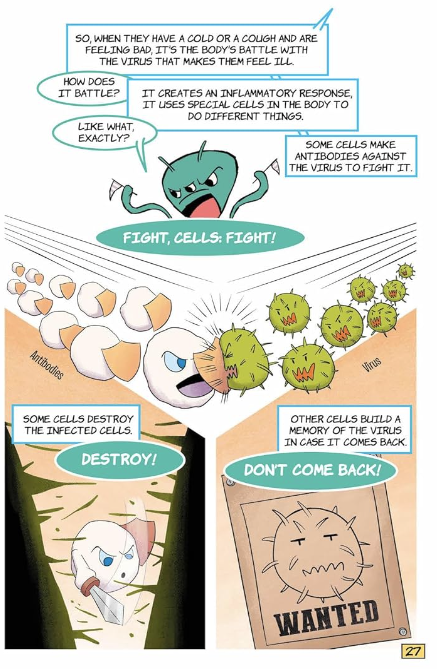
The cells mistake them for enemies and start to attack them! Luckily, the extraterrestrials escape. 


In the immune system, they learn about oxygen, carbon dioxide, lungs, mucus, viruses, and, infected cells. But real trouble awaits in the digestive system. 


“The stomach mush looks like poop.”-Noah-Austin White


In the digestive system, the one-eyed and three-eyed aliens are educated about the process of how the body digests food, the small intestine, the large intestines, feces, heartburn, stomach ache, urination, infections, and lots more! Then, the aliens start to get trapped by the stomach acid made when the human experiences heartburn, but they find a way out (phew!) without any chaos, or digestion drama in the mix.


      ”Why does he have so many arms?” Noah-Austin asked.


Lastly, in the endocrine system, the spacelings learn about puberty, hormones, the pituitary gland, the pineal gland, the parathyroid, the thymus gland, the pancreas, the adrenal glands, and the thyroid glands. I had no idea these were such things--I can’t even pronounce them! The octopus-like aliens also discover how emotions affect hormones.


I find this story fascinating because the facts are formatted in a way that’s easy to understand. This story differs from other biology books because it is a graphic novel and kid-friendly. I also enjoyed how in each system the aliens don’t only learn about the parts of the body, but they also have an adventure/exploration!


I recommend THE HUMAN BODY: An Alien's Guide to any kid who wants to learn about human biology. I love this book because it helped me learn a lot of important information quickly. The illustrations helped me better understand what the parts of the body look like, and the cartoony art style gave it a fun feel. 


Brooke Leela-Ann White is an 11-year-old 5th grader who lives in Charlotte, North Carolina. She has written two books, “ Cupcake the Lying Unicorn” and “Cookie Cat and the Tagalongs”. When Brooke isn’t reading or writing you’ll probably spot her sewing, scootering, swimming, or studying. This is Brooke’s fourth book review, She has been dreaming about becoming a book reviewer ever since she could read!


GIVEAWAY

If you are interested in adding this book to your home or school library, leave me a comment by March 19. If you are new to my blog, make sure you leave your email address. If you are a new subscriber to my blog or an educator or librarian, I'll put your name in twice. 


Don't forget to check out Greg Pattridge's great MMGM blog every Monday!  

Monday, March 4, 2024

OUR UNDERWATER WORLD by Sue Lowell Gallion: A Nonfiction Picture Book and a Giveaway


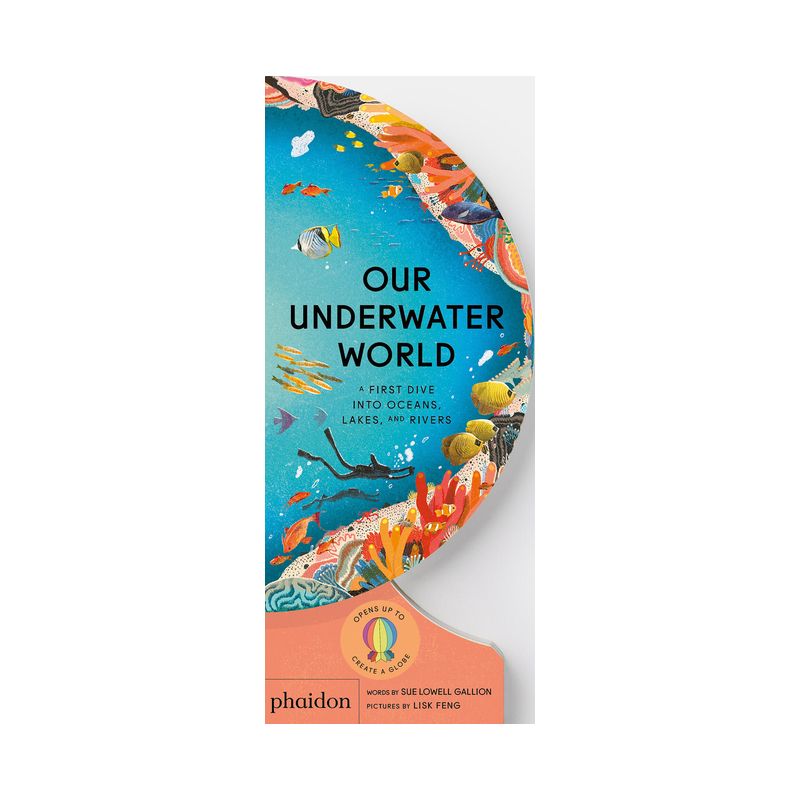
Some of you may remember a few years ago when I shared Sue Gallion's unique board book, OUR WORLD (Phaidon, 2020).  Since that book came out, she published OUR SEASONS: THE WORLD IN WINTER, SPRING, SUMMER, and AUTUMN and now has another book in the series. OUR UNDERWATER WORLD: A FIRST DIVE INTO OCEANS, LAKES, and RIVERS (also illustrated by the talented Lisk Feng) is a poetic exploration of our natural waterways. 


Open the book--and you have a globe!
Photo courtesy Sue Gallion


BOOK REVIEW


The book opens with a gentle invitation:

Rivers run, oceans flow, 

Ever wonder what's below?


Let's explore, take a dive....

                    (page turn)

                   The underwater world's alive!


With soft pastel illustrations and sensory poetry, young readers will be drawn into the world of fish, mangrove trees, sharks, kelp, and coral.  

Although the poems are simple, each word packs a punch. Consider this illustration:


paired with these words:

Mountain streams

in liquid motion

Rivers stream into the ocean. 


 Readers discover:

Sea life thrives 
In layered light,

                   (page turn) 


In deepest ocean,
Always night.

The book concludes with a global perspective and a simple plea for conservation.

A world deserving,

Our protection

                    (page turn)


Around the globe,

Our blue connection.

For older readers, each page has a text box with more in-depth information. Having read the book, I can unequivocally say--I didn't know there were more volcanoes underwater than on land and that whales swallow thousands of krill in a single mouthful!

Sue Gallion is a masterful poet whose love for our earth caresses every page. This book will be a "treasure trove" -- like a precious coral reef -- for home and school libraries. I picture art and language art units culminating with bulletin boards stocked full of underwater scenes inspired by OUR UNDERWATER WORLD. It will become a kindergarten through second-grade classroom favorite. Activities related to the book will be on Sue's website in April. 

GIVEAWAY

Do you want to win a copy of this book? Leave me a comment by March 7. Let me know if you are an educator or librarian, or if you sign up to receive my blog. I'll put your name in the hat twice. U.S. addresses only. If you are new to my blog make sure you leave your email address.

By the way, Sue has another book coming out in the fall from Phaidon. We can look forward to hearing all about it!

Thursday, February 1, 2024

Celebrate Valentine's Day with a Giveaway of VALENTINES FOR ALL by Nancy Churnin

 It seems as if we just celebrated New Year's and now it's time for Valentine's Day! To help celebrate, I have the perfect book for your child, grandchild, classroom or library-- VALENTINES FOR ALL: Esther Howland Captures America's Heart by Nancy Churnin and illustrated by Monika Rosa Wisniewska. 


REVIEW

From the opening of the story where Esther Howland gets the idea of creating valentines, to the end where she is a woman in a wheel chair watching a young couple read one of her valentines, each page is decorated with a fictional "Rose are Red, Violets are Blue" rhyme. How can you not love a book that is historical, sweet, and poetic all at the same time?

                          Roses are red. Violets are blue.  
I've got an idea for something new.

Despite Esther's brothers' skepticism that her business wouldn't take off--it did! She believed that people couldn't always express big feelings in words and that cards would help them communicate how they loved another person.

When her first order was for five thousand cards she enlisted her friends to help make them.


Roses are red. Dahlias are lime. How can I make so many in time?

When the Civil War began in 1861she was surprised how many wives asked for cards for their soldier husbands.


Roses are red. Pussy willows are gray.
When people are hurting I know what to say.


Eventually, Esther realized that she could create birthday and holiday cards that would help people convey their feelings throughout the year.

Roses are red. Night tulips are black. Looking for words? They're in my card rack.

Esther had to use a wheelchair after she slipped, fell, and injured her knee.  That didn't stop her card-making business though. She printed a poetry book so that her customers could cut and paste words and create their own cards. 

Esther is a great model of perseverance to make your dream come true. As Nancy Churnin's last poem states:

Roses are red. Forget-me-nots, blue. Why don't you make your dreams come true?

BACK MATTER

The Author's Note includes wonderful information about how Esther was a successful woman entrepreneur many years before women earned the right to vote. At the height of her business, she earned more than $100,000 per year--which is the equivalent of two million dollars today.

There is a page dedicated to creating your own valentines and how to send them to Nancy's website or to the Worcester Historical Museum in Worcester, MA where Esther lived.

CURRICULUM RESOURCE

This book can be used as a resource when teaching American history, women's changing roles, writing, and art. Since the author frequently mentions Esther Howland's desire to strengthen relationships, VALENTINES FOR ALL can also be a SEL resource. The illustrations inspire readers to create their own valentines.

GIVEAWAY

Albert Whitman is giving away a copy of VALENTINES FOR ALL to one fortunate reader. To get this in the mail ASAP, this giveaway ends February 3. As usual, if you share on social media, sign up for my blog, or are an educator or librarian, you will get an extra chance. Let me know in the comments and make sure to leave your email address if you are new to my blog. U.S. addresses only.


Friday, January 5, 2024

I'M TRYING TO LOVE GERMS: A Picture Book Review by Guest Reviewer, Helen Wheeler

 REVIEW

The I'm Trying to Love Germs book by Bethany Barton (Viking Books, 2023) is a great way to teach elementary-aged kids about germs. It provides in-depth descriptions of microbes and germs. The book is silly and fun and gives real-life examples of how you can tell a germ is around, such as sneezing and bathroom problems. The book is packed with information and drawn in a comic book style with interactive features, like an app in book form. For younger readers, the text may be difficult to follow without an adult reading along with the child. I recommend that parents read this book to their young children. Kids aged 8-10 would be able to read the book on their own. 


The narrator is a microbe that takes the reader on an information adventure to explain the power of germs. I’m Trying to Love Germs also explains ways you can prevent illness, like washing your hands thoroughly and getting vaccines. The author assures the reader: “Germs still make contact? Fear not! These heroes break down the cell walls of most germs - destroying them before they infect you.” 


Additionally, as the title describes, the author explains to readers why they should love germs (or more specifically microbes), because people need microbes to survive. Readers learn that “Humans (like you) actually have billions of helpful microbes in their bodies, doing important stuff you need to survive.” All in all a fun book that tackles the ick factor!


 ABOUT THE REVIEWER


Helen Wheeler is an 8th-grader who lives with her family in North Carolina. She is a competitive figure skater, participates in the Science Olympiad, tutors elementary students, and enjoys drawing. Helen’s favorite genres to read are graphic novels and YA contemporary fiction.

GIVEAWAY

Viking Books is providing a giveaway copy of I'm Trying to Love Germs to one fortunate reader. Leave me a comment with your email address if you are new to my blog, by January 11. As always, if you are an educator or librarian or sign up to follow my blog, I'll put your name in twice. U.S. addresses only. 


Saturday, October 21, 2023

HOW BENJAMIN FRANKLIN BECAME a REVOLUTIONARY in SEVEN (Not-So-Easy) STEPS : Review & Interview by Guest Blogger Janelle Ekpo

Today it is my pleasure to introduce a new teen blogger, Janelle Ekpo. The last time I saw Janelle she was about eight--but now she's in high school and a fantastic writer. I trust you'll enjoy her debut book review and her interview with the author, Gretchen Woelfle -- no stranger to my blog. 

REVIEW


If there were more books like How Benjamin Franklin Became a Revolutionary in Seven Steps by Gretchen Woelfle we would all be historians. This book is accessible for all ages and would work especially well for any middle school students studying American history and finding it a little dull. It’s a fun way to bring life to a history book.


Fun illustrations are by the talented illustrator, John O' Brien.

The first step Franklin learns is to not give too much for a whistle. As a child, Franklin met a boy with a whistle. He wanted it, and he used all the coins in his pocket to buy it. When Franklin’s family found out how he got the whistle, they laughed at him and told him the whistle was worth much less than he paid. Though this is a simple lesson, it is one of the cornerstones of what caused Franklin’s shift from Loyalist to Revolutionary. He waited for the British Empire to redeem itself, but it didn’t. He refused to pay for what he thought the Empire wasn’t worth.


The second lesson he learned was to push back when he felt that his rights and liberties were violated. He learned this as a young adult when he worked for his older brother’s newspaper. Franklin started writing snappy articles under the name Mrs. Silence Dogwood. In the articles, he questioned the British government and the way of life in general in the colonies. This, of course, is one of the defining characteristics of Franklin: when others were unhappy with the violation of their rights, he acted.


Thirdly, he mastered the art of writing to entertain and inform the public. As his career moved forward, Franklin worked hard to be the best printer in the colonies. He worked as an apprentice and then he opened his own shop. He continued to write. He began Poor Richard’s Almanack, which was full of farming advice, recipes, and, of course, amusing articles featuring the life of a poor man named Richard. These stories entertained the public and made Benjamin Franklin a well-known name. Writing was as important a skill then as it is now. Writing in its plainest form is to persuade, inform or entertain. From this it is clear that Franklin was not a Revolutionary simply because he spoke out against Great Britain - rather, he knew how to frame his words, how to draw the public to him, and how to win an argument.


These are the first three steps that led Benjamin Franklin from obscurity to fame, from being a Loyalist to being a Revolutionary. But these are not the only steps. There are four more. They aren’t listed here simply to encourage you to read the book for yourself and learn about the other four steps Franklin took to be a Revolutionary success. After all, if he could do it, couldn’t you too?


                                                    ****

Janelle hiding behind
a favorite book.

I’m a sophomore from South Carolina who is passionate about Christian fantasy, realistic fiction, and writing. I often help students with their papers and write book reviews to encourage people to read quality books. I’m working on growing my personal library!


INTERVIEW


Janelle: If you were to write another book like this one, who would you write about, and why?


Gretchen: I intend to write another book like this one – an illustrated biography, but of someone who is unknown in children’s literature. All my past biographies have featured such people, usually women and/or people of color. Benjamin Franklin, a very famous white man, is an aberration for me. I’ve got two new subjects in mind. Both took action against what they believed was a serious flaw in our society. I’ve done some research on both people, and am tempted to do more, but I’m in the midst of writing a much longer book and must finish that one first. Finishing a book is much harder and less exciting than starting a new one, but I must persevere!


Janelle: You worked at The Franklin Papers Project, and thus have interacted with many of his works. Which is your favorite?


Gretchen: My favorite: Franklin’s Autobiography, is the only book he wrote. He wrote it in four stages and never finished it. It presents his life up to 1757 when he first traveled to England as a lobbyist for Pennsylvania. His account of his family background, childhood, and young adulthood is especially appealing. He doesn’t hesitate to poke fun at himself and his youthful follies. We get a sense of Franklin’s boundless energy, curiosity, and love of life. Franklin’s letters and satiric essays are brilliant reads as well, and can be found in books like Benjamin Franklin: Selected Writings (NY: Fall River Press, 2010) His letters to his friends and family give us a glimpse of the private Franklin.


Janelle: What do you think is America’s biggest misconception about Franklin?


Gretchen: Many people who have only read or heard about the Autobiography, consider Franklin a self-serving, rather priggish materialist whose main goal in life was to work hard and become rich and famous. Mark Twain humorously laments that the book "brought affliction to millions of boys since whose fathers had read Franklin's pernicious biography".  Biographies of Franklin which draw on his letters and essays give us a fuller understanding of him. His voluminous correspondence to his many friends and family shows his deep affection for them. His essays display his brilliant wit and humor, as well as his passionate commitment to social and political justice. Young Benjamin Franklin: The Birth of Ingenuity by Nick Bunker; The Private Franklin: The Man and His Family by Claude-Anne Lopez and Eugenia W. Herbert; and Book of Ages: The Life and Opinions of Jane Franklin by Jill Lepore, all describe the compassionate, generous side of Benjamin Franklin.


Janelle: Do you think that if people were to apply these seven steps to their lives, we would have modern-day revolutionaries, and heralds of change?


Gretchen: How Benjamin Franklin Became A Revolutionary in Seven (Not-So-Easy) Steps is my interpretation of his responses to what life offered him. Through the steps I’ve chosen, we see him seizing opportunities to grow and expand his spheres of influence. We see him join with others for the common good. We see him learning from his mistakes, and adapting to changing times. All these qualities are important for everyone, wherever their talents lead them. 


Gretchen shared her book with her friend, Benjamin Franklin.
This sculpture by George Wayne Lundeen is in Glendale, CA. 


GIVEAWAY

To enter the giveaway, please leave a comment by October 24 with your email address if you are new to my blog. Please be aware that I will approve your post before it goes live. If you are a teacher or home school educator, I'll enter your name twice. You can also email me to enter. U.S. addresses only. 

For the fun backstory behind this book, please visit Beth Anderson's blog and another chance to win this book. 

THE NIGHT WAR: A MG Historical Novel Review

  By now you should have received an email from my new website about my review of THE NIGHT WAR by Kimberly Brubaker Bradley. (It'll com...