Showing posts with label middle grade book. Show all posts

Friday, March 22, 2024

PUSH-PULL MORNING: Dog Powered Poems About Matter and Energy

I wouldn't have believed that a book about matter and energy would be read by the picture book crowd, except that my third-grade and kindergarten grandkids are studying physics at school right now. Go figure. At their age, I would have had no idea that a catapult uses a fulcrum---or even what a fulcrum was--let alone build one for a class project! 


Eleanor's 3rd-grade catapult
(with some help from her dad).


Her younger brother, Caleb,
enjoyed the catapult too.

But I digress. PUSH-PULL MORNING (Astra Books for Young Readers, 2023) written by Lisa Westberg Peters and illustrated by Serge Bloch is a fun-filled exploration of physics for young readers. And because the narrator's new dog is the star of the show, even kids who might not gravitate to science will be won over too. After all, who can resist a book with a dog that is physics-friendly? 


REVIEW

Using the unique vehicle of poetry, Lisa Westberg Peters tackles ideas that aren't easy to explain. 

Take the concept of Matter that is shown in the first poem, "Stuff in Common." The narrator comments on the fact that although he is different than his new pet, his dog's wet nose, floppy ears, and clicky claws are all made of

zillions of wiggly molecules and

jillions of jiggly atoms.

Me too!

My new dog and I 

are made of the SAME

wiggly-jiggly stuff.


From there, the reader discovers the Phases of Matter.


A dog is the perfect way to illustrate the concept of Motion. Whether she is chasing a squirrel, running back and forth, or panting and pretending not to care about the squirrel, the "Dog in Motion" poem says it all. 

Similarly, a dog clearly demonstrates the concept of Force in "Push-Pull Morning."  How?  Think about how your dog pulls on her leash to go outside or to greet another dog; how your dog has to be pushed inside the vet's office and how she pushes against your leg when she wants attention.

Clever, huh? 

There are poems about inertia (picture a dog who'd rather nap than go for a walk); gravity (will a dog go down a playground slide?); magnetism (a dog contemplates how a bone can be stuck to the refrigerator door); energy, friction, and electricity.


My generous dog

gives me electrons 

on cool, dry days.

She rolls around on the carpet

Her fur picks up electrons

until she is extremely negative.


Using activities that are familiar to young children and with the help of a super-smart, friendly dog, Lisa Westberg Peters brings physics into the realm of common everyday experiences. 

All I can say is that I would have liked my high school Chemistry and Physics classes if I'd had this book as a youngster. I'm thankful--and a bit jealous--of my grandkids!

CURRICULUM RESOURCE

It probably goes without saying that PUSH-PULL MORNING will be a fantastic STEM supplement in kindergarten through third-grade classrooms. In addition, Lisa has ideas for combining science with poetry on her website. Since the concepts are not the easiest ones to master, the book would also be useful in middle school classrooms. Thanks to my friend, Linda Phillips, a former middle school teacher for pointing that out!

I am sorry but there's no giveaway this time. As you might have predicted, this book found a home in my grandkids' growing library.

Congratulations to Emily Weitz who won The Human Body: An Alien's Guide.

Don't forget to check out the other MMGM books featured on Greg Pattridge's blog!


Monday, August 12, 2019

The End of the World and Beyond by Avi: A Review and Audiobook Giveaway

Congratulations to Susan Rice who won One Red Sock on last week's blog. 


REVIEW

I'm a pretty big Avi fan, so when I found The End of the World and Beyond in the Recorded Books catalog, I knew it was a book I'd want to pass along. (I heard Avi speak at the SC Reading Association conference and still quote his thoughts on revision.)

This story of twelve-year-old Oliver Cromwell Pitts takes place in 1725. When the book opens, he is a prisoner on board an English ship taking him to the colonies. Instead of being hung for thievery, Oliver has been sold into slavery. The book is told in first person, uses the language of the times, and is aptly narrated by James Langton. Here is a brief link to the recording so you can get a taste of the book. 

Before boarding the ship, "Goodwill," he and his beloved older sister, Charity, are separated. Finding her is Oliver's driving goal throughout the story.

While on board, Oliver is padlocked to six other prisoners. Their ordeal to survive with chains around their necks, is described in detail. At one point Oliver observes, “Truth is always held up as a shining ideal. ...truth can also be horrific." He develops new empathy for Negroes who are slaves for life. Although his future is dismal, he hopes he'll be able to be freed after his years of service.

The boat docks in Annapolis where the captain proceeds to sell the prisoners. As much as it is an anathema to him, he realizes he must sell himself or become the property of the city. Since he is young, he is passed over and feels shame over being sold for a lot less than the other felons. Locked up for a time because no one purchases him, he concludes that London jails and American jails are both awful: Misery has no geography, and he "remains a tethered bird in a locked cage."

Eventually, he his bought by a cruel master, Mr. Fitzhugh, an alcoholic tobacco planter. Oliver is released from jail and into an unknown, dreadful world. Even on the way to the tobacco farm, escape was always in his mind. "But fear overwhelmed me. My iron collar showed I was an enslaved felon." When he realizes that many people were attempting to running from their masters he observes that this doesn’t speak well of America. 

Oliver's antagonist, Mr. Fitzhugh, is shown vividly through his dialogue and actions. He threatens Oliver, “You are my property... I only do what I want, when I want. If you try to stop me, I’ll kill you." Fitzhugh's ever-present loaded pistol and knife in his belt demonstrate how he is the epitome of being a malicious bully.  

When Oliver gets to his master's house he feels as if he is at the end of the world. There he meets the other servant, a Negro teenager named Bara. Fitzhugh says to Oliver, "Consider yourself lucky. Bara will never get free."

Oliver observes that Bara "is self-contained. It was if most of what he had was within and he had little desire of letting anything out." Bara shows Oliver how to survive Fitzhugh's cruelty and advises him not to resist. "He becomes enraged at resistance. He wants you to fight back." He also suggests that the master will make someone helpless so that he becomes even more helpless as he believes the lies.

Oliver's discovers that his sister Charity is in Philadelphia and his desire to find her leads him to several reckless decisions. Bara is frustrated with him, but together they make a difficult and harrowing escape. When the two part, Oliver feels as if he is saying goodbye to his brother. In fact, Bara was the best friend and mentor Oliver needed. The book chronicles Oliver's physical and psychological maturation.

The ending will surprise you. But, take my word for it, this is a terrific book and classroom resource. It will open middle grade and young adult readers' eyes to slavery and indentured servitude before the Revolution. 


GIVEAWAY

Leave me a comment by August 15 and leave me your email address if you are new to my blog. Start following this blog or share it on social media and you will earn an extra chance to win. 


Monday, April 11, 2016

EMPTY PLACES: A Review and ARC Giveaway

Congratulations to Deb Allmand  who won SCAR on last week's blog.

Introduction

I first introduced my husband's uncle, Robert Toupal, to middle grade historical fiction by giving him Joyce Hostetter's book, BLUE. Since then he's often my first reader when I receive an ARC. A man of definite opinions, I wondered what he would think of EMPTY PLACES (Calkins Creek, 2016) by award winning author, Kathy Cannon Wiechman. 
Robert Toupal
I've heard many of Bob's stories of growing up in East St. Louis in the 30's and 40's, as the son of a shoemaker. Familiar with hard times, the depression, and folks who worked hard, his comments about Kathy's second novel didn't surprise me. "People who haven't been there can hardly believe that's the way it was...Coal miners had a rough way to go."

Writers as Readers

Writers-in-training have certain writing principles drilled into their brains. 
  • Hook your reader from the start
  • Show don't tell
  • Choose specific details to show characters and settings
  • Employ verbs as your muscle words 
  • Use imagery and beautiful language to convey your story
Whenever I teach writing, I advocate learning how to write by reading good literature. Let's examine some excerpts from EMPTY PLACES to see what we can learn.

Opening Paragraphs, Specific Details, and Figurative Language 

If you'da rode into Harlan County, Kentucky, that June in a shiny new 1932 Packard, you'da seen hickories, oaks, and maples leafed out with the promise of shady places to rest and listen to birdsong.
If you'da got close enough to set in one of them shady spots, you'da heard the chug of engines pulling coal cars that squealed on aged tracks. You'da heard swear-words of miners and seen coal dust that clung to their faces, filled their pores, and caused their lungs to heave out deep, retching coughs. 
But even if you'da been close as a tick on a dog, you wouldn'ta heard the secrets each body kept, secrets not even told in whispers--secrets about my mama. 
Secrets and gossip spread through coal camps like Smoke Ridge the way a fever does, keeping folks talking. Until new gossip seeps into their lives. Old gossip, like stale bread, is all but forgotten when there's fresh bread to chew on.  (p. 7)
Are you hooked? I was! Did you get a taste for Harlan County, Kentucky during the 30's? You probably could practically hear the trains chugging through town, feel the cool shade, and sense the whispering gossip. Kathy gets an "A+" for sensory details that pull the reader into the time and place. How many powerhouse verbs do you count in these four paragraphs? As for figurative language, the comparison of gossip to how fever is spread and to stale bread are both masterful. As the story plays out, both fever and stale bread are components in this authentic Appalachian story.


The Story

Pretty quickly the reader meets spunky, 13-year-old Adabel Cutler who is trying her darndest to keep her family from falling apart. Adabel's father is a coal miner who drinks too much and fights with her big brother, Pick. Her older sister, Raynelle, wants to marry the grocer's son to help keep food on their table. Her little sister Blissie has a "sweetness that makes folks smile and forgit she's a Cutler." (p. 10). But Adabel's biggest problem is that her mother disappeared seven years ago and Adabel is tormented by the fact that she can't remember her. "Mama was an empty place in my mind." (p. 17)

Like a detective, Adabel's relentless pursuit of the truth propels her through the story and into conversations with her family and neighbors. This dialogue transpires after Pick tells her about how their father sent the children away after their mama disappeared:
"Don't ya remember? When Mama first left, Daddy shunted us young'uns off. Me to Shovel's. Raynelle and Blissie to Granny Cutler's. And you...I cain't recall who he give you to. Was it Jane Louise's mama?"
"I don't recall none of that. I only remember living in the old house with y'all. Till we moved her last year. It's always been us. You, me, Raynelle, Blissie, and Daddy."
"Ya's lucky not to remember ever'thing. Some things is best forgot."
"Ya's wrong, Pick." A mind full of empty places was worse'n the awfulest memories a body could have. (p. 67)

Each conversation leads to the next. Adabel asks Jane Louise's mother:
"But ya recollect Mama leaving?"
"I just recollect how broke-hearted your daddy was. He loved your mama deep."
It was hard to think of Daddy loving anyone deep. (p. 77)
With each new conversation, Adabel begins to put together a picture of her past that is different than what she had previously believed. 

Not having memories of her mother haunts Adabel. When she finds out the reason for her poor memory she thinks, "Knowing didn't fix the empty places in my head, but having a reason for 'em being there made me feel a heap better about it." (p. 188)

Adabel's new found knowledge gives her courage and strength. I'm not going to spoil the ending for you--I hope you decide to read EMPTY PLACES yourself--but let's just say Adabel's detective work brings healing to her family and leaves the reader feeling hopeful for her future. 

EMPTY PLACES will be a great classroom resource for middle school students studying the Depression, coal mining, and the Appalachian area.


In next week's blog, Kathy will answer some questions about the inspiration for this story. I'll pick a winner on April 21 and give away this ARC then. Leave me a comment on this post and I will enter your name. If you leave a comment next week or post this on social media (and let me know what you do!) I'll enter your name accordingly. PLEASE leave me your contact information if you are new to this blog. 


Monday, November 23, 2015

You Heard it Here First: Jo Hackl's Path to Publication - Part II

My apologies if you received an email on Saturday evening with a link to an old blog post--blogger error! Rory's Promise was given away 5 months ago. I'm sorry for the confusion.

Last week Jo Hackl, long-time member of SCBWI-Carolinas, shared the pitch and background of her debut novel, Smack Dab in the Middle of Maybe. This week you'll hear more about working with her agent, Tracey Adams of Adams Literary; finding a publisher; and what she wished she knew before she started her writing journey.
******
 Carol: Did Tracey suggest editorial revisions either before or after she acquired the manuscript? 


Jo: Tracey suggested editorial revisions before taking me on as a client.  I’m very fortunate to have the benefit of her keen perspective and insight and every one of her comments has made the manuscript stronger.


Carol: How long did it take before SMACK DAB found a home? Did Shana Corey suggest many changes? Was the title yours or something you came up with together?

Jo: It took years for SMACK DAB to find the perfect home with Shana Corey at Random House Children’s Books.  It was absolutely worth the wait.  During that time, I believe I’ve continued to grow as a writer.  I’ve taken more classes and workshops. I started a website, www.outdoorosity.org, devoted to providing inspiration and information about the outdoors, and I wrote articles on that site about outdoor experiences. I wrote a young adult novel and am almost through the first draft of a middle grade manuscript.  I also continued thinking about SMACK DAB, revising it, and brainstorming on ways to make it stronger.   

I greatly admire Shana Corey’s work and was enthusiastic about the opportunity to work with her.  Shana suggested changes that I believe will make the story stronger and I’m looking forward to digging into the revision process. 

For the title, Tracey, Shana and I brainstormed from a list of around one hundred possibilities. Brainstorming titles is the fun part!

Carol: I’ve often wondered how you balanced being a lawyer, mother, and writer. Any hints on how you have made this juggling act work?

Jo: I think it helps to have a sense of humor, to be curious, not to expect perfection, and to surround yourself with creative, positive people.   My family is incredibly supportive.  My husband has done more than his share of car-pool duty while I was away at conferences, critique group meetings or on a writing retreat.  Our children offer ideas for things my characters might do next.  My family in Mississippi helps me keep track of what is in season and edible in the woods so I can verify my research.  

My law firm, Wyche, PA, has a strong tradition of attorneys who serve the community and pursue personal interests in addition to the practice of law.  My extremely smart colleagues have kept me on my toes during the 25- plus years that I’ve been with the firm and continue to inspire me by their own examples.  Among our attorneys are photographers, writers, singers, and musicians and virtually every attorney serves on a community board. I believe this environment encourages creativity.  
Jo with some of her creative colleagues from the Wyche law firm.
Creating time to write has forced me to be very strategic about how I spend my free time and has probably kept me away from a lot of bad television. To create time to start work on this novel, I carved out time at night, between the time our children were in bed and my chef-husband came home from work. Now that our children are older and more independent, I have much more flexibility in creating time to write. 
Jo on a family vacation in
 Japan, 2014
Although I need quiet, mostly uninterrupted time to draft, I’ve discovered that I can edit in small chunks.  I’ve done a lot of editing through the years sitting in the carpool line.   I’ve also found that I can learn something from almost everyone I meet. I keep an idea journal with me at all times and transpose the notes onto a computer file to which I often turn for ideas. I love to listen for rhythm in different regional accents. I’m amazed at the great dialog and character details I’ve been able to pick up at legal conferences, community boards, from neighbors, and in airports. 

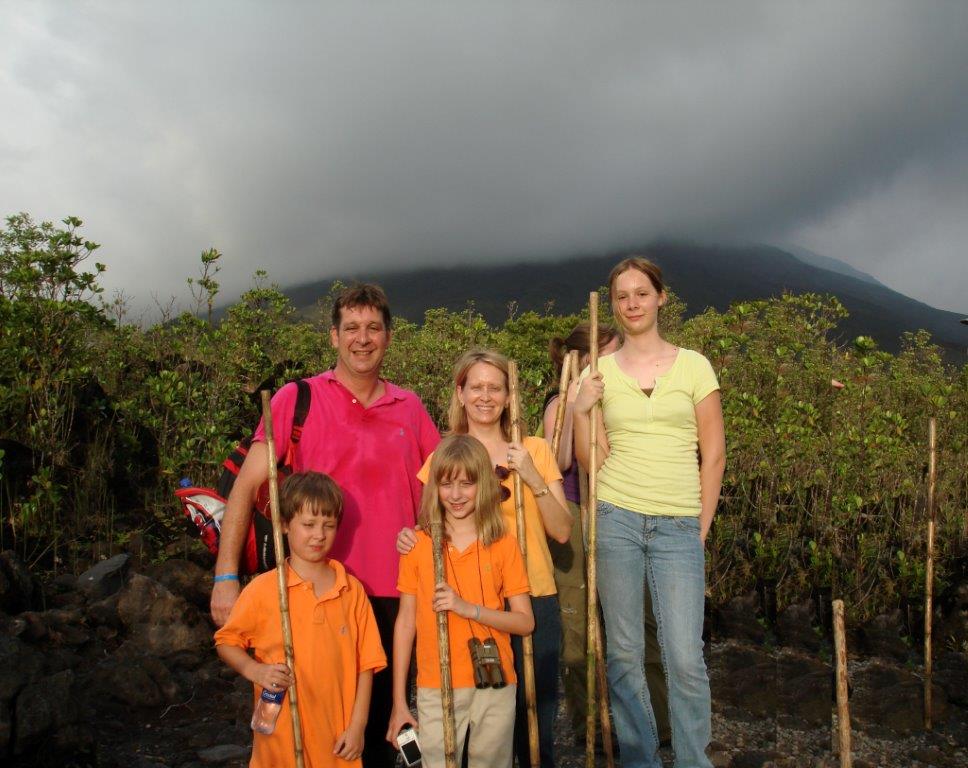
Jo and family in Costa Rica, 2009
Carol: How would you encourage others in their search for an agent?

Jo: From the first time I met Tracey Adams, I knew that I wanted to work with her.  I was enormously impressed by her experience, talent, warmth, sense of humor, and commitment to excellence in children’s literature.  I worked hard on this manuscript and waited until I thought it was ready before I sent it to her.  I also had several other shorter pieces and ideas for other projects to demonstrate that I was serious about putting in the work required to be a writer.  I would encourage others to first work on writing the best piece they can, let it sit, revise and polish it and make it as strong as it can be, then research potential agents.  I would also encourage writers to seek not only a technical match with an agent in terms of experience and genre interest, but someone with whom they believe they will enjoy working over the long term.

Carol: You’ve been very active in SCBWI Carolinas. What role did SCBWI have in your path to publication?

Jo: SCBWI has had a pivotal role in my development as a writer.  The workshops and conferences have provided training to help develop technical skills and the wonderfully supportive SCBWI community has been a consistent source of inspiration and encouragement.  I’ve made great friends through SCBWI and we cheer each other on in our writing.  You’re a great example of that, Carol.

Carol: What advice do you wish someone had given you before you started your novel?


Jo: I think the most important thing I wish someone had advised me before I started working on my first novel is this:  “Dig deep and be brave.  As you write about your character’s experiences and reactions, recall a time in your life when you felt a similar emotion and try to put into words how it felt to be inside your body at exactly that moment, no matter how awkward or weird.  Write the scenes you’re most afraid to write and don’t hold back one bit.”
Hiking Paris Mountain, South Carolina
Jo Hackl is represented by Tracey Adams of Adams Literary.  Jo is also a corporate lawyer with Wyche, P.A. in Greenville, SC, where she is Past President of the Greenville County Bar Association and the recipient of the Richard Riley Award for her pro bono service.  She is a past president of Emrys and the founder of Outdoorosity.org, which provides a free source of information and inspiration about the outdoors to individuals, families and educators. She lives with her family on the side of a mountain where she writes every day and tries to spend as much time outside as possible.
***********
Jo has agreed to share some of her research for SMACK DAB including her experiences in an outdoor survival class. But first, I have several book giveaways coming up, another "You Heard it Here First" two part interview (with the winner of the Grateful American Book Prize!), as well as some answers to FAQs about blogging/Facebook/and Twitter from the Carolinas very own Joan Edwards. Stay tuned!


THE NIGHT WAR: A MG Historical Novel Review

  By now you should have received an email from my new website about my review of THE NIGHT WAR by Kimberly Brubaker Bradley. (It'll com...