Showing posts with label disability. Show all posts

Saturday, February 24, 2024

RAT: A Book Review by Tween Guest Blogger, Brooke White

The book RAT by Jan Cheripko is an upper middle-grade/young adult novel offering a unique, first-person perspective of Jeremy, a disabled boy in high school. I would recommend this book for readers 11+ who can comprehend the use of mature language, suggestive dialogue, violence, abuse, and swear words. 


We start in a courtroom, with Jeremy a witness in a trial, stating what he saw when his basketball coach, Coach Stennard, physically abused a cheerleader, Cassandra Diaz. He explains that the coach was trying to kiss Cassandra and physically disrespect her boundaries.


He explains his passion for basketball, expressing that he’s not too good, but that doesn’t change how he likes the sport. He then tells the judge that his nickname is Rat because his “friends” always call him a gym rat! 


Jeremy states that the coach threatened to cut a slit in his throat if he told anyone about what he saw. Jeremy also stated that he saw Cassandra crying, with her blouse ripped.


Jeremy and his “friends” talk about the incident. Jeremy learns that his “friends” are only concerned about getting a new coach and are mad at him for testifying against Coach Stennard.  Jeremy thinks about how his injury at birth to his right arm affects his life. He says the reason he’s good at basketball is because he concentrates and doesn’t miss the hoop. In the gym, Simpson bullies Jeremy, and then Josh, another “friend” says, “Leave it alone”. 


In a basketball game, Simpson chooses Felipe and Josh, while Mr. O’Connor chooses two girls, Katie and Megan. Jeremy is hurt that he hasn’t been chosen, but he still watches the game. In the end, Mr. O’Connor and the girls win!


For Jeremy, it feels good to see Simpson defeated, but that ends quickly. Jeremy attempts to shoot the basketball in the hoop, but then Simpson steals the ball and pins him down using the basketball. Simpson pushes the basketball into Jeremy’s right arm and into his back. Jeremy wiggles on the floor and the kids laugh at him. I found this part of the story a great visual and a good example of what Jeremy experiences.


Mr. O’Connor, the new basketball coach, tells the team that Jeremy is the new assistant manager. No one responds. Mr. O’Connor gives the team a basketball handbook and discusses the principles with the players.


Once Simpson bullies Jeremy again, Coach O’Connor meets with Jeremy in his office. He talks about honesty and reminds him that honesty is the first principle in the handbook. Jeremy thinks about Coach Stennard and reflects on the terrible experience, then decides to reassess. My favorite character is Mr. O’Connor.  I look up to his encouraging, rule-following, and empathetic personality.


Once I started reading this book I couldn’t stop turning the pages! This story guides us through many of Jeremy’s real-life experiences, which we can learn from. Some lessons that stuck out to me were the importance of understanding how to be comfortable in your own skin, and the special perspective of how a relationship with God can be strengthened through trials. In the climax of the story, Jeremy starts to pray to help find his way. 


There are multiple plots in this story, which may be hard for some readers to follow along with, but the subplots lead to the adrenaline-pumping and fast-paced novel that it is.


The reader is left asking questions. Will Jeremy get into more trouble with his team? Will Coach Stennard get out of jail?  Will Jeremy ever find a real friend?     


In conclusion, I would recommend this young adult novel, Rat for ages 11+ or anyone who can process imperfect behavior, violence, and bullying.


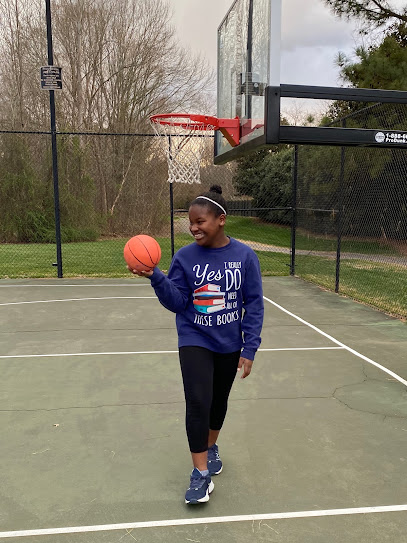
Brooke loves books and basketball!


Read Brooke's last review of Hidden Truths on my blog here. 


Monday, March 6, 2023

TWO CANADIAN STORIES + TWO GIVEAWAYS

This week I have two very different picture books for you courtesy of Sleeping Bear Press; both are related to Canada's national winter sport--hockey. If you want to win either of these books, make sure to include your name and email address when you leave a comment and let me know which book you're interested in. 

The Three Canadian Pigs  by Jocelyn Watkinson, illustrated by Marcus Cutler


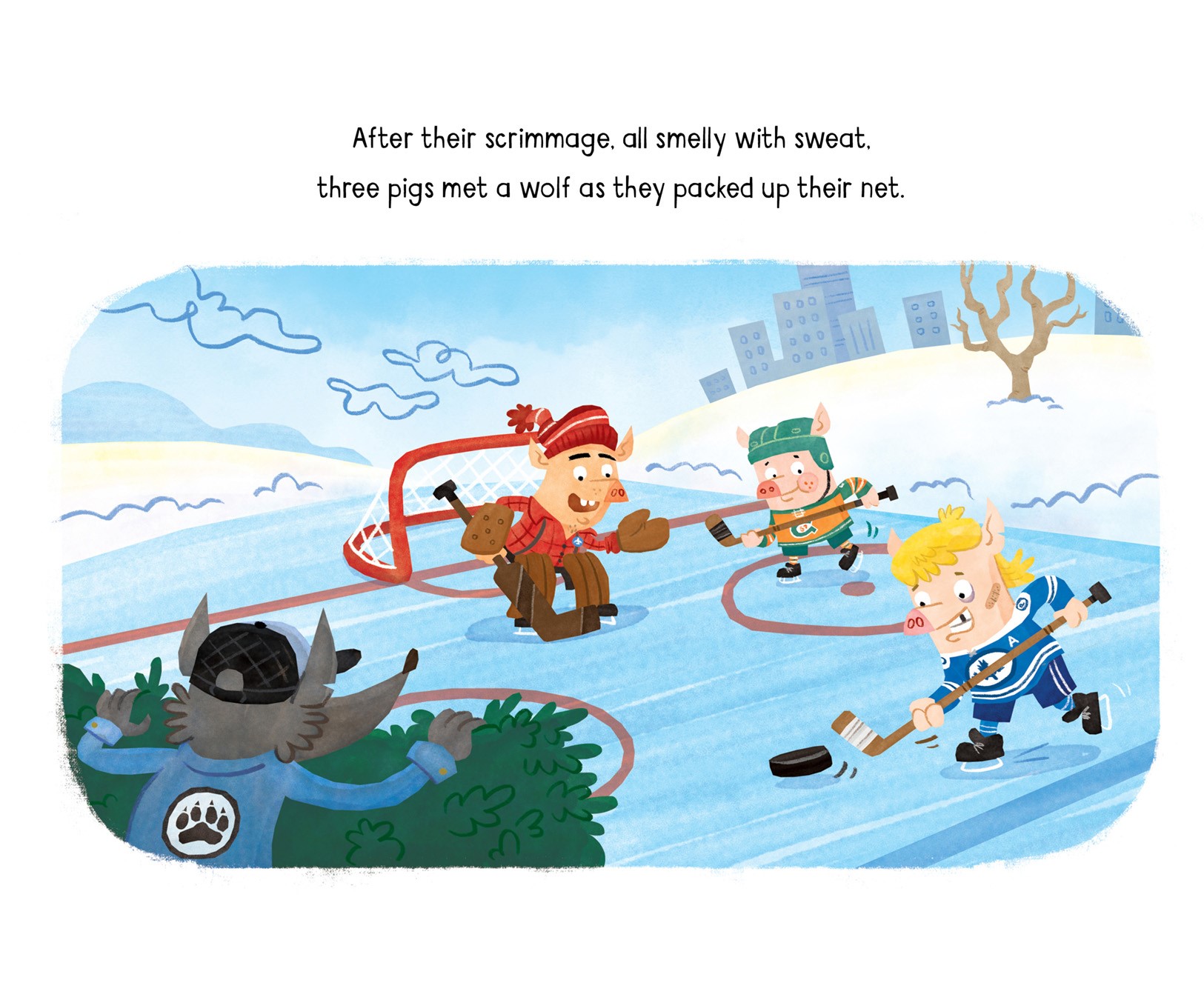
Jocelyn Watkinson took The Three Little Pigs, gave them a Canadian twist, and produced a fun picture book that children--and the adults who read this book to them--will really enjoy. 

When Wolf chases him down in his fancy Zamboni, the pigs cry out, 

"I'm sorry there, Wolf, you are sorely mistaken--"

and Wolf responds, 

"Oh no!  But I'm not! You're Canadian bacon!"

The puns and Canadian references only get better from there. 

Of course, Wolf goes to their modern-day snow fort cleverly designed by Marcus Cutler and of course, he tries to "huff and puff and blow it down." And of course the pigs reply,


Despite enlisting his friends Bear and Moose, the snow fort cannot be shaken. The pigs demand to settle their feud the "Canadian way"-- which of course, means on the hockey rink.


It's no surprise that the pigs take the lead. Wolf gets mad and resorts to some nasty moves.


Moose and Bear come to the pigs' defense and Wolf leaves with an empty tummy. But since the pigs are an honorable sort, they invite everyone back to their fort.

Now, wait up there, eh! There's no need to take off!
There's tons of great food back at home in our trough!

Wolf apologizes, "Pigs, I'm so sorry that I was a brute."

They wave him off with,


Then they all turned on the game, and they put up their feet...

and Wolf announces,

Being friends with Canadian bacon is sweet! 

                                                    ****
Jocelyn told me that she wrote The Three Canadian Pigs because she had moved to the U.S. and was homesick for Canada. She was working on some fractured fairytales when her mother said, "Do the three little pigs but make them Canadian!" This goes to show, we ALL need to listen to our mothers!

GOOD MORNING SUNSHINE! The Joey Moss Story by Lorna Schultz Nicholson, illustrated by Alice Carter


Lorna Schultz Nicholson has crafted a heart-warming story about Joey Moss, a man who became a Canadian hero.

The first spread shows the reader how Joey Moss loved to make people smile--just by being himself.  Then the book flashes back to September 1963 when Joey was born in Edmonton, Alberta, Canada. 


The fact that he was born with Down Syndrome didn't change how his family of eleven siblings welcomed him and incorporated his tambourine playing into their musical act.

Joey graduated from a special school for children with developmental disabilities and got a job working at a local bottle depot. It wasn't much fun and Joey had to catch several buses to get to work.

But, things changed when a family friend, Wayne Gretzky, saw Joey shivering at a bus stop one day.


Wayne helped Joey get a job working in the Edmonton Oilers equipment room. Despite being made fun of at times, Joey loved it!


Joey worked hard and the team loved his friendly enthusiasm.


The TV cameras focused on him when he sang the national anthem before games. After the Canadian Football League asked him to work for them also, he became so popular that people asked him for his autograph!

He helped out at charity golf events and modeled clothes at the Edmonton Down Syndrome Society fashion shows. 

Whether it was belting out "O Canada!" before a hockey game,


or helping people, Joey loved making people smile.

For the rest of his life, Joey Moss continued to be an inspiration for people and an advocate for those with disabilities.

Just by being himself, Joey showed the world that everyone can be a force for good, active in their community, and a positive role model.


                                                    ****
Joey Moss was an inspiration to Lorna and she is happy that she got to dance with him at the Edmonton Down Syndrome Society fashion show. The illustrations by Alice Carter are warm and inviting--just like Joey was. 

Here is a Joey Moss Tribute video that will help you realize why Lorna wrote this inspirational book. 


GIVEAWAY

I am giving away both of these books! Leave a comment with your name and email address, or send me an email if you prefer. Please let me know which book you prefer. If you share this on social media, you will get one extra chance; if you follow my blog you will get another chance. Tell me what you have done and I will enter your name accordingly. U.S. postal addresses only.  Please note that your comment will not show up until I approve it. The giveaway ends on March 9. 


Thursday, May 19, 2022

SO MUCH MORE TO HELEN! The Passion and Pursuits of Helen Keller: A Picture Book Biography and Giveaway

 What do you know about Helen Keller?

Many of us have grown up knowing the story of how Annie Sullivan taught Helen to sign her first word, "water" by the family's water pump. 


But as the title of this new picture book from Sleeping Bear Press indicates, there is much more to know. Written by Meeg Pincus (no stranger to my blog) with lush illustrations by Caroline Bonne-Müller,
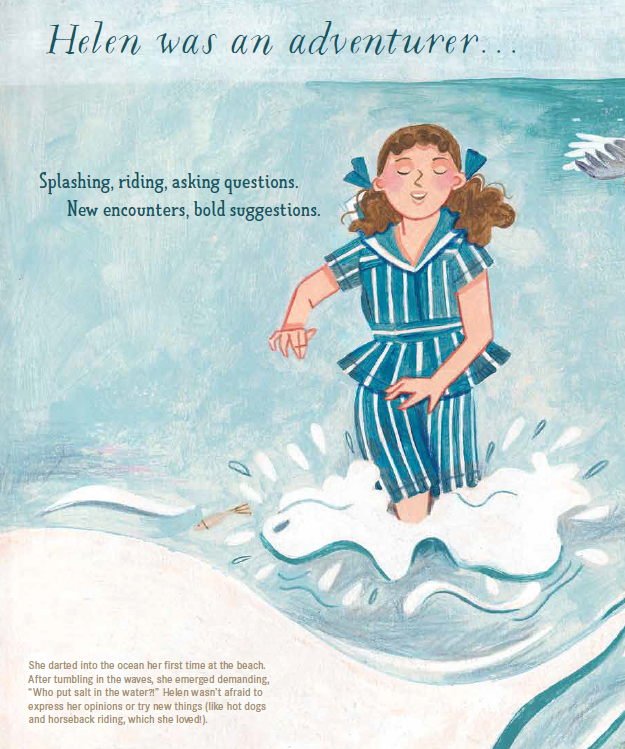
this book will appeal to Kindergarten-third grade readers. As you'll see from the illustration samples below, each spread includes basic information written in a rhyming couplet with additional details provided in a text box for older children. 

REVIEW 

On the first page, readers discover that Helen was a friend to a young black girl as well as to First Lady Eleanor Roosevelt and Inventor Alexander Graham Bell.

Then we discover that, 


And she was,


                Braille and signing, first through college.


Helen was a dog lover and an author...

            Always writing, never slowing.
            Essays, books, and stories flowing.


Helen was an activist, a jokester, and also, 


Did you know that Helen was a romantic who fell in love with Peter Fagan, a journalist? Her parents wouldn't allow her to marry him since many people at the time didn't think DeafBlind people should marry or have children. 

Indeed, Helen was a survivor. 


            Discrimination, heartbreak, grieving.
            Never gave up, kept believing. 

She traveled to five of the seven continents as a humanitarian and peacemaker.  After the World Wars, she visited wounded soldiers and damaged cities to help foster goodwill and healing. She gave speeches in packed amphitheaters and met with world leaders as well as everyday struggling people.

Helen was a changemaker.


Fought for those with deafness, blindness.
Laws, employment, schools--and kindness.

The last spread shows thirteen individuals with either visible or invisible disabilities. 

BACK MATTER

The last two pages include more details and quotes about each "job" that Helen had. There is also a smaller version of the last spread identifying the thirteen "solutionaries" (someone who tries to solve problems for people, animals, and the planet) and what their disabilities and accomplishments are.

Meeg includes her interest in Helen Keller which stemmed from a high school project. She ends with, "I hope this book inspires you-- whatever disabilities or challenges you may face--to follow our passions and be a solutionary too."

This is an excellent curriculum resource, but I wish a bibliography was included for students and teachers who wanted to read more about this DeafBlind heroine. Click here for Meeg's Free Teaching Tools.

For more of the author's backstory, please see Kathy Temean's blog (and another giveaway!). 

And check out this book trailer:


GIVEAWAY

Leave me a comment (with your last name and email address if you are new to my blog) by May 23 to enter the giveaway. U.S. addresses only. 

Congratulations to Terri Michels who won Ribbit! The Truth About Frogs.

Thursday, January 13, 2022

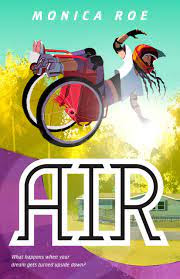
INTERVIEW WITH MONICA ROE, AUTHOR OF AIR, and a GIVEAWAY- PART II

 In my last post I shared Monica Roe's debut middle grade novel, Air.  Today you're going to hear why Monica was uniquely prepared to write this book, her path to publication, and why bees and Alaska each have special roles.

In the author note at the end of Air, Monica relates that in her job as a pediatric physical therapist, she looks at what physically disabled children can do--with or without help. Once she was asked to help determine if a junior high student needed a one-on-one aide. Once you read Air, you'll see how coming alongside of that student and evaluating what he could do and what the school needed to provide, helped provide the framework for Air.

AUTHOR INTERVIEW

CAROL: How long did you think about this idea before you started writing Air? 


MONICA: I'm a bit of a squirrel when it comes to ideas. I grab onto bits and pieces (often quite randomly) and sort of burrow them away for later. I originally started thinking about the first bits of the story back in 2014. Other glimmers and scraps came to me for a few years after that, including the experiences I recounted in the author's note.  

CAROL: I’m curious—are you a plotter or pantster? Mostly I want to know if you “saw” the story pretty quickly because of working with that student, or did the idea evolve. If it evolved—how long was your brainstorming process?


MONICA: I have to write from a plot outline, I've learned, or else I find myself endlessly writing myself into corners and dead ends. But the bits-and-scraps of idea collecting that I do beforehand generally takes quite a long time---I might jot down notes for months (or years) before I ever sit down to write that first outline.  


CAROL: The ending is brilliant and unexpected. Without giving away the ending, did you know what it was when you started, or did that evolve also?


MONICA: Thank you! The ending actually evolved rather unexpectedly to me, as well. I honestly can't remember when or how it came about, but I was pleasantly surprised when it did. I think that nailing down the title helped a bit--as I wrote and revised, it become a sort of repeating motif of sorts, which led me to all sorts of fun little moments of connection that I hadn't expected. 


I can only chalk it up to the magic that can sometimes happen when we as writers really let ourselves trust the process--and our subconscious. 


CAROL: How long did it take to write?


MONCA: I honestly don't remember how long the actual writing process was. I know that I drafted the last half of the book fairly quickly (over three very intense weeks). But the initial outline and the first half of the draft took a lot longer, I think. 


CAROL: How did you find your agent? 


MONICA: I'd spent some time in the query trenches back in 2015-2016 with another novel and promptly racked up an impressive stack of close to 50 rejections. Jacqui and I met at VCFA and had been in workshop sessions together while there. We knew one another's writing and had traded pages here and there after graduating. We reconnected after she began agenting and she reached out to me when she was building her client list. I was very, very lucky. It was one of those lightning-strikes moments I least expected.  


CAROL: From PW, it seems as if the book is getting published in about a year, which is incredible! Is that true?


MONICA: The pandemic played a bit of havoc with that timeline. I think the book sold back in May 2020 and it was originally slated for a Fall 2021 release. COVID ended up pushing that back to Winter 2022, which ended up being a good thing. As an added bonus, Air is now launching on the ides of March, which is fun.  


CAROL: Can you tell us anything about signing with FS&G?


It was a pre-empt--the editor who initially offered asked my agent and me if we'd put a brief hold on considering any other pending offers to allow a window for some negotiating. We were pleased with what FSG came back with and were thrilled and grateful to sign with them. 


MONICA: What helped you most in writing this book?


I suppose this book really arose fairly organically over time, drawing upon various facets of my professional and personal life, my research and advocacy interests, my own rural background, and--at the end of the day--just the plain old desire to write a story about an ordinary kid full of big dreams and determination who wants to do things in her own time on her own terms.  


CAROL: How did you nail Emmie’s voice? 


MONICA: I'm very much a character-driven author (which is why I have to force myself to work so hard on plot!). Quite often, it's a character's voice that comes to me first--long before I have any inkling of a storyline or other more concrete details. It usually comes to me fairly unbidden and I'm often surprised by what my characters have to say and how they say it. I was born and raised in a very rural and working-class community, so rural voices are often the ones that I hear most clearly in many of my characters. 


CAROL: You obviously have the credentials to write this book. But have you wondered/worried if anyone would question you writing it since you’re not disabled?


MONICA: Worried, no. Rather, I'd say that I feel a great responsibility to do this particular story justice. Air takes aim at a lot of tropes, stereotypes, and assumptions that still exist far too widely regarding disability and those who identify as disabled--most of which I've encountered or observed firsthand either in society at large or in my own professional career, research/advocacy, and personal life. I do absolutely feel the gravity of my choice of POV character and I both expect and hope for all the questions and feedback as to why I chose to write Emmie as I did. There are many, many identities and backgrounds which I would never consider myself equipped or appropriate to write and I feel strongly that we as writers must fully embrace and thoughtfully consider the question of which stories we are best (or not) equipped to tell. (Also, any day I get to talk about the social model of disability is a good day, as far as I'm concerned!). 


I am very grateful to the two excellent authenticity readers who read the manuscript with a specific eye to my portrayal of Emmie and provided thoughtful and insightful feedback. 


I think that sometimes there's a default assumption that all help is helpful as long as intentions are "good." But plenty of clear feedback from within the disability community begs to differ. At its heart, Air is a story about community and accessibility--and how hard it can be to change longstanding assumptions, especially within one's own largely loving community, and how hard it can be to speak up for oneself in the face of well-intentioned ableism. I knew from the start that the main character was a young girl and aspiring athlete who comes to realize that her school's lack of architectural accessibility--and her community's assumptions about her abilities--have actually (if unintentionally) led to her being held to a higher level of scrutiny than her peers. And then she takes action to help them see that! Had I told that story from the point of view of a character who didn't ride on wheels (and therefore wasn't the one directly affected by the school's policies), I think the story would have risked cutting far too close to saviour-ish territory, which I absolutely did not want. It was very important to me that Emmie be the one to both face this unjust (and unfortunately all-too-common) situation--and also that she be the one who gains the agency and the assertiveness to be the change-maker (as opposed to having someone else come in and do it for her). 


CAROL: What type of research did you do?


MONICA: I did do a fair amount of research on WCMX, since I--sadly!--do not share either Emmie's athleticism or her passion to become involved in that particular sport. I also brushed up on some of the finer details of the historical timeline of the disability rights movement in the United States, particularly the 504 sit-ins. 


CAROL: What did you think of the cover?


MONICA:  It exceeded my hopes in every way. I was also quite surprised and pleased with the amount of input I was given on the cover, especially in the fine-tuning stages of the process. Before any illustrations were made, my editor asked me to make a Pinterest mood board for the team with some images and ideas that captured how I imagined the cover might look, which was a lot of fun. 


Mallory Grigg (cover designer) and Oriol Vidal (cover artist) were phenomenal to work with. They were extremely responsive to the input I offered on early versions of the cover and ultimately captured the energy, ethos, and place of the story in a pitch-perfect way. I couldn't have been more delighted or grateful for their amazing skill and vision. 


CAROL: Why bees?


MONICA: My husband and I have kept bees for about ten years now-- just a small apiary next to the Congaree Swamp. We've kept as many as 24 hives and as few as 2, depending upon the year and what else we've got going on. These days, since we divide our time between Alaska and South Carolina, we only have a handful of active hives and are fortunate to have family nearby who help care for the bees when we're not around. 


CAROL: Why Alaska?


MONICA: I wanted to create a character who lived far away from Emmie, yet became an unexpected confidant and mentor. Alaska seemed a logical choice--it seems to have a bit of a mystique, particularly among those who've not experienced it firsthand, and I thought that a fiesty, independent grandma who lived life her way on a tiny Alaskan island would be someone Emmie would find fascinating--and perhaps a potential role model in some ways. 


GIVEAWAY 

You have THREE chances to enter this giveaway. Leave a comment here and you get one chance. Leave a comment on the review for a second chance. If you click here and discover how I met Monica and leave a comment there--your name goes in the hat three times! U.S. addresses only. Giveaway ends January 17th at noon. If you don't want to leave your email address, please email me and I'll enter your name. Make sure you leave your name and email address if you are new to my blog!

And if you don't win, I hope you consider purchasing this book for yourself, a young reader in your life, or a library. Pre-orders help authors!

Monday, September 9, 2013

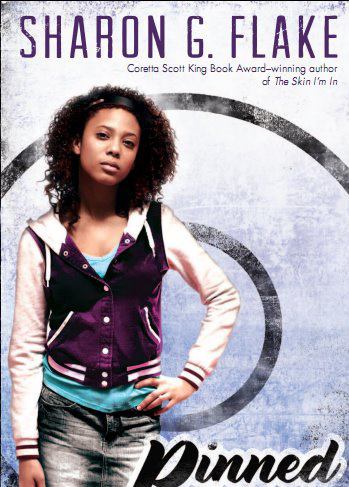
Character + Plot = Pinned

Congratulations to Jeannie Smith who won Deanna Klingel's book, "Cracks in the Ice."

Writers have ongoing debates as to which is better, a character-driven story or one that is plot-driven. Obviously, both well developed characters and engaging plots are vital for a successful novel. As Rebecca Petruck said in a recent post, "Character and plot are Siamese twins. We must have plot to navigate so that we can experience how it would feel, but we only care about plot in how it reveals a character’s experience and feelings (her reactions)." 

I've been working on my two protagonists' character arcs for Half- Truths, deepening my knowledge of who they are, and asking them each about what they want and why (yes, novelists do "talk" to their characters!).  In the process, I am discovering just how much character influences plot and visa versa.

So, when I read (or listen) to a book, I am trying to figure out how the author has brought her characters to life and what their journey--or character arcs--are. 

Enter the latest book I have listened to:  Pinned by Sharon Flake. I thought as an exercise for me and to give you a taste of this excellent young adult book, I'd give a brief description of the characters and their arcs. But don't worry, I'll try hard not to include any spoilers. 


Adonis Miller is a brilliant 9th-grader who manages the school's wrestling team, tutors fellow students, and volunteers at the library--all from his wheelchair. He values honesty, hard work, and has little patience for students who don't apply themselves in school. 

Autumn Knight is the only girl wrestler on the school team, reads below her grade level, hates math, dreams of opening a restaurant, and loves Adonis. She is attractive, friendly, and brutally honest. 

The book opens by showing each character's normal: Adonis is busy with school work and managing the wrestling team and is annoyed by Autumn who will not leave him alone. Although Adonis detests girls who aren't smart, Autumn plagues his dreams. Adonis wants to do well in high school so he will be admitted to an excellent college. 

Autumn lives to wrestle; she is good at it and knows it. She dismisses her academic struggles although in the background, her parents (who also have difficulty reading) are beginning to pressure her to bring up her grades. Autumn wants to excel at wrestling, get Adonis to like her, and wishes that her failing grades wouldn't matter. 

Told from alternating points-of-view, Flake shows how both Adonis and Autumn seek to obtain their goals and are frustrated either by themselves (Autumn's inability to focus on her work leads to poorer grades and removal from the wrestling  team) or by each other (Adonis wants not to like/be seen with a girl like Autumn but is drawn to her). 

Although Adonis feels as if he is perfectly adjusted to the fact that he was born without legs, memories of a time when he was totally helpless plague him. Autumn matter-of-factly accepts his disability and texts him,

"Disabled is me not being able to read. And you with out legs. So (u+me) = perfect. Right?"

Her honest observations about how they are both "stuck" in their predicaments helps Adonis get out of his friendless world. Flake avoids the simple solution of Adonis becoming Autumn's tutor, but allows Autumn to figure out how (and why) she will learn how to read.  

Read this book to enjoy a powerful novel with wonderful, authentic voices. And after you do, you'll understand the title of this blog.

THE NIGHT WAR: A MG Historical Novel Review

  By now you should have received an email from my new website about my review of THE NIGHT WAR by Kimberly Brubaker Bradley. (It'll com...