Showing posts with label voice. Show all posts

Monday, July 30, 2018

Between The Lines: A Review and Audio Book Giveaway

Congratulations to Connie Saunders who won Behind These Hands from last week's blog.

********

Nikki Grimes' sequel to Bronx Masquerade, BETWEEN THE LINES (Penguin Random House, 2018), combines narrative and free verse in a moving book about teens whose lives are changed through poetry. The audio book published by Recorded Books is narrated by different actors; each eloquently expresses a different character. Listen or read this book and you'll reach the same conclusion that I did: Grimes masterfully created authentic voices and personalities for the six different point of view characters. 


REVIEW

For various reasons ranging from a desire to write poetry to attendance only because of a guidance counselor's suggestion--the students in Mr. Ward's poetry class are thrown together. The universal theme of wanting to belong weaves the students and their poems together. This commonality provides the reader a window into the the personal and interpersonal struggles and triumphs they face.

The reader first hears about Darian, a Puerto Rican teen who sees himself as a newspaper man, not a poet. He lost his mother to breast cancer and by the end of the book his poetry gives him a way to express his grief. 

Private Pain


Numb, I sit on the edge
of the bed
Mami y Papi share.
Shared.
I feel light as the ghost
my mother has become.
Her picture 
on the bedside table
looks blurry until
I wipe my eyes.
"Pobrecito," she would say.
If she were here,
if she were anywhere
in this world.
"Mijo," she would whisper
and touch my cheek,
and I would answer,
"Mami."
But this time,
The word never leaves
my throat.
And what difference
does that make?
When I wasn't looking
Mama's heart stopped
like a broken clock.
Half past 36,
the final tick,
the final tock.
Explain to me
exactly how 
I'm supposed to
tell time now. (pp. 130-1)

**********

Li Cheng is "all Chinese and all American." Her poetry is full of "contradictions which squeeze into one small body."

Threads


How can I explain
the duality of Li?
The muffled sounds
of mah-jong tiles touching,
clicking together,
flips a switch in me
as my parents follow
the ritual 
of the ancient game.
The Mandarin calligraphy
clinging to our walls
sends my soul sailing 
to rice paddies
oceans away,
to the land of silk,
red sunrises,
and the jade mountain peaks
my parents
often speak of.
China whispers 
through their blood,
You are part mine.
Remember!
And I nod, silent
and ashamed
that my untrained
American lips
are unfamiliar 
with my ancestors'
local lingo. (pp. 26-7)

************

Jenesis has been placed in thirteen foster homes and is worried about aging out of the system and having nowhere to live. Here is some of her story. 


Blue Eyes Squared


I see you staring at me.
You be boring a hole in my soul
as if the alchemy
of your curiosity
could somehow turn
these blue eyes brown,
but you might as well forget it.
You frown at my blond curls,
even though girls with hair
the color of sun
the color of spun gold
are supposed to have more fun.
At least, that's the story
they try to sell on TV.
Yeah, I'm different, but
don't call me freak
or assume I'm the only one.
There are bound to be
other brown beauties
with pale blue eyes
eerily like mine,
wearing smiles crooked
in exactly the same way,
noses that scream
matched set.
Are there more like me?
Yeah, you bet.
When I find them,
I'll fit in without question,
never mind that
the world thinks
I'm odd as H-E-
well, you get it. (pp. 33-34)

***********

Val feels the pain of the prejudice her father faces as an Argentinian immigrant.


What You Don't Know


Mi padre, Ignacio,
is a book you haven't read.
It's filled with poetry
that can curl its fingers
around your corazón 
and squeeze out joy.
Pero you've never
cracked the cover.
You scribble crítica  
that questions
the measure of the man,
but you've never
 peeled back the pages
of his biografía.   
You toss el libro
onto the trash heap
marked "Immigrant"
y ustedes dicen it has no value.
But, of course,
you are categorically incorrect,
which you would know
if only you could read
las palabras.
If only you, too,
were blessed
to be bilingual. (p. 51)

*******

Marcel has been labeled a troublemaker. His past includes his father's unjust imprisonment and how that demoralized him and shattered their family.

Troubled (partial)

What is it
with people and their labels,
as if the way they mark me
makes them able
to understand who I am
or why?
"Troubled kid"
tells you exactly nothing
about the trouble
my pops has seen 
or Moms
or me.
We stare from windows 
caged in iron,
in state prisons
or rented rooms,
which are only better
by degree.
We are forced
to survive outside
the neatly mowed landscapes
of your imagination.
Our stop on the train station
is worlds away
from your manicured lawns
and lives
and the lies you tell
about the days
of racial discrimination
being in the past.
Quit asking
why I'm angry
or I'll tell you. (pp. 39-40)

*******

Freddie takes care of her eight-year-old niece and her alcoholic mother. This is a portion of one of her poems.

School Rules


Stage right,
the lights fade on a daily life
of tiptoeing around
my niece's feelings about the mom
who traded time with her
for time spent cozying up to crank.
The truth is too rank
for her tender little-girl ears.
And so, until she's fast asleep,
I keep bitter thoughts
under my tongue's lock and key.
Have I mentioned how it hurts me?
That neither my niece nor I
manage to have a mother
worthy of the name?
Oh, mine is present,
in an alcoholic-fog kind of way,
which is to say, hardly at all. (p. 148)


*******

Nikki Grimes stitches a story together so real and touching that after the boys vs. girls poetry slam which produces outstanding poetry on both sides--I want to know what happens to each character. This would be a great curriculum resource for teens: some readers will resonate and identify, others will be informed by stories much different than their own. Read it out loud in reader's theater. Let it inspire you and your student to write poetry. The results may surprise you.  


Giveaway

I am giving away my audio book, courtesy Recorded Books. Leave me a comment with your email address if you are new to my blog. Random.org will pick a winner on August 3.


Monday, July 9, 2018

Smack Dab in the Middle of Maybe: A Review and ARC Giveway

Introducing Jo Hackl

Over two years ago I had the pleasure of sharing Jo Hackl's path to publication. (Both Part I and Part II are great reading; Jo shared how she came up with the ideas for the book and the process of acquiring a publisher). Jo and I have been friends through SCBWI-Carolinas for over ten years, and now that her hometown of Greenville, SC is also mine, I proudly claim her as my critique partner also.

It is with great joy and pride in her publishing accomplishment that I share my review of Jo's debut middle grade novel, SMACK DAB IN THE MIDDLE OF MAYBE. 


Review


Read these opening paragraphs and hear voice oozing out of every sentence:
Turns out, it's easier than you might think to sneak out of town smuggling a live cricket, three pocketfuls of jerky, and two bags of half-paid-for-merchandies from Thelma's Cash 'n' Carry grocery store.
The hard part was getting up the guts to go.
 It happened like this: There I was in Thelma's produce section, running my fingers up and down a bundle of collards. Collards never did make for good eating, but I was wondering if maybe they were some kind of sign that it was time for me to skedaddle. Collards always reminded me of Mama. She used to make me drawing paper out of collards, sumac seeds, dryer lint, and newspaper Daddy chopped up in his wood chipper. She plunked things in her paper the way other people stuck things in scrapbooks. Thread from the hem of her wedding dress, a four-leaf clover, Daddy's first gray hair. Mama's paper held so much life, it made my drawings pop off the page.
That was the kind of Mama and Daddy I used to have.  (p.1-2)

Who wouldn't keep reading after a hook like that?

Soon the reader discovers that Cricket is on a quest to find Mama who ran off and left her with Aunt Belinda. Taking a cricket who she names Charlene, a little bit of food, her father's pocketknife, a doogaloo, and a small notebook full of Mama's paper, she sets off. 

By nightfall she gets to the woods near her family's property. Here is a setting description that I used in my writing classes this summer: "The woods smelled like a hundred and fifty years of dark. A goose-bumpy ghost-town kind of dark."(p. 19)

She climbs into the tree house that "smelled like cedar, clean and wild," which her father built before he died. There, she reviews a letter addressed to her mother indicating her Grandmother's tombstone was to be placed on March 1-- in exactly eleven days. On it her mother had scrawled before, "I'm off looking for my birds." This brings back memories of all the times her mother left to find the "Bird Room" so she could prove it was real. 

With her few supplies, Charlene to keep her company, hope, and a pocketful of clues, Cricket begins her quest--but first she has to learn how to survive living outdoors. 

Like all good stories, Cricket's search has several twists and turns that test her gumption:  raccoons steal her food, snow, and a copperhead bite. The last is too much for her to deal with alone and she seeks help from Miss V., an eccentric woman who provides more answers about her mother and the bird room than Cricket could have dreamt of. At the same time that the story moves forward, the author provides bits and pieces of backstory that help put the puzzle pieces together. 

SMACK DAB is not only a story of outdoor survival or putting puzzle pieces together. It is also a story of a young person coming to grips with her mother's mental illness. Beautifully woven into the text is Cricket's slow realization that her mother's behavior was eccentric, unexplainable, and unstable. Like Laura in CRAZY by Linda Phillips, Cricket begins to see a different picture:
What about all the sharp looks in the grocery store? The looks at Mama. The looks at me. 
If my mama was crazy, just what exactly did that make me? 
The floorboards felt like they were shifting. Nothing felt solid. I grabbed hold of the wall. 
Is this what going crazy feels like? (p. 141)


After I finished reading SMACK DAB I told Jo, "When I grow up I want to be like Cricket." Readers young and old will be inspired by Cricket's courage and spunk--as well as her love for her mother and the truth. And of course, also for her love for the outdoors.


Trailer

Just in case my review didn't sufficiently entice you, here is the trailer:


Giveaway
I took this picture when Jo hand-delievered
the ARC to my house!


Please leave your name and email address (if you don't think I have it) in the comments for my gently read autographed copy of this ARC. Winner will be drawn on July 13. Jo, our expert for the summer issue of Talking Story is also giving away a personally autographed copy too (anyone see an outdoors theme here?). Share this post on social media (and tell me what you do) and I'll enter your name twice. 

Monday, August 31, 2015

Two Girls Staring at the Ceiling: A Review and a Giveaway!

Sometimes titles of books are difficult to come up with. But when I consider, Two Girls Staring at the Ceiling (PenguinRandom, 2014) I think, Lucy Frank, this title is perfect. 


Written out of Ms. Frank's own battle with Crohn's disease, this novel-in-verse is simultaneously beautiful and earthy. The premise is simple and as alluded to by the title, focuses on two young women--as opposite in lifestyle, character, and background as you can imagine--who share a Crohn's disease diagnosis, as well as an hospital room. 

This is not exactly a book written in two-points-of-view, but then again, it is. As Ms. Frank explains before the novel commences, the line down the center of many pages represents the curtain separating the two hospital beds. No line means the curtain is open or that Chess, the main character, is no longer in the room. The reader is told that the verses on the left belong to Chess; those on the right are Shannon's. Although the reader discovers more about Chess' backstory and struggles, Shannon's history, pain, and family relationships are also gradually revealed. This format is a clever way of presenting this story. 

Like drips out of Chess' IV bag, the reader slowly begins to understand the events leading up to Chess' hospitalization. Although readers might guess that the date Chess had before she was taken to the ER culminated with sexual harassment or rape, the truth of a beautiful night which ended in disaster is slowly revealed. 

To show you how well this book is written, here are some segments. (Since I can't mimic the 2-columns of the book, I've put Shannon's words in blue.)
Bald-head doctor's voice too fast, too smooth, too jolly, hearty, way too close, drawing squiggly pictures of intestines as Mom nods and peppers him with questions I can't listen to.
I don't know this hard and tough language. Don't speak Disease.
And I am so tired,
I close my ears until he's gone,
and through the curtain Shannon mutters:
"Duh. I could've diagnosed her two days ago. You don't need to be a friggin; genius to know she's got Crohn's. Same as me. Crohn's. Inflammatory bowel--" 
"Excuse me?" 
C-words ricochet around my brain.
"You don't know me!You know nothing about me or my..."
My mouth runs screaming from the B-word.
"Mom. Could you see if this curtain closes any tighter?
"Fine with me.Who said I was even talking to you? I'm just saying it pisses me off, these turkeys talking about tough.They wouldn't know tough if it bit them on their flabby ass." (p. 73-4)

 ***********

And I whisper to the dark:
"I wish I could be just me. Without my body."
Then through the curtain,
so soft
I hardly know
it's her:
"Sometimes it helps if you imagine purring. One of those big old stripey-I'll just stand here on your pillow and keep this going all night long as you don't do something to annoy me-tomcats with a rumbling purr that quiets down your breath and helps your heart un-hurt.
"Anyway. That's what works for me sometimes." (p. 105-6)
 **********
Even if you've never faced a life-threatening illness, there's much to appreciate about this award-winning novel. I can understand why it won the 2011 PEN/Phyllis Naylor Working Writer Fellowship and was picked as one of the Best Teen Friendship Books of 2014 by Kirkus.

But don't just take my word for it. View this trailer, and leave me a comment by 9 AM on September 3 to win this book. If you are new to my blog, please leave me your email address. If you start following my blog or share this on Facebook or Twitter, I'll enter your name twice--just tell me in your comment. If you don't win, buy this book for the teen reader in your life who feels as if she's battling a disease or situation which makes her feel scared and alone. 


This review was originally published on LitChat on August 18.

Monday, July 13, 2015

SCBWI Florida Workshop Part VI- Holden and Augustus: What We Mean When We Talk About Voice in YA

This is my sixth post from the 2015 Florida SCBWI young adult workshop with Erica Rand Silverman, an agent with Sterling Lord Literistic, and Jacquelyn Mitchard, author and editor-in-chief at Merit Press. Click here for Part I  (Why Write Young Adult); Part II (Querying); Part III (Pitches); Part IV (Marketing Yourself and Your Work); and Part V (Building a Lasting Career).


Jacqueline Mitchard
facilitated this part of the workshop 
    Using Augustus Waters from Fault in our Stars by John Green and Holden Caulfield from Catcher in the Rye by J.D. Salinger as examples, Jacqueline Mitchard made the following points about creating voice:

  • This is not the time to be restrained.
  • Teenagers are dramatic. They’re over the top. Now or never. Black or white. Let them tell their stories. Speech can be overblown. Let out the drama queens!
Examples of how teens talk:

“My life is over.” 
“No none is ever going to love me again.” 
“I’m a total loser.”

  • Teens blurt stuff out. They make mistakes in judgment.
  • They're self-centered. A girl doesn’t care if the world blows up, unless it ruins her hair. What they care about the most is themselves.  Madly self-invested.
  • Teens focus small. Is she going to get what she needs to survive?
  • Write in bursts. Not necessarily grammatically correct. Use syntax and rhythm to create patterns. Awkward speech mimics the natural and conversational talk of teens.
  • Teens have heartbreaking passion and honesty. All their money is in the middle of the table all the time.
  • The way the character perceives the world shows who he or she is. Using this information develops deep POV.
  • Teens are all about self-sacrifice and loyalty. Who you are within the tribe is very important. Novelists must create a personality and moral structure. The novel will be about how the character changes and grows.
Erica Rand Silverman added: Teens have a strong sense of fairness and justice. Most of them are dedicated to learning and school. They have lots of thoughts and a lot of time to notice things.
***********
Personal note: Writing this blog post legitimized the fact that both of my protagonists in Half-Truths are prone to exaggeration. It also made me think about how I was the same way as a teenager--self-absorbed in my own heady thoughts! Remembering my own life experiences will help me make Lillie Harris and Kate Dinsmore more authentic.  

From: Writersdock.com

Here is a narrative exercise to help you work on the voice of your characters. Write twelve lines of dialogue in which one teen has a secret that he or she is trying to keep from the other teen. Use ONLY speech. No tags or descriptive beats allowed! Feel free to share your writing in the comments if you try this exercise.

*******
This series of posts concludes next week with Erica's and Jacqueline's answers to some FAQs and other miscellaneous nuggets. I'm glad that these posts have been helpful to many of you!

Monday, September 8, 2014

Learning Character Internalization

Congratulations to Lindsay Fouts, my new blog follower, who won James Scott Bell's book, Plot and Structure.

*********
As I begin the fourth major draft of Half-Truths, I need to attack some of my writing weaknesses. According to my writing coach Rebecca Petruck, I have to work on my "internal-life writing muscles." To do this, she assigned me this task:
Type several dialogue-free passages from books you would like to emulate. Type at least three pages to get the rhythm. Then, type at least five dialogue-free pages from Kate’s POV and then again from Lillie’s POV.... Think about the difference between rote description, and description that reveals something about the character. When you describe the external world around them, it has to be in order to reflect how they interpret it, what it means to them and how it feels.
I'm beginning this assignment by sharing a dialogue-free passage from the latest book I listened to, Dodger, by Terry Pratchett. An historical fantasy spin-off of Charles Dickens' character, the Artful Dodger, it is an entertaining and funny book--albeit at times irreverent. Here is a brief blurb from Pratchett's website for context: 
A storm. Rain-lashed city streets. A flash of lightning. A scruffy lad sees a girl leap desperately from a horse drawn carriage in a vain attempt to escape her captors. Can the lad stand by and let her be caught again? Of course not, because he's….Dodger….Dodger's encounter with the mad barber Sweeney Todd to his meetings with the great writer Charles Dickens and the calculating politician Benjamin Disreali, history and fantasy intertwine in a breathtaking account of adventure and mystery.

The following excerpt occurs after Dodger rescues the girl and "Charlie" Dickens and Henry Mayhew take them both to the Mayhew household. 
Twenty minutes later Dodger was sitting close to the fire in the kitchen of a house, not a grand house as such, but nevertheless much grander than most buildings he went into legally; there were much grander buildings that he had been into illegally, but he never spent very much time in them, often leaving with a  considerable amount of haste. Honestly, the number of dogs people had these days was a damn scandal, so it was, and they would set them on a body without warning, so he had always been speedy. But here, oh yes, there was meat and potatoes, carrots too, but not, alas, any beer. In the kitchen he had been given a glass of warm milk that was nearly fresh. Mrs. Quickly the cook was watching him like a hawk and half already locked away the cutlery, but apart from that it seemed to be a pretty decent crib, although there had been a certain amount of what you might call words from the missus of Mister Henry to her husband on the subject of bringing home waifs and strays at this time of night. It seemed to Dodger, who paid a great deal of forensic attention to all he could see and hear, that this was by no means the first time that she had cause for complaint; she sounded like someone trying to hard to conceal that they were really fed up and trying to put a brave face on it. But nevertheless, Dodger had certainly had his meal (and that was the important thing), the wife and a maid had bustled off with the girl, and now…someone was coming down the stairs to the kitchen. 
It was Charlie, and Charlie bothered Dodger. Henry seemed like one of them do-gooders who felt guilty about having money and food when other people did not; Dodger knew the type. He, personally was not bothered about having money when other people didn't, but when you lived a life like his, Dodger found that being generous when in funds, and being a cheerful giver, was a definite insurance. You needed friends--friends were the kind of people who would say: "Dodger? Never heard of 'I'm, ever clapped eyes on 'im, guv'nor! You must be thinking of some other cove"--because you had to live as best you could in the city and you had to be sharp and wary and on your toes every moment of the day if you wanted to stay alive. 
He stayed alive because he was the Dodger, smart and fast. He knew everybody and everybody knew him. He had never, ever, been before the beak, he could outrun the fastest Bow Street runner, and now that they had all been found out and replaced, he could outrun every peeler as well. They couldn't arrest you unless they put a hand on you, and nobody ever managed to touch Dodger.  
No, Henry was no problem, but Charlie--now, oh yes Charlie--he looked the type who would look at a body and see right inside of you, Charlie, Dodger considered, might well be a dangerous cove, a gentleman who knew the ins and outs of the world and could see through flannel and soft words to what you were thinking, which was dangerous indeed. Here he was now, the man himself, coming downstairs escorted by the jingling of coins. (pp. 6-7)
Rebecca encouraged me to figure out where my characters are coming from. In this excerpt, narrated by the omniscient narrator, but in Dodgers' close POV, I learn that Dodger is coming from a place where:

  1. He doesn't always get a whole meal.
  2. He's prone to illegal activity that is Dodger's normal; a fact of his life. 
  3. He is street smart and has friends on the street who cover for him (and the reader assumes, he does the same for them).
  4. He looks suspicious to the cook who has to "hide the cutlery".
  5. He is very observant. Notices the cook's mistrust, perfectly assesses Mr. Mayhew's character, communicates his own distrust of Charlie Dickens and why. 
  6. He's "bothered" by people who can read him, as well he can read others.
  7. He's proud of his abilities to outsmart the police. 
In other words, Dodger sees the world of London through a lens of "I have less money than the rich, but that doesn't bother me, because by my wits and speed, I get what I need." The reader meets a character who feels confidant about himself and moves with ease--unless he is up against another person who is equally good at reading people and their motivations as he is.

Pratchett has portrayed a character who I want to find out more about and who I want to root for-- as he goes from being a tosher (one who scavenges London's sewers) to a…wait, I don't want to spoil this book for you!

This week I'll be attending the Table Rock Writer's retreat where I'll be studying with John Bemis and Dawn Shamp. I'm hoping to strengthen my "internal-life muscles." 

So, watch out Kate and Lillie! You're about to grow deeper, inner lives. 


Tuesday, October 8, 2013

Guest Blogger for Write2Ignite

Last year at this time I attended the Free Expressions seminar, Your Best Book. If you missed my recap of that great writing workshop, today I am guest blogging about it at Write2Ignite. I hope you'll click on over to learn more about "Creating Voice and Deep Point of View."

Lorin Oberweger, Brenda Windberg, Emma Dryden, and me!

**********************************************
Congratulations to Gail Hurburt who won Lisa Kline's book, Season of Change and thanks to all who entered. Stay tuned for more giveaways later this month: Hill Hawk Hattie by Clara Gillow Clark and Birmingham, 1963 by Carole Weatherford. 

Monday, September 9, 2013

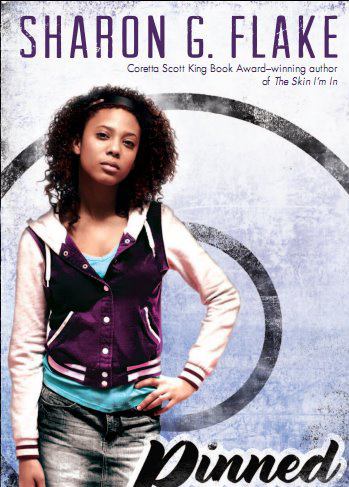
Character + Plot = Pinned

Congratulations to Jeannie Smith who won Deanna Klingel's book, "Cracks in the Ice."

Writers have ongoing debates as to which is better, a character-driven story or one that is plot-driven. Obviously, both well developed characters and engaging plots are vital for a successful novel. As Rebecca Petruck said in a recent post, "Character and plot are Siamese twins. We must have plot to navigate so that we can experience how it would feel, but we only care about plot in how it reveals a character’s experience and feelings (her reactions)." 

I've been working on my two protagonists' character arcs for Half- Truths, deepening my knowledge of who they are, and asking them each about what they want and why (yes, novelists do "talk" to their characters!).  In the process, I am discovering just how much character influences plot and visa versa.

So, when I read (or listen) to a book, I am trying to figure out how the author has brought her characters to life and what their journey--or character arcs--are. 

Enter the latest book I have listened to:  Pinned by Sharon Flake. I thought as an exercise for me and to give you a taste of this excellent young adult book, I'd give a brief description of the characters and their arcs. But don't worry, I'll try hard not to include any spoilers. 


Adonis Miller is a brilliant 9th-grader who manages the school's wrestling team, tutors fellow students, and volunteers at the library--all from his wheelchair. He values honesty, hard work, and has little patience for students who don't apply themselves in school. 

Autumn Knight is the only girl wrestler on the school team, reads below her grade level, hates math, dreams of opening a restaurant, and loves Adonis. She is attractive, friendly, and brutally honest. 

The book opens by showing each character's normal: Adonis is busy with school work and managing the wrestling team and is annoyed by Autumn who will not leave him alone. Although Adonis detests girls who aren't smart, Autumn plagues his dreams. Adonis wants to do well in high school so he will be admitted to an excellent college. 

Autumn lives to wrestle; she is good at it and knows it. She dismisses her academic struggles although in the background, her parents (who also have difficulty reading) are beginning to pressure her to bring up her grades. Autumn wants to excel at wrestling, get Adonis to like her, and wishes that her failing grades wouldn't matter. 

Told from alternating points-of-view, Flake shows how both Adonis and Autumn seek to obtain their goals and are frustrated either by themselves (Autumn's inability to focus on her work leads to poorer grades and removal from the wrestling  team) or by each other (Adonis wants not to like/be seen with a girl like Autumn but is drawn to her). 

Although Adonis feels as if he is perfectly adjusted to the fact that he was born without legs, memories of a time when he was totally helpless plague him. Autumn matter-of-factly accepts his disability and texts him,

"Disabled is me not being able to read. And you with out legs. So (u+me) = perfect. Right?"

Her honest observations about how they are both "stuck" in their predicaments helps Adonis get out of his friendless world. Flake avoids the simple solution of Adonis becoming Autumn's tutor, but allows Autumn to figure out how (and why) she will learn how to read.  

Read this book to enjoy a powerful novel with wonderful, authentic voices. And after you do, you'll understand the title of this blog.

Monday, October 29, 2012

Free Expressions Takeaway Part I: Voice & Deep Point of View

 Last week, I joined fifteen other middle grade and young adult writers in an intense week of writing instruction orchestrated by  Lorin Oberweger, founder of Free Expressions seminars.  As we learned throughout the week, our books need to be closely seen and experienced through our character's point-of-view. Accordingly, in my next 5 or 6 blog posts I plan to experience the seminar through my point-of-view. I plan to share some of the writing craft points as well as feedback I received on Half-Truths. 

As Emma Dryden, an experienced editor and children's publishing professional,  said on our last day together when she gave us an overview of the digital landscape of publishing, "Buckle your seat belts, and get ready for the ride!"

When we introduced each other during our Saturday night get together, we were asked what superpower we wished we could have. After a moment's thought I replied, "I would like to be able to heal old hurts." My unexpected tears told me I had struck a chord. That bit of self-realization--that applies both to my life and my book--was a tremendous way for me to begin this seminar. 

My week began on Monday morning with much anticipated classes on Voice and Deep Point of View. Emma Dryden said, "Voice turns an "anyone" into a "someone." An author must employ word choice, sentence structure, vernacular, slang, idioms, to create the "poetry of speech." 


Emma Dryden

She told us that, "Voice helps identify characters in a setting. It lies beneath the actual words the characters use."  Underneath those words, our characters' bodies and eyes may say something else. "The emotions, motivations, fears, hopes, desires, internal trajectory of your characters should all be expressed through dialogue, actions, and thoughts." 

Going into the week I had wondered if my characters were exhibiting voice. Overwhelming feedback from my critique group and response to our daily writing prompts answered that question with a deep resounding "Yes!" So good to know. 

Later Monday morning, Lorin Oberweger, the mastermind and talented wordsmith behind Free Expressions, taught us about deep point of view. She introduced her class with the words, "Seduction—not instruction." In a nutshell, deep POV is about, "Creating a immersive rich environment on the page that seduces the reader. You want your reader to lose herself in your book." Writers want to avoid "Instruction" with a more distance POV that’s more authorial.  
Lorin Oberweger

As much as possible, writers need to see the world through their characters' eyes and experiences. The more we are inside our characters' skin, the greater our ability to write how their emotions dictate their responses. Lorin told us to use rich details to show who they are, what they love, and how their passions filter through their language and experiences. 


Later that afternoon, I had my one-to-one critique time with Lorin. She had many great things to say about my manuscript (Yeah!) but helped me to see some holes too (double yeah!). Both of my characters need clear external goals which they are striving for. And since they are fifteen-year-olds in the 1950's, my job is to show how they think about the world and their relationships in a more complicated manner that is also appropriate to their time period. Their passions and desires need to surface through their actions, thoughts, and dialogue. And not just their anger (which apparently I have down pretty well!)--but also their soft spots and sympathies. 

A tall order. 

But after a week with the staff of Free Expressions, I am excited to dig in and make this happen.

Now, back to work. 


Lorin Oberweger, Brenda Windberg, Emma Dryden, & me!
************
Lorin has generously allowed me to share some of her handouts with all of you.  Here is the first one,  Deep Point of View. Click "download file now" and it will open as a PDF file. 

Next week in Part II of this series, I'll share what I learned about creating deep scenes and how Gary Provost's sentence can shape your WIP. 


THE NIGHT WAR: A MG Historical Novel Review

  By now you should have received an email from my new website about my review of THE NIGHT WAR by Kimberly Brubaker Bradley. (It'll com...