Showing posts with label giveaway winner. Show all posts

Monday, December 7, 2020

FLY, FIREFLY! A Review and Picture Book Giveaway

 Congratulations to Connie Saunders who won the autographed copy of JUST BETWEEN SAM AND ME from last week's blog.


With the holidays coming up, I'm going to review and give away a few more books than usual. I know that many of you give these books to your children, grandchildren, nieces, and nephews. I enjoy passing them along and would love if you share pictures with their books on Facebook (please tag me and Sleeping Bear Press too) --as long as their parents don't mind!

Today I have another outstanding book written by Shana Keller and illustrated by Ramona Kaulitzki. Shana is no stranger to my blog but this is the first time I saw Ramona's evocative illustrations. 


With a few pictures and quotes from this rhyming picture book, I hope you will glimpse the beauty and hear the music in this story.

REVIEW


                                   to see the sea.


Attracted by bright lights in the ocean, the firefly ends up being whooshed out to sea. 


A young woman and her niece see him sink.

The woman wades in and scoops him out from the wet sand. Her niece explains to the firefly he is seeing bioluminescence swirling and twirling in the great sea. 


Cradling him in her hand, she brings him back to the tree line. 

"Trust us, you'll see. That glittering there is from the sea.
The glowing HERE is your own family.


CURRICULUM RESOURCE

This lovely picture book not only includes a message about the importance of "staying close" to one's family, but the back matter includes how Rachel Carson inspired this story and information about bioluminescence. Pre-kindergarten through second-grade teachers could use this book in their classrooms. See Shana's website for LOTS of ways to use this book as a resource. 


GIVEAWAY

Leave me a comment if you wish to be entered in this giveaway. PLEASE leave your email if you are new to my blog. If you are a new follower, I'll enter your name twice--just let me know! The giveaway ends on Wednesday, December 9 at 6 PM. 


Monday, January 5, 2015

Psychology 101, Dominoes, and Answers to the $64,000 Question

Congratulations to Ellen Sepnafski who won Eleanora Tate's book, "Just an Overnight Guest."
*******
For those of you who are writers, no doubt you have parried the question which friends and relations pose: 
"What's taking you so long to finish your book?"
This question, often accompanied by skeptical looks and eyebrow raises, may or may not accompany genuine interest and bemusement.  

I have heard it more times than I care to remember.

(If you aren't familiar with my YA historical novel Half-Truths, you can find a pitch and relevant blog posts here.)

I've been fortunate to work with Rebecca Petruck as my book doctor/editor/and all-around cheerleader. As I reflected on her feedback on a 34-page outline for Draft #4, I realized that her comments fall into three categories: psychology (deep characterization), dominoes (story events), and plot. Or,
     Psychology + Dominoes = Plot
(For a great explanation of plot and story, see this blog from the amazing folks at Writer Unboxed.)

So for your benefit (and for any of my relatives who happen to be reading this blog) here are some of Rebecca's suggestions which I need to incorporate into my next draft:

Psychology 101: Characters must always act true to their personality and the time period and/or story world. Rebecca is gifted at seeing deeply into who a character is and how he or she will act.  
  1. Kate's upper-class grandmother would NEVER ask her granddaughter to fix a barn in her Myers Park back yard. (And yes, my Charlotte friends--there were barns for animals in Myers Park in 1950. But fixing them would have been the help's job. Not the family's.)
  2. Lillie's parents would do whatever they could to help Lillie get an education. Lillie's mother wouldn't be jealous of Lillie's dreams; she would fear her daughter's dreams might take her far from home. (This observation was actually expressed by one of my African-American experts. Girls who went to college in the 50's stayed close to home in case they were needed.) Lillie's father would also want what is best for his daughter, including trying to protect her from disappointment.
  3. Kate's family wouldn't have moved off the farm in South Carolina unless it had been sold. Aging relatives who took them in years earlier would demand a "we'll stay here and help" mentality. 
  4. Lillie's anger would not be in realizing that she has "white blood" in her. She knows that already. It would be her connection to her employer's family that would send her over the edge.
Dominoes: Like dominoes falling, story events are supposed to naturally trigger other events, as shown in this image from  photobucket:
    dominoes photo: Dominoes dominoes.gif
  1. When Lillie passes there MUST always be the risk that she will be seen by her black friends. 
  2. If Lillie steals something from her employer, she's got to be caught with it. (Like showing a gun in a scene. It has to go off. Note: I took this scene out. Not only was it too difficult to figure out how she'd be found out, it was historically unlikely, and not in keeping with her personality  See points above in Psychology 101.)
  3. If Kate's father is in the Korean conflict, his safety will be of great concern throughout the book and will affect Kate's choices and actions.
  4. If Laura's mother's arc is contributing to the family's nest egg, then how will her growing independence from her mother-in-law impact Kate?
Plot:

Rebecca and one of her works of art:
my new plot chart.
  1. If this story is about an unlikely friendship between Lillie and Kate, then they need to meet as soon as possible in the book. In other words, that can't wait until Chapter 4. 
  2. If you open with something dramatic like a scene in a funeral home, you've got to revisit that place later in the book. 
  3. If Shirley was Kate's friend when she'd visited her grandmother previously, then she wouldn't reject her out right.
  4. If finding a broken Blue Willow teacup in a grave rocks the girls' friendship, than it needs to happen much earlier in the story. 
Pinned from brabournefarm.blogspot.com
Although an unearthed teacup would not
look like this, it is an imaginative way to
re-purpose pieces of Blue Willow china.
So to answer that $64,000 question: it takes time to figure out how I will incorporate changes like these into my manuscript, and time to write it. The good news is that on January 1, Rebecca gave me a thumbs up on my recent plot outline. It started out looking like this,
but ended up looking much neater and organized. 
*******
I'm starting the new year with a new vision for my book, and a few answers to my $64,000 question. 

How about you? How have you answered this question before? What are you kicking the year off with? 

Tuesday, October 8, 2013

Guest Blogger for Write2Ignite

Last year at this time I attended the Free Expressions seminar, Your Best Book. If you missed my recap of that great writing workshop, today I am guest blogging about it at Write2Ignite. I hope you'll click on over to learn more about "Creating Voice and Deep Point of View."

Lorin Oberweger, Brenda Windberg, Emma Dryden, and me!

**********************************************
Congratulations to Gail Hurburt who won Lisa Kline's book, Season of Change and thanks to all who entered. Stay tuned for more giveaways later this month: Hill Hawk Hattie by Clara Gillow Clark and Birmingham, 1963 by Carole Weatherford. 

Monday, August 12, 2013

A Time to Think

Congratulations to Linda Phillips who won a 10-page critique from Rebecca Petruck. For those of you who know me personally, Linda is my best writing buddy, friend, and prayer partner. But, I want to assure you that this drawing was not rigged--although I'm glad that Rebecca will help Linda with her current WIP, a middle grade book about a boy with learning disabilities.

If you follow this blog, you know that Rebecca has been sharing her revision process for her forthcoming book, Steering Toward Normal. (If you're just coming back from vacation, you can find Part I and Part II here.) 

I recently received Rebecca's editorial comments on my second full draft of Half-Truths. Now I'm following her advice and taking time to think about where to go from here. Here are a few snippets of her feedback to me, along with my current "to do" list. 

Rebecca:  Lillie’s anger is too strong and too consistent throughout. We need an arc.  We need to plan how and why Lillie’s anger will build, and if that really is the primary emotion we want to focus on. For me, I’m less interested in Lillie being angry than I am in her growing awareness of her own social circumstances and how that makes her feel frustrated, hopeless, depressed, galvanized, stubborn and eventually determined to be a part of the change.

My challenge: create a character arc that shows Lillie's "normal" life including her goals, what happens that opens her eyes to the world of white privilege around her (including meeting Kate, the granddaughter of her grandmother's employer), and how she tries to reach her goals.

Rebecca: Kate’s arc is disjointed and too much about Lillie’s arc. Kate needs more of her own story if she’s going to take up half of the novel. The elements are there, I think, but need to be developed. What is Kate’s internal journey? Then what events will hamper and what will help that journey? I don't really "see" her very well. 

My challenge: Rebecca is right. Even though Kate was the character I created first I haven't really figured out her story. For that matter, I don't have a complete sense of who she is and what she wants! As Rebecca said in the last post, "Character and plot are Siamese twins." In order for me to plan her character arc, I need to know her better. So, I'm going to take the time to ask Kate these questions and if I need more help, I'll make her answer the questions on Janice Hardy's blog on Character Tips too.

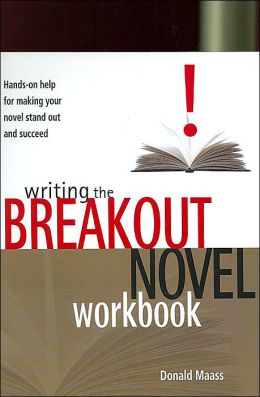
And while I'm at it, I'll probably do more work in Donald Maas's excellent book, 


Then, I'll take two really long pieces of freezer paper and stretch them out on my dining room table. I'll place one on top of the each other and start drafting each girl's character arc. I'll think about what are the important events in each girl's story and how one story will affect the other. From there I'll construct  my new chapter by chapter outline. (I guess this means that I'm a plotter, not a panster!)

And then, I'll start draft #3. Meanwhile, now I know why I bought two of these at the grocery store. I might need a lot!


Monday, June 3, 2013

And the Winner is...

Congratulations to Gail Hurlburt, who persevered and WON an autographed copy of Chris Woodworth's book, Ivy in the Shadows.
For those of you who didn't win, don't despair! Next May I will give away my last copy of this book as a part of the Friendship issue of Talking Story. If you don't receive this bi-monthly newsletter which Joyce Hostetter and I publish, sign up today!

Gail, please send me your mailing address and I'll put the book in the mail to you shortly. Thanks to all for entering!

Saturday, March 16, 2013

And the winner is...

Congratulations to Joan Edwards who won a copy of Tameka's picture book, My Cold Lemon Pie Bluesy Mood!

Joan is a prolific blogger and her posts are full of writing advice and giveaways. I'm glad she had the opportunity to win this catchy, colorful book. 

***********
Speaking of giveaways, this week I was happy to receive a copy of Miriam Glassman's book, Call Me Oklahoma which I won off the ReaderKidZ blog.

You can be sure that I'll be giving it away on a future blog!

Wednesday, February 27, 2013

Two Winners and Some Winning Writing Advice

In another totally random drawing, Rosi Hollinbeck, the SCBWI critique group coordinator for SCBWI in Northern California,  won last week's giveaway contest! A copy of Chris Woodworth's new middle grade book, Ivy in the Shadows is on its way to California. Tracey Adams of Adams Literary kindly offered two copies and the second name I drew was Carolyn Abiad, a member of my SCBWI critique group.  The moral of the story? It pays to follow my blog AND to be a member of SCBWI!

Today I'm offering something different: some advice via Writer's Digest and a link to a fantastic blog post. Both of these resources made me think about upping the ante in my scenes in Half-Truths. Not so coincidentally, this is next week's topic for my "Writing for Children" class at CPCC

First, here are seven points about narrative forces from Steven James' article, "Go Organic" in the March/April 2013 issue of Writer's Digest. He outlined the points within the article and then asked corresponding questions in a sidebar. For the sake of this blog, I'm going to list his points and then follow each with his questions to writers. His questions make a great checklist for all of us! Here is the excerpt:

"Imagine a ginat ball of clay being held by a group of people. As one person presses agains the clay, the clay's shape changes.

"The clay is your story; the people surrounding it represent the narrative forces pressing in upon it to shape it. For example:

  • Escalation: The tension must continue to escalate scene by scene until it reaches a climax after which nothing is ever the same again. Does this scene ratchet up the tension of the one before it? How can I make things worse?
  • Believability: The characters in your story need to act in contextually believable ways. All the time. What would this character naturally do in this situation? Is he properly motivated to take this action?
  • Causality: Everything that happens must be caused by the thing that precedes it. Is this event caused by what precedes it? How can what I want to happen bow to what needs to happen for this story to work?
  • Scenes and Setbacks: If nothing is altered you not have a scene. If your characters solve something without a setback you do not have a story. Have I inadvertently included scenes just for character development? Are there necessary interludes or moments of reorientation between scenes?
  • Inevitability and Surprise: Each scene should end in a way that's unexpected and yet satisfying to readers. The end of every scene must be not only logical but, in retrospect, the only possible conclusion to that scene. Does this scene end in a way that's unexpected and yet inevitable? How can I ensure that readers don't see the twist coming?
  • Continuity: Continuity develops through pace (the speed at which things are happening) and narrative energy (the momentum carrying them along). Do my revelations happen at the right moments in the story? Have I used foreshadowing to eliminate coincidences, especially at the climax?
  • Genre Conventions: Readers enter a story with expectations based on their understanding of its genre. You need to be familiar enough with genre conventions to meet or exceed those expectations without resorting to cliches. What obligatory scenes are inherent to this genre? How can I render them in a way that's not cliched?
Just in case you need more to think about when you're creating scenes that sizzle, check out Lorin Oberweger's blog on Writing Scenes: Cooking at the Right Temperature. Like James' article, this is also chock full of the reasons you want to write high temperature scenes, and how to accomplish that. 

I read that blog before and during my writing session today. It made me aware of creating conflict between my characters and taking power away from my protagonist (sorry Lillie!). 

What are yours technique to create powerful, reader-gripping scenes? I'd love to hear about them!

Monday, February 18, 2013

We Have a Winner!

Congratulations to Rosi Hollinbeck, one of my newest blog followers and the SCBWI Critique Group Coordinator for North Central Northern California. She won last week's giveaway contest and chose to receive a 10-page critique from Rebecca Petruck


Thanks to all of you who entered this contest. Since it was so popular, Rebecca has agreed to sponsor it again. She'll be back again in a few months with more advice for me and a 10-page critique to one of you. And for those of you who don't want to wait until then, contact Rebecca on her website for information on receiving your own professional critique. 

Saturday, January 5, 2013

This & That

  • Congratulations to Linda Andersen for winning a copy of Stake Out by Bonnie Doerr. 

  • This week I am honored to be a guest blogger on Kathleen Fox's Funbrarian blog. Please mosey on over to her blogread how librarians can encourage students' writing, and download some free handouts from my book, Teaching the Story: Fiction Writing in Grades 4-8. While you're there, check out Kathleen's workshops, books and games for librarians.
  • In February I'll be teaching Writing for Children at Central Piedmont Community College. If you live in the Charlotte area and are looking to learn more about writing picture books, novels, or short stories for children--then I'd love to have you join us!

THE NIGHT WAR: A MG Historical Novel Review

  By now you should have received an email from my new website about my review of THE NIGHT WAR by Kimberly Brubaker Bradley. (It'll com...