Showing posts with label Writing the Breakout Novel Workbook. Show all posts

Monday, August 12, 2013

A Time to Think

Congratulations to Linda Phillips who won a 10-page critique from Rebecca Petruck. For those of you who know me personally, Linda is my best writing buddy, friend, and prayer partner. But, I want to assure you that this drawing was not rigged--although I'm glad that Rebecca will help Linda with her current WIP, a middle grade book about a boy with learning disabilities.

If you follow this blog, you know that Rebecca has been sharing her revision process for her forthcoming book, Steering Toward Normal. (If you're just coming back from vacation, you can find Part I and Part II here.) 

I recently received Rebecca's editorial comments on my second full draft of Half-Truths. Now I'm following her advice and taking time to think about where to go from here. Here are a few snippets of her feedback to me, along with my current "to do" list. 

Rebecca:  Lillie’s anger is too strong and too consistent throughout. We need an arc.  We need to plan how and why Lillie’s anger will build, and if that really is the primary emotion we want to focus on. For me, I’m less interested in Lillie being angry than I am in her growing awareness of her own social circumstances and how that makes her feel frustrated, hopeless, depressed, galvanized, stubborn and eventually determined to be a part of the change.

My challenge: create a character arc that shows Lillie's "normal" life including her goals, what happens that opens her eyes to the world of white privilege around her (including meeting Kate, the granddaughter of her grandmother's employer), and how she tries to reach her goals.

Rebecca: Kate’s arc is disjointed and too much about Lillie’s arc. Kate needs more of her own story if she’s going to take up half of the novel. The elements are there, I think, but need to be developed. What is Kate’s internal journey? Then what events will hamper and what will help that journey? I don't really "see" her very well. 

My challenge: Rebecca is right. Even though Kate was the character I created first I haven't really figured out her story. For that matter, I don't have a complete sense of who she is and what she wants! As Rebecca said in the last post, "Character and plot are Siamese twins." In order for me to plan her character arc, I need to know her better. So, I'm going to take the time to ask Kate these questions and if I need more help, I'll make her answer the questions on Janice Hardy's blog on Character Tips too.

And while I'm at it, I'll probably do more work in Donald Maas's excellent book, 
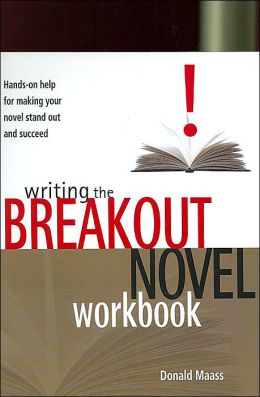

Then, I'll take two really long pieces of freezer paper and stretch them out on my dining room table. I'll place one on top of the each other and start drafting each girl's character arc. I'll think about what are the important events in each girl's story and how one story will affect the other. From there I'll construct  my new chapter by chapter outline. (I guess this means that I'm a plotter, not a panster!)

And then, I'll start draft #3. Meanwhile, now I know why I bought two of these at the grocery store. I might need a lot!


Thursday, May 10, 2012

Character + Setting = Story (Almost)

Part I: Character
A recent Facebook discussion on my wall led one of my FB friends Leslie Guccione, an author of 30 books, to blog about the importance of totally knowing your character and setting. 
Leslie Guccione


I have often thought how stories are built from the inside out.  Appropriately, her blog on character is named, "Know Your Characters Inside and Out." She listed a variety of questions writers should ask about their character. This list is similar to an handout that is in Teaching the Story which you can download here


I hope you'll read her entire blog, but here is her ending advice:


Whether your character works against the background you’ve devised or reflects it in stereotypical detail, you’ve provided a solid frame on which to weave voice, behavior, attitude and goals as you hook your reader with their tale you’re telling.

By the way, I highly recommend Donald Maass' book, Writing the Breakout Novel Workbook. His exercises are probing and will make you get to know your character in such a way that you can portray him or her authentically.


Part II: Setting
On Leslie's blog about setting, "Your Character's Physical World," she uses two fantasy books to demonstrate the importance of creating extensive, believable worlds for characters to live in. She lists several aspects of a fictional world that the writer must create. You can also download my handout, "Set the Scene" or "Create an Imaginary World" to help you begin this brainstorming process. 


Leslie summarizes that blog with, "Your goal is to breathe life into every individual & create atmosphere for every setting. You have to take your readers there. And they have to want to stay."

I found Richard Russo's article, "Location, Location, Location: Depicting Character Through Place" in Creating Fiction (Story Press, 1999) to be helpful on this topic.


Part III: Plot
What about plot and conflict? Let me recommend two books to help you tackle that most important story componenent. The first is Many Genres One Craft: Lessons in Writing Genre Fiction which, according to Leslie, is crammed with good advice. She should know--she contributed an article and it just won its second "Best" award for a writing how-to book in 2012.


Second, consider purchasing Becky Levine's book, "The Writing & Critique Group Survival Guide." She has an excellent chapter on critiquing for plot along with a great deal of other useful information. 


THE NIGHT WAR: A MG Historical Novel Review

  By now you should have received an email from my new website about my review of THE NIGHT WAR by Kimberly Brubaker Bradley. (It'll com...