Showing posts with label multiple POV. Show all posts

Tuesday, February 22, 2022

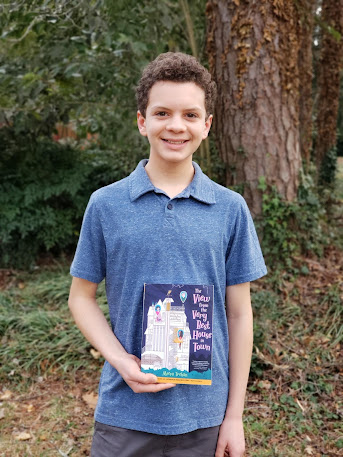
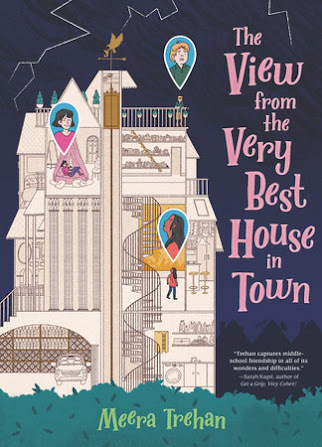
THE VIEW FROM THE VERY BEST HOUSE IN TOWN: A Middle Grade Review by Guest Blogger, Elliott Kurta


REVIEW

The View from the Very Best House in Town (Walker Books, 2022) is a tale of friendship, told with a twist. Sam and Asha are both autistic and ostracized as a result. They’re each other’s best friends, playing soccer and their favorite videogame, Househaunt, together. 


As the summer ends and Sam and Asha are preparing to begin seventh grade, they’re suddenly separated by Sam’s acceptance into the most prestigious school in Coreville, Castleton Academy. When Sam is pushed into the privileged world of Castleton, more of an outsider than ever, he meets Prestyn Donaldson. Prestyn is the most popular girl in school, and her family lives in the biggest mansion in Coreville—Donnybrooke. Meanwhile, Asha makes new friends and does her best to forget about Sam, but she can’t stop worrying about him. He’s been hanging out with Prestyn, who happens to be Asha’s nemesis ever since a disastrous party years ago. Is that why Sam’s been skipping soccer practice every Thursday--to go to Donnybrooke? But why does Sam keep going to the best house in town if he looks miserable every time he leaves?

Meera Trehan’s debut novel sets itself apart with its original premise. Not only does she have two incredible protagonists with touching journeys, but her book also includes thirteen chapters from the viewpoint of Donnybrooke itself! As the main characters of The View from the Very Best House in Town are portrayed as middle-schoolers, their descriptions and phrasing can at times be simplistic. Even so, no detail is left out of the narrative. A well-thought-out video game that serves as an analogy for friendship and a weathervane containing an important message, are both examples of the book’s multiple layers. Older or experienced readers are best suited for this book, as they will recognize and understand the underlying themes.

Even though friendship is the driving force of The View from the Very Best House in Town, there is another, underplayed but equally important message. Asha and Sam are both subject to discrimination because of their autism. In Asha’s case, she was humiliated by the Donaldsons during their housewarming party, while Sam is made fun of and called the ‘Miracle Boy’ after his classmates find out about an embarrassing article. Despite having good intentions, Asha’s mom doesn’t understand her daughter’s pain and can’t relate to how Asha’s feeling. Sam’s parents try to encourage their son, but inadvertently push him to remain silent about how he’s feeling. Asha and Sam are both struggling, and they need each other’s support.

This tween drama is slow to develop, but will entrance readers with a mix of drama and personal growth. A spotlight on what it means to be different, The View from the Very Best House in Town is a necessary read for anyone who has felt lonely or has felt the need to belong. No matter who reads this touching book about friendship, the moral of this story will stay with them long after the end of the book—always remember who your friends are.


Elliott is a prolific reader of various genres who is more than happy to share his opinions on books. 
In his free time, he enjoys writing, reading, and running. 
He is an 8th grade homeschool student in Charlotte, NC.  


GIVEAWAY 

To enter the giveaway, please leave a comment with your email address if you are new to my blog. U.S. addresses only. If you share it on social media or start following my blog (or both!) I'll put your name in for extra chances to win this book. Giveaway ends Tuesday, March 1 at 6 PM. 

Susan Wroble won Racial Just in America: Topics For Change and Theresa Milstein won Marching for Change: Movements Across America from last week's blog.

****

Find this review and other great books on Greg Pattridge's terrific blog.


Wednesday, January 6, 2021

For to See the Elephant: A Novel in Verse and an Autographed Giveaway

 Congratulations to Tricia Clark who won Letters from Space.


Six months ago, author Tammi J. Truax contacted me after reading my review of Orchards on Goodreads. She deduced that I liked free verse historical novels and offered to send me a copy of her book, For to See the Elephant (Piscataqua Press, 2019).  Come with me into the pages of this amazing chronicle of the first two elephants who came to America, their keeper, and the people whose lives these honorable animals touched. This is a work of fiction, but as the author notes, "the found poems included in the work are taken from diaries, newspaper articles, advertisements, and songs from the time period." It is a saga of the enslaved.


REVIEW

For to See the Elephant is written from several different points of view including the men who purchased the elephants, the slave boy William who is their keeper, the elephants, and Hachaliah Bailey. A different font is used for each point of view and their voices are all distinctive. To best see the beauty of the poetry, I'm sharing excerpts from several different entries. The elephants' POV are written in narrative.

GAJA, At leaving Bengal, India, October 1795

My mahout was conflicted that day. I could tell by the silent language of his body. Further, I could tell that he needed me to go where he was leading me, but that in his heart he did not really want me to go. I also knew I had been sold...I let out a trumpeting roar, one I knew he could hear as his little bare feet flew across the wharf in the opposite direction that I was headed. I was but a baby and had never been left alone before. (p. 2, 5)


Captain Jacob Crowinsheild at sea. December 1795


I say with certainty

I've never heard 

a sadder sound 

than the cry of 

The Elephant.

Adding to the misery

of the cries,

the beasts thrusts itself

in rhythm with the rise

and fall of the sea,

against the pen

built to hold her.... (p. 9)


William at sea 1795


captain said
I'm to take care of
the Elephant
me
the smallest one here
captain said
I'm African 
so I should know-
what that mean

captain said

get the beast 
to calm down
and clean up
all her mess

captain ain't said
how (p. 11)

Mister Welshaven Owen, Philadelphia, Pennsylvania. June 1976


Tonight she makes
her stage debut!
I have rented out
the Elephant
to the Philadelphia Theatre.

I'll have the boy
wash and oil her all up.
Not sure if I'll let the boy
take her on stage
or if I'll do it. 

She seems to like the boy
much more than me. (p. 21)

William on the Maine/New Hampshire border. late 1802


i know why 
folks call her
ugly or beast
or whatnot
i been called
lots of names too
some folks just dont
see things proper
sure she all wrinkled
an got a funny nose
an ears big enough
to make lookers laugh
but they missing somethin
so important

they not having
a good up-close
honest look
in her eye
all her beauty there
in her eye
it looks like
a topaz marble
a boy once showed me

an her pretty eye
have long lashes
that flutter like
a little birds wing

a big beautiful
round eye
full of feelings
.....(pp.54-55)

[Gaja is seriously injured when she falls from a bridge spanning the Connecticut River. ]

William, Amherst, Massachusetts. November 1803


she was hurt bad
I tole em all
she couldn't get up
gave her what comforts I could

I was so sorry
for what happened
but what I mos felt
was angry

I couldn't barely
stand for it
when they drug her
up the hill like that

finally got her
in the barn
master said hes
going to charge

people a nickel
for to see
the dying elephant
an he did...

....me and gaja
we lived likewise lives
I think she knew it  (pp. 74-76)

BIG BETTE IN A BARN AT BOSTON, MASSACHUSETTS. January 1804


I CAN TELL THIS IS NOT MY HOMELAND. I DIDN'T THINK I COULD BEAR IT WHEN I DETERMINED THAT FACT SHORTLY AFTER OUR ARRIVAL. I REALLY DID NOT. WHEN I WAS DELIVERED TO MORE STRANGERS AND MY LEG WAS CHAINED IN THIS NEW BARN I CALCULATED HOW I COULD TEAR DOWN THE WALL WITH MY LEG IF I USED ALL OF MY STRENGTH, AND PICK UP ANY OF THE MEN THAT CAME NEAR ME. SIMPLY PICK THEM UP AND CRACK THEM AGAINST A BEAM IN THEIR OWN FILTHY BUILDING....

AND THAT IS WHEN I MADE THE ACQUAINTANCE OF THE NEW MAHOUT I BELIEVE HIM TO BE FROM MY HOME LAND. HE DOESNT SEEM TO BELONG HERE EITHER. HE SHOWED ME THAT THE MEASURE AND CONTENT OF HIS HEART IS THE SAME AS MY OWN... (P. 84)

Hachaliah Bailey in a tavern at Danbury Ct. Spring, 1806


Of course I need to make some changes.
This is my livelihood.
I need the keeper to understand that.
I want him to teach
the Elephant
some more amusing tricks.

I intend to purchase more animals
we can pull along in cages.
And we must take to traveling by night.
Far too many people
are getting a free look at
the Elephant. (p.92)

[Big Bess is shot by a man who had been drinking. William is forced to help dig her grave.]

William, April 1816


...the thought that struck me was
maybe its just time

for me to go
to walk away
theres no more elephants

for me to take care of
this is a place
where maybe
maybe I can
make my own way
in the world

those merry dancers [Shakers]
told me I'd be welcome
at their holy land
and theres indians
up in the woods
where a man can live free
some kind of way
....

dug the dang hole
dug til my hands bled
   my back ached
but my back
wasnt the part of me
   hurtin most

(p. 173-4)


Hachaliah Bailey, Town Hall at Alfred, Maine. April 1816


I can't state plainly enough
that I want that man, that criminal
brought to justice. Further I expect 
to be reimbursed for my losses
which since I came to this town
have been egregiously high.
That elephant was worth
more than a thousand dollars!
And how my elephant keeper
has gone missing!
He's worth nearly that much.
My stop in your town
may just bankrupt me. (p. 176)

Boston, 1797


THE END...PERHAPS THE SPIRIT OF BIG BETTE THE MATRIARCH TODAY


I WAS MURDERED, WITHOUT CAUSE, AND, JUST LIKE GAGA, MY SKIN AND BONES WERE TAKEN IN A GRUESOME WAY AND PUT ON DISPLAY. OLD MAN BAILEY STILL PROFITED BY MY EXHIBITION, DRAGGING THE DEAD ME FROM PLACE TO PLACE. UNTIL AT LAST MY FLESH AND BONES WERE SOLD TO P.T. BARNUM, TO BE SHOWN FOR PROFIT, IN HIS LITTLE MUSEUM OF ODDITIES...IT IS OFT CLAIMED THAT MY REMAINS WERE LOST TO A FIRE THAT CONSUMED BARNUM'S BUILDING AND CREMATION IS AT LEAST, A MORE RESPECTFUL WAY TO TREAT SACRED REMAINS....  (P.191)


CURRICULUM RESOURCE


This novel would be an excellent curriculum resource for middle and high school language arts or history classes. I would love to hear students discuss the content as well as the beautiful way in which Ms. Truax delivered the story.  For more information on her other poetry projects, please consult her website.

BACKSTORY


When I asked Ms. Truax what inspired her to write this story she replied, "I had interviewed an elderly woman who still lived on property that had been in her family for a couple of hundred years. She told me that once long ago "an elephant had stopped by to drink from the well". I was intrigued by that but didn't get serious about research until I heard about the murder of an elephant in Maine and thought that must have been the same elephant. Then I took in on as a NaNoWriMo project in 2015."

                                      Tammi J. Truax next to the roadside marker
                                      in Alfred, Maine where Big Bette was killed.


GIVEAWAY


I have an autographed copy ready to be mailed to one of you. Please leave me a comment (along with your email address if you are not a frequent commenter) by 6 PM on January 8. If you subscribe to my blog I'll enter your name twice!

Wednesday, January 16, 2019

Wonderland: A Review and Audio Book Giveaway


Browsing a recent Recorded Books catalog, I was pleased to find Wonderland (Farrar Strauss and Giroux, 2018), by North Carolina author, Barbara O' Connor. I hope one of your students, children, or grandchildren will enjoy it as much as I did.


REVIEW


The book opens with10-year-old Mavis Jeeter leaving Hadley, Georgia for the same reason she's left so many other homes--her mother's job hasn't worked out and she decides it's time to move on. Mavis is brave and spunky--but because of their frequent moves, she never ends up having a best friend. The reader quickly figures out Mavis's internal goal: to live somewhere long enough that she can have a "true" best friend. 

Therefore, when she meets Rose Tully, the shy daughter of her mother's new employer, Mavis announces, "You'll be my new best friend." Since Rose doesn't feel like she fits in with the other girls in their exclusive Magnolia Estates neighborhood, that suits her just fine. 

The story sweetly shows their ups and downs in navigating this new friendship. Since Wonderland is written from multiple-POV's, the reader gets to see the agonies each girl suffers when they feel as if they've blown it with the other person. The author does a great job of showing their gaffes as well as how the two girls forgive one another. 

The main conflict centers around Mr. Duffy, the elderly gatekeeper at Magnolia Estates whose dog recently died. Since Queenie's death, Mr. Duffy has become depressed and increasingly forgetful. Rose and Mavis love Mr. Duffy and fear that he's in danger of losing his job. When Rose's arch-enemy, Amanda, discovers a loose dog in the woods behind her house, Mavis is convinced that "Henry" (as Amanda names him) is the answer to all of Mr. Duffy's problems. 

The story has a happy ending--Mavis proves to be right--but there are enough obstacles that get in the way of that perfect solution to make the story interesting for elementary school girls. 

A neat addition to this friendship story is that Henry has his own POV. Readers will enjoy "hearing" Henry's thoughts and "feeling" his emotions as the greyhound longs for freedom and a person of his own to love him. 

I asked Barbara about her reason for including Henry as a POV character and she said, 
I know that most kids love dogs and have no problem thinking of them as an actual character in a story. I needed Henry (the dog) in order to add another emotional layer to the story. I needed the reader to know Henry’s feelings and motivations for his actions. Having a third POV character also kept the story moving forward but in differing, yet parallel, ways.
I enjoyed Mavis's child-like optimism that her plans would work and her persistence to come up with a "Plan B" when they didn't. In the end, she has gained what she wanted--but not exactly in the way she had expected. Rose's character arc--from a shy, quiet girl to a brave 5th grader who speaks her mind to her mother--is believable and worth cheering for.  

Besides Rose, Mavis, and Henry, the secondary characters including Mr. Duffy and the two mothers are well developed. Mr. Duffy's colorful language, Ms. Jeeter's petulant complaining, and Mrs. Tully's constant criticisms of her daughter and Mr. Duffy, show all these secondary characters well--and serve both Mavis's and Rose's journeys. 

The story will help young readers to consider what truly makes a best friend. In the end, as all three main characters reach a new normal I thought, "Is this Rose, Mavis's or Henry’s story?"

That will be for the reader to decide.

GIVEAWAY

I am giving this book away in conjunction with the winter issue of Talking Story in which Barbara is our expert. Leave a comment here and I'll enter your name once. Leave it through the newsletter and you'll have two chances to win. Hurry! Giveaway ends January 21. 

Here is an audio excerpt as a teaser.

Monday, July 30, 2018

Between The Lines: A Review and Audio Book Giveaway

Congratulations to Connie Saunders who won Behind These Hands from last week's blog.

********

Nikki Grimes' sequel to Bronx Masquerade, BETWEEN THE LINES (Penguin Random House, 2018), combines narrative and free verse in a moving book about teens whose lives are changed through poetry. The audio book published by Recorded Books is narrated by different actors; each eloquently expresses a different character. Listen or read this book and you'll reach the same conclusion that I did: Grimes masterfully created authentic voices and personalities for the six different point of view characters. 


REVIEW

For various reasons ranging from a desire to write poetry to attendance only because of a guidance counselor's suggestion--the students in Mr. Ward's poetry class are thrown together. The universal theme of wanting to belong weaves the students and their poems together. This commonality provides the reader a window into the the personal and interpersonal struggles and triumphs they face.

The reader first hears about Darian, a Puerto Rican teen who sees himself as a newspaper man, not a poet. He lost his mother to breast cancer and by the end of the book his poetry gives him a way to express his grief. 

Private Pain


Numb, I sit on the edge
of the bed
Mami y Papi share.
Shared.
I feel light as the ghost
my mother has become.
Her picture 
on the bedside table
looks blurry until
I wipe my eyes.
"Pobrecito," she would say.
If she were here,
if she were anywhere
in this world.
"Mijo," she would whisper
and touch my cheek,
and I would answer,
"Mami."
But this time,
The word never leaves
my throat.
And what difference
does that make?
When I wasn't looking
Mama's heart stopped
like a broken clock.
Half past 36,
the final tick,
the final tock.
Explain to me
exactly how 
I'm supposed to
tell time now. (pp. 130-1)

**********

Li Cheng is "all Chinese and all American." Her poetry is full of "contradictions which squeeze into one small body."

Threads


How can I explain
the duality of Li?
The muffled sounds
of mah-jong tiles touching,
clicking together,
flips a switch in me
as my parents follow
the ritual 
of the ancient game.
The Mandarin calligraphy
clinging to our walls
sends my soul sailing 
to rice paddies
oceans away,
to the land of silk,
red sunrises,
and the jade mountain peaks
my parents
often speak of.
China whispers 
through their blood,
You are part mine.
Remember!
And I nod, silent
and ashamed
that my untrained
American lips
are unfamiliar 
with my ancestors'
local lingo. (pp. 26-7)

************

Jenesis has been placed in thirteen foster homes and is worried about aging out of the system and having nowhere to live. Here is some of her story. 


Blue Eyes Squared


I see you staring at me.
You be boring a hole in my soul
as if the alchemy
of your curiosity
could somehow turn
these blue eyes brown,
but you might as well forget it.
You frown at my blond curls,
even though girls with hair
the color of sun
the color of spun gold
are supposed to have more fun.
At least, that's the story
they try to sell on TV.
Yeah, I'm different, but
don't call me freak
or assume I'm the only one.
There are bound to be
other brown beauties
with pale blue eyes
eerily like mine,
wearing smiles crooked
in exactly the same way,
noses that scream
matched set.
Are there more like me?
Yeah, you bet.
When I find them,
I'll fit in without question,
never mind that
the world thinks
I'm odd as H-E-
well, you get it. (pp. 33-34)

***********

Val feels the pain of the prejudice her father faces as an Argentinian immigrant.


What You Don't Know


Mi padre, Ignacio,
is a book you haven't read.
It's filled with poetry
that can curl its fingers
around your corazón 
and squeeze out joy.
Pero you've never
cracked the cover.
You scribble crítica  
that questions
the measure of the man,
but you've never
 peeled back the pages
of his biografía.   
You toss el libro
onto the trash heap
marked "Immigrant"
y ustedes dicen it has no value.
But, of course,
you are categorically incorrect,
which you would know
if only you could read
las palabras.
If only you, too,
were blessed
to be bilingual. (p. 51)

*******

Marcel has been labeled a troublemaker. His past includes his father's unjust imprisonment and how that demoralized him and shattered their family.

Troubled (partial)

What is it
with people and their labels,
as if the way they mark me
makes them able
to understand who I am
or why?
"Troubled kid"
tells you exactly nothing
about the trouble
my pops has seen 
or Moms
or me.
We stare from windows 
caged in iron,
in state prisons
or rented rooms,
which are only better
by degree.
We are forced
to survive outside
the neatly mowed landscapes
of your imagination.
Our stop on the train station
is worlds away
from your manicured lawns
and lives
and the lies you tell
about the days
of racial discrimination
being in the past.
Quit asking
why I'm angry
or I'll tell you. (pp. 39-40)

*******

Freddie takes care of her eight-year-old niece and her alcoholic mother. This is a portion of one of her poems.

School Rules


Stage right,
the lights fade on a daily life
of tiptoeing around
my niece's feelings about the mom
who traded time with her
for time spent cozying up to crank.
The truth is too rank
for her tender little-girl ears.
And so, until she's fast asleep,
I keep bitter thoughts
under my tongue's lock and key.
Have I mentioned how it hurts me?
That neither my niece nor I
manage to have a mother
worthy of the name?
Oh, mine is present,
in an alcoholic-fog kind of way,
which is to say, hardly at all. (p. 148)


*******

Nikki Grimes stitches a story together so real and touching that after the boys vs. girls poetry slam which produces outstanding poetry on both sides--I want to know what happens to each character. This would be a great curriculum resource for teens: some readers will resonate and identify, others will be informed by stories much different than their own. Read it out loud in reader's theater. Let it inspire you and your student to write poetry. The results may surprise you.  


Giveaway

I am giving away my audio book, courtesy Recorded Books. Leave me a comment with your email address if you are new to my blog. Random.org will pick a winner on August 3.


Monday, October 30, 2017

Restart by Gordon Korman: A Review and Audio CD Giveaway

What if you’re an 8th grade football player who has built your reputation around bullying. You’re suddenly given the opportunity to rewind the clock and restart your life. Would you do it? 

That’s the problem that Chase Ambrose faces in Restart by Gordon Korman. After falling off his roof and going into a coma, he wakes up in a hospital and can't remember anything. Not his mother, brother, or the picture on his phone of three boys (including himself) who are thrilled over some sort of prank. (Note: since this review is of the audio CD provided by Recorded Books quotes might not be absolutely accurate. I did my best!)


Review

I reach back for an image of mom and come up totally empty. Ditto dad, home, school, and friends, and I come back empty….I’m blank. I’m like a computer with it’s a hard drive wiped clean. You can reboot it and it’s operating system works fine. But when you look for a document file to open, nothing’s there. Not even my own name.

The doctor says his ability to access his memory has been damaged and there's no telling when it will return. Meanwhile he must re-meet everyone in his life for the first time. In this way, he learns about himself before his accident. He sees his father and step-mother and step-sister and thinks, "They already know me, but don’t like me. What did I do to them? They look like I’m a time bomb going off in their face. Karin shrinks back like I’m going to eat her."

Being in his own room is weird. There are dozens of photos and shelves of trophies. "I’m really somebody. I only wish I knew who. I’ve been parachuted into someone else’s life. What kind of person am I?"

Korman uses multiple points-of-view to show how Chase is perceived by his peers. Through their reactions he gains clues as to who he used to be. In Chapter 2 the reader meets Shoshanna Weber at a frozen yogurt parlor. He smiles at her and she "goes ballistic," dumping her yogurt on his head. "He looked as if he’d never seen me in my whole life—not like he’d played a starring role in destroying my family."

Back in his POV on the first day of 8th grade, Chase gets dropped off and has no idea who anyone is:

All I see are football players who push people out of the way and are supposed to be my friends. They eye each other like they don’t believe me.  I don’t blame them for not believing me. I'm surrounded by all these people and I’m still alone. 
He meets with the principal who chooses his words carefully:

"This is a rare opportunity to rebuild yourself from ground up. Don’t squander it. Millions would want a blank canvas." I’m struggling to find the person I was, and he wants me to change? What was wrong with the old me that now I have to be somebody else?

Chapter 4 is narrated by Brendan, a member of the video club who is shocked when Chase comes to sit with him. Despite Shoshana's disapproval, he becomes Chase's new best friend and invites him to the video club. 

Meanwhile, his football buddies, Aaron and Bear (other POV characters), are loud and obnoxious and wonder why he'd rather hang out with the video kids than with them. Chase tags along when they go to a local nursing home for their community service. He finds out that he'd also been sentenced to service and discovers the awful prank the three of them pulled off. He befriends Mr. Solway, a Korean vet, who jokes that they are "memory loss buddies." This friendship proves pivotal in the book.

Aaron wonders, "Is the old Ambrose trapped in there and will come out and be normal?"  Chase wonders the same thing. His new normal is being a stranger in a strange land. "I’m definitely famous at school, but am I famous good or famous bad? Everyone has a slightly different version of me. Who should I believe?"

As Chase searches for who he once was and who he is now, his father pushes him to become the champion football prayer he once was. Returning memories of feeling powerful and confidant on the football field layer in more conflict for Chase.

Korman's ability to delve deeply into Chase's POV makes this book an insightful look at bullying. In moments of awareness, Chase realizes that he and his friends bullied others to feel better about themselves, and that he’ll never be able to erase their memories of who he was before his concussion. 

The last third of the book moves quickly through misunderstandings between characters, lies, complicated motivations, high stakes, and ultimately to Chase taking responsibility for his behavior before falling off the roof. 

Restart (Scholastic, 2017) is masterfully written and will be a great classroom resources on  bullying. Up until the end it seemed a little stereotypical: before his accident, Chase was the bad, bullying football player, and afterwards he became a goody-goody that Bear and Aaron didn't recognize. But in the end, Shoshanna in her forthright manner gave an honest perspective of Chase: 


It's the mix of good and bad that makes my head spin....
The big question is what kind of person is Chase going to be now? He gave the medal back--that's a plus. But there are minuses too, like at school, when he lied to cover up for his old friends. I'm not saying that to make him look bad; I'm trying to give you a totally honest picture of Chase today. Thanks to falling off that roof, he's been given a chance to restart his whole life.


A Mini-Author Interview (via Twitter)


CAROL: What prompted Restart?


GORDON: The topic of how kids treat one another-and why- has always been fascinating to me. This began as almost a thought experiment about the nature versus nurture of what makes a bully. 

CAROL: The multiple POV works so well for this story. Why did you decide to use it?


GORDON: I've been doing multiple POV for a couple of decades, dating back to NO MORE DEAD DOGS and before. It doesn't work for every type of story, but it's great for portraying an environment- a middle school, let's say--as the rolling, chaotic maelstrom and axes to grind that it really is. Often, different narrators will see the same set of events completely different. It's a style I use a lot lately, and kids genuinely seem to respond to it. 


Audio CD Giveaway


The fact that the audio CD is narrated by multiple narrators conveys the real feel of a school environment. To enter the giveaway, please leave me a comment by 5 PM on November 3. If I don't have your email address, please leave that too! Share this on social media or become a new follower of my blog, and I'll enter you twice. Just let me know what you did in your comment. 

Bonus: Here is an audio snippet from Brendan's POV.


Monday, September 25, 2017

Behind the Scenes of REFUGEE: An Interview with Alan Gratz and Giveaway-Part II

Congratulations to Connie Saunders and Jennifer Ervin for winning FIRST TIMES from last week's blog.

As promised last week, Alan Gratz  has returned to share some of the intricate process of writing his middle grade novel, REFUGEE. 
Alan autographing a copy of REFUGEE
for the Cousins Club. 

INTERVIEW

CAROL: How much time did you spend researching REFUGEE? Was that typical for all your books?

ALAN: I spent a month or two researching REFUGEE, which is typical for me.

CAROL: Why did you pick the topic?


ALAN: Writing about refugees was something I wanted to tackle. I empathize with the plight of refugees in today's world, and wanted to do something to bring that situation to the attention of school children, the way Linda Sue Park did with water in Africa and A LONG WALK TO WATER.

CAROL: At what point in that process did you realize you were going to use three different characters in three different time periods? Did you plan it or did it “just” happen? Did you know the ending when you started writing? 

ALAN: I knew I was going to write a story about three different kids in three different time periods when I began researching and outlining the book. That decision--to tell three stories--took a while to come up with on its own. But as soon as I realized I could not only show parallels between each story, but actually link the three main characters and their families across time, that's when I knew I had a novel!

CAROL: Each POV is a complete story. Did you write the 3 POV separately or concurrently the way the book appears?

ALAN: I outlined each separately, all the way out--first Josef's story, then Isabel's, then Mahmoud's--although Isabel's story was created knowing what happened to Josef, and Mahmoud's knowing what happened to the other two children. Once I had all three stories outlined, then I wrote the book linearly. That is, I wrote Josef's first chapter, then Isabel's first chapter, then Mahmoud's first chapter, and so on and so on.
CAROL: What system do you use to keep the research, plot lines, and characters straight? 

ALAN: I had a system I had developed over the years, but that has now been replaced by the awesomeness that is Scrivener. Scrivener is a great program for writers that allows you to store all your research and outline and story notes and character sketches in the same file with your manuscript--and it doesn't take a million years to load. You can click between separate screens very easily. It even has an outlining feature with faux note cards on the screen, but I prefer to do that by hand on the big pin board in my office. I'm a heavy outliner, and Scrivener allows me to keep all of my pre-writing notes in one place and at my fingertips when I'm writing.

CAROL: You make writing look easy. 😀 How many drafts? 

ALAN: Including my outline--which, again, is pretty extensive--I did eight drafts of Refugee. The first drafts see the bigger things hammered out, and see major changes to the book's structure and characters. Beginning with the fifth draft, I'm focusing on much more specific problems. By the final drafts, I'm doing line editing. After the manuscript was finished, the Author's Note went through many more revisions than the book, as I tried to stay on top of all the changes happening in American politics and policy--both for the Syrian story AND, to my surprise, the Cuban story!

CAROL: This isn’t your first multi-POV book. What have you learned in the process of writing books from several POV? 

ALAN: With multiple POV books, you have to be very careful to make sure that each POV character has a unique voice and character. Ideally, you want the reader to know whose story they're reading just by the narration and dialogue, even without names or chapter titles. So I do a lot of work on the front end to develop my POV characters, and make sure they have rich, detailed lives off the page as well as on!

GIVEAWAY

Leave me a comment for a chance to win this amazing book. If you left a comment last week, I'll add another entry. MAKE SURE you leave me your email address if you are new to my blog! Random.org will choose a winner on September 28. Like last week, if you also leave a comment through Talking Story, I'll give you another chance (PLUS there are other great books on this topic in the Refugee issue!).

THE NIGHT WAR: A MG Historical Novel Review

  By now you should have received an email from my new website about my review of THE NIGHT WAR by Kimberly Brubaker Bradley. (It'll com...