Showing posts with label historical novel. Show all posts

Tuesday, February 1, 2022

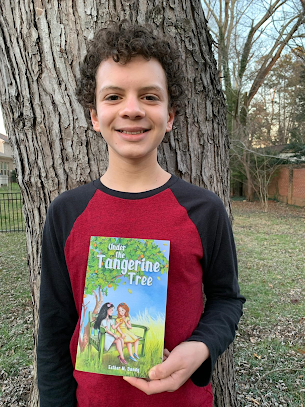
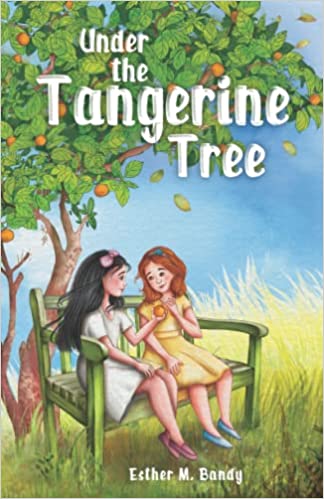
UNDER THE TANGERINE TREE by Esther Bandy: A Book Review by Guest Blogger, Elliott Kurta

Some of you know that one of my passions is teaching writing to teens and adults. I haven't had that opportunity for awhile, but I recently met a young man who loves to write. I've taken Elliott Kurta under my writer's wing and am excited to share his first book review with you. 

Without further ado, here is Elliott's review of Under the Tangerine Tree, a debut middle grade book by Esther Bandy.

REVIEW

Under the Tangerine Tree is a Christian novel set in 1963, geared towards readers 9 to 13 years old, written by Esther Bandy. It details the adventures of Angie Mangione as her father is killed, causing her to move to Florida with her mother and five-year-old brother, Joey. Angie meets a cast of memorable characters along the way, including her best friend, devout and optimistic Melanie, embittered teenager Leroy, and friendless and ostracized Juan.

Esther Bandy does an exceptional job portraying young Angie and her little brother, Joey. Both characters are likable with natural dialogue packed with plenty of quips that betray their naivety. One of my favorite lines from the book is spoken by Angie, in response to her friend Melanie.

“The Bible says He (God) is just, too.”

Angie frowned. “Just too what?”

You can find other instances of Esther Bandy’s wordplay present throughout her debut novel. "Angie felt like a mouse in a room of hungry cats" and "That smell pulled me right out of bed," are more examples of what you’ll find throughout Under the Tangerine Tree.

The Christian aspect of this book is not apparent until nearly a hundred pages in. From then on, references to God are frequent and there appears to be an unexpected paradigm shift. I was surprised by the sudden appearance of religion in a seemingly neutral novel, especially given its intensity. However, if readers take this change in stride, they’ll find the rest of the book enjoyable.

Not a single page of Under the Tangerine Tree is wasted; even when the plot appears to slow down, Esther Bandy is simply planting references that will be tied together later. The characters in Under the Tangerine Tree have complicated yet easy to follow personal histories. The book begins on a sad note, the death of Angie’s father, but is not overly melancholic. Esther Bandy jumps right into her story, quickly introducing us with goals and obstacles that reveal more of Angie’s, Joey’s, and Mama’s personalities. Some characters, such as Leroy and Granny, appear at first to be archetypical. However, their unique histories defend seemingly stereotypical behavior.

Throughout Under the Tangerine Tree Angie struggles with her father’s death and accepting God as well as better understanding the Bible, but ultimately comes to terms with each issue. Towards the end of the book, Angie accepts God and as a result, is brought closer to her family and friends. Angie has changed as a person, becoming more understanding and devout, and readers will like her all the more because of it.

In conclusion, the religious aspect of Under the Tangerine Tree might not appeal to readers of other faiths. However, middle schoolers can appreciate the relatable and original story present throughout Under the Tangerine Tree. Esther Bandy’s storytelling will surely inspire children and help them discover what it means to be a Christian with her moral-rich writing.


Elliott is a prolific reader of various genres
who is more than happy to share his opinions on books.
 In his free time, he enjoys writing, reading, and running.
He is an 8th grade homeschool student in Charlotte, NC. 

Come back on Friday and read Elliott's first author interview!


GIVEAWAY

I am giving away a copy of Under the Tangerine Tree. Leave me a comment on this blog and you'll receive one chance; leave another on the author interview and you'll receive a second chance. U.S. addresses only. If you prefer not to leave a comment, email me and I'll enter your name. PLEASE LEAVE YOUR NAME AND EMAIL ADDRESS IF YOU ARE NEW TO MY BLOG.

Congratulations to Danielle Hammelef who won VALENSLIME from last week's blog.

Wednesday, January 6, 2021

For to See the Elephant: A Novel in Verse and an Autographed Giveaway

 Congratulations to Tricia Clark who won Letters from Space.


Six months ago, author Tammi J. Truax contacted me after reading my review of Orchards on Goodreads. She deduced that I liked free verse historical novels and offered to send me a copy of her book, For to See the Elephant (Piscataqua Press, 2019).  Come with me into the pages of this amazing chronicle of the first two elephants who came to America, their keeper, and the people whose lives these honorable animals touched. This is a work of fiction, but as the author notes, "the found poems included in the work are taken from diaries, newspaper articles, advertisements, and songs from the time period." It is a saga of the enslaved.


REVIEW

For to See the Elephant is written from several different points of view including the men who purchased the elephants, the slave boy William who is their keeper, the elephants, and Hachaliah Bailey. A different font is used for each point of view and their voices are all distinctive. To best see the beauty of the poetry, I'm sharing excerpts from several different entries. The elephants' POV are written in narrative.

GAJA, At leaving Bengal, India, October 1795

My mahout was conflicted that day. I could tell by the silent language of his body. Further, I could tell that he needed me to go where he was leading me, but that in his heart he did not really want me to go. I also knew I had been sold...I let out a trumpeting roar, one I knew he could hear as his little bare feet flew across the wharf in the opposite direction that I was headed. I was but a baby and had never been left alone before. (p. 2, 5)


Captain Jacob Crowinsheild at sea. December 1795


I say with certainty

I've never heard 

a sadder sound 

than the cry of 

The Elephant.

Adding to the misery

of the cries,

the beasts thrusts itself

in rhythm with the rise

and fall of the sea,

against the pen

built to hold her.... (p. 9)


William at sea 1795


captain said
I'm to take care of
the Elephant
me
the smallest one here
captain said
I'm African 
so I should know-
what that mean

captain said

get the beast 
to calm down
and clean up
all her mess

captain ain't said
how (p. 11)

Mister Welshaven Owen, Philadelphia, Pennsylvania. June 1976


Tonight she makes
her stage debut!
I have rented out
the Elephant
to the Philadelphia Theatre.

I'll have the boy
wash and oil her all up.
Not sure if I'll let the boy
take her on stage
or if I'll do it. 

She seems to like the boy
much more than me. (p. 21)

William on the Maine/New Hampshire border. late 1802


i know why 
folks call her
ugly or beast
or whatnot
i been called
lots of names too
some folks just dont
see things proper
sure she all wrinkled
an got a funny nose
an ears big enough
to make lookers laugh
but they missing somethin
so important

they not having
a good up-close
honest look
in her eye
all her beauty there
in her eye
it looks like
a topaz marble
a boy once showed me

an her pretty eye
have long lashes
that flutter like
a little birds wing

a big beautiful
round eye
full of feelings
.....(pp.54-55)

[Gaja is seriously injured when she falls from a bridge spanning the Connecticut River. ]

William, Amherst, Massachusetts. November 1803


she was hurt bad
I tole em all
she couldn't get up
gave her what comforts I could

I was so sorry
for what happened
but what I mos felt
was angry

I couldn't barely
stand for it
when they drug her
up the hill like that

finally got her
in the barn
master said hes
going to charge

people a nickel
for to see
the dying elephant
an he did...

....me and gaja
we lived likewise lives
I think she knew it  (pp. 74-76)

BIG BETTE IN A BARN AT BOSTON, MASSACHUSETTS. January 1804


I CAN TELL THIS IS NOT MY HOMELAND. I DIDN'T THINK I COULD BEAR IT WHEN I DETERMINED THAT FACT SHORTLY AFTER OUR ARRIVAL. I REALLY DID NOT. WHEN I WAS DELIVERED TO MORE STRANGERS AND MY LEG WAS CHAINED IN THIS NEW BARN I CALCULATED HOW I COULD TEAR DOWN THE WALL WITH MY LEG IF I USED ALL OF MY STRENGTH, AND PICK UP ANY OF THE MEN THAT CAME NEAR ME. SIMPLY PICK THEM UP AND CRACK THEM AGAINST A BEAM IN THEIR OWN FILTHY BUILDING....

AND THAT IS WHEN I MADE THE ACQUAINTANCE OF THE NEW MAHOUT I BELIEVE HIM TO BE FROM MY HOME LAND. HE DOESNT SEEM TO BELONG HERE EITHER. HE SHOWED ME THAT THE MEASURE AND CONTENT OF HIS HEART IS THE SAME AS MY OWN... (P. 84)

Hachaliah Bailey in a tavern at Danbury Ct. Spring, 1806


Of course I need to make some changes.
This is my livelihood.
I need the keeper to understand that.
I want him to teach
the Elephant
some more amusing tricks.

I intend to purchase more animals
we can pull along in cages.
And we must take to traveling by night.
Far too many people
are getting a free look at
the Elephant. (p.92)

[Big Bess is shot by a man who had been drinking. William is forced to help dig her grave.]

William, April 1816


...the thought that struck me was
maybe its just time

for me to go
to walk away
theres no more elephants

for me to take care of
this is a place
where maybe
maybe I can
make my own way
in the world

those merry dancers [Shakers]
told me I'd be welcome
at their holy land
and theres indians
up in the woods
where a man can live free
some kind of way
....

dug the dang hole
dug til my hands bled
   my back ached
but my back
wasnt the part of me
   hurtin most

(p. 173-4)


Hachaliah Bailey, Town Hall at Alfred, Maine. April 1816


I can't state plainly enough
that I want that man, that criminal
brought to justice. Further I expect 
to be reimbursed for my losses
which since I came to this town
have been egregiously high.
That elephant was worth
more than a thousand dollars!
And how my elephant keeper
has gone missing!
He's worth nearly that much.
My stop in your town
may just bankrupt me. (p. 176)

Boston, 1797


THE END...PERHAPS THE SPIRIT OF BIG BETTE THE MATRIARCH TODAY


I WAS MURDERED, WITHOUT CAUSE, AND, JUST LIKE GAGA, MY SKIN AND BONES WERE TAKEN IN A GRUESOME WAY AND PUT ON DISPLAY. OLD MAN BAILEY STILL PROFITED BY MY EXHIBITION, DRAGGING THE DEAD ME FROM PLACE TO PLACE. UNTIL AT LAST MY FLESH AND BONES WERE SOLD TO P.T. BARNUM, TO BE SHOWN FOR PROFIT, IN HIS LITTLE MUSEUM OF ODDITIES...IT IS OFT CLAIMED THAT MY REMAINS WERE LOST TO A FIRE THAT CONSUMED BARNUM'S BUILDING AND CREMATION IS AT LEAST, A MORE RESPECTFUL WAY TO TREAT SACRED REMAINS....  (P.191)


CURRICULUM RESOURCE


This novel would be an excellent curriculum resource for middle and high school language arts or history classes. I would love to hear students discuss the content as well as the beautiful way in which Ms. Truax delivered the story.  For more information on her other poetry projects, please consult her website.

BACKSTORY


When I asked Ms. Truax what inspired her to write this story she replied, "I had interviewed an elderly woman who still lived on property that had been in her family for a couple of hundred years. She told me that once long ago "an elephant had stopped by to drink from the well". I was intrigued by that but didn't get serious about research until I heard about the murder of an elephant in Maine and thought that must have been the same elephant. Then I took in on as a NaNoWriMo project in 2015."

                                      Tammi J. Truax next to the roadside marker
                                      in Alfred, Maine where Big Bette was killed.


GIVEAWAY


I have an autographed copy ready to be mailed to one of you. Please leave me a comment (along with your email address if you are not a frequent commenter) by 6 PM on January 8. If you subscribe to my blog I'll enter your name twice!

Monday, November 9, 2015

Mississippi Trial, 1955: A Book Review and a Writing Exercise

I recently submitted the fourth draft of Half-Truths to Rebecca Petruck for her critique. In a future blog I'll clue you in on my marching orders for Draft #5, but today I'm sharing a specific part of her feedback about writing scenes. This is a longer blog than normal, so grab your favorite beverage and get ready to learn about a great book and about the writing craft. 

Craft-wise, writing scenes is your weakest element. That’s partly why I asked you to write the slow down scene. You might want to read Make a Scene by Jordan Rosenfeld. For exercises, I suggest choosing a few scenes from three novels and deeply analyze the arc—what did the MC want as she entered the scene? What did she get? How did the author show the external action? The internal action/reaction? How much dialogue is used relative to narrative text? How did the author set the scene? End it? 
Then, look at one of your own scenes, and critique it for the elements listed above. Does the scene have an arc? Is there room for the reader to experience what’s happening? Time for the reader to feel what’s happening? How might you deepen the scene? How might you create more tension? Raise the stakes? - Rebecca Petruck
The first novel I chose to study scene making was the award winning book, Mississippi Trial, 1955 by Chris Crowe. I anticipated learning more about Jim Crow. I gained that, and much more.

Crowe's debut novel (Penguin Putnam, 2002) is based on the true story of the kidnapping and murder of Emmett Till. Crowe created a believable white protagonist, Hiram Hillburn, whose life is irrevocably changed following Emmett's kidnapping and murder. 

As a young child, Hiram spent several years in Greenwood, Mississippi living with his paternal grandparents. He has fond memories of Grampa Hillburn and a town steeped in cotton and Southern traditions. Hiram doesn't understand the deep conflict between his father and grandfather and blames his father for the alienation between the two men.

At 16, Hiram returns to Greenwood after his grandfather suffers a stroke and meets Emmett who is in town visiting his uncle. Hiram reconnects with R.C. Rydell, a boyhood friend who drinks too much and bullies Negroes; and R.C.'s sister Naomi who he likes. R.C. convinces Hiram to go fishing together, and the two meet up with Emmett who is cooling off in the river. R.C. mercilessly bullies Emmett while Hiram stands by helplessly. Afterwards he feels ashamed of himself and later becomes convinced that R.C. was involved in Emmett's death. 

This scene follows Hiram reading a newspaper report of Emmett's death:
When I put the newspaper down, my hands were shaky and cold. Emmett was dead, murdered. The article said nothing about R.D. Rydell, but I figured the sheriff must still be looking of him. Was R.C. involved in the murder? I knew he was, and I hoped the police would find him--soon.    
And what about Naomi? If R.C. skipped town or ended up in jail, she'd be left alone with her dad. I didn't even want to think how much more miserable her life might become in that shack down along the Yazoo.    
Grampa interrupted my thoughts when he whistled softly after reading the article. "I can't believe they killed that boy." He rubbed his hand across his face and muttered to himself, "There's going to be hell to pay now." He still looked pale as he folded the paper on his lap, creased it carefully in half, and set it on the table next to his chair. "Hiram, those boys went too far, way too far. For his sake, I sure hope your friend [R.C.] wasn't involved in this mess. I never did think much of R.C. Rydell, but I never took him for a murderer."    
"R.C.'s not my friend, Grampa," I reminded him without looking at him. "I told you how he acted."  
 "Of course he's not your friend. A Hillburn usually has better sense than getting mixed up with people like these." Grampa rapped his knuckles on the folder newspaper. "People all over the United States are hearing about what's happened down here and wondering what kind of uncivilized brutes live in Mississippi. Those peckerwoods who did this are a shame to all of us in the Delta. No self-respecting Southern gentleman would lover himself to of this far."    
Grampa's reaction bothered me. He seemed more concerned bout the negative press than about what had happened to Emmett Till.    
He kept on complaining. "The radio said that colored boy's mama up in Chicago is blaming everyone in Mississippi for what's happened, said she said, 'The entire state of Mississippi is going to pay for this.' The woman's grief is understandable, Hiram, but she's go tho cause to blame all of us for what a couple redneck peckerwoods did in the middle of the night.  
 "Before we know it, the NAACP and all those bleeding-heart Northerners are going to use this as another excuses for integration. They're going to come down here and cry about how we treat our Negroes and how we've got to mix the races in our schools. That's what really makes me mad, son: Those ignorant boys have stirred up a hornet's next of trouble."    
"But what about Emmett?" I asked. "They killed him. Doesn't that make you mad?"    
"Of course those boys went too far. Whatever that colored boy deserved, he didn't deserve getting shot and tossed into the Tallahatchie, that's for sure."      
I wanted to yell at Grampa. A boy was murdered just for acting cocky! I wanted to say something, something mean and hard that would knock some sense into him, but I knew nothing I could say would change him, and I had a glimpse into why Dad and Grampa never got along. (p. 123-5)

*******
Here are Rebecca's questions:

What did the MC want as he entered the scene? 
Hiram wants comfort/justice over Emmett's death. 

What did he get? 
He got a "glimpse" into why his father and grandfather don't get along, and a new picture of his grandfather. 

How did the author show the external action? 
Reports the grandfather complaining, shows Hiram arguing.

The internal action/reaction? 
Hiram's observation that his grandfather was more concerned about negative press than justice is a huge "Aha!" moment. His appreciation for his father initiates a change in his attitude. 

How much dialogue is used relative to narrative text? 
Dialogue and internalization carried this scene; not much narration. 

How did the author set the scene?
"When I set the paper down." Opens the scene.

End it? 
With Hiram's new realizations. 
********
I picked this scene because it was pivotal to Hiram's burgeoning questions of the culture he accepted as a child as well as his new understanding of the tensions between his father and grandfather. The reader sees Hiram's conclusions so that when there is a switch at the end, Crowe has paved the way for a surprise ending. 

Rebecca has told me before that I need to go deeper into my character's internal experiences (I guess I'm a slow learner!). But copying out a scene pushed me inside Hiram. I saw his grandfather and father in new ways and found a model for what I needed to work on in Half-Truths.

How about you? Have you ever deeply studied a scene from a novel? If not, I hope you'll try this exercise. If you have, what book did you study? I'd love to hear from you. 

And I hope you'll read Mississippi Trial, 1955. You won't regret it; and besides, you need to discover the surprise ending which wraps up this important book so well.


Wednesday, January 15, 2014

Prisoner of Night and Fog--and a GIVEAWAY!


If Goodreads allowed more than 5 stars for a review I’d give Anne Blankman's debut novel, Prisoner of Night and Fog, a 6. 

Or maybe a 7.

It’s that good.

Blankman’s historical novel has it all: the underpinnings of extensive research, romance, mystery, beautiful language, rich characters, fast-pace and heart-pounding suspense, a terrific title and above all else—a great story.

Can you tell I loved this book?

Set in Munich, Germany in the early 1930's, this fictionalized account of the unlikely romance between Gretchen Muller, Adolf Hitler’s “pet” niece and Daniel Cohen, a handsome Jewish reporter, is a page-turner that will keep you awake at night.

Out of nowhere, Daniel interrupts Gretchen’s  “normal” with the information that her father’s death was not as a martyr as the Nazis have portrayed it. It was murder. When Gretchen sets out on a dangerous journey to discover the truth, her innocent reverence for Hitler (Uncle Dolf) is ripped away and she begins to see the evil underbelly of his schemes.

I don’t want to spoil this book for you so I’ll just share two favorite passages, from among many.

One of Gretchen's antagonists is her brother, Reinhard, who has mistreated her since childhood. When Gretchen discovers that her mother refuses to support her dream to attend a university and study to become a doctor in lieu of supporting Reinhard, she thinks:

"...The decision had been made. Reinhard had gotten his way, as he always did; they were forced to circle around him like dying planets, and he the sun whose magnetic pull directed their rotation  was the glowing orb that might blaze into uncontrollable brightness at any moment." (p. 79)

When Daniel confronts her naivety about not seeing how Hitler planned to exterminate the Jews she remembers, 

"Uncle Dolf had promised their enemies would vanish into the night and fog. Just as in Goethe's famous poem Der Erlkonig, 'The Alder King.'

"She had recited the poem to Uncle Dolf as they sat in the parlor together last year, sipping apple-peel tea while the old ladies knitted, and he had smiled, for he loved the tale about the super-natural being  who attacked a boy held in his father's arms as they rode on horseback through the night-darkened countryside.
    'My son, why do you hide your face so anxiously?'
    'Father, do you not see the Alder king?
     The Alder King with crown and train'
    'My son, it's a wisp of fog.'" (pp. 179-80)

Joyce Hostetter and I are giving away an ARC of Prisoner of Night and Fog in this issue of Talking Story. Click on the link and you’ll find directions (under "Giveaways") for how to enter.  While you’re there, take a look around at the other resources we offer on the topic of Children and War.

Next week Anne will share some of her secrets of how she wove together Prisoner of Night and Fog.  I'll be giving away a second ARC courtesy of Tracey Adams at Adams Literary.

Just in case you need additional incentive to pre-order a book which I am convinced will be an award winner this year, here is the trailer:


THE NIGHT WAR: A MG Historical Novel Review

  By now you should have received an email from my new website about my review of THE NIGHT WAR by Kimberly Brubaker Bradley. (It'll com...