Showing posts with label NaNoWriMo. Show all posts

Friday, January 27, 2023

On Submission


This post has been a long time coming. About 16 years long. There have been times when I thought I was ready to submit my middle-grade novel, HALF-TRUTHS. But now I KNOW it. 

IN THE BEGINNING

From the beginning, I imagined a story about a white girl and a light-skinned Black girl discovering that they were second cousins. That premise, which consistently elicits a "WOW!" response, has remained the same throughout my book journey.  

Having written dozens of articles and two nonfiction books, (Friendship Counseling, Teaching the Story: Fiction Writing in Grades 4-8)  I had confidence in my writing skills. But I knew nothing about writing fiction. It felt like jumping into deep water without knowing where I'd find the bottom. 


I wanted it to be a pre-civil rights story but Harold Underdown, my mentor at a Highlights Foundation workshop in 2009, informed me that was only the setting. For years I wrestled to answer the question he posed: What does your character want

EVERYONE HAS A STORY 

In the summer of 2007, I started thinking about my story and began interviewing "experts." My friend and mentor, Joyce Hostetter, encouraged me to research far and wide. What was happening in the world? In North Carolina? In Charlotte? She suggested that I find people who lived in the area and listen to their histories. Since I was just discovering my story, those initial interviews were broad. It's funny to reread them and see some of the questions I asked. 

Even though I often got off track and wanted to include every story I heard--I absorbed a time and place that was new to me. (In a future post I'll share some of the stories that I wanted to include but didn't.) 

I'm working on my 20+ page bibliography which includes 100 expert interviews. Some interview notes are less than a page. One of my experts is a man who graduated high school the same year my protagonist was in middle school. His notes are over 90 pages. Skimming through these interviews, I found details that made it into my story. I'd forgotten where and how I learned things such as what was served for lunch in the school cafeteria, the Black help's relationship with their employers, what it felt like to sit at the back of the bus, the used books and sports uniforms passed to the Black schools, the discussions about school integration, the peasant dresses worn to dances. You name it. It's one thing to read about these things in history books. It's another thing to have someone tell you how they felt as they experienced Jim Crow and/or chose not to become a debutante. 


Dorothy Counts, one of my experts, walking to Harding High School in 1957.
She was the first Black to attend the school.  
The photo originally appeared in The Charlotte Observer. 

People often wonder how I found these experts. I learned to ask everyone, "Who else should I talk to?". Tom Hanchett, Charlotte's local historian recommended several individuals. Others were patients of my dentist husband who were long-time Charlotteans. Others were parents of friends. These became my experts whose stories were woven together to create Half-Truths.

WHERE DID I FIND THIS STORY?

As the (working) title indicates, this book is about secrets and "white lies." Ben Franklin wrote in the Farmer's Almanac in 1758, "Half a truth is often a great lie." Over the years, I've thought about the secrets that people choose to conceal or at least, not talk about. I've often wondered what effect that has on the following generations.  As a Christian, I'm committed to telling the truth as commanded in the ninth commandment: "Thou shalt not bear false witness." As I wrote this novel, I had to think about my own "little" half-truths that I tell, and the reasons for them.

One elderly woman, a former debutante, suggested that I not pry into Charlotte in the 1950s and instead, write about my own life. (Who would want to read about growing up in South Jersey? Boring!) I was fascinated by my adopted new hometown and walked and biked around South Park and Myers Park thinking, "What is the story that could have happened here?" When I visited the former Rosenwald School in Grier Heights and saw the picture of a light-skinned Black principal, I found a key part of my story.

Billingsville School in Grier Heights. 
Now a community center. 

JOURNEY HIGHLIGHTS 

 INovember 2008, following Joyce's advice, I joined NaNoWriMo for the first time. I didn't feel ready, but it helped me create a first draft.

Pretty soon I realized that I didn't know what I didn't know. I attended workshops and webinars, conferences, and classes. I read books and blogs on plotting, conflict, and character; participated in several critique groups, and received critiques from industry professionals. Throughout this time, my best writing buddy, Linda Phillips, and Joyce encouraged me, asked me pointed questions, and provided feedback.


From the left: Joyce Hostetter, myself, and Linda Phillips
 at a writer's retreat in 2011.


But why did it take 16 years? First, I spent a long time trying to figure out where the story began. HALF-TRUTHS takes place in 1950, but at one point I started it with the protagonist's father in WWII. Not even close to the inciting event--which I didn't know a novel needed! 

Despite the fact that I wrote several outlines, I kept getting off track. Whenever I heard a feasible suggestion, "Someone should die," or, "Write it from the points of view of both girls," or, "Include romance," I spent time incorporating these ideas and going down rabbit holes of research. Combine that with going back and forth on whether or not this was a young adult or middle-grade book, I often strayed from my original vision: two girls--one white, one Black, discovering they are related. 

Enter Rebecca Petruck.  Rebecca critiqued several drafts and offered great insight into character arcs, plot points, and internalization. After I had spent a lot of time writing boyfriends for each main character (when I was thinking HALF-TRUTHS was a young adult book), Rebecca told it to me straight. I had lost the essence of the story--the girls' relationship.  


Rebecca helped me construct a plot chart in October 2013. 
I learned about Save the Cat! for the first time.

Since all of my readers were saying the book sounded more middle-grade, I ditched the boyfriends and the young adult genre. Along the way, I continued to interview folks and read and review middle-grade books. I particularly enjoyed Kathy Weichman's historical novels. Winner of the first Grateful American Book Prize, Kathy used to joke that she is the poster child for perseverance. I think I might be tying her for that distinction. 

Joyce Hostetter and I have swapped manuscripts over the years. Last February she suggested that I hire an editor to bring the book to the next level. I asked several trusted professionals in the Kidlit community for recommendations and found Deborah Halverson. She is a treasure.

In June 2022, I shared one page from Deborah's comprehensive editorial letter. For the next six months, I worked on incorporating her suggestions. I took out Kate's free verse poetry and changed it to journal-type entries in her steno pad. This fits Kate's goal of becoming a journalist. I worked on more youthful language, made Kate the instigator for the major change in her life, tightened the ending, and strengthened the City Girl vs. Country Girl motif as Rebecca had suggested years ago--but I'd forgotten!

In other words, I revised. A few weeks ago I was rewarded with these words from Deborah: 

In this revision, I feel you have accomplished your goals with this project, creating an entertaining, enlightening, compelling, and satisfying story for middle graders. I believe young readers will connect with Katie immediately and root for her throughout. Her growth is inspirational, showing the triumph of a flawed but earnest young person. 


Deborah's words gave me a boost of confidence that finally brought me to the...


of this stage. But it is also the beginning of an exciting time--being on submission!

WHAT'S NEXT?

For my friends and family who are reading this and aren't writers, you may be wondering what happens next. Remember those conferences and webinars I mentioned? At each one, I collected the names of agents and editors who expressed interest in the manuscript. Many said they didn't care how long it took. They just wanted to see it when it was the best I could make it. 

Now I take out that list, organize it through Query Tracker, and start sending out the manuscript.

If you are a writer, how did you feel when you began submitting your work? Please share your experiences in the comments. 

GIVEAWAY

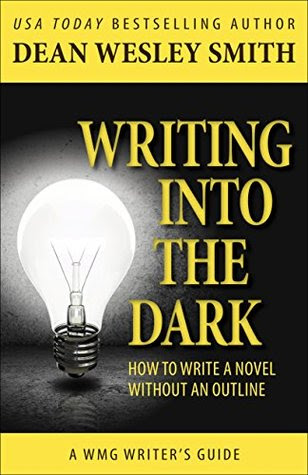
Obviously, I don't have a copy of Half-Truths to give away, but I'm cleaning off my bookshelves to make room for the books I'll need for my next project. Over the last 16 years, I learned that I'm definitely a plotter, rather than a panster. For those of you who abhor outlines, I'm giving away my (slightly marked-up) copy of WRITING INTO THE DARK. Leave me a comment with your email address by February 1 and it could be yours.


Congratulations to Emily Weitz who won MY SCHOOL IN THE RAIN FOREST.

Please take a minute to see views about other middle-grade books on Greg Pattridge's Always in the Middle blog.


Saturday, March 21, 2020

You Heard it Here First: Dorothy Price signs with Agent, Miranda Paul

It's always fun to share publishing news with my blog readers--particularly if it's news from one of my own writing friends. I first met Dorothy Price 10 years ago when she joined my SCBWI-Carolinas critique group. I've read her manuscripts and she's read mine. Today I'm thrilled to share her story of how she recently signed with an agent. 

Take it away, Dorothy!

*****

I am so excited to share my agent success story, after 11 years of writing kidlit!

This story began in October 2018, when I got a nudge from my writing friend, Tara Luebbe. She suggested I apply to the 2019 We Need Diverse Books Mentorship Program, to which I had zero interest. I was at a place in my writing career where I had gotten discouraged by rejection, and simply planned to stop submitting, to everyone and everything. But something about Tara’s nudge forced me to apply anyway, on October 31st—the very last day to submit. 

Two months later, I received an email from WNDB that I had been selected as a picture book winner, out of more than 100 entries! The amazing Samantha Berger became my mentor, and beginning in January 2019, we edited and revised three of my PB manuscripts.  

In November 2019, I decided to participate in NaNoWriMo, even though I had failed to finish three times before. On November 30th, I finally completed my first middle-grade novel. 

Armed with three completed PBs and a finished MG, I was confident this would attract an agent. In January 2020, I began agent submissions. I had a list of six agents, but one, in particular, was by referral only. This agent was also on the WNDB team, so she had seen my PB submission that won the contest; however, her agency only accepted referral submissions. Enter Samantha Berger, who graciously referred me, which opened the door for me to submit to Miranda Paul with Erin Murphy Literary Agency. 

Although I had two other agents to consider, when Miranda emailed me back a couple hours later and said she was happy to receive my query and asked to speak two days later, I knew she was the agent for me. Her intensity, energy, and passion were something I truly wanted in an agent.

Before we ended the call, Miranda offered representation, and after praying on it, a few days later, I accepted. If it hadn’t been for Tara’s nudge to enter that contest, I’m not sure I would have an agent today. The plug for that is, contests DO help, and I strongly encourage writers to submit! 

Things have been going well so far and I am enjoying every minute of the process. I can honestly say, if you put in the work, believe in yourself, and never quit, dreams will come true. 

*****


Dorothy H. Price is a long-time member of SCBWI Carolinas. Two of her nonfiction stories were published in Teaching Tolerance’s 2019 Teaching Hard History: American Slavery series. Her first picture book, Nana’s Favorite Things was published in 2016. You can connect with Dorothy on Twitter


Monday, December 19, 2016

A Lover of Words: Sydney Kirsch, NaNoWriMo Teen--Part II

Some of you will remember my interview with one of my writing students, Sydney Kirsch, which I posted at the beginning of November. Please welcome her back for Part II.


Carol: How did you fit NaNoWriMo into your homeschool curriculum?

Sydney: Being in high school, I do have a lot of work to do on a regular basis. Fitting in NaNo isn’t always the easiest thing, but I’ve developed a sort of method.  Generally, I start my school year in June or July, so that gives me plenty of time to work ahead in most subjects. That way I’m able to really focus on NaNo when November comes around. Other than writing, my parents only require me to keep up with math during November.  Being able to work at my own pace really is an incredible advantage, and I’m so thankful that I’m in a position where I can.

Carol: Any crazy habits that you developed or kept you going during NaNo?

Sydney: My favorite habit, or tradition, is preparing for Nano with crazy amounts of “Nano Food,”  which includes basically all of my favorite snacks and teas.

Carol: What was the best part of NaNo? The worst?

Sydney: For me, the best part is something every writer can relate to at some point or other. Those moments when the words just seem to be flowing from my brain. That’s my favorite. When I love my characters, when I think my plot makes sense, when chasing ideas with a net of words doesn’t seem so impossible after all. Those are the moments that make NaNo so worth it. 

The worst part? Probably two things. Middles and back pain. 
I feel like whenever I’m writing the middle of a story it’s really just a chain of muddled gibberish that just wanders around without pulling the story in the direction it needs to go. Of course, It’s my own fault that those moments happen, but they’re still discouraging. 

Also, sitting for an entire month isn’t exactly ideal for spinal health. Pretty painful.

Carol: What helped you to get to the finish line?

Sydney: I’m extremely competitive. During the first days of NaNo, a friend of mine challenged me to beat him to 50K. All I’m going to say about it is that you can’t declare war on me and expect no reaction. I accepted the challenge. So, with some spurring on by friends, I wrote and wrote and wrote until I thought my brain was reduced to a sizzling pile of cells inside my skull. That’s what pushed me to the finish line so soon, really.

Carol: What did you learn? 

Sydney: I learned (or relearned) a lot of things. I learned that world building is hard. Endings are hard. Words are hard. Being a writer is one-quarter sleep deprivation, one-quarter edited outlines, four-ninths will power, and just a smidge of having your head in the clouds.

Carol: Tell us about your process. Did you end up gushing? Revise as you went? Did you have any readers as you went along?

Sydney Well, it turns out something unexpected happened. I completed a first draft in around 52,000 words. I didn’t revise as I went and I didn’t word spew. I just wrote. The key was, first, not having a ridiculously detailed outline, but also trying to give my writing direction. Using every word to pull the story along. 

It didn’t always work. Sometimes I found that I had backed myself into a corner and realize I’d wasted 1500 words on a scene I didn’t need. But for the most part, it just hashed itself out. (Though I will have to flesh it out later, of course.)

As for readers, I guard my first drafts with my life. Though I did enjoy randomly sending some of my friends lines from my story. And I kind of dropped giving them any kind of context. It never failed to make me laugh.

Carol: Did your story go off in different directions than you had expected?

Sydney: Oh, yes. Plot points I thought were going to just be small snitches turned out to be the foundation of my story. Characters I thought were going to play big roles just sort of tagged along and will probably not survive the second draft. 

Carol: Can you tell us any more about your story?

Sydney: Turns out this story is a little bit like Narnia gone entirely wrong. Ancient royalty (supposedly) returns, political jealousies being dug up with them. Plus there’s a unicorn involved.

Also, I finally named it. Until We’re Broken. 

Carol: Final word count? Plans for revision? Hopes for publication?

Sydney: Final word count is 52,156. After I got to the end of my outline, I had planned to go back and “add scenes” I thought were needed throughout the story. But then I realized I just wasn’t admitting to myself I wanted to start rewriting and editing. Calling it something else doesn’t change the fact that editing is editing. So I made myself stop and wait a while before slashing away at my manuscript.

I have another idea or two brewing for stories, so my plan (as of right now) is to let Until We’re Broken rest while I slave away at my other projects. Or… mull them over for a while. Then I plan to come back to my NaNo story and hack away at a second draft.

As for publication, I don’t know. I think we all have that little (or big) corner of our hearts where we stick our novels and with them a few scraps of unrealistic hopes. Yes, I’d love to be published. Can I? And a novel? Probably not. But maybe someday I’ll try.

Carol: What’s next?


Sydney: Well, first, Geometry. I’m trying to finish it before the end of the year (a friend challenged me in this, actually :)) so I’ll probably spend a lot of time working at that. But I also have a couple of story ideas I’ll be thinking over. If I like them enough, I’ll probably write them. This year’s NaNo has reminded me how much I adore writing stories. How I love the precision of it. The imagination of it. And how much I love words. So, I’m going to keep working at it. I’ll never get better if I don’t try.

Sydney's organized writing space. Mine should look so clean!
Carol: My guess is that you're going to keep getting better and better. I look forward to buying your book one day!

Sydney: 😊

Monday, November 14, 2016

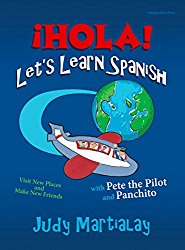
¡Hola! Let's Learn Spanish: A Review

Judy Martialay has a passion for languages.  Specifically, she has a passion to teach children from ages 6-10 that learning Spanish is fun and rewarding.


¡HOLA!, Martialay’s first book, includes a fun story written in English with key words in Spanish, a song, a skit, background information about the cultural context, an art activity, and a dictionary.  The material is supplemented by an audio version which parents and educators can download online. Simple, colorful illustrations by the author amplify the content and engage readers in the story. The combination of these activities makes this an attractive classroom or homeschool book.


When I received my review copy, I first thought I’d pass the book along to my daughter, Lisa Edgar, who teaches middle and high school Spanish. I envisioned she would eventually use it to introduce Eleanor, my youngest granddaughter, to Spanish. 

But when my seven-year-old granddaughter, Caitlin Kasten, announced she loved Spanish, I thought ¡HOLA! might supplement her introduction to the language. 

Caitlin is reading above her second grade level so I let her try reading the book herself. Unfortunately, that was frustrating since she’s only just begun to learn Spanish. She enjoyed listening to me read (although Lisa later told me my accent was awful), was disappointed that there wasn’t a second story in the book, and wanted to make the mask. Her four-year-old sister was drawn in by the illustrations and listened attentively while we waited to be served at a favorite restaurant. 

Libbie and Caitlin enjoyed the story of Panchito, the Mexican jumping bean. 
After showing the book to Libbie and Caitlin, I next asked Lisa for her impressions. She said it would be a cool book for students at the elementary school level. She liked how the reader was introduced to the meanings of different vocabulary words and how Spanish words replaced the English in the text and was bolded to further capture the student's attention. “The repetition of Spanish helps a child remember the words. The multiple opportunities for kids to see words in context is also good,” Lisa said.  As a teacher, she thought that using words found at home or in the supermarket was attractive. 
Eleanor listening to ¡HOLA! for the first time.

I finally decided that the book is making it’s first home with Caitlin. I asked her to share it with her Spanish teacher and I'm sure she'll soon learn to read the story on her own. ¡HOLA! will get passed down to Libbie and  since it is part of the Cousins Club collection, it’ll eventually be back in Eleanor’s hands. 


And who knows? If her mommy starts talking Spanish to her soon, she’ll be reading it to her grandmother one day—with a better accent than I can ever manage!

Judy is working on a book to introduce children to French, BONJOUR! LET'S LEARN FRENCH, featuring Louis l'escargot, France's favorite snail. Like ¡HOLA! it will include a story, activities, culture, song, and craft: How to make an impressionist style painting/picture. She also hopes to publish similiar books in Chinese, Arabic, and Italian. 


*******
Sydney Kirsch, last week's blog guest, agreed to keep us posted on the progress of her NaNoWriMo book. Here is her conclusion from last week:

"Awful writing can be fixed... nonexistent writing can't."

Word count as of 12:08 AM November 13, 2016: 30,091.

Monday, November 7, 2016

Meet Sydney Kirsch: A Teen Tackling NaNoWriMo-- Part I

For the last eight weeks I have had the privilege of teaching fiction to nine talented teens. When I found out that one student, Sydney Kirsch, was gearing up for NaNoWriMo, I suggested she write about her experience for my blog. 

Sydney emailed me this post ahead of the due date and I commended her for that. She answered, "Yes, it is a little early, but I'm trying to clear out my brain since I'll be starting NaNo at midnight tonight!" 

And that, readers, tells you a lot about Miss Sydney Kirsch!


CAROL: I understand you’ve participated in NaNoWriMo before. How did you hear about it? Do you follow the rules for adults or for the youth? What did you learn and/or accomplish the last time you participated?  

SYDNEY: Last year, 2015, was my first time participating in NaNoWriMo. Where exactly I heard about it, I can’t remember, either from a friend or a random blog post. However it happened, I ended up deciding to join sometime in early October and I ran headfirst into brainstorming. 

In the beginning, I planned to shoot for 30,000 words in the Young Writers Program, but at some point I decided there was no reason why I shouldn’t just go for the full-on 50K. So by the end of November, I was the proud owner of my very own set of baggy under-eye circles, fifty thousand words, and a half-finished novel. 

Before starting NaNoWriMo, I had heard over and over and over that to get to 50K you have to put down as many words as you can. No editing. Just spilling whatever comes to mind. Well, the biggest thing I learned last year is that the word-spewing method does not work for me. When I write, I tend to lean to the side of overly descriptive and not-exactly-necessary-but-pretty writing. You can imagine how that ended (let’s just say there may or may not have been an entire paragraph describing omelets). So, 50,000 words swirled by and I was left trudging through the middle of my first draft. 

CAROL: What did you do with your story after writing it last year? Can you give us a synopsis? 

SYDNEY: I tried including a blurb about my project in this post, but failed miserably. Apparently I do not know how to write a synopsis.  :)

Once the great NaNo sprint was conquered, I tucked my unfinished file away, planning to peek at it again in a month or two. That time (or double that time, let's be honest) passed. I still couldn’t bring myself to look at what I’d written. Just recently I worked up the courage to print a full copy and sit down to rip my half-novel apart. Rereading it was a kind of wonderfully miserable experience. Like I mentioned before, the novel is still not finished. Whether or not I'll ever go back to it, I can’t say, but for now, I don’t think it would be rewarding enough for the trouble.

CAROL: You're in good company of other writers with unfinished projects buried deep within their computers. Last year did you use any of the support groups associated with NaNo? If so, which ones and how were they helpful?

SYDNEY: One of my favorite things last year was going through the forums on the NaNoWriMo website. There were so many helpful tips and ideas all gathered into one place there. My favorite of the NaNo resources, though, is by far the NaNoWordSprints account on Twitter. They’re constantly hosting mini-competitions during November. I was just racing against my own time, but that pushed me toward 50K more than anything else did.

CAROL: How did you prepare in 2015? How did you prepare this year?

SYDNEY: I am an outliner, through and through. Last year, I took a very detailed, three-act approach to planning, which was helpful, but I can see now that having every thought planned out ahead of time actually constricted me in some ways. So this year, I’m leaning toward a more general “beginning, middle, ending” roadmap to go by until I break it down further once the writing actually commences.


CAROL: When did you start preparing for Nano?

SYDNEY: I’m always gathering ideas for stories, but it wasn’t until June that I really started thinking about specific ideas I wanted to write about this November. It began with being aware. Noticing things.

My family was reading through Deuteronomy, and in chapter 3 it describes these massive people living in gigantic cities, sleeping on enormous beds. And that intrigued me. It sounded like something I would want to write about. So I put the idea on a list and pinned it to the corkboard above my desk.

After that, more ideas came. From writing prompts, from pictures, from text posts, from random sentences. I took my most hated cliches and tried twisting them. Making them align more with what I’ve seen of people and the world. (Not like that’s a whole lot.)


As far as actually sitting down and connecting the dots, though, that didn’t happen until a couple of weeks ago.


CAROL: How are you using what you learned in our fiction writing class for your preparation?

SYDNEY: Well, just about everything I’ve been working on in class these last few weeks has become helpful in some way or other.

Surprisingly, though, one of the greatest things I’ve put to use seems obvious: having other people brainstorm with me. Since actually trying this for my NaNo project, I found it hard to believe how many times I was clapping in delight at someone’s suggestion for my story. You’re a brilliant human! How did I not think of that? 

Another big thing for me was simply learning about mood. Before, I had only a vague idea of what a good scene was like. When something wasn’t working, I wasn’t able to point out exactly why. Now, though, I can work at keeping my moods consistent and smooth.

CAROL: What is your story about this year?

SYDNEY: I’m writing an urban fantasy including a pair of sisters, a mind-reading (but mute) bird, and a quest to spare three necks from a giant’s blade. That’s my current plan, anyway.

CAROL: That is an intriguing pitch! What is your goal in completing this story (besides making it to 50 K words)?

SYDNEY: Well, I have two goals. One is kind of achievable, the other is insane. 

My realistic goal is to work toward better characters. My entire writing life I’ve struggled with creating unique people for my stories, and I think my main difficulty is that I’m afraid. Good characters are realistic ones. Not perfect. And to write them you have to crack yourself open and be unflinchingly honest about what and who people are. I’m not good at that. Yet.

And my unrealistic goal? To finish a first draft no matter how many words it takes. This really terrifies me, because that leaves me with two options: I can really cut down the way I portray and describe things in my first draft so I can get through an entire story in 50,000 words. Or I could write 80,000-100,000 words during NaNo and have to CUT, CUT, CUT later. Will either of these happen? I don’t know. But I’m hoping that going into this November thinking, I am finishing this story could be invaluable to me.
*******

Stay tuned, blog readers! One month from now, Sydney will share what she accomplished during NaNoWriMo 2016.


*********

Sydney Kirsch is a young writer, word enthusiast, and story collector who lives in upstate South Carolina. She is the oldest of ten and when she’s not hidden away with a book, she can be found at a piano, teaching historical dance, or singing musicals with her younger siblings. A high school junior, follow her on Twitter @hmskirsch.

Tuesday, August 3, 2010

Kindred Spirits

L.M. Montgomery inscribed those two words in the minds of every reader who devoured the Anne of Green Gables books. I am fortunate to have several friends who fit into that category (you know who you are!) and today I connected with two organizations that also fit that description.

The first group is Literacyhead, an online magazine that is committed to encouraging creativity in the classroom by joining together writing, reading, and art. The team who publishes the magazine define a Literacyhead as "someone who is intensely serious about exercising creative literacy, making connections across multiple literacies, pursuing thoughtful literacy as an individual and as a teacher, and constantly searching for ideas. Literacyheads may have expertise in different areas of literacy, but all are committed to children's literacy, passionate about the arts, incessant thinkers, and display a propensity for having fun." (http://www.literacyhead.com/index.php?option=com_content&view=article&id=162&Itemid=55)

Page through their website and you'll find writing, reading, art prompts, essays, comics, coaching ideas, tools for your classroom, and titles of books related to the issue's theme. Look at this (partial) list of why this team created this magazine, and you will see why I am thrilled to find this resource:

  • Because we wanted to help teachers nurture their creative lives while they meet the demands of high accountability to which they are subject.
  • Because we love children's books and art, and the connections between the two make us positively giddy.
  • Because we believe that the arts are a basic component of a healthy life, not an afterthought or a bonus if there is time or funding.
  • Because we wanted to help teachers take care of themselves by lightening their lesson planning load a bit.
  • Because we enjoy the challenge of camouflaging solid literacy research in lessons that appear to be just looking at and talking about art and literature.
  • Because we want children to begin to think that they need and deserve beauty in their lives.
  • Because we want to give teachers a springboard for extending their own creativity.
The second organization I connected to today was one I've blogged about before, National Novel Writing Month (or as participants fondly call it: NaNoWriMo). Today, the Young Writer's Program's new director, Chris Angotti, asked me if I would write a short advice article for the "Writer's Block" column.

Chris, a former middle school and high school English teacher, understands my concern that the testing environment which permeates schools squeezes out creativity. He believes that NaNoWriMo can help teachers who want to teach their students more than just how to be good test takers.  "I definitely believe in the NaNoWriMo program for young writers. Our surveys and anecdotes indicate, almost without deviation, that it has positive effects in writing fluency, time management, risk taking, and self-esteem. But these things aren't as easily measured on a standardized test. My goal is to think about how objective results CAN be seen, so creative writing programs like ours (and books like yours) aren't lost in the bureaucratic shuffle."

                         Kindred Spirits--Unite!


Tuesday, November 18, 2008

How Writing a Nano Novel is Different than “Normal” Novel Writing


On the ride to NCCAT with Joyce Hostetter, my fellow presenter, we talked about our NaNoWriMo books. This is my first foray into historical fiction; this is Joyce's fifth book. Her story is about a teenager who for unexpected reasons finds himself working in a mental hospital in the 40's. I was curious to know how writing a book within the framework of one month has been a different experience than how she normally writes her books.

"Before I started NaNo I actually used "Create a Character" from Teaching The Story." (Of course I was delighted to hear that!) "It pushed me to identify major people in my character's life and formative events and helped me to know his back story. I don't usually intentionally sit down and brainstorm about my character first; usually I just discover my characters as I go along.

"I haven't had as much time to research as I would have liked," Joyce admitted. "I have books on my shelves that I haven't even had a minute to read. For example, I want to read the memoirs of a mental hospital employee from WWII but I've been so busy trying to write that I haven't even been able to contact him yet.

"The other difference is that before I had high speed internet connection and the distractions of Facebook and blogging, I would just get up every morning to write. Now, I get up and check my e-mail, and troll around the web and it is all very distracting. NaNoWriMo has helped me to remember what it feels like to create a character and to have my mood lifted by the writing process itself. It energizes me. After recently experiencing the tediousness of proofing the copyedits for Comfort, the sequel to Blue, it is exciting to have a new story and a fresh new character."

Joyce and I became so engrossed in talking about our experiences with NaNoWriMo, that we missed our exit coming here. Fortunately, we figured it out before we drove too many miles out of our way. Get two writers together and that's what happens! But we arrived with plenty of time to set up and lead 24 teachers in the process of exploring, "Is there a Children's Book in You?"

This is Joyce sharing how to create characters with voice. Hopefully a character who doesn’t miss her exit driving along I-40 West in the Appalachian Mountains!

Technorati Tags:
, , ,

Saturday, November 8, 2008

Literary Odds and Ends

Since working on NaNo depletes my brain, this blog will be a consortium of quotes from other people who are inspiring me at the moment. Appropriate for writers as well as teachers, I hope these words inspire you too:

This is how I feel when I am writing: "Writing a first draft is like creating clay out of nothing, just dirt and water." John Green, winner of the 2006 Michael L. Printz Award for Excellence in Young Adult Literature for Looking for Alaska.

This is what I struggle with (see last post):

"For the same reason that active verbs are generally better than passive verbs, a lively present tense will beat a sodden past tense every time. It's the difference between a saunter and a trudge." James Kilpatrick, "Why because? Since is sounds better, that's why," November 8, 2008 column.

This is what I have to remember: "I firmly believe the story knows itself and the really good stuff just pops up when we let down our guard." Joyce Hostetter, author of Blue and Healing Water.

This is what I'm doing now and later:

"Of course we [Joyce is also in the middle of NaNO] can layer in what we know for now but we don't have to know everything. We can leave _____________s for filling in later or make up something totally not accurate. I do have some sensory details and little descriptions of what is going on around my character but I expect to have tons of stuff to layer in later (and lots to take out)."

This is what I have to think about:

"Novels that last and please readers are written because the novelist is intoxicated by the delight and the endlessly renewable joy that comes from engaging with imaginary characters—with story; and that engagement always begins with reading; and if it catches you, it never lets go. Write a novel if you want to win a competition, or impress your friends, or possibly make some money—do so by all means. But if you're not a lover of stories, a passionate and devoted reader, don't expect your novel to please many readers." Phillip Pullman – from his NaNo Pep talk on 11/7/08.

Technorati Tags:
, , , ,


Tuesday, November 4, 2008

The Teacher Learns to “Show, Not Tell”

I'm thick into NaNo and realizing that I can describe something to death-- but making up something that hasn't ever existed except in my mind is really HARD for me! As I push along at the keyboard and struggle to produce (gulp!) 2,000 words a day, I barrage myself with hundreds of questions: What will Anna Katherine, my 12-soon-to-be-13-year-old protagonist say or do next? What words would she use? What hand gestures or facial expressions would show her feelings? I am aware that every snippet of conversation can take her and my other characters in multitudes of directions and the possibilities overwhelm me.

I feel like I'm floundering in deep water with some knowledge of how to swim and hoping I can finish the race. Although I talk about show, don't tell in lots of workshops, I am at home doing that in nonfiction. This plunge into fiction is another story all together. (Pun intended.) I am more comfortable narrating what Katie (her nickname) did last summer than showing what she is saying, thinking, or doing in the moment.

So what is helping me? Remembering my own acronym for showing a character- FAST.

  • F- Feelings
  • A-Action
  • S-Speech
  • T- Thoughts

It's nice that my own book is informing my writing! I am convinced that this foray into fiction will not only move me toward making my dream of writing a book for young readers become reality, but it will make me a better writing teacher also.

Last night at a writing workshop at South County Library I happily concurred with my teen participants that "plot holes" happen. Now I know the pains of dialogue that doesn't sound authentic; the reality of making all of the details fit together into a cohesive whole.

Technorati Tags:
,


THE NIGHT WAR: A MG Historical Novel Review

  By now you should have received an email from my new website about my review of THE NIGHT WAR by Kimberly Brubaker Bradley. (It'll com...