Showing posts with label grandchildren. Show all posts

Monday, August 1, 2022

F is for Feathers: An Informational Picture Book Review and Giveaway

Along with the many fine books that Sleeping Bear Press publishes, they also have a line of alphabet books. Two years ago I reviewed H is for Honey and T is for Thor and today I'm bringing you a new title, F is for Feathers: A Bird Alphabet.  I have featured both the author, Helen Wilbur, and the illustrator, Andy Atkins on my blog. I am happy to share another one of their beautiful STEM books.

Each of the alphabet books in this series combines poetry that is accessible to younger readers and text that 2-4th graders will understand. 


REVIEW

From the publisher's cover sheet:

Grab your binoculars, this new alphabet tour by Helen L. Wilbur is a grand exploration into all things birds! With over 10,000 bird species on Earth, there is plenty to explore. The featured creatures vary in size, shape, color, and abilities. And besides being beautiful to look, at birds are a critical part of our ecosystems and support biodiversity on our planet.

Every page teaches about either bird anatomy, types of birds, or a vast variety of related concepts such as their behavior and language, geographic range, migration, threats, and the role of an ornithologist. 

Here is some of what I learned and enjoyed in F is for Feathers.

B is for Beak

Did you know that the shape and size of a bird's beak depend on the food it eats?  

Catching insects in the air,
cracking nuts and seeds,
sipping nectar, peeling fruit,
breaks show how each bird feeds.

C is for Chickadees and Caching 

Chickadees cache hundreds of seeds and insects each day and remembers them in the winter. Did you know that chickadees add more dee notes to the chick-a-dee-dee to give out a predator call?

F is for Feathers


Soft and bright, strong and light,
perfectly designed for flight,
for keeping warm and dry and sleek,
feathers make all birds unique.

H is for Habitat


J is for Jays

Jays, ravens, crows and magpies belong to the corvid family of birds. Corvids can be loud and annoying and are treated as nuisance birds. But cross them at your peril. Crows can remember your face and they carry grudges.

L is for Lovebirds

Although this entry focused mostly on lovebird parrots, it also mentioned other bird families that begin with courtship. One of the birds that Helen Wilbur mentions is the sand crane. Here's a video of cranes I've seen in Florida. Skip the ads and enjoy!


N is for Nests

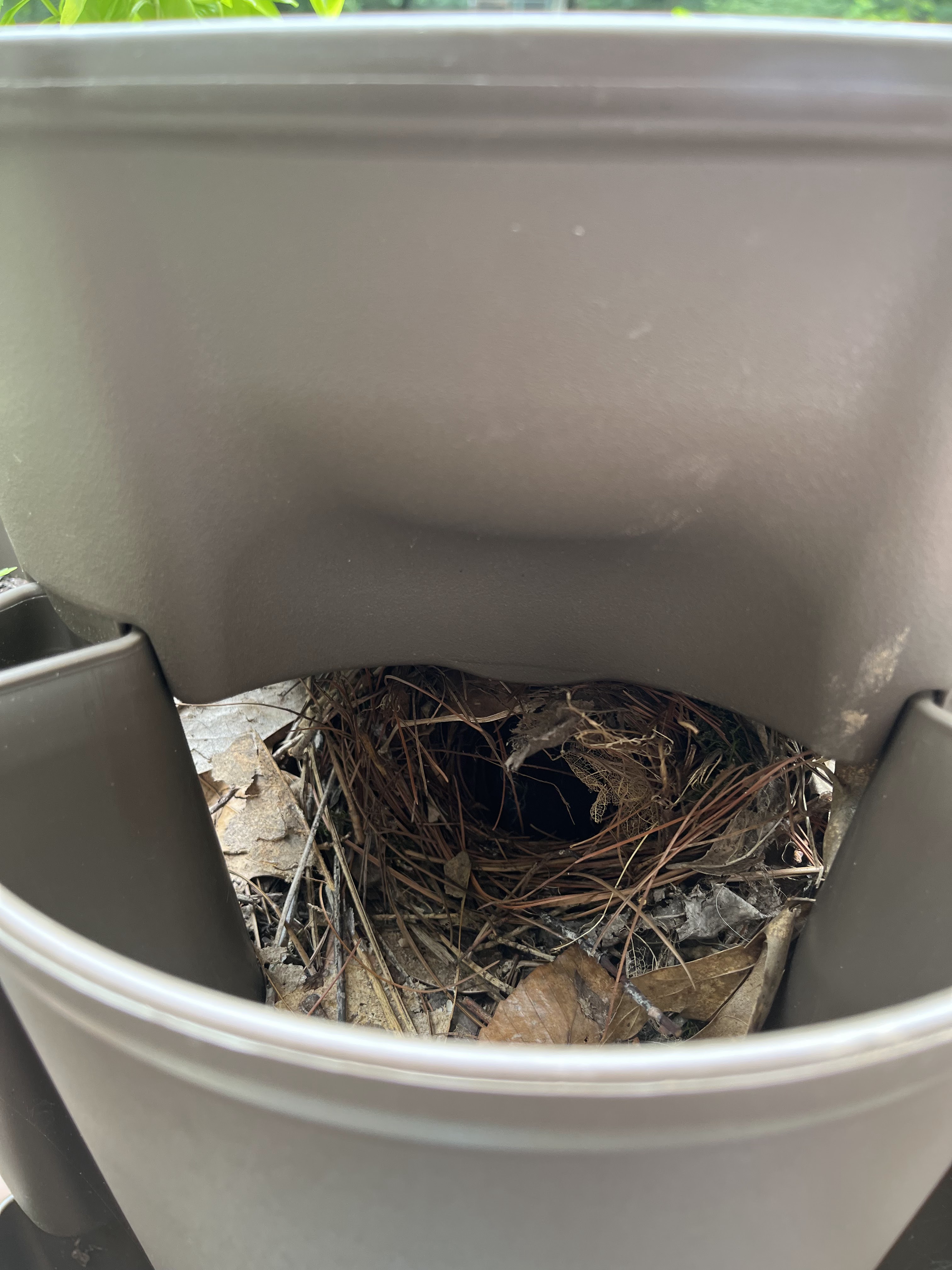
Who doesn't remember the joy of finding a birds nest? My grandchildren have been enjoying watching brown thrashers build their next inside their stacked garden in Charlotte, NC.


Photographs courtesy C. Kasten


When I think of nests, I also think of my FB friend, Melodye Shore who posts beautiful pictures she takes of hummingbirds from her garden in coastal Orange County, California. 


This verse in F is for Feathers reminded me of the bluebird boxes I saw on a golf course in Tennessee.
   
Come along the bluebird trail,
nesting boxes in a row.
Safe and warm in cozy homes,
little baby bluebirds grow.

U is for Updraft


This page definitely belongs in a book about birds. The text discuses how birds ride on spiraling thermals enabling to soar over many miles during migrations.

Z is for Zones


In this perfect ending to this beautiful and informative book, the information on this page discusses the four north-south flyway zones in North America and how important they are to migrating birds.

CURRICULUM RESOURCE

This book is a shoo-in as an important resource for elementary school educators. The front matter includes a beautiful illustration of the parts of a bird and a glossary. The back matter include suggestions on identifying and helping birds.

GIVEAWAY

Leave a comment by August 8 if you are interested in winning this book. Please leave your name and email address if you are new to my blog. If you prefer, drop me a note here. If you are a librarian or educator, your name will be entered twice. U.S. addresses only. 

Enjoyed this post? Never miss out on future posts by following me! 


Monday, August 5, 2019

Two Socks, One Giveaway

Congratulations to Gwen Porter who won "A Boy Like You" and to Linda Townsend who won "A Fist for Joe Louis and Me."

*******

If you didn't win last week, here's another chance at winning an adorable picture book, also courtesy of Sleeping Bear Press. 

Little Sock


This debut picture book by Kia Heise and Chrispher D. Park, is one that children (and their parents or caregivers) will enjoy reading. 

Little Sock is bored. Every day it's the same old thing. He gets worn, gets dirty, and gets washed. "All the other Socks seem happy, but Little Sock dreams of something different." He's heard of a place called Sock City where every day is a new adventure and he is determined to find it--even though it means going through a scary, dark tunnel in the back of the dryer. 

On the other end of the tunnel Little Sock finds Sock City and lots of different Socks,


and determines to go back again. 

Only next time, he'll bring a friend. 


One Red Sock


This is the second book I've reviewed by author-illustrator Jennifer Sattler. Like BULLY, ONE RED SOCK also is light on text but full of bold, larger-than-life illustrations which will amuse young readers.

How many purple hippos do you know who live in a room full of colorful dots? And how many can't seem to find a red sock to match the one she already has on? Young readers will enjoy meeting this unique hippo, identifying colors, and learning the rhymes.

In the end, after trying out a rainbow of colored socks, Ms. Hippo decides to wear one that has polka dots to match her room.


Jennifer was featured last week on Kathy Temean's blog. Check out the link to see more of Jennifer's illustrations and her entire process!

GIVEAWAY

Since my youngest grandson is turning one this week, LITTLE SOCK is on its way to his house. I think his older sister will enjoy reading it to him. 


Four-year-old Eleanor, "reading" Five Little Ladybugs
to her brother, Luke. According to my daughter,
Luke listens the best when she reads to him.
ONE RED SOCK is up for grabs though! Leave me a comment by August 8 and I'll enter your name in the giveaway. Just make sure you leave me your email address if I don't have it.


Monday, December 3, 2018

Finding Home: My Arf-O-Biography: A Grandmother/Granddaughter Review + Giveaway!

Congratulations to Clara Gillow Clark for winning Hanukkah Hamster from last week's blog. Clara is a fellow writer and blogger with whom I often trade books!

********
In this post, I'm introducing a new format for some of my book reviews. I'm known to five of my six grandchildren as the grandma who loves books. (The sixth is only 3 months old. Give him time.) When I read this book I knew it would be a perfect read for my seven-year-old granddaughter, Libbie, who not only loves dogs, but has wanted to be a veterinarian since she could say the word. She agreed to read the book and give you her thoughts. So here you go, friends--a book review brought to you by Libbie and me!


This sweet early chapter book is perfect for the 1-2nd grade reader who is starting to read on her own. This is Bridgett Langson's debut book and her love for all things four-legged and fuzzy comes through loud and clear.  

Like Christie Miller's book, Raccoon Rescue, FINDING HOME is written for young readers from the point-of-view of the animal character, involves a rescue, and is self-published.

"Puppy" as his new family calls him until they decide on his name, wants one thing: a boy of his own. He and his "Sis" were abandoned by their parents (Marf and Darf) in an attempt to protect them from a mean man they called Bad Boots. Puppy is thrilled when his boy, Eric, wants to keep him. But Puppy's problems aren't over. He arfs too much and doesn't always go potty in the right place. Even though he does his best to look cute and adorable,


Illustration by Edwina L. May
Eric's father dislikes his yapping and is not convinced he wants to add another dog to the household. 

Puppy's "dialogue" with Moka, the big scary dog who belongs to Eric's brother John, as well as his own thoughts are interspersed throughout the story. During a visit to Sis she tries to convince him to stay with her. He says,


I love visiting you, but I need to go back to my own home. Darf was right. It's the way of dogs to live with their own humans. (p.88)
At another time Puppy thinks,
Guess what, you boy named John? Dogs do know human talk! Even puppies like me, I arf. (p. 55)

Puppy has a keen sense of smell, and can smell when a person is scared. This sense of smell saves the day when Puppy finds Eric's father lost work notebook. 

This is the last illustration in the book. I'll give you one guess how the book ends!
Illustration by Edwina L. May


LIBBIE'S THOUGHTS


AUTOGRAPHED GIVEAWAY

Please leave me a comment by December 6 and I'll enter your name in the giveaway. Bridgett will be happy to provide an autographed copy for one fortunate winner. This will make a great holiday present for a young reader. Don't forget to leave me your email address if you are new to my blog.

Monday, September 18, 2017

First Times by Charles Ghigna: A Review and a Giveaway

I met  poet and prolific writer Charles Ghigna (aka "Father Goose") several years ago at a reading and writing conference. Today, I am happy to introduce him, and his newest picture book, FIRST TIMES, to you.


In this engaging book in rhyme, Charles shows several characters celebrating their "firsts." Delightfully illustrated by Lori Joy Smith, a young reader will identify with the pride and pleasure of brushing her hair, tying his shoes, riding his bike, or picking a book out from the library. Is there a better way to inspire young children than to praise every milestone accomplishment?

Here are two sample spreads:


The Backstory

I asked Charles what his inspiration was for this book. He replied, 
"The idea hit me during one of my granddaughter's visits. We were at the park playing on her favorite slide when another little girl came by. The younger child stood at the bottom of the slide watching Charlotte Rose as she laughed and cheered her way down the slide. She then stopped to say something to the girl who promptly followed her on her next turn up the ladder. The little girl's eyes widened with joy as she slid down the slide. Charlotte Rose came by and whispered to me, "It's her FIRST TIME." 

Bam! My little six-year-old muse struck again. I spent the rest of the afternoon sitting on a nearby bench writing my new book, listening to the laughter of Charlotte Rose and her new friend. Like many of my books of the past few years, this one is dedicated to Charlotte Rose."
Charles, with his favorite little muse, Charlotte Rose when she was three. His
writing space is actually a tree house!

Lesson Plans and Launch

Teachers and home school educators, make sure you check out the lesson plan on Charles' website. Many of you reading this are in the Carolinas, but if you have friends or family in the Birmingham, Alabama area, information for his book launch is here. Pass it along!

Giveaway

Orca books is giving away TWO copies of this lovely picture book for you to share with your favorite young reader. Please leave me a comment by September 22 and Random.org will pick a winner. For extra chances, share this on your social media of choice. Tell me what you've done and if you are new to this blog, PLEASE leave me your email address in case you win!


Monday, September 4, 2017

TAKEAWAYS from SCBWI-CAROLINAS 2017

Congratulations to Connie Saunders who won Sheri Levy's Starting Over ARC.

********

Teresa Fannin and Bonnie Adamson, the SCBWI-Carolinas Regional Advisors, co-ordinated another great annual conference. For those of you who were unable to attend, here are some of my takeaways:

From two time Newberry Honor award winner Gary Schmidt's breakout session on Narrator and POV:
  • Make a conscious decision about who your narrator is. If you're stuck, switch POV (even to an inanimate object or animal). Even if you don't use that narrator, your story will be informed by what you discover. 
  • Use long vowels to slow your story down. Short vowels speed things up.
********

From my critique of Half-Truths with agent John Cusick (my reactions in red):
  • "Writing is polished and accomplished." (Woohoo!)
  • "Love the family relationships."
  • "Prose is solid, tight, and evocative."
  • "Characterization and dialogue feels a bit generic in places." (Fixable. I have to think harder, dig deeper)
  • Develop Kate's unique POV. (Ditto)
  • Sounds more middle grade than young adult. (I have received this feedback before. Middle grade, here I come.)
John had other suggestions as I go forward. The shift to middle grade will take some switching around in my head and on the page, but as I'm in the middle of another draft this is the time to do it. Since I tend to read middle grade more than young adult, I think that ultimately I'll be happy with this decision.

******

From my breakout session on "Wiki's 101": 
  • Be ready to improvise when technology doesn't work the way you expect. Thanks to my gracious attendees who made my moment of "Oops, the LCD isn't projecting the online wikis as I expected," less of a panic situation and more a learning experience. 
********

From agent, Jennifer Mattson's breakout, "Putting on the Architect's Hat":


  • There are several different narrative structures besides a straight linear one (Beginning, Middle, End.) The one that most interested me was pastiche. When I read Kathleen Burkinshaw's debut novel, The Last Cherry Blossom, I was intrigued by her use of headlines and snippets from radio broadcasts as part of her chapter headings. In fact, last week I was glued to the microfilm machine at the Charlotte public library searching articles from The Charlotte Observer, Charlotte News, and The Carolina Israelite for that purpose. Since I'm also including free verse and letters in Half-Truths, I'm glad to find a name for this type of novel!

From THE LAST CHERRY BLOSSOM
Example of a pastiche novel.
*******

From John Cusick's breakout, "Pacing- What to Cut. What to Keep and What Order to Put it In":
  • Physical description must reveal character.
  • Character should be revealed through ACTION. Not a decision to act.
  • Cut rhetorical questions.
  • "Start as close to the end as possible." Kurt Vonnegut.
  • Open with scene, not summary. 
*********
From the bookstore:
5 grandchildren = going a little crazy in the conference bookstore!
*******
From the first pages session:
  • Be careful of inner monologue that's not authentic.
  • Hook your reader with emotion first.
  • If you're writing historical fiction, make sure there is a good reason for placing it in the past. 
  • Be in the moment with your characters and scenes.
******
And last, but certainly not least, from my friend Donna Earnhardt:

"You are tackling a story that is not easy, yet you've made the effort to get feedback that was probably not easy to hear... and still, you keep on going. I am so proud of you and I think that you should be proud of yourself, too. Your tenacity encourages me to keep on keeping on - even when it's hard."
I confess to fighting discouragement over how long it has taken to complete Half-Truths. But Donna looks at my journey and sees perseverance. Which goes to show that often--in life and in books--there are two points of view. 

Monday, March 27, 2017

Little Literacy

Congratulations to Deborah Allmand who won, Midnight Without a Moon from last week's blog.
******
I'm thankful that each of my five grandchildren's parents are encouraging literacy from an early age. I was on grandma duty last week so allow me to share some pictures and videos I've accumulated over the years. 

At a few days old, Eleanor Edgar was introduced to Sandra Boynton.
Two years later, she's still a fan.


At ten months, Eleanor was "selecting" books.

Now she plays alphabet games with her Mommy,


enjoys independent reading,


and shares books with her dog.


Her cousin Libbie Kasten enjoyed reading DON'T LET THE BEDBUGS BITE by Niki Masse Schoenfeldt in the car.


She memorized favorite books,


and wrote her name in the sand.


My grandson Mason Clark discovered that literacy includes receiving HOW TO CHEER UP DAD signed to him by Fred Kohler,


as well as reading Biscuit, a first reader all by himself.


Caitlin, Libbie's big sister, was extremely proud when she began reading chapter books. She loved the Princess Posey books by Stephanie Greene.


As well as writing her own book.


Caitlin actually told her parents that she hoped to major in reading when she goes to college. Her scientific/math-minded parents raised their eyebrows about that, but she is a girl after my own heart!

My oldest granddaughter, Ebby Clark, is in fourth grade and offered these two book reviews:


I'm delighted that my grandchildren have discovered through The Cousins Club that their Grandma LOVES books!

If you're not tired of videos yet, here is one more that will entertain the favorite toddler in your life:


As a parent or grandparent, how have you encouraged literacy? I'd love to hear your stories!

Monday, November 14, 2016

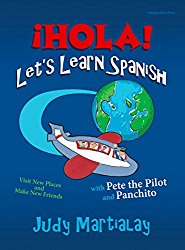
¡Hola! Let's Learn Spanish: A Review

Judy Martialay has a passion for languages.  Specifically, she has a passion to teach children from ages 6-10 that learning Spanish is fun and rewarding.


¡HOLA!, Martialay’s first book, includes a fun story written in English with key words in Spanish, a song, a skit, background information about the cultural context, an art activity, and a dictionary.  The material is supplemented by an audio version which parents and educators can download online. Simple, colorful illustrations by the author amplify the content and engage readers in the story. The combination of these activities makes this an attractive classroom or homeschool book.


When I received my review copy, I first thought I’d pass the book along to my daughter, Lisa Edgar, who teaches middle and high school Spanish. I envisioned she would eventually use it to introduce Eleanor, my youngest granddaughter, to Spanish. 

But when my seven-year-old granddaughter, Caitlin Kasten, announced she loved Spanish, I thought ¡HOLA! might supplement her introduction to the language. 

Caitlin is reading above her second grade level so I let her try reading the book herself. Unfortunately, that was frustrating since she’s only just begun to learn Spanish. She enjoyed listening to me read (although Lisa later told me my accent was awful), was disappointed that there wasn’t a second story in the book, and wanted to make the mask. Her four-year-old sister was drawn in by the illustrations and listened attentively while we waited to be served at a favorite restaurant. 

Libbie and Caitlin enjoyed the story of Panchito, the Mexican jumping bean. 
After showing the book to Libbie and Caitlin, I next asked Lisa for her impressions. She said it would be a cool book for students at the elementary school level. She liked how the reader was introduced to the meanings of different vocabulary words and how Spanish words replaced the English in the text and was bolded to further capture the student's attention. “The repetition of Spanish helps a child remember the words. The multiple opportunities for kids to see words in context is also good,” Lisa said.  As a teacher, she thought that using words found at home or in the supermarket was attractive. 
Eleanor listening to ¡HOLA! for the first time.

I finally decided that the book is making it’s first home with Caitlin. I asked her to share it with her Spanish teacher and I'm sure she'll soon learn to read the story on her own. ¡HOLA! will get passed down to Libbie and  since it is part of the Cousins Club collection, it’ll eventually be back in Eleanor’s hands. 


And who knows? If her mommy starts talking Spanish to her soon, she’ll be reading it to her grandmother one day—with a better accent than I can ever manage!

Judy is working on a book to introduce children to French, BONJOUR! LET'S LEARN FRENCH, featuring Louis l'escargot, France's favorite snail. Like ¡HOLA! it will include a story, activities, culture, song, and craft: How to make an impressionist style painting/picture. She also hopes to publish similiar books in Chinese, Arabic, and Italian. 


*******
Sydney Kirsch, last week's blog guest, agreed to keep us posted on the progress of her NaNoWriMo book. Here is her conclusion from last week:

"Awful writing can be fixed... nonexistent writing can't."

Word count as of 12:08 AM November 13, 2016: 30,091.

Monday, May 2, 2016

Books for Babies: By Eleanor

As some of you know, my life has been pretty busy recently. I spent two weeks in Philadelphia helping out with my youngest granddaughter, Eleanor. This past week my husband and I moved into an apartment in Greenville, SC. Not much time for writing or blogging. Usually this blog is about writing tips, author interviews, or book reviews. Indulge me for a minute, for a post that is brought to you by my youngest guest blogger, 10-month-old Eleanor.
*******
Lisa and Adam both love books and have been reading to Eleanor from her earliest days. 


8 days old and already a Sandra Boynton fan!


They lined her board books on a shelf that is perfect for Eleanor to grab. They usually suggest she picks three, but as we all know, sometimes it's hard to limit ourselves.


Limited in her verbal abilities, Eleanor communicates her enthusiasm in other ways.

After picking her books, there is snuggle and reading time.

Of course, we did other things besides read. 

At the park, I struck up a conversation with a young mother who told me about the 1000 Books before Kindergarten program. In Lansdowne, Pa. where they live, the library rewards children with prizes for every 100 books which are read to them. She was using an App to keep track of her daughter's books. 

As a grandmother, I just shake my head. They certainly didn't have that when my young 'uns were growing up!

If you need more ideas on promoting reading in your family, here's another great blog on How to Create Readers (and Read More Yourself) by Liz Michalski on Writer Unboxed.


Monday, October 6, 2014

Gifts from John Bemis- Part III And a GIVEAWAY!

In the final post of this series, John Claude Bemis shares the last five points from his talk at the Table Rock Writers retreat on “What Creative People Can Learn from Observing Children. Directions for how to win an autographed copy of The Prince Who Fell From the Sky follow this post. If you missed the first five points, you can find them here.
********
Sixth, from the moment a baby starts exploring his world, his job is to learn. Kids’ daily “work” is going to school. This implies a position of humility as they listen to their teachers impart knowledge, facts, and wisdom. 
"I know there's a way these scissors
are supposed to work!"
Libbie Kasten, 18 months


The same goes for writers. No matter how knowledgeable you think you are about the craft, there’s always more to learn. Be a humble, patient, attentive student as you continue to grow your craft.
Seventh, kids operate from a gut-level. Sometimes the information daily flooding our brains from the news, Internet, and media can impede our decision making process. Whereas it might take us awhile to gather our thoughts, children often sit down at a blank piece of paper and begin to draw or create immediately. They listen to their intuition
"A masterpiece!"
Ebby Clark when she was 4
Everyone has an opinion about art. Sometimes writers get stuck trying to figure out if their idea is worthwhile or not. John reminded us that, “if you trust your instincts, you can create more purely.”

There is a time to critically evaluate your work, to tweak and re-evaluate it. It’s called revision. But, when you’re creating a new work, “shoot from the hip. Operate from your gut. Don’t over think—create from your intuitive imaginative place!”

Eighth, kids laugh. In fact, they laugh more than 300 times a day whereas adults laugh less than 20 times. Laughter decreases stress hormones, improves blood glucose levels, improves blood pressure, circulation, and oxygen intake, and releases endorphins. Think about laughter as a way to increase your productivity.
Mason & Libbie
laughing it up!
For children, laughter is part of their play.  Adults should make more time to visit with friends and laugh, relax, and have fun. This gets your right brain working, rather than the logical left side. John suggested that, “If you’ve hit that creative wall and can’t get back to a productive place, call up a funny friend, and find a way to laugh.  It’ll relax you and you’ll be surprised how quickly a solution to your problem pops out ‘Eureka!’”

Ninth, kids operate in the moment. Think about a child who is intensely interested in a bug on a sidewalk. That child is being mindful. “The act of being mindful is a place where you are sharply in tuned to the present moment,” John said.  Toddlers don’t think about consequences when they scribble on the wall.  But they are enjoying the moment!
"Isn't this what you're supposed to do with ink pads?"
Mason, 3-years-old
As writers, thinking too much about the future stifles our actions in the present.  For example, if you’re constantly worrying about whether your current story will get picked up by a publisher or how reviewers will respond to it, you can get into a “very negative head space.” John suggested that writers be “present to the journey, not the destination,” focusing on each word, page, and scene.  

Tenth, kids embrace and enjoy the absurd. They are delighted by James flying away in a giant peach with a crew of insects and Alice’s wacky adventures in Wonderland. Their brains don’t say, “That could never happen,” instead they love being surprised by the unexpected.

“When we hear something that strikes our brain as ‘wrong’ or ‘off’ or ‘weird’, we start to reassess our assumptions,” John noted. “A cognitive shift occurs as we try to make sense of the absurdity.” He advised writers to embrace the absurd, the strange, AND the weird, in order to get your brain in a more creative place.

In conclusion John encouraged all writers to take a few tips from the most creative people on the planet – kids! In the process, “you’ll be productive and make new discoveries about yourself and your craft.”
I appreciate John allowing me to use the material from his talk on my blog. I hope you'll visit his website and check out all of his marvelous books!
*******
FINALLY--THE GIVEAWAY!
If you would like to receive an autographed copy of this book, please leave me a comment along with your contact information. (Sorry! United States only.) Drawing will be held after 8PM on Thursday, October 9. 


THE NIGHT WAR: A MG Historical Novel Review

  By now you should have received an email from my new website about my review of THE NIGHT WAR by Kimberly Brubaker Bradley. (It'll com...