Locally (Charlotte, NC):
Levine Museum of the New South presents, "Blood Done Sign My Name", performed by Mike Wiley. The play is based on Tim Tyson’s best book about a true story in eastern NC involving the murder of a black Vietnam veteran. Click here for ticket information.
Nationally:
The 2010 National African American Read-In is sponsored by the black caucus of NCTE.
"Schools, churches, libraries, bookstores, community and professional organizations, and interested citizens are urged to make literacy a significant part of Black History Month by hosting and coordinating Read-Ins in their communities. Hosting a Read-In can be as simple as bringing together friends to share a book, or as elaborate as arranging public readings and media presentations that feature professional African American writers.
To be counted as participants, simply select books authored by African Americans; and report your results by submitting the 2010 African American Read-In Report Card. The Read-In has been endorsed by the International Reading Association. Over a million readers of all ethnic groups from 49 states, the West Indies, and African countries have participated. The goal is to make the celebration of African American literacy a traditional part of Black History Month activities."
You can download a packet here.
Other resources:
"African American Read-In Day 2010": Watch this video about introducing students to first editions of classic works by African American authors and having "characters" from the books on hand to read and act out excerpts of the documents.
"Wallace School Honors Black Writers": See the photos from the event. Vineland Daily Journal, February 2, 2010
"Black History Month Used As Teaching Tool": View the photos of "57 Great Faces in Black History": Cherry Hills Courier-Post, February 1, 2010
New City School Class Features Black Literature. The Pittsburgh public schools are offering a black literature course as one choice for senior English; other choices are the standard 12th grade AP or English. Pittsburgh Post-Gazette, February 1, 2010
Technorati Tags:
Black History Month, Blood Done Sign My Name, Levine Museum of the New South, National African American Read-In, NCTE, Pittsburgh Post- Gazette, Cherry Hill Courier-Post, Vineland Daily Journal

Wednesday, February 10, 2010


Saturday, February 6, 2010
History Happened Here
In honor of Black History Month the Charlotte Mecklenburg Public Library is hosting a series of documentaries highlighting local African American history. The four films were produced by WBTV reporter Steve Crump; click here to see the schedule (scroll down to films).
Today I saw the first movie, Lessons from the Lunch Counter, which recounts the Greensboro lunch counter sit-in fifty years ago. The non-violent protests began with four African American students from A&T College and were followed by similar sit-ins at several lunch counters in Charlotte. From there, the movement spread to other southern cities.

This photograph was taken of several Johnson C. Smith students demanding service at a Woolworth's lunch counter. In Charlotte, store owners responded to the situation by closing the lunch counters all together. With falling sales, five months later the sore managers re-opened the counters and served the black community. Although it might have been a decision forced by economics, it proved to be instrumental in leading to the desegregation of other public facilities and the eventual end of Jim Crow laws.
The documentary interviewed protesters as well as area historians. A professor commented that one of the reasons the lunch counter desegregation was so significant was that it was taboo for people of different races to eat together. Sharing a meal implied equality and common respect. People I have interviewed for my novel have confirmed this truth. They have recounted how the black help ate with separate utensils, plates, and glassware; sometimes outside the house itself.
As Crump said when he introduced this film, if you live in Charlotte, N.C., this is part of the story in our own backyard.
Not too far down the interstate, this photograph was taken in Durham, NC in 1940. Notice the signs for "White" and "Colored."

Fifty years ago, dedicated college students impacted history in ways they could never have foreseen.
Technorati Tags:
Black History Month, history in our own backyard, Public Library of Charlotte Mecklenburg, Woolworth's, Greensboro sit-in, Steve Crump, Lessons from the Lunch Counter
Today I saw the first movie, Lessons from the Lunch Counter, which recounts the Greensboro lunch counter sit-in fifty years ago. The non-violent protests began with four African American students from A&T College and were followed by similar sit-ins at several lunch counters in Charlotte. From there, the movement spread to other southern cities.

This photograph was taken of several Johnson C. Smith students demanding service at a Woolworth's lunch counter. In Charlotte, store owners responded to the situation by closing the lunch counters all together. With falling sales, five months later the sore managers re-opened the counters and served the black community. Although it might have been a decision forced by economics, it proved to be instrumental in leading to the desegregation of other public facilities and the eventual end of Jim Crow laws.
The documentary interviewed protesters as well as area historians. A professor commented that one of the reasons the lunch counter desegregation was so significant was that it was taboo for people of different races to eat together. Sharing a meal implied equality and common respect. People I have interviewed for my novel have confirmed this truth. They have recounted how the black help ate with separate utensils, plates, and glassware; sometimes outside the house itself.
As Crump said when he introduced this film, if you live in Charlotte, N.C., this is part of the story in our own backyard.
Not too far down the interstate, this photograph was taken in Durham, NC in 1940. Notice the signs for "White" and "Colored."

Fifty years ago, dedicated college students impacted history in ways they could never have foreseen.
Technorati Tags:
Black History Month, history in our own backyard, Public Library of Charlotte Mecklenburg, Woolworth's, Greensboro sit-in, Steve Crump, Lessons from the Lunch Counter
Thursday, February 4, 2010
A Voice Questioning Writing Standards
Since I bemoan the lack of attention given to developing imaginations in our students, an article in Education Week, "The Core Standards for Writing: Another Failure of Imagination?" by Edgar H. Schuster, caught my interest. His thesis is stated early on in the article. "Imagination, defined by one dictionary as 'the ability to confront and deal with reality by using the creative power of the mind,' is a critical faculty in our world. And where better for it to be nurtured and to flower forth than in the writing classroom?" He follows this with a comprehensive understanding of the national writing standards, and then provides several examples of great literature that would not meet these standards.
Unfortunately, national standards (and the state-mandated testing that have developed as a result) are squeezing students' imaginations right out of the classroom. When I speak to teachers at educational conferences about my book, Teaching the Story: Fiction Writing in Grades 4-8, they sigh and say, "I wish I could teach my students how to write a short story. I know they'd love it and would learn a lot about writing. But I'm so busy getting them ready for the writing test, I don't have time for anything else."
What's wrong with this picture?
As Schuster writes, "Who would quarrel with students’ need to establish a topic, sustain focus, represent data accurately, revise their own writing ‘when necessary,’ or use technology as a tool?"
Like Schuster, I agree that standards are necessary. But the education system's slavish adherence to testing may end up shooting itself in the foot. We may end up producing a nation of writers who perform well on tests but can't think beyond answering a writing prompt.
After quoting the NCTE's call for "writing that matters" to be part of the National Day on Writing, Schuster concludes:
Writing that matters most to you—that’s the spirit that animates all good
writing, from William Manchester’s essay, to kids’ kindergarten attempts. I urge the core-standards-makers to reconsider the excessively narrow and unrealistic standards they have proposed. Were those standards to be implemented K through 12, they would kill that spirit and diminish the role of imagination, which the poet Wallace Stevens once aptly described as “one of the forces of nature” in the world of words.
Amen. I am sure that I couldn't have written this better myself.
Technorati Tags:
Edgar Schuster, Education Week, National Day on Writing, NCTE, Teaching the Story: Fiction Writing in Grades 4-8, Wallace Stevens, William Manchester, writing standards, writing tests
Unfortunately, national standards (and the state-mandated testing that have developed as a result) are squeezing students' imaginations right out of the classroom. When I speak to teachers at educational conferences about my book, Teaching the Story: Fiction Writing in Grades 4-8, they sigh and say, "I wish I could teach my students how to write a short story. I know they'd love it and would learn a lot about writing. But I'm so busy getting them ready for the writing test, I don't have time for anything else."
What's wrong with this picture?
As Schuster writes, "Who would quarrel with students’ need to establish a topic, sustain focus, represent data accurately, revise their own writing ‘when necessary,’ or use technology as a tool?"
Like Schuster, I agree that standards are necessary. But the education system's slavish adherence to testing may end up shooting itself in the foot. We may end up producing a nation of writers who perform well on tests but can't think beyond answering a writing prompt.
After quoting the NCTE's call for "writing that matters" to be part of the National Day on Writing, Schuster concludes:
Writing that matters most to you—that’s the spirit that animates all good
writing, from William Manchester’s essay, to kids’ kindergarten attempts. I urge the core-standards-makers to reconsider the excessively narrow and unrealistic standards they have proposed. Were those standards to be implemented K through 12, they would kill that spirit and diminish the role of imagination, which the poet Wallace Stevens once aptly described as “one of the forces of nature” in the world of words.
Amen. I am sure that I couldn't have written this better myself.
Technorati Tags:
Edgar Schuster, Education Week, National Day on Writing, NCTE, Teaching the Story: Fiction Writing in Grades 4-8, Wallace Stevens, William Manchester, writing standards, writing tests
Tuesday, February 2, 2010
Let the Limericks Begin!
Are you a closet limerick writer? Then the Charlotte Observer has a contest for you. Starting today until March 17, you can send your political or public policy related limerick to either limerick@charlotteobserver.com or to Mary Newsom, Charlotte Observer, PO Box 30308 Charlotte, NC 28230-0308. Weekly winners are posted online on Friday and a Grand Prize Winner is announced in March. Not leaning towards limerick writing myself, I understand it can be addictive. Here is an entry from last year written by Joel Zauss:
It's limerick time-nothing sweeter.
But at Exon or in Harris Teeter
Or at work or at home
Or wherever I roam
All the thoughts that I think are in meter.
If you win or are chosen as an honorable mention one week, please let me know. I'd love to post some winning limericks on this blog!
Technorati Tags:
limericks, The Charlotte Observer
It's limerick time-nothing sweeter.
But at Exon or in Harris Teeter
Or at work or at home
Or wherever I roam
All the thoughts that I think are in meter.
If you win or are chosen as an honorable mention one week, please let me know. I'd love to post some winning limericks on this blog!
Technorati Tags:
limericks, The Charlotte Observer
Friday, January 29, 2010
J.D. Salinger: 1919-2010

J.D. Salinger's death made front page news today. His book, The Catcher in the Rye, is on list of books to read since Salinger captured the same time period which I am writing about.
As the literary world wonders if several unpublished novels will be discovered in a safe in Salinger's home, here is a thought-provoking quote for all writers:
"Publishing is a terrible invasion of my privacy. I like to write. I love to write. But I write just for myself and my own pleasure."
How many of us would say that?
Technorati Tags:
J.D. Salinger, Catcher in the Rye, motivation to write
Wednesday, January 27, 2010
Wild Things
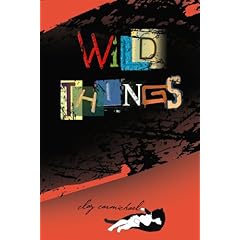
A stray cat. An orphaned pre-teen girl. A heart surgeon turned metal sculptor. A young boy rejected by his domineering father. A wild homeless boy and his albino deer. Mix these all together and what do you have? If you're author/illustrator Clay Carmichael, then you have the beautiful 2010 ALA Notable book, Wild Things. Some books are meant to be savored, read slowly and enjoyed page by page. This is one of them.
The story is about kindred spirits who are in some way, in need of home and family. The cat, Mr. C'mere, senses that Zoё, unlike other humans, can be trusted. In turn, Zoё, who has been burned one too many times in her not quite-twelve-year-old life, learns to trust her Uncle Henry (the former heart surgeon). Henry Royster opens his home to a niece he has never met before, thus softening his own grief-torn heart. Zoё’s nemesis, Hargrove, turns out to be a very different person than she first imagines, about the same time that she discovers a half-brother (Wil) and someone special he has named “Sister.”
This isn’t a book with every loose end wrapped up neatly with a “they all lived happily together” ending. But it is a book about acceptance and healing and one that may leave you wondering: Who really are the wild things? And where is the safe place that they might call home?
Read the book and enjoy.
(Recommended for girls and boys, 9-12. Boyds Mills Press, 2009)
Technorati Tags:
ALA Notable Book, Boyds Mill Press, kindred spirits, book for boys and girls, Clay Carmichael, Wild Things
Friday, January 22, 2010
Help for Haiti

Generally this blog is about literacy. But every now and then I blog about other important topics. This is one.
If you're like me, you might have wondered what you can possibly do to provide assistance in the wake of the disaster in Haiti. This week I found an answer in Donna Earnhardt's blog. She wrote about the health kits that UMCOR is assembling and distributing. Here are the instructions:
For individuals or groups that want to contribute basic necessities, UMCOR requests that the following NEW items be placed in a sealed one-gallon plastic bag.
1 hand towel (15” x 25” up to 17” x 27”. No kitchen towels.
1 washcloth
1 comb (large and sturdy, not pocket-sized)
1 nail file or fingernail clippers (no emery boards or toenail clippers)
1 bath-size bar of soap (3 oz. and up)
1 toothbrush (single brushes only in original wrapper, no child-size brushes)
6 adhesive plastic strip sterile bandages
$1.00 to purchase toothpaste
(NOTE: Toothpaste is purchased in bulk to be added to health kits to ensure that the product does not expire before they are sent.)
Because the emergency kits are carefully planned to make them usable in the greatest number of situations and strict rules govern product entry into international countries, UMCOR requires that the kits contain only the requested items – nothing more. In Charlotte, NC you can drop off assembled kits at: Mount Olivet UMC, 301 Mount Olivet Road, Concord, NC or at St. Stephen's United Methodist. Shipping instructions are also online here.
If my 85-year-old mother can assist in providing help to Haiti, what can you do?

Technorati Tags:
Haiti, health kids
Thursday, January 21, 2010
Flygirl Makes the List!

I was delighted to find out that a book I recently reviewed, Flygirl was recognized as one of 2010's Best Books for Young Adults by the Young Adult Library Services Association.
I am planning on interviewing the author, Sherri Smith, in the next issue of Talking Story. I e-mailed my congratulations and said I knew she'd be dancing a jig in excitement. She wrote back, "Thank you, Carol! I only just found out about it myself. I’ll go put on my jig shoes and dance!"
Technorati Tags:
Flygirl, Sherri Smith, Best Books for 2010, Talking Story, Young Adult Library Services Association
Tuesday, January 19, 2010
Multi-Racial Read #3

From the moment I read the title, When White is Black I knew that I would find stories within that would inform my research. Written by John Martin,

this is another book which causes the reader to consider how the color of a person's skin affects how he is perceived and treated by both the black and white community.
One aspect of this book which I find intriguing, is Martin's family tree that introduces the narrative. Tracing his mixed race heritage back four generations, Martin had African American, Native American, and Caucasian ancestors on his mother's side. I was familiar with the words Mulatto and Quadroon, but Martin introduced me to Octoroon. He labels his family further explaining that many were "Mulatto-W" (65% white). This forms an excellent backdrop to showing how the "one-drop rule" governed both his mother's and grandparents' lives.
Most of the book records his mother's (Mulatto-W) and grandmother's (Quadroon) experiences as multi-racial women--well before there was more than one box to check on a census form.(It was not until 2000 that individuals could check more than one race on the census form.) The time period spans almost a century (1876-1969) when passing afforded a better economic lifestyle but also included personal risks from both the white and black communities.
One of the stories that demonstrates the schizophrenia of the time period shows how in mid-life, Martin's great-grandfather (Mulatto-W) was recast from white to black after an incident when he saved a black man from being beaten by whites. The man he rescued later accused him of having a "brown" grandmother, whites began condemning him as a "white nigger," and his life dramatically changed. His daughter (Martin's grandmother) had always seen herself as white, "...in view of how colored folks were treated, there was no way she, or anyone else in their right mind, would voluntarily choose to be one of them." (p. 36). For many years afterwards she was plagued with "a mixture of confusion, anger, resentment, paranoia, and fear." (p. 37). Her questions about why her father has been mistreated were finally answered when she understood "how colored people experienced daily life, the humiliations they suffered, and the real barriers they had to overcome just to exist." (p. 37)
Are racial biases only about skin color, hair texture, or the shape of one's nose? In my next two blogs I'll reflect on that in greater depth.
Technorati Tags:
When White is Black, multi-racial, John Martin, passing, 2000 census, Mulatto, Quadroon, Octoroon
Friday, January 8, 2010
Multi-Racial Read #2

Flygirl is a fictional account of a young light-skinned African American woman in Louisiana in 1941 who decides to pass in order to be accepted into the WASPs (Women Airforce Service Pilots). Her motivation is two-fold and powerful. She has a deep passion to fly, fueled by memories of flying with her deceased father who taught her how to fly his crop duster; and she desires to help bring her older brother home who enlisted as a medic.The core of this book, which is appropriate for 5th-9th grade readers, is the price that Ida Mae will have to pay to accomplish her dream.
I read this book looking for background information on Lillie Harris, my light-skinned African American character. I was not disappointed. Sherri Smith, the author of Flygirl, deftly depicts the conflicts which Ida Mae experiences because of her skin color. From the beginning when her best friend observes that she is “Little Miss Pretty Hair [with] Creamy White Skin” (p. 9) through the last pages when she is confronted by romantic attention from her white flight instructor—the book is full of the difficult decisions Ida Mae makes in pursuit of her goal.
As an author investigating the social and cultural context of the South before integration, the book’s key passages are those which show Ida Mae’s background and the tensions which she faces. Early in the book the reader discovers that Ida Mae’s maternal grandmother is a French-speaking Creole. Smith writes,
“My father’s people were town people, city folks who followed opportunity the way a compass follows north. Sometime back, one of them found herself with child by a white man. They steered that half-colored girl down a path that made each generation lighter than light, having children by white men and marrying those children to other mixed coloreds, lighter and whiter until my father was born.
“Daddy was destined to marry a white woman, to be a passé blanc and give his family a better lot in life. By daddy wasn’t an opportunist. He was a romantic, and his heart chose Mama. Grandmѐre Boudreaux never forgave daddy for his choice of a brown-skinned bride…” (p. 53)
Constantly fighting her fear that she will be discovered, Ida Mae passes into a world that is denied other African Americans. Although she is accepted into the WASP program and fulfills her dream to fly, there are heavy consequences. In a poignant scene her mother visits her at the training camp. Meeting her at the gate, Ida Mae pretends that her mother is her maid in order to have a simple conversation:
“Aware of the guard at our backs, we fall into the pattern of mistress and maid. Watching my mother play the role of servant, I feel a sour taste in my throat. I never meant for my own role-playing to bring her such humiliation.
“I don’t know this guard. He gives us a suspicious once-over, the look of someone trying to keep his status. “It’s all right,” I tell him. “She’s our housekeeper.” The word burns my throat…” p. 160-161.
Although more appealing to girls than boys, this account of one women’s struggle against both gender and racial prejudices would supplement classroom studies of African Americans and World War II. I learned a lot by reading it; Flygirl will provide thought-provoking lessons to students across many cultures. (G.P.Putnam’s Sons, 2008)
Technorati Tags:
1941, Flygirl, Sherri Smith, light-skinned African Americans, WASP, WWII, historical fiction,
Saturday, January 2, 2010
Multi-Racial Read #1
"In Charlotte in 1950 family secrets unravel when a 13-year-old white girl (Kate) and a 14-year-old light-skinned black girl (Lillie) discover that they have the same great-grandfather."
That is the pitch of my Work In Progress (WIP). Although I'm a little younger than Kate and I wasn't raised in the South, it's not too much of a stretch for me to conjure up her character. But Lillie is another matter. The more I thought about her the more I realized that I had no idea what her life was like. My quest to discover how she would have felt about herself, her family, and her community, began in the research section of the Morrison branch of the Charlotte library. My next few blogs will be about the books that have informed my research.

Family Secrets: Crossing the Colour Line by Catherine Slaney is an autobiographical account of how she discovered her black ancestors and relatives. Raised white, she began uncovering her genealogy in her forties. She uncovered the fact that her great-grandfather was Dr. Anderson Abbott, the first Canadian-born Black to graduate from medical school in Toronto in 1861. In the process of delving into her history, she investigated why (and how) several family members decided to "pass" as white, while their siblings did not.
One key theme I found in this book as well as in others, is that race is not just about the color of one's skin. As Slaney writes, "...this race business seemed to me not so much a matter about colour (sic), but rather one of racial identity and cultural representation." (p. 147)
When Slaney received photographs of her cousins she discovered great variations in appearances. "Some of the cousins were very 'black,' some were 'dark,' and others quite 'fair.' However, what really amazed me was that their skin colour did not necessarily reflect their choice of racial identity. In one case, I received a photo from a 'Black' cousin who strongly resembled my 'white' uncle they could pass as brothers." (p.147)
One of her light-skinned Black cousins wrote to her and said, "Americans tend very much to classify people by race. I think this probably goes back to the first segregation laws. Not that it was absent before but people were forcefully separated by their physical appearance. The Black's facilities, from schools to washrooms, were always inferior to the white's, during segregation, which perpetuated the notion that they were an inferior race." (p. 148)
This led Slaney to question, "If life could be so difficult as Black and one could pass as white, then why not do so? Moreover if one looked white, would it not prove awkward to claim a Black identity? Perhaps the purpose of identifying oneself with a particular race had more to do with the colour of one's state of mind rather than one's color of skin. Did identifying as Black then automatically imply that one could not identify as white? As one white cousin asked, 'When one is of mixed race, where does passing end and identity as white begin? Is it simply based on how you look?'" (p. 150)
These questions run through my mind as I wonder, how would Lillie have seen herself? How did others react to her? What experiences shaped and molded her? Stay tuned. With help from Slaney and others, Lillie is coming to life.
Technorati Tags:
multi-racial, historical ficiton, Charlotte, passing, Family Secrets: Crossing the Color Line, Catherine Slaney
That is the pitch of my Work In Progress (WIP). Although I'm a little younger than Kate and I wasn't raised in the South, it's not too much of a stretch for me to conjure up her character. But Lillie is another matter. The more I thought about her the more I realized that I had no idea what her life was like. My quest to discover how she would have felt about herself, her family, and her community, began in the research section of the Morrison branch of the Charlotte library. My next few blogs will be about the books that have informed my research.
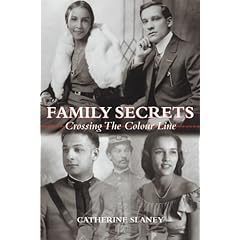
Family Secrets: Crossing the Colour Line by Catherine Slaney is an autobiographical account of how she discovered her black ancestors and relatives. Raised white, she began uncovering her genealogy in her forties. She uncovered the fact that her great-grandfather was Dr. Anderson Abbott, the first Canadian-born Black to graduate from medical school in Toronto in 1861. In the process of delving into her history, she investigated why (and how) several family members decided to "pass" as white, while their siblings did not.
One key theme I found in this book as well as in others, is that race is not just about the color of one's skin. As Slaney writes, "...this race business seemed to me not so much a matter about colour (sic), but rather one of racial identity and cultural representation." (p. 147)
When Slaney received photographs of her cousins she discovered great variations in appearances. "Some of the cousins were very 'black,' some were 'dark,' and others quite 'fair.' However, what really amazed me was that their skin colour did not necessarily reflect their choice of racial identity. In one case, I received a photo from a 'Black' cousin who strongly resembled my 'white' uncle they could pass as brothers." (p.147)
One of her light-skinned Black cousins wrote to her and said, "Americans tend very much to classify people by race. I think this probably goes back to the first segregation laws. Not that it was absent before but people were forcefully separated by their physical appearance. The Black's facilities, from schools to washrooms, were always inferior to the white's, during segregation, which perpetuated the notion that they were an inferior race." (p. 148)
This led Slaney to question, "If life could be so difficult as Black and one could pass as white, then why not do so? Moreover if one looked white, would it not prove awkward to claim a Black identity? Perhaps the purpose of identifying oneself with a particular race had more to do with the colour of one's state of mind rather than one's color of skin. Did identifying as Black then automatically imply that one could not identify as white? As one white cousin asked, 'When one is of mixed race, where does passing end and identity as white begin? Is it simply based on how you look?'" (p. 150)
These questions run through my mind as I wonder, how would Lillie have seen herself? How did others react to her? What experiences shaped and molded her? Stay tuned. With help from Slaney and others, Lillie is coming to life.
Technorati Tags:
multi-racial, historical ficiton, Charlotte, passing, Family Secrets: Crossing the Color Line, Catherine Slaney
Subscribe to:
Posts (Atom)
THE NIGHT WAR: A MG Historical Novel Review
By now you should have received an email from my new website about my review of THE NIGHT WAR by Kimberly Brubaker Bradley. (It'll com...

-
 Congratulations to Janet Davis-Castro who won HER FEARLESS RUN on last week's blog. No giveaway this week, but I hope you...
 -
 This is a busy week on my blog. TWO giveaways running concurrently! WARNING : Reading this book will make you stay up late and the chara...