Tuesday, June 17, 2008

The dog days of summer


Two weeks ago, my husband and I drove to Cincinnati to pick up our "grand-dogs;" their parents are in the middle of moving there where our son-in-law will be continuing his surgical residency at the University of Cincinnati. Since they were in-between houses we agreed to "dog-sit" for several weeks. Cruise (the Maltese) and Brandy (a Corgy/Chow/Golden Retriever mix- or as a friend described her, "a stuffed Disney character come to life") now frolic around the house and have scampered, sniffed, and snuggled their way into our lives. We're going to have a hard time giving them back in a few weeks.

I guess you can say that we've just gone to the dogs…

Have you ever played with idioms like these in the classroom? According to www.wilstar.com, Dog days of summer refers to the hottest and most sultry days which in the northern hemisphere from July-September. Apparently, the brightest of the stars in Canis Major (the big dog) constellation is Sirius, which also happens to be the brightest star in the night sky. The star is so bright that the ancient Romans thought that the earth received heat from it.

How about "gone to the dogs?" According to this English language website, if something has gone to the dogs, it has gone badly wrong and lost all the good things it had.

Several years ago at Novello, an annual book festival in Charlotte, NC, our SCBWI group manned a booth. We invited children to pick an idiom out of a box and then draw it- not what the idiom meant, but what the words said. This is a fun activity for elementary age students and can be particularly helpful for ESL students. Can you imagine your students drawing "Down at the mouth", "take a nosedive" or, "spit it out"? Print out a list of idioms, cut them apart, hand them out, and voila! You'll have a great mini-lesson on language usage. If your hunger for idiom-play is not satiated, then check out Maupin House's books Idioms for Aliens and Exploring Idioms.

Has the Baldwin family gone to the dogs? I believe Brandy and Cruise would vote "yes."

Technorati Tags:
, , , , ,

Wednesday, June 11, 2008

Looking to Promote Your Book?

If you are a new or established writer, you might want to check out the Book Promotion Blog. In yesterday's post Stacey Miller wrote:

"If you're still thinking that traditional book reviews will appease your publisher and fulfill your book promotion duties, think again. A new age of book promotion is dawning, and book publicists are rolling up their sleeves and getting to work on creative ways to help you build your brand. Get ready to meet your readers -- under conditions you never would have dreamt of just a few years ago!"

And you thought all you needed to do was write a book.Technorati Tags:

Tuesday, June 10, 2008

Craft Plus revisited


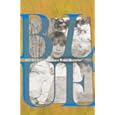
In March I blogged about the project which Maupin House publisher Julie Graddy had asked me to work on— adding 6-8th grade fictional narrative lessons to the new edition of the Maupin House Craft Plus series. I recently received my copy in the mail and was proud to see my name listed along with eleven other teacher educators who participated as curriculum writers. If you are looking for a comprehensive program to teach writing skills, check out this easy-to-follow set of lesson plans that also include descriptive, expository, personal narrative, procedural, persuasive, and comparison writing. A list of materials, which you will need during the 5 weeks of writing and application, introduces each book. Selecting literature models was one of the fun parts of writing these lessons; I could choose books that I have enjoyed over the years. In 6th grade I recommended that students write an historical story and was happy to suggest that they read Blue and Healing Water
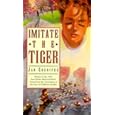
by my colleague, Joyce Hostetter; and Anchor: P.Moore Proprietor by fellow North Carolina SCBWI-er, Blonnie Wyche. For seventh grade, I used sports fiction as a model and included Jan Cheriko's book, Imitate the Tiger
and Samurai Shortstop
by Alan Gratz. Eighth graders write mysteries and one of the books that I recommended was Gratz's book, Something Rotten. It's an honor to have been part of the staff that created these writing lessons, and a pleasure to recommend these books to your students.

Technorati Tags:
, , , , , ,

Tuesday, June 3, 2008

Samurai Shortstop


Baseball bats and samurai swords. At first glance, you wouldn't think that these two have much in common. But if you're Alan Gratz, you will discover the story of how a Japanese teenager brings together his father's samurai traditions with his own passion for the gaijin sport, baseball. Readers of Samurai Shortstop (Dial 2006) will discover a coming of age book both for Toyo (the main character) as well as for the "new" Japan.

Although set in the end of the 19th century, this is the story of every young person who wrestles with having one foot imbedded in the traditions of family and culture, the other foot ready to sprint into the future. Which rules and family traditions will Toyo embrace and bring with him into his adult life? Which rules will he throw off? This is the not only Toyo's decision, but one that faces all young people, in every culture and every time period.

The two symbols, the bat and the sword, play significant roles as Toyo angrily wrestles with Sotaro's insistence that he learn bushido (the samurai code). In a poignant passage, his fellow players come and ask him for bushido lessons so that they can become better baseball players. As Toyo struggles with his decision, he realizes that, "…maybe they could take the warrior code and leave the worst elements of the samurai behind. He knew Sotaro would never approve. But wasn't that what Japan was herself doing—taking the best of what the rest of the world had to offer and making it her own?" p. 206.

"…the warrior's way is the twofold path of the brush and the sword," Sotaro tells Toyo on his sixteenth birthday. By opening the book with the following haiku, Gratz sets the stage for this well-written historical and sports novel.

The secret to catching a ball

Lies with the willow

Swaying in the wind

--Haiku by Japanese baseball player and poet Shiki Masaoka (1890)

I would recommend this book for middle and high school students. The quality of research and attention to detail which Gratz includes makes this an excellent supplementary book for Asian studies particularly in the period prior to World War I. Teachers could also use this book to discuss the issues their students face in assimilating or rejecting their own cultural heritage.


Technorati Tags:
, , , , , ,

Friday, May 30, 2008

Celebration Time


I was the proverbial kid in the candy shop picking out books for the tutoring group that I had organized and which was sponsored by Christ Covenant Church. Not too many things can make me happier than being told I could spend whatever I wanted to on books—besides giving the books away and seeing the children's excited responses. On Monday as I headed towards the cash register at Border's with two large piles of books, I hoped that I had chosen ones that would interest the kids—you never can tell if you'll hit home or not. I picked some of my and my own children's favorites—The Yearling, Artemis Fowl
(now in a graphic novel), a collection of Tintin stories, and Shiloh
were among the stack.

Tuesday afternoon we held our end-of-the-year-celebration at one of the tutor's homes. Each child had the opportunity to ride a horse, which was no doubt the highlight of the party. However, I think a close second was that everyone received one or two books. Quoting Linda Gambrrell's message in a recent Reading Today,I told them that one of the most important things they could do over the summer was to read. I hope they got the message!

One of the youngest, a struggling kindergarten reader, looked at his new collection of Frog and Toad and said, "We have these books in school." His little face scrunched up and he seemed confused as to why he was receiving a book that obviously belonged in his classroom.

I squatted down next to him and said, "Now you have your own copy." After that, he walked around showing it to his friends and promised me that he would read it to me in September. I wish I had thought to take his picture, or one of the boy leafing through his book on dinosaurs, or one of his friend who was looking at a book about cars and trying to figure out what a Mad Lib was. I was too busy giving out books, happy that my selections had found new homes with growing readers.

This time of year, many of you receive thank you notes from students and parents. Here are three that made my time with these students worth every minute:

"A simple thank you does not seem to be enough words to say how much we appreciate you and all you've done week after week." (From the parent who weekly brought the 12 students to the church.)

Without editing, from two students:

"Thank you for helping me with my homework and stuff and reading homework to. It was really fun having a tutor for me." A 4th grader.

"Thank you for doing so much for us. We all know it's the last time we will come to tutoring. We loved your tutoring. I hope you injoyed our company. And I want to wish you all a happy and safe summer vacation." A 4th grader.

Makes me look forward to September. How about you?

Technorati Tags:
, , , ,

Monday, May 26, 2008

The Boy in the Striped Pajamas


"If you do start to read this book, you will go on a journey with a nine-year-old boy called Bruno. (Though this book isn't a book for nine-year-olds.) And sooner or later you will arrive with Bruno at a fence. Fences like this exist all over the world. We hope you never have to encounter such a fence."

This description from the cover flap of The Boy in the Striped Pajamas (or in my case, on the cover of the CD) piqued my curiosity, but I was totally unprepared for the drama that lay in store for me. Told from the perspective of the son of a newly-appointed Commandant, young Bruno's voice of innocence permeates this atypical Holocaust story. The story opens with Bruno receiving the news that his family is packing up his beloved house in Berlin to move to an undisclosed location. The servants will only tell him that the sudden move has something to do with his father's important, yet highly secretive, job. Not pleased with the news that he has to leave his three best friends with whom he goes on exploring adventures, or that his "Hopeless Case" sister Gretel is also coming, Bruno contemplates the events in the unfolding days with a quiet seriousness. He is at the same time inquisitive (the explorer in him) and naïve (why do all of the boys, men, and grandfathers who live on the other side of the fence wear gray-striped pajamas? And if his father knew about the horrible huts they lived in, wouldn't he do something about it?) These traits are both endearing, and his downfall.

As the story develops, the reader sees life though the eyes of this young boy. We meet "The Fury" ("he was the rudest guest Bruno had ever witnessed.... he walked directly into the dining room and sat down at the head of the table—in Father's seat!"); and Shmuel, the boy who "happens to be on the other side of the fence" who Bruno finds out with delight, was also forced to leave his home—solidifying the friendship that Bruno longs for. Bruno struggles to make sense of the fence that separates the two of them, wondering why he can't crawl under it to play with Shmuel and the hundreds of other boys that Bruno imagines are happily living there.

It is this desire for the simple pleasures of boyhood friendships that propels Bruno into his final "adventure". The sad ending, as unfortunately inevitable as war, prejudice, and discrimination; hits the reader with bomb-like force. I would recommend it for 7th graders and up, in conjunction with holocaust studies; or, in language arts, to discuss a character's voice. Bruno's distinct but naïve voice is evident in his comments to Shmuel about his clothing, the camp…even about Poland itself. As the book jacket testifies, this is not a book for nine-year-olds. But it is a book that will certainly prompt thought-provoking discussions in the classroom. (Random House, 2006)Technorati Tags:
, , , ,


Monday, May 19, 2008

Playing on my new HP


Don't you just hate the fact that your 19-year-old can get on your new computer and instantly be at home, navigating all over the place, without a moment's hesitation? I'm now on my fourth or fifth computer and even though I'm not the scaredy cat that I was 25 years ago with my Kaypro II (anyone else remember those monsters with tiny screens from the first days of personal computers?) when it sat on my desk and I wouldn't even touch it for a week for fear of breaking it, I still have an awe that keeps me at bay for the first few weeks of new computer ownership. Last week, after lugging my aging 13 lb laptop (including power cord) through the Georgia World Congress Center, I bought a 4 lb HP Pavilion. The touch screen and tablet capabilities are very cool and will add a new dimension to my powerpoint presentations for teachers. I can't wait to master the webcam and all of the other nifty gadgets packed into a machine that is half the size of the notebook binders I carried in high school. Of course, I'm not like Lori, who within minutes was chasing little colored balls by running the tablet pen all over the screen …but I'm getting there. Isn't it funny how as we get older and our memories get slower, our computers get smaller and their memories get faster? I guess it's a good thing. I sure wouldn't want it the other way around!

Now, if someone can tell me how to get the little orange ball into the orange hole and the blue ball into the blue hole, maybe I could give Lori some Ink Ball competition.

Technorati Tags:
, ,

The Neddiad


What kid isn't going to like a book in which the main character boards a fancy train headed to Los Angeles; is abandoned among cowboys in Flagstaff, Arizona; meets a famous movie star; and has a gun pulled on him during an airplane ride over the Grand Canyon? Personally, I can't imagine an adult not enjoying this fantastical novel by Daniel Pinkwater (Houghton Mifflin, 2007). If this doesn't sound like enough fun and excitement, then throw in a ride on a circus elephant, outwitting a movie producer who wants to take over the world, being an extra in the evil producer's movie along with your school buddies, and a mammoth who wanders into the circus one day.

Sound something like a crazy ride in an amusement park? You bet. Is it a little wacky? More than just a bit. In fact, the wild mixture of fantasy and fiction increases as the book progresses. But readers need to beware. Although the La Brea Tar Pits and The Brown Derby are real places—fantasy including shamans, ghosts, and sacred turtles are part of the roller coaster ride of the book.
As a Christian who believes in creation, I was uncomfortable with the manner in which Pinkwater intertwined evolution into the story presenting it as irrefutable truth. But the book is well-written and funny and will engage boy and girl readers from 4th-8th grade. In the classroom I would recommend using it to show how fantasy must be internally believable, despite the fact that the premise might be outlandish.
After reading the book, I discovered that Pinkwater published weekly chapters online. The sequel,Yggyssey, can now be read the same way.
Technorati Tags:
, , , ,

Tuesday, May 13, 2008

IRA-2008- Part 2

In her "Ode to David Letterman" Linda Gambrell (president of IRA) presented these as her top 10 reasons for pleasure reading in her keynote address:

10. Reading exercises the brain.

9. Reading helps you become fluent in a second language- text language.

8. The more you read the smarter you get. (Anne Cunningham and Keith Stanovich)

7. Reading takes you places when you have to stay where you are.

6. The reading practice you get from pleasure reading may not make you a perfect reader, but it will surely make you a better reader.

5. People who read are people who achieve. (Benjamin Carson, MD, Pediatric Neurosurgery, Johns Hopkins University)

4. Outside of a dog, a book is a man's best friend. Inside of a dog it's too dark to read. (Grocho Marx)

3. It is not true that we have only one life to live; if we can read we can live more lives and as many kinds of lives as we wish. (S.I. Hayakawa, educator and politician)

2. The more that you read the more things you will know; the more that you learn the more places you'll go. (Dr. Seuss)

And last, but not least:

  1. If you're going to binge, literature is definitely the way to do it. (Oprah Winfrey)
Technorati Tags:
, , , , , , , ,

Wednesday, May 7, 2008

IRA, 2008- Part One


Even for a writer, it is hard to describe the energy and enthusiasm of 20,000 reading teachers, principals, and literacy coaches who came together to learn the latest methods to teach reading and writing. The World Congress Center in Atlanta, Ga. was packed this week with educators to whom "Reading Matters"- as the pin, which I acquired from a vendor selling Teaching the Story proudly, proclaimed. As Linda Gambrell, outgoing IRA president said at the Keynote on Monday morning, "We want our students to be readers, writers, and critical thinkers. Through reading, we become better at understanding ourselves and the world around us." Highlights from this conference were:

  • Close to 100 people at my session…and every single educator enthusiastically involved in creating an original character. Together we looked at three mentor texts: Peter Pan in Scarlet, Blue, and Brian's Return
    and how the authors showed their memorable characters FAST- through their feelings, actions, speech, and thoughts.
  • Selling my book to a woman from the Philippines who started her own K-6 school. To my knowledge, that is the furthest away that Teaching the Story has travelled. (Imagine the stories that those students will write!)
  • Sharing a room with Margriet Ruurs, author of over 10 picture books as well as several Maupin House books on writing poetry. Sitting on her bed, Julie Graddy (Maupin House's publisher) and I had the privilege of previewing Margriet's presentation on My Librarian is a Camel
    and hearing some of the amazing stories behind the book. Winner of the Silver IRA award for Global awareness, I would recommend this book for children as a window into seeing how children in other countries value books and some very unique "book mobiles" around the world. By the way, Margriet is also the editor for Kids Write—an online magazine where students can publish their stories- a resource which I recommend in my book!
  • And as pictured here, having dinner with Margriet and part of the Maupin House team: Julie Graddy, Rita Beck, and Laura Lok.


    Stay tuned. More on the conference in my next blog.

Technorati Tags:
, , , , , , ,

Sunday, May 4, 2008

Blogging Benefits Teen Writers

A recent report featured in E-School News, indicated that teens who blog write more frequently both online and offline, according to a study by Pew Internet and American Life Project with support from the College Board and its National Commission on Writing.

In fact, "Forty-seven percent of teen bloggers write outside of school for personal reasons several times a week or more, compared with 33 percent of teens without blogs. Sixty-five percent of teen bloggers believe that writing is essential to later success in life; 53 percent of non-bloggers say the same thing."

The report goes on to quote Bradley A. Hammer, who teaches in Duke University's writing program. "In real ways, blogging and other forms of virtual debate actually foster the very types of intellectual exchange, analysis, and argumentative writing that universities value," he wrote in an op-ed piece last August." Be sure to read his full article in which he defends the use of blogs and other alternative forms of written expression in his university classroom.

I know as an avid blogger myself, that I feel a responsibility to organize my thoughts in a well-written format before hitting the "publish" button. One has to take the responsibility of writing to an audience very seriously. Similarly, blogging is not only a way for teens and young adults to use their writing skills for a specific task for a specific audience, but appears to be a promising new tool for language arts teachers as well.

I am writing this from Atlanta, where tomorrow I will be presenting a session at the IRA on, "Learn from the Masters: How Creating a Fictional Character Enhances Reading Instruction." Hopefully, afterwards I'll have the opportunity to talk to lots of teachers about the benefits of writing short fiction as well as the benefits of blogging!

Technorati Tags:
, , ,

THE NIGHT WAR: A MG Historical Novel Review

  By now you should have received an email from my new website about my review of THE NIGHT WAR by Kimberly Brubaker Bradley. (It'll com...