Showing posts sorted by relevance for query Craft plus. Sort by date Show all posts

Tuesday, June 10, 2008

Craft Plus revisited


In March I blogged about the project which Maupin House publisher Julie Graddy had asked me to work on— adding 6-8th grade fictional narrative lessons to the new edition of the Maupin House Craft Plus series. I recently received my copy in the mail and was proud to see my name listed along with eleven other teacher educators who participated as curriculum writers. If you are looking for a comprehensive program to teach writing skills, check out this easy-to-follow set of lesson plans that also include descriptive, expository, personal narrative, procedural, persuasive, and comparison writing. A list of materials, which you will need during the 5 weeks of writing and application, introduces each book. Selecting literature models was one of the fun parts of writing these lessons; I could choose books that I have enjoyed over the years. In 6th grade I recommended that students write an historical story and was happy to suggest that they read Blue and Healing Water
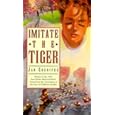
by my colleague, Joyce Hostetter; and Anchor: P.Moore Proprietor by fellow North Carolina SCBWI-er, Blonnie Wyche. For seventh grade, I used sports fiction as a model and included Jan Cheriko's book, Imitate the Tiger
and Samurai Shortstop
by Alan Gratz. Eighth graders write mysteries and one of the books that I recommended was Gratz's book, Something Rotten. It's an honor to have been part of the staff that created these writing lessons, and a pleasure to recommend these books to your students.

Technorati Tags:
, , , , , ,

Wednesday, March 26, 2008

Never say “No”


Once I refused to write about a particular glass artist for a prestigious children's magazine because I wanted to write about a different glass artist. I was consequently totally bummed when I held the published article (written by someone else!) in my hands, and thought, "I could have written this!" Ever since that day, I've tried to live by my "Never say 'No'" rule.

So, when my publisher, Julie Graddy of Maupin House, called a month ago and asked me to write 60 mini-lessons for their Craft Plus® Writing Program, I listened. It wasn't what I had thought that I would be writing next, but I remembered my rule and agreed. Maupin House had recently decided to add fictional narrative to the new sixth, seventh, and eighth-grade middle school Daily Writing Lessons portion of the program. And, although I have been working on a tight deadline, I have enjoyed the challenge of adapting the approach in Teaching the Story and for the Craft Plus® writing program.

If your school is looking for a comprehensive set of writing lessons, check out this series which is successfully used by teachers across the country. The innovative K-8 writing curriculum has been around for a few years, with improvements and additions made every year. This year, the teacher packs will be sold separately from the staff development/reference videos. Schools can buy a $199 teacher pack (which includes the grade-level Daily Writing Lessons, Curriculum Guide, and an integrated professional resource), for just one teacher, several teachers, or school-or district-wide. All assessed genres are covered with a spiraling, differentiated writing curriculum that emphasizes explicit instruction and authentic practice, includes assessments, and which incorporates writing process and conventions skills, too.

I am proud to be a part of a series initially developed by Marcia S. Freeman, and that now includes lessons by Sarah Stafford, Jeannie Keaton, Suzanne Wilkinson, Candice Allen Ray, Carol Winger, Susan Koehler, Susan Davis, Sheila Veatch, Allie Tyler, Tim Clifford, and pretty soon…me!

Technorati Tags:
, ,

Monday, July 6, 2015

SCBWI Florida Workshop Part V- Building A Lasting Career

This is my fifth post from the 2015 Florida SCBWI young adult workshop with Erica Rand Silverman, an agent with Sterling Lord Literistic, and Jacquelyn Mitchard, author and editor-in-chief at Merit Press. Click here for Part I  (Why Write Young Adult); Part II (Querying); Part III (Pitches); and Part IV (Marketing Yourself and Your Work). In this post they both share what it means to build your career beyond one book.


Both Erika and Jacqueline used the language of romance to discuss aspects of the publishing business  Jacqueline said, "Acquiring a manuscript is like dating. Sometimes if it doesn't happen in the first twenty minutes there's a flaw in the machinery."  She also said, "If I fall in love with a manuscript I'm hoping readers will fall in love with it." Erika called the process of finding the right publisher for a book "matchmaking."
http://zionica.com/2014/05/23/short-history-christian-matchmaking/
  • When your book is accepted by a publishing house you’re bringing people into the "Circle of Trust" about your story.
  • After you sell your first book, keep writing. You want to feed your audience by giving them something similar. It is more strategic to keep going with same genre as your first book, if possible.
  • Going from your first to second book can be hard. Write what excites you, not for the market, not your agent, and not your publisher. Sometimes with a second book you actually know about the industry, so you end up writing for your agent, editors, publishing house, or fans. Don't forget: You still need to just write for you.  Your first book might be easier because it’s been in you for so long.
  • Don’t disturb your own momentum. Start your second book as soon as possible. If your book does or does not sell well-- either one can mess with your head. 
  • Don't forget the secondary (institutional) market. Make sure your book is nominated for state lists and awards. Librarians will be your best friends; cultivate these relationships.
  •  Say thank you and remember people. Keep personal relationships with people you meet. Don’t act like a diva or take yourself too seriously. Don’t be high-handed with book sellers. Everyone is a spoke in the wheel. Make friends with people in the industry.
  • Embrace opportunities. Both work for hire or intellectual property projects might supplement your career. (Personal note: Nine years ago my last publisher, Maupin House, asked me if I would be interested in contributing to their Craft Plus series. Since my own motto is "Never say no" (to writing requests!) I accepted the assignment and was glad I did.
  • Make friends with your publishing team. Have realistic expectations but inspire the people you work with to think creatively.  “I have thought about A and B can you help me with C?” Fill out your author information sheet keeping in mind that it will help the marketing team at your publisher.
  • Market yourself and your books. You can’t depend on your publisher.  “No matter who you are, you have to hustle,” Jacqueline said. Your agent and your publicist will work together getting you traction (visibility) so that more people will connect you with your book. These things feed into each other. You want to be known as a networker, and an accessible human being "without being slutty." 
  • Keep attending conferences, workshops, and industry events.
  • Strategize your publishing schedule with your agent and publisher. Ask, "Why are you publishing the book now?" Books published closer to awards are more likely to be in people’s minds. Do you want to publish in the summer when school is out? Near the holidays? It's okay to question and be your own advocate. Ask, “Tell me how I can help." Make it a partnership and become a part of the publishing strategy. But don’t become too obsessed with the business side. 
  • Jacqueline warned, "Writers write. Don’t be a three-ring circus. Be the best one ring circus you can be.”
https://kenlai.wordpress.com/2011/08/16/one-ring-master/

Monday, January 21, 2019

Plan to Persevere

Congratulations to Becky Scharnhorst for winning A Tough Act to Follow and Acting Innocent and to Mel Hager for winning WONDERLAND.


    One of my favorite stories to listen to as a child was, The Little Engine That Could. The voice of the little blue engine who took on the insurmountable challenge of bringing toys, dolls, and “good things to eat to the good boys and girls on the other side of the mountain,” still echoes in my head: “I think I can, I think I can, I think I can.” 


      Fast forward 60 years. I’m a grandmother with dozens of articles and two non-fiction books under my belt. For the last ten years I’ve been working on my first young adult novel, Half-Truths. I have revised the story fourteen times; not including the hundreds of times I’ve rewritten scenes and chapters. 

      Did I know what I was getting into when I first started this project? Definitely not.

      So, besides hearing the little blue engine in my head, what has kept me going for all these years? What keeps me chugging along from one revision to another?

      Perseverance.

      Plus, a healthy dose of belief in my story.

      Take a minute to list your definition of perseverance as it relates to your writing career. Here’s mine:

1. Not giving up on a reasonable goal. 

2. Making sure that my goal is God-honoring and worth completing.

3. Not allowing myself to be distracted from that goal by other activities.

4. Being willing to sacrifice (time, ego, money, etc.) to complete my goal.

    Now, consider what is the opposite of perseverance? In other words, what will keep you from being the little blue engine who climbs that "I'm published!' mountain? 

     Here are some obstacles I thought of:

1. Abandoning the idea because it takes too much time and effort.

2. Listening to self-doubts and fears.

3. Listening to the nay-sayers who mock the goal. 

4. Not being willing to make changes suggested by serious, constructive feedback.

5. Not being willing to put in the time and effort it will take to revise, revise, revise.

6. Not having the tools and abilities to reach your goal AND not trying to obtain them. (i.e., diligently practicing all types of writing, take classes, attend conferences, join a critique group)

7. Rejections from agents and/or publishers.

     When I began my novel, I didn’t know what I didn’t know. But I had an idea that I loved: a story set in the early 50’s in Charlotte, North Carolina about the unlikely friendship between Kate Dinsmore, the granddaughter of a rich, society woman, and Lillian Harris, her grandmother’s teenage black help. Their friendship uncovers a century worth of secrets, including their shared ancestry.

     Although I’d written two non-fiction books, when I began Half-Truths, I didn’t know how to write a novel. So, I did what you’re supposed to do: I read craft books, attended writing conferences, and received dozens of critiques. I also didn’t know much about African American or southern history. So, I read books (many of which are listed here) and interviewed African Americans who lived in Charlotte during the time period. Each book and interview took time, but they all enriched my work.

      One of the influential books I listened to was Eyes on the Prize: America’s Civil Rights Years 1954-1965 by Juan Williams. Besides giving me a fuller understanding of the scope of the civil rights struggle, it also provided a meaningful example of perseverance.

     Civil rights activists, including Martin Luther King, had their eyes on the prize of obtaining equal rights for blacks. Did they always know what they were getting into? Maybe not. Certainly some, like Dr. King, Medgar Evers, and the protestors who were beaten and imprisoned, ended up losing more than they’d anticipated. But did they believe in the equality they were working towards? 

    Without a doubt, they did. 

    I for one, am glad they persevered. 

     My need to persevere as a writer is minuscule compared to those who unfailingly fought for equality and persevered in the face of discrimination, danger, and death. 

    But, as I begin the next step of my publishing journey—finding an agent--I have a plan: I must persevere. I have no choice.


    And I must believe in my story.

    I'm looking forward to being able to repeat the little blue engine's refrain as she came down the mountain:


    What about you? How will you persevere in meeting your writing goals in 2019?

    If you are reading this blog and aren't a writer, I'd love to hear your stories of perseverance also!

********

(This post first appeared on Write2Ignite's blog.)

Wednesday, December 20, 2023

A Holiday GIft: Haikus from Two Friends Plus Two Announcements

 I'm going to end my blogging for 2023 with some delicious word morsels from two writer friends. They'll take you less than a minute to read, yet I suspect it took Jo Hackl and Michelle Nott hours to craft them. Savor each verb and taste every image. Let the flavor of their figurative language roll around on your tongue.

These word treats pack no calories--just pleasure!

HAIKUS


Leaves fell but still I

cling, waiting wafts of wind, to

glide to waiting soil.  -- Jo Hackl


Image courtesy Jo Hackl

Leaves in shades of wine

Dance with secrets on a breeze

Encore and applause. -- Michelle Nott 


Image courtesy Jo Hackl

Irresistible

Straw basket beckoned me near

and now it is mine. -- Jo Hackl


Image courtesy Michelle Nott. Photo taken in Savoie, France while snow-shoeing.


Grains of dust, frost-kissed

Crystallize, waltz, bow, whisper

Warm wishes to all. -- Michelle Nott


ANNOUNCEMENTS


💗 Congratulations to Erin Hecker who won THE MEMORY QUILT which comes out on January 9.

💗 I will be leading writing workshops again in 2024. My first one is Ten Steps on Your Path to Publication at Steele Creek Library in Charlotte, NC on March 19. Join me in this hands-on workshop as I share ten steps toward making your writing dream a reality. We will also touch on the pros and cons of self-publishing.

The workshop is free and all attendees will take home a journal to inspire them on their path to publication. Registration is required and opens on January 1. 

                                                                ❄❄❄❄

Happy Holidays to all of you. I'm taking some time away from blogging and will welcome you back here in 2024 for book reviews from myself and my team of tween and teen bloggers; giveaways, and more!

Monday, May 23, 2016

A Chat with Janice Hardy: What Would You Ask the Person Behind Fiction University?

Facebook can be a huge distraction but it also can be a way to connect with people and find out what's going on in their lives. I'm never sure who I'm going to read about, but at times I find out interesting tidbits about a friend's life. 

For example, several months ago Janice Hardy, author and blogger extraordinaire, mentioned she'd just moved to central Florida and was trying to make her way through a pile of boxes. Wow! One of my favorite blog personalities was living just down the road from me! (Not exactly...but close enough.) I jotted an email and asked if we could meet sometime. It took a few months of coordinating schedules, but we finally met. 

Here are some notes while we ate a delicious lunch at Turner's Kitchen and Bar in Leesburg, Fl. (BTW, they specialize in fresh, local food if you're in the area!)


Janice's Background

CAROL: I'm always impressed with your depth of knowledge about the writing craft. How did you learn so much?

JANICE: I taught myself "on the job" and by reading every writing book I could put my hands on. I learned a lot about writing by critiquing other people when I was a member of Critters Writing Workshop.

CAROL: I'm surprised. I thought you had a degree in writing!

JANICE: My training is in commercial art. I did that to make a living, but I’ve always wanted to write. When I was little I drew stories and then wrote stories about them.


Finding the Time

CAROL: You're a novelist with three fantasy books in print, you write and self-publish excellent books about writing (Planning Your Novel: Ideas and Structure Foundations of Fiction Volume I) plus you post A LOT of blogs. How do you find time for everything?

JANICE: I don't. (grin) Some stuff just doesn’t get done.  And I have days when I feel like I'm behind in my own writing. My goal is a minimum of 2000 words a morning (I write for about 4-6 hours). If I'm disciplined I can write 80,000 words in two months. And that’s a book. I keep a structured schedule but make sure I take breaks. 

This might not be the best writing in the world, but it’s a pretty good draft.  In the afternoon I also try to write 1000 words a day on my writing books and/or blog posts.

I don’t check my email until noon and can walk away from it if it's not important. 

It helps to have a guest authors every week on the site besides myself. I have posts that are just story prompts. My Indie column features Indie authors and I also have a monthly, "How do they do it?" series. I've recently begun re-posting old articles on my Refresher Fridays. Real Life Diagnostics runs on Saturdays, and sometimes they can be pretty quick to write, but not always. 

I'm always trying to make writing easier for my readers, that's why I cross post to previous blogs. My husband Tom said it is more like a writer resource site than a blog.


Inside Fiction University

CAROL: What is your favorite thing to do on your blog? 

JANICE: Finding different ways to approach a tough subject for people. For example, how do I explain show don’t tell? It's gratifying when I know I have helped a writer take the next step. 

CAROL: What is the most common mistake you find in Real Life Diagnostics? 

JANICE: A lack of conflict; no sense of a problem. 

Inside Janice Hardy

CAROL: What are you working on right now?

JANICE: I'm revising an adult paranormal suspense that I began as a Nano novel. I wrote it for fun and it's making me laugh. I may self-publish it since I know there are readers out there for this type of book. I'm also working on a young adult science fiction fantasy. 

I'm working on a writing book on revision that I will self-publish. Revising Your Novel: First Draft to Final Draft is due this summer; it's a more fleshed out writing workshop.  I have a third Planning Your Novel Workbook that is a companion book to the writing book.  

CAROL: How long did it take before your first novel was published?

JANICE: Fifteen years. I received lots of rejections in the beginning because I didn't know what I was doing. When I had the  right book, the process of getting an agent and publisher went fast. 

CAROL: What's your opinion on critique groups?

JANICE: The sweet spot is being in the middle skill-wise. Having a few people better than you who you can learn from and a few people under you who you can help is ideal. You learn by teaching; you'll see stuff in other people’s work and either check it in your own or realize you do it too.


I have critique partners who give me different types of feedback One on characterization, another on descriptions or worldbuilding. All my beta readers have different strengths and bring something strong to the table. 

CAROL: If you could give advice to other writers, what would it be? 

JANICE: 

  1. Don’t send your manuscript out until it’s ready.  
  2. Read and write a lot. Read widely. In your genre and other books also. It gives you ideas about how other writers handle things. 
  3. Focus on what’s unique about your story and run with it. 
  4. My high school creative writing teacher told me: “Stories are interesting people solving interesting problems in interesting ways." When your character resolves his problem, the book is over. 
  5. Write your query first. Set up the world, the characters, and what the problem is and how they’re going to resolve it. The better you know the ending, the more you'll know where you're going with your book. 
  6. A great story trumps writing skill any time.  

If you haven't already found the wealth of information Janice has on her blog, what are you waiting for? Fiction University is at your fingertips and like One Stop for Writers, is another amazing writing resource.


THE NIGHT WAR: A MG Historical Novel Review

  By now you should have received an email from my new website about my review of THE NIGHT WAR by Kimberly Brubaker Bradley. (It'll com...