Showing posts with label animals. Show all posts

Saturday, October 7, 2023

LULLABY FOR THE KING by Nikki Grimes: A Picture Book Review and ARC Giveaway

The calendar tells me it's October, but before you know it, December will be here and it'll be time for the holidays. I'm getting ahead of the game with today's book review. Many of you are familiar with the multi-talented award-winning children's author Nikki Grimes. I've featured her books in verse for middle-grade students and young adults many times: Ordinary Hazards, Garvey's Choice, and Between the Lines to name three of them.

LULLABY FOR THE KING  (Beaming Books: 2023) is textually and visually very different from the previous books I've read by Nikki. It's certainly not her first picture book though! Click on this link and you'll see the great variety of books that Nikki has published.  


REVIEW

Each stanza of this fanciful depiction of the animals who come to honor the birth of Jesus Christ is accompanied by vibrant illustrations by Michelle Carlos.

The lyrical story opens with a beautiful sunrise celebration:

One magnificent morning in Israel,

when the sun warmed the Great Salt Sea,

word spread to every living creature:

The Holy One has, at last, been born.

A season of celebration can begin!

On the next few pages, we follow a "caravan of creatures" wending their way to Bethlehem--each with their own unique gift for the newborn King.

In an allusion to the wise men bringing gifts, an Antelope has an alabaster flask filled with myrrh, a Hawk has an incense stand of purest gold, and a Jackal carries frankincense along with a linen sash. But the similarity to the Biblical gifts ends there. Fanciful creatures--not people--fill these pages: a camel draped in crimson carting a cedar chest, a Hippo "lumbered heavily" carrying jugs of oil strapped to his girth, and a Stork "carefully cradled a bundle of wildflowers, scenting the air as she flew." Notice all of the wonderful alliterations!


As they turn pages together, both young and old readers will enjoy the variety of animals and the gifts they bring. Imagine in your mind the pictures that these words convey:

Sparrow--as always, silent and shy--

skimmed the wind, a silk sash round her wee throat,

holding grains of mustard and saffron--

all a small bird could hope to tote.


Tortoise, awhile, the Royal Prince of Slow,

trudged up from Tiberias

with a tambourine in tow.

At last, after traveling through the wilderness for "hours that spun into days" the colorful caravan arrives in Bethlehem. 


The first gift presented was Nightingale's hum,

which swelled into a glorious, sky-piercing chord

that reverberated through the stable

and startled the sleeping Lord.

As the animals bow before the Babe, the angels join them with a new lullaby:

Rest, sweet child from on high,

apple of your Father's eye.

We humbly honor you, O King.

Please bless each gift we bring you.

The brilliant watercolor illustrations will invite readers to explore every page. But remember: Nikki Grimes' words came first. She carefully constructed each image-filled phrase. 

GIVEAWAY

If you're interested in winning my ARC (Advanced Reader Copy) please leave me a comment by October 11. If you sign up to follow my blog or share this on social media, I'll put your name in twice. Make sure you leave your email address if you are new to my blog or send me an email. U.S. address only. 

Congratulations to Greg Pattridge who won Brook White's book, Cookie Cat and the Tagalongs. Greg plans to share the book with his students.

Monday, October 3, 2022

A PLANET LIKE OURS: A Picture Book Review and Giveaway

 My long-time blog readers will recognize the author and illustrator of A PLANET like OURS. I have reviewed other books by author Frank Murphy that are illustrated by Kayla Harren and published by Sleeping Bear Press: A Boy like You, A Girl like You, A Friend like You, and A Teacher like You.  Like those other four books, A Planet like Ours includes curriculum-rich content that preK-first grade teachers can use in their classrooms. It is co-written with Charnaie Gordon.  Here are some sample illustrations and quotes from the text. 


We need a planet like ours

to nourish us, protect us, and give us life.

A place to call home.

Our planet. Our Earth.

That is one of the opening pages which succinctly states the theme of this informational picture book: respect our planet. The following pages mention six different resources which we must protect.

SOIL


It helps grow our food. 

Pollution and chemicals can ruin our soil and our groundwater.

Let's protect our soil

WATER

Without water there would be no plants... no animals...no people! 
 So we must take care of lakes, rivers, and streams.


I loved this illustration of a child fishing the litter out of the water--what a great message and perspective.

ALL LIVING THINGS


Taking care of creatures means taking care of their 
habitats. Let's protect all living things.

TREES 

Our trees help keep the atmosphere cool. 
They grow branches that grow leaves that give us shade.


AIR

Earth's atmosphere needs clean air.

Pollution comes from factories and energy power plants.


PEOPLE

Our cities, towns, and neighborhoods.

                    ...... 

We build communities, together.  

                    We learn new things, together. 


The back matter includes personal notes from the authors and illustrator as well as several easy-to-implement activities. Click this link for another Activity page

GIVEAWAY

If you're interested in winning this book, please leave a comment with your email address by October 6. Educators (home or school) and librarians get an extra chance as do new followers to my blog. Just let me know what you've done in the comments. U.S. addresses only. 


Thursday, March 3, 2022

BATTLE OF THE BUTTS: The Science Behind Animal Behinds-- A Nonfiction Picture Book Review and Author Interview

BATTLE OF THE BUTTS (Running Press, 2021) by Jocelyn Rish with illustrations by David Creighton-Pester, is really about a battle to determine which animal has the best buttocks of all. As Jocelyn tells her young readers in the introduction:

You're the judge in the Battle of the Butts. As you meet each challenger in this battle and learn about their posterior power, it's up to you to rate them:

        • Terrific Tushie
        • Remarkable Rump
        • Cool Caboose
        • Passable Posterior
        • Boring Backside
What kid can resist being a judge--particularly a judge of animals' backsides?!

With that intriguing set-up, Jocelyn begins this fact-filled and incredibly kid-friendly book. 


REVIEW

Two spreads are dedicated to each of the ten challengers" posteriors: the "Pudgy Posterior" A.K.A. the Manatee; the "Tough Toushie A.K.A. the Wombat; the "Bum Breather" A.K.A. the Fitzroy River Turtle; the "Toot Talker" A.K.A. the Herring; the "Cannon Caboose" A.K.A. the Bombardier Beetle, the "Projectile Pooper" A.K.A. the Silver-Spotted Skipper Caterpillar; the "Fatal Farter" A.K.A The Beaded Lacewing; the "Beach Bum" A.K.A. the Parrotfish; the "Two-headed Tooter" A.K.A. the Sonoran Coral Snake; and the "The Hotel Hiney" A.K.A. The Sea Cucumber. 

(Clearly, Jocelyn has too much time on her hands if all she is doing is sitting around thinking up amazing alliterations!)

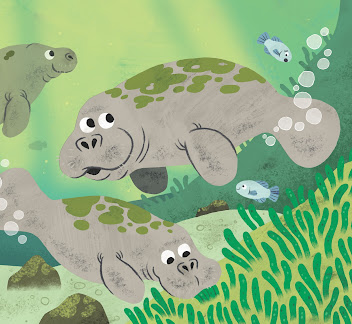
The Manatee's Posterior Power

The book begins with the manatee (which by the way, I had the pleasure of swimming with a few years ago. Unfortunately, the water was a little murky so I didn't get to observe their "posterior power" -- they swim using farts!).


Besides that important piece of information, In the "Extra Booty" section I also learned that manatees' intestines are as long as a bowling alley (65 feet) and as wide as a dollar bill (6 inches in diameter). But wait--there's more! 
Butt Bonus: When manatees are unable to poop because they're constipated, they lose buoyancy control and float with their tails higher than the rest of their bodies. Once they are finally able to poop again, they will let out a massive fart and are then able to swim normally.

I know... you've been waiting all your life to know that about manatees, right?

The Wombat's Posterior Power

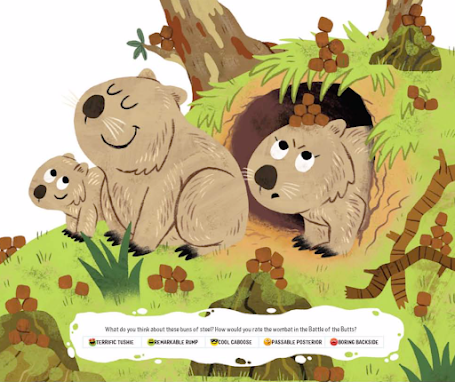
Jocelyn's research took her far and wide. In the process she found the Australian wombat. You'll never guess what their posterior power is so I'll let you in on a secret---their butts are shields that protect themselves and destroy their enemies! 

If a predator manages to push its head into the entrance, the wombat uses its strong legs to slam its butt against the predator's head. Wham! It crushes the predator's skull against the roof the burrow, killing it. That's one deadly derrière!


Not only that, but according to the "Butt Bonus," wombat poop is shaped like cubes. They mark their territory on rocks and logs and the square shape stops the pellets from rolling onto the ground. Pretty amazing, huh?

Whether you want to read more about a turtle who breathes through his butt; herring who communicate through farts ("Bluurp! Hey dude, you're too close to my left, move over a few inches); or the beetle that deploys a chemical poison from his "super soaker butt"--than this is the book for you! Parents, caretakers, teachers--you all will love introducing your pre-school through second grader to these crazily cool creatures. (Uh oh, Jocelyn! Your alliteration is contagious!)

The book ends with a challenge to the kid judges and a glossary highlighting unfamiliar words. Kudos also to artist David Creighton Pester for his clever and colorful illustrations. 

AUTHOR INTERVIEW

In this interview Jocelyn not only shares what's coming up next, but her (very early!) inspiration for writing BUTTS.

CAROL: “Why butts?” Why did you think of this idea in the first place?

JOCELYN: I'm not sure if I should admit this, but I have a pretty terrible Twitter habit. Late one night when I should have been doing something productive (like sleeping!), I was mindlessly scrolling Twitter when I saw an adorable graphic of a manatee that said, “Manatees can control their buoyancy through an endless cycle of farting. There. That’s a thing you know now.” I didn't think that could possibly be true, so I googled, and it was! The best part is the google search also brought up articles about other animals that do weird things with their tushies. From that night of learning funny fanny facts, BATTLE OF THE BUTTS was born!
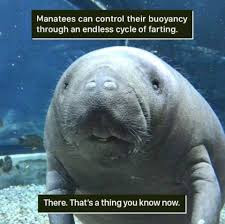

The picture that started it all.
FUN FACT: Jocelyn has been enamored with manatees since she was a kid.

CAROL: How did you pick these ten animals? 

JOCELYN: As I discovered there were other animals out there with remarkable rumps, I started googling things like: "animals with weird butts" and "funny butt abilities" and other silly terms like that. As new animals came up in searches, I added them to my notes. Then I researched each animal further in scientific journals to separate fact from internet legend. When it came time to decide on the final ten animals, I tried to pick a variety of scientific classifications, with different types of booty abilities, and a mix of water and land (there are five of each). But I still have plenty of animals with funky fannies available to make BATTLE OF THE BUTTS NUMBER 2. 😆

CAROL: I love the judging format. How did you come up with that?


JOCELYN: Thank you! As I read about the various fanny facts, I envisioned the animals on stage showing off their tushie talents reality show style, like America’s Got Talent or American Idol. I started playing around with titles like Butts Got Talent or Butt Idol, but those didn’t feel right. When I hit on the alliteration of BATTLE OF THE BUTTS, I immediately knew that was the title. So then I started thinking, if it’s a battle, then there has to be a winner, and if there’s a winner, there should be judges – and of course the kids will be the judges! From there, it was just a matter of hitting up the thesaurus to come up with fun names for each judging category. 


CAROL: The language is very kid-friendly.  Did it take many drafts to get in all the lovely alliteration?  Did you have any kid beta-readers? 


JOCELYN: I’m so glad you think so! It was important to me that along with the funny butt facts that the book also be fun to read out loud. I’m actually an alliteration aficionado (probably too much so!), so it kind of comes naturally as I write. I found lists online of synonyms for butts, farts, and poop (there are a shocking number of alternate potty words!) and kept those beside my thesaurus as I wrote my first draft. Then I sent it to my critique partners, and from their feedback, I did some tightening and tweaking. At that point, I felt ready to query, so it was really only two drafts. 


My cousin’s son loves animals and nature, so he read it for me and found an issue where I said poisonous rather than venomous when talking about the snake, so that was a great catch (Thanks, Colton!). I also read it with my Reading Partners student, having him mark places that made him laugh and places he didn’t understand. That was very helpful for adding words to the glossary. 


CAROL: How has the book been received? Are schools using it? Do you have plans for online curriculum guides? 


JOCELYN: Friends and even strangers on social media have been so sweet about sending me videos of their kids reading BUTTS and giggling. One little girl was laughing so hard she fell over sideways on the couch, which totally made my day. So I think kids are enjoying it like I hoped. 


I participated in World Read Aloud Day with ten schools last month and had such a blast reading with the kids. They asked such insightful questions. And I’m reading with eight more schools next week for Read Across America Day – I can’t wait! I’d love to have a curriculum guide, but I’ll definitely have to outsource that. It’s on my To Do list! 


CAROL: What awards have you won?


For BATTLE OF THE BUTTS, I was thrilled that the Missouri Association of School Librarians included BUTTS on their 2022 Dogwood Book List for Nonfiction.


As for non-BUTTS awards, I’ve been fortunate to win several like the 2020 Book Pipeline YA Unpublished Contest, the 2013 SCBWI WIP Grant for Contemporary Novel for Young People, and the 2009 Highlights Fiction contest. 


It’s because of that last one that I first met you because my prize was tuition to the Highlights Chautauqua summer session! 
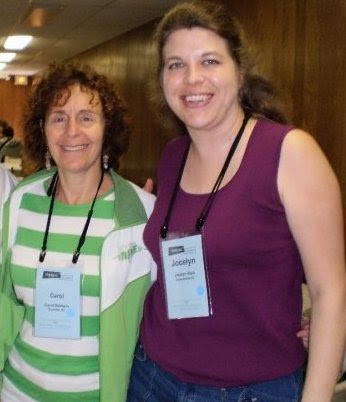

This picture popped up in Jocelyn's FB feed.
I'd forgotten we were there together!


CAROL: What’s next?


The illustrator David Creighton-Pester is currently working his magic again on BATTLE OF THE BRAINS, which is scheduled for release on Nov 8, 2022. It’s about ten animals with mind-blowing brain abilities.


And I’ve pitch my agent and editor several ideas for a third BATTLE book, so fingers crossed. Also, I was inspired by Tara Lazar’s Storystorm with several fiction ideas, one of which I’m currently scribbling about in my notebook. I hope it shapes into something creepy and fun!


GIVEAWAY INFORMATION

No giveaway this time.  I hope my grandkids laugh themselves off the sofa when I read them this book! Congratulations to Joan Edwards who won The View from the Very Best House in Town and to Donna Johnson for winning I Want My Book Back. 

Wednesday, January 19, 2022

PHOTO ARK ABC: NONFICTION PICTURE BOOK REVIEW, GIVEAWAY, and MINI-AUTHOR INTERVIEW

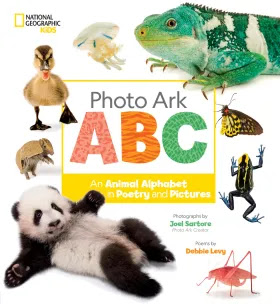
 I first "met" Debbie Levy through the pages of her novel-in-verse, This Promise of Change. In her newest book, Photo Ark ABC, Debbie  uses more than five different types of poems to playfully describe animals from Aardvarks to Zebra Finches. The accompanying photographs by National Geographic's Joel Sartore are outstanding, cute, and engaging. Children from ages 5-8 will "get" Photo Ark's message of protecting animals and their environment in a beautiful and fun manner. 


REVIEW

The book opens with an overview of all the animals featured in the book. Here is the first stanza:

Hi, Armadillo, 
Greetings! Grizzly Bear!
In a poem you are neighbors
In the wild, you're not a pair.
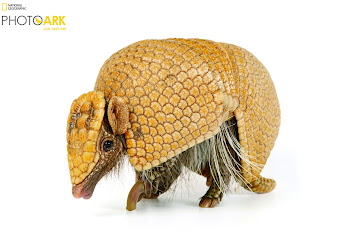
From there, Debbie takes a unique look at A, for Armadillo. 

This is the last portion of the poem; unfortunately I can't show you how the words are positioned to highlight the physical features of the animal. But the words dance on the page!

The only mammal with a shell
Can barely see but sure can smell
A sniff will tell if danger's near
And if its time to disappear...

To once again
become a pillow
Stoney, scone-y
Armadillo.
The next two spreads compare bears with butterflies- through the photos and words. I wouldn't have have thought of pairing them together, but think about it... They both feast, sleep, and creep!

D is for Duck

Hey, little duckling
What did you do?
What's that drop 
I see behind you?

Aw, little mallard
That's part of life too-
It's not just a Duck thing
It's what we all do!

I is for Iguana


The second stanza of this poem reads,

Neither emerald nor moonstone,
not mineral, but fauna,
This gem has a backbone
This gem is Iguana.
J is for Jellyfish


No lungs, no nose, no ears, no eyes
No brain to make a jelly wise.
No tongues, no toes, not even hearts
Nope. Jellyfish don't need those parts.

Y is for Yabby


There once was a Yabby down under
Who thought he could vanquish the thunder
With claws he went THWACK
At each BOOM and each CRACK
But could not tear thunder asunder.


This great STEM book will make a wonderful addition to a little one's library, or to the pre-school through second grade curriculum.


AUTHOR INTERVIEW

CAROL: How did you come up with the idea for this book?


DEBBIE: I didn’t come up with the idea, the people at National Geographic did! A few years ago they’d published Animal Ark, which paired the amazing photos of Joel Sartore with poetic text by Kwame Alexander. Now the idea was to feature another batch of Joel’s photos (of which there are thousands) in an ABC book—from A for armadillo to Z for zebra (and zebra finch!), with a separate poem for each animal. They wanted the poems to be fun and to encourage young people to care about the animals. I was thrilled to have the opportunity.


CAROL: Were the poems difficult to write?


DEBBIE: The poems really were a joy to write. I wanted to include different types of poetry, as an homage to the diversity of species but also to add texture to the book. So there are rhyming forms and free verse and more formal structures, too. (These are all identified in my author’s note in the back matter.) You ask how difficult the poems were to write; if writing’s not at least a little difficult, I’m not sure it’s any fun! Some were more of a challenge than others, but by learning about the different species and subspecies pictured in the book, playing around with forms and words, thinking about what might bring a smile or spark curiosity in the reader’s mind, and meditating on Joel’s images, I composed the poems from A to Z! 


GIVEAWAY

To enter this giveaway, please leave your name and email address in the comments. If you are reluctant to leave your email address, you can email me at cbaldwin6@me.com. If you are educator or librarian (including home educators!) tell me where you work and I'll put your name in twice. Giveaway ends Saturday, January 22 at 6 PM. 

Congratulations to Lauris Burns who won the much-in-demand book, AIR by Monica Roe. 

Monday, July 2, 2018

Strange, Unusual, Gross and Cool Animals by Charles Ghigna: A Review and Giveaway

Congratulations to Joan Edwards who won the audio CD of "The Road to Bittersweet." Thanks to all who left comments. Keep persevering and entering. More giveaways coming up--starting today!

**********
Charles Ghigna, the Father Goose of children's books and no stranger to this blog, has done it again. But this time, it's not a clever book in rhyme for the youngest readers. Strange, Unusual, Gross, and Cool Animals  (Animal Planet, 2016) will appeal to kids of all ages who want to get up close and personal to some very weird animals. 


The animals are divided the way the title predicts: Strange, unusual, gross, and cool. Within each section there are four types of pages: a gallery spread which shows animals that live in different parts of the world but have adapted to their environment in similar ways; a featured creature that highlights one phenomenal animal through details about its life, stats, and maps; a creature collection which compares and contrasts a large group of animals; and macroview pages which show tiny details of very small animals.

Charles Ghigna gave me a "behind-the-scenes" look at the book's creation. After he agreed to write this book in nine months, he realized it would be a book that was, "Full of facts. No fanciful word play. No imaginative nonsense rhymes for toddlers. My tranquil treehouse would become the center of the universal pursuit of the biggest, baddest, best creatures on the planet. No more loose and loony alliteration. This was serious business."

Enter Strange, Unusual, Gross and Cool Animals--an accessible, factual, humorous book that will make every young reader want to learn more about the animal kingdom--even if she's scared of snakes and spiders like me. And guess what? Ghigna couldn't resist including a rhyme or two.

STRANGE

Strange how we as humans
view creatures great and small--
for we who see their strangeness
are the strangest of them all!


How strange is the star-nosed mole? Pretty strange. "It's nose is covered in 22 sensitive appendages that are so good at detecting vibrations they can tell when earthquakes are coming...It can even smell underwater by blowing bubbles it then breathes in through its nose." (p. 10)


UNSUSUAL

Unusual is what we call
The weird, the fast, the rare.

We classify each creature--

But do they really care?


The thorny dragon looks like it comes from prehistoric times. Besides having a camouflaged body covered in hard, sharp spikes and two horns--it also has a false head growing on its shoulders! The sharp spines make it difficult for a predator to swallow. Besides, as Ghigna points out, "Who would want to eat a thorny, two-headed , puffed-up dragon?"

GROSS

Gross is used instead of yuck
for words like poop and pus,
but all these animals agree--
it's only gross to us!


From my experience with kids, many are delightfully intrigued by gross stuff. From finding out that honey is really regurgitated nectar and millipedes can secrete yucky liquid that burns other bugs, discovering parrotfish who poop out sand, reading about a Goliath bird-eating spider that can be up to five inches long and when threatened, has a hiss that can be heard 15 feet away--readers looking for gross animals will find it in these pages.

COOL


Cool is how we think we look
when we try to impress,
but animals are born that way-
with lots of cool finesse!


Because of its translucent skin on its belly, "you can see through the glass frog and see its liver, heart, and intestines without an X-ray machine, just like Superman can!" (p. 108) Some see-through creatures include glasswing butterflies, the pelagic octopus, and the big skate that looks like a slimy ghost! Other cool animals glow in the dark, sport blue feet (blue-footed booby) or climb walls like Spider Man (mwanza flat-headed rock agama). 

A book to leaf through or read from cover to cover, young readers will enjoy discovering new animals just as much as Ghigna did: "The Blobfish first caught my eye. Icky pink and bulbous looking. Voted the “World’s Ugliest Animal,” I knew that one would become a hit with the 8-12 year old crowd. Who could resist the Rosy Wolfsnail, the fastest snail on earth? Who just happens to be a cannibal from Hawaii. And who just happens to inhabit my home state of Alabama and throughout the Southeast. Or the Fangtooth Fish whose teeth are so large it can never close its mouth?"


Ghigna told me, "I am glad I could be a part of this irresistible collection of amazing creatures whose lives will be explored by an endless parade of curious kids who might even put down their iPhones to ponder these scary, stunning pictures of exotic animals from around the world taken by some of the world’s top photographers."

GIVEAWAY

In mid-July Joyce Hostetter and I will publish our summer issue of Talking Story on "The Great Outdoors." Since all of these animals can be classified as existing somewhere in that category, I'm going to give away this tremendous classroom resource through Talking Story. Leave me a comment here (with your email address if you are new to my blog) and I'll enter your name once. Follow the directions to enter the Talking Story giveaway (and if you don't know about this quarterly newsletter for teachers and librarians here is a link to the spring issue. You can subscribe through the link) and your name goes in twice. Winner will be drawn on July 21. 

THE NIGHT WAR: A MG Historical Novel Review

  By now you should have received an email from my new website about my review of THE NIGHT WAR by Kimberly Brubaker Bradley. (It'll com...