Showing posts with label survival. Show all posts

Monday, March 28, 2022

THE VERY OLDEST PEAR TREE: A Picture Book Review, Mini-Author Interview, and Giveaway

 I'm delighted to introduce you to a new author friend of mine, Nancy I. Sanders. Nancy has published scads of books and her blog is full of information for writers, teachers, and readers. Take your time to look around her site and you'll be impressed as I am with her experience and generosity! If you want to get to know more about Nancy's passion for picture books, check out this interview. 

In today's post I'm highlighting one of her picture books, The Very Oldest Pear Tree (Albert Whitman & Co., 2020). This informational book for readers from 5-8 years old, tells the inspirational story of how the Endicott pear tree grew up with our nation. Click here for links to classroom resources.
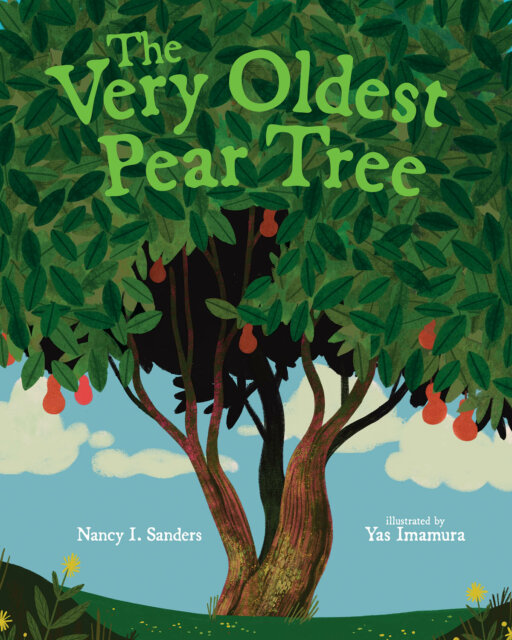

REVIEW

The year is 1630. The main character is a pear tree sapling that is shipped to the governor of Salem, John Endecott.  He has missed the fruit trees in England and is determined to start an orchard.


Governor Endecott picked the little pear tree to grow right in front of his house, hoping that it would live a long time. "The tree was small yet strong. Though young, its roots reached deep."

Twelve years later a fire blew through the orchard, destroying hundreds of trees--but the Endecott pear was spared. Generations passed. The family changed the spelling of their last name, the Governor's house crumbled, but the Endicott pear tree--with its new name, stood.  

By the time our second president of the United States, John Adams, ate one of its pears, the tree had become a legend. It inspired Massachusetts poets like Henry Wadsworth Longfellow and  Lucy Larcom. 


The tree survived a hurricane in 1938 and vandalism in 1964. Tree experts were unable to graft new branches. But, the Endicott pear tree tree sent out roots and "almost miraculously, a hundred tiny branches sprouted along the trunks. It survived!"


In 1997 a cutting was used to grow a new Endicott pear tree. Clones were made, seeds stored in a storage bank, and now Endicott pear trees have been planted across the nation--including this one, that Nancy planted and is now six feet tall!


Today, about four hundred years old, the Endicott pear tree is the oldest living tree cultivated in America. When John Endecott first planned it in front of his house, he expected the pear tree to outlive him by more than a hundred years. But no one imagined its story could still be told today.

The Endicott pear tree is a survivor. It's older than America itself. And it's still standing strong.

MINI-AUTHOR INTERVIEW

CAROL: How did you get interested in this topic? 

NANCY: I wanted to write a picture book every elementary teacher would want to use in the classroom. I figured that would be a highly commercial topic. So I knew children study Pilgrims in Kindergarten/first grade. So I started reading about Pilgrims to see if I could find any new topics about Pilgrims that hadn't been written about before. I discovered they planted an orchard of apple trees!

I started researching their orchard of apple trees because I love trees...and each time I searched for that on the Internet, links would come up for a pear tree that the Puritans had planted...that was still alive and growing strong! I started clicking on those links, learned about the Endicott Pear Tree, and was hooked. I fell in love with it right from the start!

CAROL: What type of research did you do?

NANCY: First I read everything I could about it. There's actually a lot online from the historical society that still helps care for it.

Then I contacted Bill Endicott, the president of the family's descendants who originally planted the tree. He gave me a lot of information.

Then I took a trip to Boston and Salem and Danvers to actually visit the tree and take lots of photographs. That was so exciting to actually touch the tree and sit near it!

CAROL: What was your path to publication? 

NANCY: This was one of the rare times in my career that I wrote the entire book before I queried a publisher. I sent the manuscript to my agent Cyle Young who submitted it. And Albert Whitman picked it up!

CAROL: Any thoughts on the illustration style?

NANCY: I was so excited to learn that Yas Imamura was picked up to illustrate this book. I was already familiar with her name and her style because she had illustrated some very nice nonfiction picture books at that time. I love her style which has a nice Americana and historic feel.

GIVEAWAY

Leave me a comment with your email address if you are interested in winning a copy of this book; U.S. addresses only. Giveaway ends April 2. This will make a great homeschool or classroom resource--or just a wonderful book for your bookshelf!

Congratulations to Natalie Aguire who won Picturing a Nation from last week's post.

Monday, July 17, 2017

The Wolf's Boy: A Review and Autographed Giveaway

Congratulations to Kathleen Burkinshaw who won the Audio CD, MADE YOU UP.

********

A very long time ago, a baby boy is born with a withered foot. His father, obeying the rules of his people, leaves him out in the open, presumably to die. A mother wolf adopts him and treats him like one of her own pups. One night the boy’s mother hears a human cry mixed in with the cry of the wolves. With great longing for her child, she rescues him. In this way, Kai—or Wolfboy as the village boys eventually call him—begins his difficult, pain-filled life.

REVIEW

The author of THE WOLF’S BOY, (Disney Hyperion, 2016)  Susan Williams Beckhorn, reached out to me after reading my post on Kirby Larson’s blog. Her description of her book, “a ‘first dog’ story inspired by the 1994 finding of the fossilized footprints of a boy and a canine walking side by side in Chauvet Cave in France” intrigued me. Although Susan and I probably disagree about the Biblical view of creation and evolution, I found this middle grade book for boys and girls to be well-written with many layers built into it. 

Interesting enough, Beckhorn incorporated a fictional creator/supreme being, Tal, into the story. At the story’s outset Kai observes that, “Tal gives two arms, legs, eyes, ears. If one is hurt, the other grows stronger. Maybe Tal is trying to make me stronger.” (p. 37) This not only reflects that a belief in a supreme being is common among cultures (Romans 1:20, Acts 18: 22-31) and that difficulties and trials are for our good (James 1:2-4, Romans 5:3-5), but also foreshadows Kai’s journey.

Despite his father’s reservations and his brother’s contempt, Kai gets to keep a wolf pup he rescues. This pivotal point is shown here:
I carried the pup back to my bed. The little wolf nestled against me. She stretched out a foot, bumping my nose. I ran a finger over her muzzle. It was shorter than most. Her little skull seemed rounder too. “Will you be one of the People?” I whisper to her. “Or should I be one of the innos with you?” (p. 49)

The friendship between Kai and his wolf who he names, Uff, grows as they do everything together: sleep, eat, play, and hunt small game and fish. Uff accepts Kai and his lame foot as normal; he doesn’t treat him as cursed (tabat) as the other members of the community do. “You don’t hate me for my bad foot,” I put my forehead against hers. “You are my friend.” (p. 70) 

Since he is tabat, Kai may not touch a weapon and therefore is not trained to be a blood hunter like other boys. As his brother and peers shame him he contemplates running away, with the realization that he’ll have to be able to hunt large animals in order to survive. "There must be a place in the world for us.” Kai thinks. (p. 83) 

The shaman, both revered and feared within the community, is also disfigured. When he tells Kai that he has powers, Kai is puzzled. In another pivotal moment on Kai’s journey the shaman tells him, “You are strange like me. You are other.” (p. 86) 

Without including too many spoilers, Kai risks physical dangers and estrangement from his family and community, and leaves home. His survival journey is a great metaphor for his development as a young man in this unique coming of age story. Kai faces his fear of death, of losing Uff, and of being struck down because he has gone against the rules of the community by creating his own weapon. After his last test he realizes, “I was still myself--Kai, yet I was someone new.” (p. 215)

In the classroom, teachers can use this book to discuss disabilities, friendship, bullying, risk-taking, and survival. If I were a teacher I would latch onto the shaman’s description of other and ask students if they ever felt that way or treated someone else like that. Here is a link to discussion questions.

GIVEAWAY


I am giving away my autographed hardcover copy of this book. Please leave a comment by July 20 for your chance to win it. Share this on social media or start following my blog (be sure to let me know what you did and leave me your email address if you are new) and I’ll enter your name twice. 


*******

By the way, if you are interested in a Biblical view of the world’s age, here is a link to Answers in Genesis.


Monday, August 3, 2015

Prisoner B-3087 by Alan Gratz

Congratulations to Tonya Goettl who won Wonder at the Edge of the World in last week's giveaway. Stay tuned for another great giveaway coming up soon. But first, two posts about Alan Gratz's middle grade Holocaust book.

I'm going to tell you from the start this review contains spoilers. It's a story driven by a young boy's desire and need to survive. But of course, the spoiler is implied by the very nature of this book. Prisoner B-3087 by North Carolina author Alan Gratz, is based on the true story of Jack Greuner, an Holocaust survivor.


The book opens in 1939 in Kraków, Poland. Yanek Gruener (much later he changes his name to Jack) is ten-years-old and his father doesn't believe that Hitler's invasion of Poland will last for more than six months. 

His family soon finds out how deadly wrong he is. 

In magnificent prose that combines accurate details from Yanek's life with historical research, Alan Gratz has woven together a painful-but-true portrayal of a young boy's determination to survive which carried him through ten concentration camps in six horrific years. 

Within three years the family goes from rationing; to losing jobs, their synagogue, and access to schools; to being sealed off within the walls of the ghetto. Life is horrible, but at least Yanek has his family around him. After his secret bar-mitzvah, he is terrified when the sick and elderly are killed. He thinks,
I was a man and I wanted to do something. Something to stop the Nazis. To save my family. I asked myself over and over again what I could do to help, but I had no answer. p.50
He argues that his family should not give in to the Nazi's demand to be "selected" and buys more time for them all. But one day he comes home and witnesses his parents being brutally herded away by the Nazi soldiers. 

Yankee is sent to the Płaszów concentration camp and is amazed to find his Uncle Moshe who gives him survival instructions: 
From now on, you have no name, no personality, no family, no friends. Do you understand? Nothing to identify you, nothing to care about. Not if you want to survive…We have only one purpose now: survive. Survive at all costs, Yanek. We cannot let these monsters tear us from the pages of the world. (pp. 68, 70)
As Yanek is packed into cattle cars and moved from one concentration camp to another he learns what he must do to survive:
  • Don't share your portion of bread with someone, even if that person might be kept alive by what you have.
  • Don't miss a roll call. You will be beaten.
  • Don't show fear. The Nazis' dogs will attack.
  • Don't befriend anyone.
  • Always obey orders. 
  • Don't think for yourself.
  • Don't question orders even if it means moving back-breaking rocks from one side of the yard and then back again. 
  • Don't fight back. If you do, you'll be killed.
  • Don't complain when you are forced to sing and entertain Nazi soldiers feasting on a dinner. Look away so your stomach won't grumble and you won't be shot. 
Yanek clings to the smallest "comforts" in his pursuit of survival:
I stood at the water pump, scrubbing my body. It was bitterly cold out, but I didn't care. I would scrub my body, I decided, each and every morning, no matter how cold it was, no matter how tired I was. I was alive, and I meant to stay that way.
…I paid careful attention to where I had been tattooed. Too many others had let their tattoos get infected, and that had taken them to the camp surgeon. You didn't want to go to the camp surgeon. Ever. I even rubbed my teeth with my wet fingers--we had not toothbrushes or toothpaste, of course, but it felt important to remember what it was like to be human. (p. 136)
As the war ends, Yanek's will to survive does not:
The war had come to Dachau, and any moment a shell or a bomb might fall on our building and kill us all. So many times I had wished for a bomb to fall on me, to end my suffering, but now I prayed that no bomb would hit me. Not now, when I was so close to the end! If only I could survive a little longer, I thought, just a little longer-- (p. 242)
As I said in the beginning of this review, it is obvious that Yanek Gruener does survive. So, it's not a spoiler to quote the last lines of this memorable book:
I stepped on board the train and didn't look back. For nine years I had done everything I could to survive. Not it was time to live. (p.256)
Next week Alan shares his process of writing Prisoner B-3087 and what it has meant to him both personally and professionally. To whet your appetite, here is a video of Alan with Jack and his wife Ruth, that Scholastic created. 

Next week Alan shares his process of writing Prisoner B-3087 and what it has meant to him both personally and professionally. To whet your appetite, here is a video of Alan with Jack and his wife Ruth, that Scholastic created. 


THE NIGHT WAR: A MG Historical Novel Review

  By now you should have received an email from my new website about my review of THE NIGHT WAR by Kimberly Brubaker Bradley. (It'll com...