Thursday, April 22, 2010

Reading a Museum

For those of you who are planning an end-of-the-year class trip to a museum, I’d like to share some insights from an article in a recent International Reading Association journal.

“Museum Literacies and Adolescents Using Multiple Forms of Texts ‘On their Own,’“ (Journal of Adolescent and Adult Literacy, 53 (3), 204-14. doi:10.1598/JAAL.53.3.2) evaluated the way in which eight teenagers interacted with exhibits in the Bedford Museum, a collection of archeological artifacts from the Americas, Greece, and Africa. Although none of the teens spent time reading the printed texts accompanying the displays, each of the participants made several “text to self” and “text to text” connections based upon the exhibits.

After analyzing the students’ responses, the author, A. Jonathan Eakle, concluded that “what was seen in the museum took precedence over what was written.”   Although some might disparage how the teenagers ignored the printed museum texts, Eakle argued otherwise:

“…the greatest value of the museum experience may well be how visitors, such as the adolescents in the present study, use museums freely, that is, on their own and for their own purposes. And to be free was an attractive part of adolescent museum excursions as shown through the investigation, whether it was, for example, escape through fantasy play, as was the case with Frank and Tom [two teens] darting among museum labyrinths, or by turning a corner to go beyond adult purview, as did Flo aka Mic and Bishop [three other teens] to discuss an interesting object in their own terms. These movements through, and readings of, space are an important aspect of museum literacies and suggest degrees of freedom perhaps not available in many education settings. In times when liberties and choices are often considered precious and rare commodities in education, as well as in wider communities, museums may offer important possibilities for engaging in most valuable aspects of literacies.

Furthermore, Eakle recommends that teachers conceptualize museums as text, thinking about the exhibits as if they were chapters of a book. In this way, activities like treasure hunts are in fact search-and-find activities familiar to literacy educators (p. 213). 

Eakle ended the article with questions which can guide museum learning.
·      Who is represented in the exhibition?
·      Who do we not hear from through the exhibition?
·      What language does the museum curator use to create a visual image?
·      What images, other objects, and spaces does the curator use to craft a language?
·      If we were to take away the printed text labels, do our notions of the museum object or exhibition change?
·      Whose interests are served by the museum text? Whose interests are not served?
·      What view of the world is put forth by ideas in the museum texts? What views are not?
·      What are other possible worldviews seen through the museum texts?
Note. Questions are adapted from Franzak, J., & Noll, E. (2006). Monstrous acts: Problematizing violence in young adult literature.Journal of Adolescent & Adult Literacy, 49(8), 662–672. doi:10.1598/JAAL.49.8.3

Technorati Tags:

Tuesday, April 20, 2010

SOS for PLCMC

If you live in or near Charlotte, NC then you know that public libraries are in huge financial trouble. I recently received this email:

What is to become of libraries
if funding is cut by 50%?

Get the facts. Show your support.
Join the conversation.

Last week, Director of Libraries Charles Brown presented three scenarios to the Library Board of Trustees that outlined ways Charlotte Mecklenburg Library could potentially deal with an expected $17 million (50%) budget cut from Mecklenburg County. Learn more and find out how you can help at one of these community meetings:
  • Wed., April 21 at 6:30 p.m.
    CPCC North campus: 11930 Verhoeff Drive, Huntersville
  • Mon., April 26 at 7 p.m.
    CPCC Levine campus: 2800 Campus Ridge Road, Matthews
  • Wed., April 28 at 11:30 a.m.
    Main Library: 310 North Tryon Street, Charlotte
  • Thurs., April 29 at 6:30 p.m.
    Myers Park Baptist Church: 1900 Queens Road, Charlotte
  • Mon., May 3 at 6:30 p.m.
    CPCC Cato campus: 8120 Grier Road Charlotte
Additional community information sessions will be scheduled soon so that citizens from across the County who are interested in the future of the Charlotte Mecklenburg Library can learn more at www.plcmc.org. 


The county has already fired over 100 staff and cut hours at many branches.I can't imagine a community without libraries. Can you?


If you value the many services which public libraries provide and you live in the area, come out and show your support. 

Technorati Tags:
, ,


Thursday, April 15, 2010

Hormone Jungle

After quoting one of Brod Bagert’s poems in a previous blog, I decided Hormone Jungle was worthy of its own post. This collection of 50+ poems is “written” by 11 fictional characters, the self-proclaimed “Digital Poets.” The book is presented in the form of a scrapbook compiled by the girl whose poem, “Middle School Payback,” began a middle school poetry war. Bagert did such an excellent job of writing the poems from different point-of-views that several times I had to remind myself that he is the behind-the-scenes real author of the entire collection.

Middle school voices are authentic and compelling. Consider this final verse from “Middle School Payback” by Christina Curtis:

This ain’t elementary anymore,
You’re in a brave new world,
You’re a boy in middle school
And buster, I’m a girl!
So down on your knees and crawl, slime,
Middle school is payback time.

The poetry matures as the pre-teens develop into teenagers. No adolescent anxiety is left untouched. Body odor, self-image, fear of love, fear of rejection, sports trauma, school … Bagert’s “Digital Poets” uncover them all. What middle schooler won’t relate to:

“Bored” by Steven Gilley

Forty-three stations on the radio,
Ninety-seven channels on cable TV,
Thirty-nine thousand books in the library,
And the whole world on the Internet.
So why am I totally bored?

I’m lying in bed, I smell like cheese,
And half the day is through.
I think I get so bored because
There’s too much stuff to do.

Or, how about “Underarm Charm” by Ryan Spalding:

Last night at the drugstore,
My mother smiled discreetly and said:
“Look, Ryan, deodorant.
Would you like the roll-on or the spray?”

I may not have big muscles,
And I may not have a tan,
But I’m growing hairy armpits,
And I’m smelling like a man.
Although many of the poems are humorous, some are serious such as “The Door Unopened,” by Emma Mackey:

In our house there are doors—
    A front door.
    A back door.
    A door to the patio.
Doors that open to the light.

But there’s another door—
    A door that moves on rusty hinges
    To steps that sink through silence,
    Past the whisper of broken promises,
    Into the dust of forbidden memory.
In my house there are lots of doors,
And among them
There is one door
I can never open again.

Christina Curtis opens the book with a flippant narrative about the Digital Poets, and ends with a somber reflection about Steven Gilley that brought me to tears. Bagert has woven together poetry and fiction into an award-winning book that will be appreciated by students and teachers alike. Art work by “real” middle school students at  PK Younge Laboratory School in Gainesville, Florida, complements the book. (Maupin House, 2006) 


Technorati Tags:
, , , ,


Tuesday, April 13, 2010

Watch this Video! (if you want to write for kids)

A friend just told me about this You Tube video. File it under I "wish I had thought of this" category!


Technorati Tags:
, , ,


Monday, April 12, 2010

Celebrating Poetry Month

In honor of  celebrating April as poetry month, here are some classroom resources. The first is an unpublished poem written by my friend, Linda Phillips. She gives you permission to use it with your elementary students as you celebrate spring together:


SURE SIGN


It wasn’t when the snow melted
   or the air forgot to sting
        neither was it by the calendar
            when I knew it must be Spring.

But the sun in Daddy’s voice
    the winking of an eye
         first drive into the country
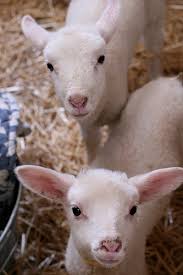
             to hear the new lambs cry.


This second poem, written by Brod Bagert the author of Hormone Jungle, (Maupin House, 2006) has an older audience in mind. This poem is taken from his book that is simultaneously poignant and humorous. Poems will be appreciated by middle school students and teachers alike.

Aunt Aurora's Promise

I don't think Daddy likes her,
He says she's pretty wild,
just because she dresses
With her own Aurora-style.

She never ever wears her hair
The way my Daddy likes,
She uses lots of gooey stuff
And shapes it into spikes.

Her lips are painted purple,
And her nails are painted black,
So Aunt Aurora looks as though
                                         She's ready to attack.

So Daddy's feeling nervous,
He's feeling full of stress,
Cause Aunt Aurora promised me
She'd teach me how to dress.

Finally, here are some links to more poetry resources provided by the Journal of Adolescent & Adult Literacy (October, 2009):

Poetry Alive is a good site for teaching poetry, especially through performance. Check out "Poetry resources" for ways you can incorporate poetry into the classroom.

Favorite Poem Project documents ways that poetry affects and informs people's lives. Includes videos, readings, lessons plans and poetry workshops.

ReadWriteThink has many poetry (as well as other literacy) resources. This one shows how to make magnetic poetry in your classroom.

National Writing Project Scroll down to "Spotlight on Poetry Programs for Teachers." Lessons, ideas, radio broadcasts, and more.

Technorati Tags:
, , , , , , , , ,


Monday, April 5, 2010

A Southern Smorgasbord

Following Karen Hesse's advice that aspiring historical fiction writers should read novels from the same time period and place that they're writing about, I have read several books to inform my own work. Here is a smorgasbord of books that take place in the south during the last 60 years; with a rating (5 *'s is the highest) following each.

Bone by Bone by Bone by Tony Johnston

In Tennessee in the early 1950's, nine-year-old David suspects that his father, the town's well-respected physician, is a member of the KKK. Despite knowing his father's feelings towards "niggers," David's best friend, Malcom, is black. He knows he can never bring Malcom home because his father has threatened to shoot any black person who comes into the house. The two boys enjoy one another's company until David is picked to be on the neighborhood baseball team while Malcom, clearly the better player, is not. Although the book is a good depiction of racial relations and bigotry during this time and place, I felt that the repeated foreshadowing of the terrible event that would happen, spoiled the predictable ending for me. I would recommend it as a good 4-7th grade book to be read in conjunction with a social studies unit about segregation in the South.***

Belle Prater's Boy by Ruth White.

This novel is told through the eyes of Gypsy Arbutus, cousin to Woodrow Prater who moves in next door after his mother disappears. Set in the 50's in rural Virginia, I appreciated how White gradually unveils both Gypsy's and Woodrow's stories, against the background of Woodrow's adjustment to life in the small town of Coal Station. Woodrow gains notoriety because of his ability to tell outlandish tales--including his own idea of where (and how) his mother left him. Gypsy lives with her mother and step-father; the reader is not told how her father died. The book's powerful climax is how both children face up to the truth of their missing parents. When the taunting of a peer at school brings up memories, Gypsy remembers: "He shot himself in the face. He killed himself. Of course I knew it all the time. I was there. I saw what happened. But how can a thing like that be in your head and you go on talking and eating and sleeping. It's the thing you can't really look at. So you hide it away and pretend it never happened. You have to. Only in my dreams did the truth look out at me."*****

My Louisiana Sky by Kimberly Willis Holt


In rural Louisiana in the 1950's, Tiger Ann is the smart daughter of two mentally challenged parents. Although she is embarrassed by her parents, she manages to live comfortably in the safety and protection of her strong maternal grandmother, Granny. When Granny dies, Tiger Ann's Aunt Doreen swoops in and takes her back to Baton Rouge; insisting that Tiger Ann would have more opportunities with her. Tiger Ann is torn. She loves the modern city, the clothes, and fun life her aunt promises, but when she comes back to visit her mother, Tiger Ann finds her depressed and unable to even get out of bed. This sensitive book shows a situation not often portrayed in books; Tiger Ann's conflicts are real and sympathetically described. ****

When Zachary Beaver Came to Town by Kimberly Willis Holt

The place is the south, the Texas town of Antler, but the time period has moved up about 20 years. This is a story of an unlikely friendship between three boys: Toby, his best friend Cal (whose brother, Wayne, is serving in Vietnam); and the sideshow star, Zachary Beaver, who comes to town and is billed as the "fattest boy in the world." Ostensibly, Zachary is trying to eat his way into the Guinness Book of World Records and is hostile to the boys' feeble attempts to befriend him. It's not until Cal's older sister genuinely shows interest in him, that the ice is broken between the boys. There is an undercurrent of lies and dishonesty throughout the story. Toby comfortably lies about his mother, but is bothered about Zachary's obvious lies about his own past. When Wayne dies, Toby can't bring himself to attend the funeral. Zachery confronts him which proves to be a turning point for all three boys. Recommended for 4-8th graders, this book can help students think about honesty, stereotypes, and friendship.*****

Missing May by Cynthia Rylant


Set in rural West Virginia, the main theme of this contemporary, intermediate novel is how the main character, Summer, deals with the death of her beloved Aunt May. Orphaned, Summer comes to live with Aunt May and Uncle Ob (a whirligig artist) as a young child. They love her completely and when May suddenly dies, she and Ob are left bereft and helpless. As Ob sinks deeper into depression, Summer's fear of losing her only remaining relative increases. When Cletus, a peer at school, suggests they consult a medium to see if they can reconnect with May, Ob and Summer agree. I found Summer's gullibility as a 12-year-old to be a little far-fetched. On the other hand, I loved how at the end, the three "planted" Ob's whirligigs in May's garden-- setting them, and their grief free. A good book to open up discussion about death.****

Both Bone by Bone by Bone and When Zachary Beaver Came to Town are books with strong male protagonists that would appeal to boy readers.
Technorati Tags:
, , , , , , 

Tuesday, March 30, 2010

Google Surprises

Every once in awhile I google my name along with Teaching the Story. I found some sites that I expected, and some surprises:

Not Surprised by:

My "interview" with Joyce Hostetter on her blog. Not only do Joyce and I teach together, but I also consider her to be my writing mentor. When she invited guest bloggers, I thought I'd include musings I have in my head about writing historical fiction. Here we are at NWRESA.


There were several references to our newsletter Talking Story.


I saw Elysabeth Elderling's, author of the Junior Geography Detective Squad series, postings on how she is skyping with a teacher in Utah and using my book. Very cool!

There was an announcement about my upcoming library event (listed under "If You're Bored..." I guess that's a good thing!)

I found a review that I had read before, one which was fairly recent, one that I hadn't seen, and one from Orton Gillingham.

Surprised by:

I read a great blog about how social media is here to stay in the classroom written by Steve Johnson. Steve wrote the technology lessons for my book and is now completing his own book for Maupin House. Here he is teaching some students in Rockingham, NC:


I found an internet bookshop advertising my book in Spanish (the ad, not my book!); an Italian website offering English language arts materials; and a listing in an Australian bookstore.

I found several sites that had uploaded handouts from the book. Here are some from creating a Genre Setting; handouts from Making the Red Pencil Your Best Friend; and one of my favorites, my Build-a-Plot.

I discovered an excerpt about using technology to teach revisions that was on Literacy Connections and a blog from a teacher who attended one of workshops at the SC Middle School conference.

These were other surprises: an article in Better Teaching on "Show, Don't Tell" writing. (p. 3); and an article just posted 7 hours ago which shows my video on teaching creative writing in the classroom!

I found out that my blog was on a list of 150 useful, educational, and inspirational blogs.

Finally, I discovered a website about wikis in the classroom which showed my video about wikis. Here it is:


It goes to show. You never know where a Google search might take you.

Technorati Tags:
, , , , , 

Friday, March 26, 2010

Reading & Writing Across the Curriculum


One of my popular workshops at teachers conferences is "Writing Across the Curriculum: How Short Fiction Supplements Science and Social Studies Instruction." In one hour I review the main elements of short stories and read from mentor texts which exemplify well-written characters and settings. We discuss how language arts teachers can collaborate with social studies and science teachers to help students write a story taking place in another country or time period, or one that includes scientific facts.

During the workshop I assign the teachers a writing task. I give them reproducibles from my book, Teaching the Story, and ten minutes to brainstorm a character from another time or place, and another ten minutes to begin developing a scientific setting. These teachers at the North Carolina Reading Association Conference, several of whom serve young adults in the juvenile justice system, enjoyed the activity. One said that it was the most useful workshop she had attended in two days, another wished it had been longer (a frequent "complaint,") and a third said he would try it in his world history and US history classes.

Here are some examples of what teachers at the Virginia Gifted & Talented Conference wrote during this same workshop:

SOCIAL STUDIES EXAMPLE #1
"As the night wore on, she continued to walk; exhausted by the miles behind her, yet encouraged by the thoughts of her final goal…freedom! She got her bearings from the Drinking Gourd and reflected back on the letter that started this journey…

Dear Brother,
I cannot believe that the purveyor of our goods was, in fact, a Negro man by the name of Thomas Bethune."

by Elizabeth Bourie, Norfolk Public Schools; Martha Nicholson, Alleghany Count Public Schools; Anne H. Moore Robious Middle School, Chesterfield County Public Schools.

SOCIAL STUDIES EXAMPLE #2
"Maria Rosetti takes a wheezing breath and hoists her grandson onto her lap. He goes gazes into her red-rimmed eyes and asks her why his last name is being made fun of.
Maria gazes into the distance and the memories come flooding back…

She is 11-years-old and still walking wobbly-legged from the month long boat ride from Italy to Ellis Island. She straightens her skirts and smoothes over the tatters. Maria feels the gap in her teeth from losing her back molar. She feels the rosary beads around her neck and gains strength from that. Glancing around, she makes sure her two younger brothers and sisters are following her parents and grandmother."

by Amanda Prettyman Rude

SCIENCE EXAMPLE #1
"Shortly before earth rise, the only thing they could hear was the sound of their breath from the re-breather. He had long since learned how to bound over the dusty surface in spite of his awkward suit.

Soon he was far from the safety of the dome and his destination loomed closer. Standing at the rim of the deep, dark crater, he gazed down at the wreckage."

by Jacqui Cecalupo , Holeymead Elmentary, Albermarle County; Liana Spring, Baber Buter Elementary, Albermarle County.

SCIENCE EXAMPLE #2
"He was 6’ 4” looming in the doorway, adorned with a large scary gun, his walkie-talkie strapped to his hip and a strange looking meter around his neck. The lead filled walls silenced the outdoors. As we settled into our seats, the quiet was punctured by an occasional electrical zapping- like a huge bug zapper for humans."

by Anne Moore, Chesterfield County Public School and CBG Teacher at Robious Middle School; Martha Nicholson, Allegheny County Public Schools; Elizabeth Bourie, Gifted & Talented for Norfolk Public Schools.
********************************************************
Teachers are frequently amazed at the ideas which they generate and agree that writing short fiction would reinforce language arts, social studies, and science skills. For more information on this topic, see the most recent issue of Talking Story, where Joyce Hostetter and I highlight several books and activities which reinforce reading and writing across the curriculum.
Technorati Tags:
, , , , 

Tuesday, March 23, 2010

Grammar Myths

If you don't already subscribe to Delancey Place, this excerpt might convince you. Five days a week you'll receive e-mail excerpts from a variety of nonfiction books. Subjects are as varied as the stars in the night: you'll read about ancient Rome, the Basque bombing of Guernica in Spain, Fidel Castro, or Central Park in New York. One thing you can be sure of, the writing is excellent.

Since this excerpt was about grammar, I thought that language arts teachers and writers might appreciate this expose of writing myths. These are quotes taken from John McWhorter, Our Magnificent Bastard Tongue, Gotham, Copyright 2008 pp. 65-69,80:

"Take the idea that it is wrong to say If a student comes before I get there, they can slip their test under my office door, because student is singular and they 'is plural.' Linguists traditionally observe that esteemed writers have been using they as a gender-neutral pronoun for almost a thousand years. As far back as the 1400s, in the Sir Amadace story, one finds the likes of Iche mon in thayre degree ("Each man in their degree").

"Maybe when the sentence is as far back as Middle English, there is a sense that it is a different language on some level than what we speak - the archaic spelling alone cannot help but look vaguely maladroit. But Shakespeare is not assumed to have been in his cups when he wrote in The Comedy of Errors, 'There's not a man I meet but doth salute me / As I were their well-acquainted friend' (Act IV, Scene 111). Later, Thackeray in Vanity Fair tosses off 'A person can't help their birth.' ...

"Or there's the objection to nouns being used as verbs. These days, impact comes in for especial condemnation: The new rules are impacting the efficiency of the procedure. People lustily express that they do not 'like' this, endlessly writing in to language usage columnists about it. Or one does not 'like' the use of structure as in I structured the test to be as brief as possible.

"Well, okay--but that means you also don't 'like' the use of view, silence, worship, copy, outlaw, and countless other words that started as nouns and are now also verbs. Nor do many people shudder at the use of fax as a verb....

"Over the years, I have gotten the feeling that there isn't much linguists can do to cut through this. ... There are always books out that try to put linguists' point across. Back 1950, Robert Hall's Leave Your Language Alone! was all over the place, including a late edition kicking around in the house I grew up in. Steven Pinker's The Language Instinct, which includes a dazzling chapter on the grammar myths, has been one of the most popular books on language ever written. As I write, the flabbergastingly fecund David Crystal has just published another book in the tradition, The Fight for English: How Language Pundits Ate, Shot, and Left. But the air of frustration in Crystal's title points up how persistent the myths are. ...

"English is shot through with things that don't really follow. I'm the only one, amn't I? Shouldn't it be amn't after all? Aren't, note, is 'wrong' since are is used with you, we, and they, not I. There's no 'I are.' Aren't I? is thoroughly illogical - and yet if you decided to start saying amn't all the time, you would lose most of your friends and never get promotions. Except, actually, in parts of Scotland and Ireland where people actually do say amn't - in which case the rest of us think of them as 'quaint' rather than correct!"


Technorati Tags:
, , , 

Wednesday, March 17, 2010

Writers Workshop at Highlights: Make Your Book A Page Turner

I received this in my in-box today and although I can't attend, I thought perhaps that one of you might be interested in this wonderful opportunity:

"One of the keys to great fiction is a conflict or struggle that has enough weight to carry the story and enough tension to keep the reader turning pages. That struggle can best be understood by looking deep into the "shadow"—your hero's adversary. Long-time editors Marileta Robinson and Kim T. Griswell have developed a workshop to guide writers toward understanding the role of the Shadow. They've planned plenty of time for critiquing and revising to strengthen an existing manuscript.

"Many stories can be seen as a struggle of the main character for wholeness. The adventure to which the hero is called is actually an invitation to take back parts of himself that have been rejected or repressed. These parts represent the Shadow. They have been shoved into the unconscious, where they become a destructive force. They may be projected onto another character, who becomes the villain the hero must confront. The journey is about acquiring the wisdom and experience to be able to accept and transform these shortcomings.

"What keeps your character from being complete at the beginning of the story? What parts of himself does he deny? What does she hate or fear? Like the missing pieces of a puzzle, these elements will determine what kind of struggle awaits the hero." Marileta Robinson

"The hero doesn't just confront the Shadow within himself on his journey for wholeness, he must confront—and overcome—the Shadow in its manifestations in the physical world. The Shadow shows up in many ways: Wild Things that need taming, dark towers that must be climbed, rings that must be thrown into the Crack of Doom. For your tale to have depth, you must be sure that the Shadow and its minions challenge your hero in many forms—not just the single form of the major adversary. These manifestations make your story rich, detailed, real, and—when well crafted—publishable." Kim T. Griswell

If you'd like to learn more from Marileta and Kim, they will be teaching The Hero and the Shadow for the Highlights Foundation from April 16—18, 2010. The workshop takes place near Honesdale, Pennsylvania, at the homeplace of the Founders of Highlights for Children. To reserve your spot, contact Jo Lloyd at 570-253-1192 or e-mail jalloyd@highlightsfoundation.org.

ANNOUNCING A SPECIAL GUEST SPEAKER!
Marileta and Kim are pleased to welcome special guest K.L. Going (Kelly), award-winning author of The Liberation of Gabriel King, Saint Iggy, and The Garden of Eve. Kelly will talk about her work and share the "shadows" that make her books outstanding. For more information, visit Highlights Foundation."

I wish I could go...it sounds terrific!

Technorati Tags:
, , , , , 

Monday, March 15, 2010

The A, B, C’s (and D, E, F’s) of Blogging

On March 16th I’m speaking to the Charlotte Writer’s Club about “Targeting Your Blog.” Since I didn’t want to make 80 copies of my notes for the participants, I thought I’d post the notes here. This way they’re accessible to the Charlotte Writer’s Club as well as to anyone else contemplating starting a blog. Here are some easy points to remember when you begin your blog:

A is for Audience. When Kay McSpadden first asked me to speak to the CWC she complimented me on how focused my blog was. I can’t say I did that on purpose. All I knew was that I wanted to share my thoughts about reading and writing. From the beginning I expected that my main audience would be teachers and home school parents. Now I hope it also includes people who are interested in the novel I'm writing. My passion and my audience continue to shape what I post; I try to offer information that benefits these readers.

B is for Blogs. Visit other people’s blogs and think about what you find attractive or unattractive about them. One of my favorite blogs belongs to Joyce Hostetter. She uses pictures and videos well, shares herself, and writes succinctly. When you visit someone else’s blog, leave a comment. If someone visits your blog, check out theirs. It’s an unwritten rule in the blogosphere, but it generates enthusiasm, good will, and readers.

C is for Learning Curve. Be patient with yourself as you play and experiment. It takes time. Rome and blogs weren’t built in a day.

D is for Do’s and Don’ts. Do learn how to include pictures, graphics, and videos. This will make your blog more interesting. Don’t make it too personal unless that’s your purpose. Remember, whatever you post online is available for the world to read.

E Is for make it Easy to find information. Use tags (words or main points in your blog) which people can use to search your blog, or by which they might find your blog. Last summer when I attended the Highlights Writers Workshop I was pleased when Boyds Mills Press editor Carolyn Yoder, told me she had read my blog. She had found it one time by googling “historical fiction.”

F is for Focus and Finish. Make sure each of your blog posts is focused. Don’t ramble. And when you’re finished, print it out and reread it several times before hitting “publish post.”

Go ahead, get started. And when you do, post a comment here and let me know where I can find you online!

Technorati Tags:
, , , , , , 

THE NIGHT WAR: A MG Historical Novel Review

  By now you should have received an email from my new website about my review of THE NIGHT WAR by Kimberly Brubaker Bradley. (It'll com...