Showing posts with label Theresea Elder. Show all posts

Thursday, January 7, 2021

Thereasea Elder Wore Many Hats

 One of the good things about writing historical fiction set in the not-so-distant past is that you can interview people who lived through the conflicts you are writing about. 

One of the hard things about writing "recent" historical fiction is that the people you interview--your experts--are elderly and die. 

Ten years ago I posted my first blog about six people I interviewed for Half-Truths. Only one is still alive. In 2014 I wrote about four women who shared their histories with me. Only two are still living. 

Yesterday, I heard that one of these women, Thereasea Elder, passed away on January 5, at the age of 93.

                                Thereasea as a U.S. Nurse cadet in World War II.

Thereasea's Legacy

I met Thereasea in 2011. With open arms and a smile that never quit, she welcomed me into her home. At the same time, she welcomed Half-Truths into her life. A conversation wasn't complete without her asking, "How is the book coming along?" She encouraged me every time I visited her.

As I tried to understand the city of Charlotte in which she grew up, there were no questions or topics that were off-limits. She told me about the dangers she faced as the first nurse to integrate Mecklenburg County's Public Health Service and the asbestos waste products which coated their window screens from the factory in their Greenville neighborhood.  


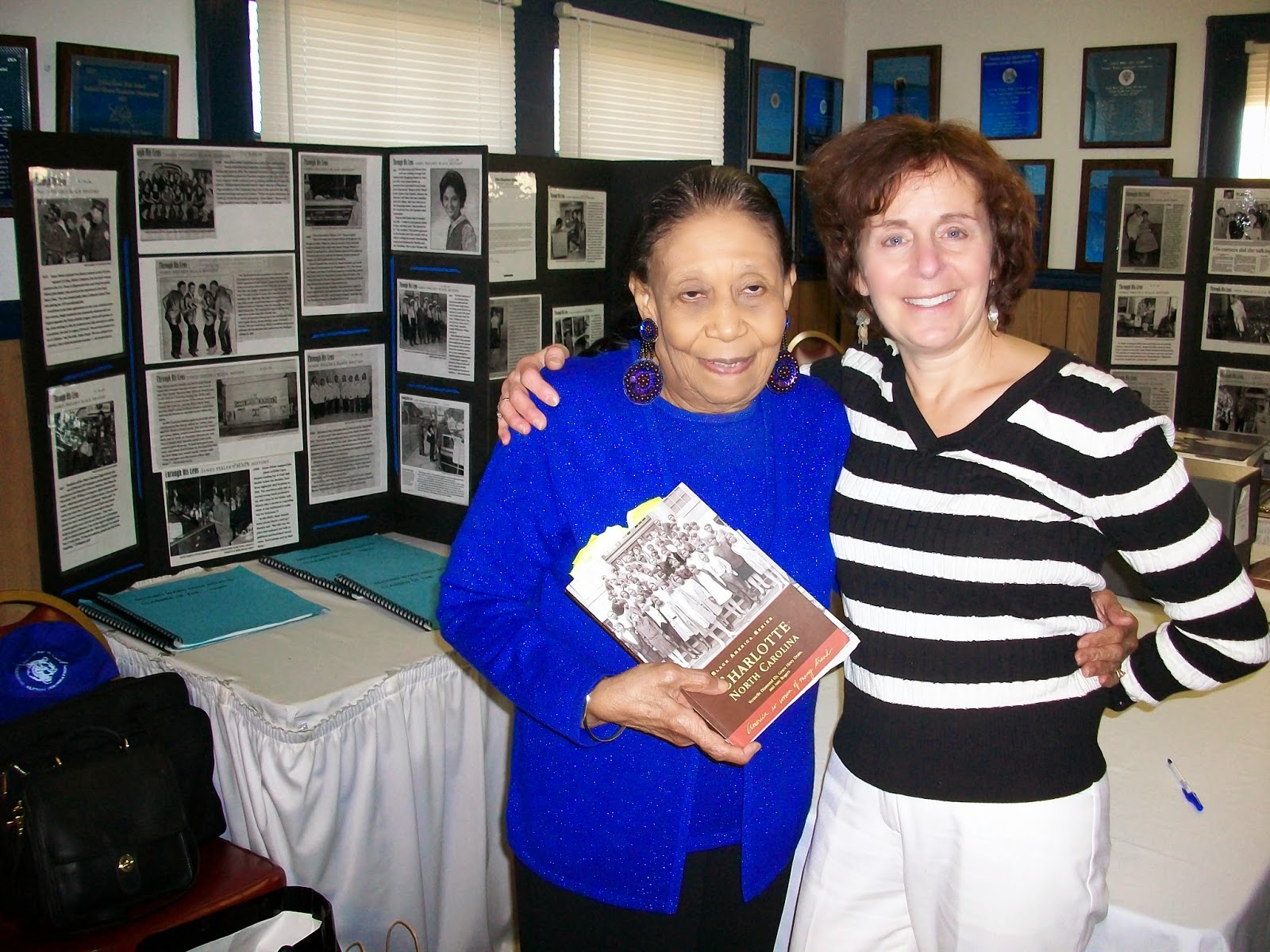
In 2014 she proudly showed me the exhibit she helped put together at Johnson C. Smith University honoring those who integrated the medical profession in Charlotte. 

Thereasea's list of accomplishments is long. She was a strong advocate for public health, helped register Black voters, served as president of the Greenville Historial Association, was active in the National Association of Negro Business and Professional Women, served on the board of the Greater Carolinas Chapter of the American Red Cross, and started the Black Heritage Committee in Charlotte. 

Whenever we talked she had a new cause or passion. She was concerned about local drug dealers and gun violence; government officials heard her concerns over the phone and through letters. She received innumerable awards for her service to the city of Charlotte, including the Order of the Long Leaf Pine (North Carolina's Highest Civilian honor) and the Maya Angelou/Elizabeth Ross Dargan Life Time Achievement Award. 

But man, oh man, she loved her hats.


Dozens and dozens of hats were stacked in boxes in her closets. She wouldn't go out without one on her head that of course, coordinated with her outfit.


One day we had a "photoshoot" and Thereasea enjoyed every minute of it.


So did I.

Thereasea was brave and courageous. The same things my protagonist, Kate Dinsmore, wants to be. The same things I want to be.

In 2013 her biography, T.D.'s Truths was published. She was so proud!


The author's note includes an observation that resonated with me:

I was mesmerized by our first meeting. I was struck not only by the power of her narrative, but her ability to cause transformational change in our community. Her nurturing attitude was characterized by unselfish caring, supportiveness, and a willingness to share her time.  

Thereasea's inscription to me reads:

Dearly Beloved Carol,

God has blessed me with your Friendship and Love. To God be the Glory and Power always. 


On a Personal Note


Thereasea quoted this Bible verse to me when she was talking about some of the prejudice she faced growing up:

"For I know the plans I have for you, declares the Lord. Plans to prosper you and not to harm you plans to give you hope and a future. Jeremiah 29:11

Certainly, the Lord used Thereasea's talents, energy, and love.

One time my husband and I took her out to dinner at a favorite fish restaurant. After that, she never failed to end our conversations by sending him her love. She always reminded me to give him a hug and a kiss; her love for family inspired me.

I will miss Thereasea's hand clasping mine when we gave thanks for our food. I will miss her hug and her voice. I will miss her encouragement and pride in what I was doing. 

And I will miss her beautiful hats.


"Precious in the sight of the Lord is the death of His saints." Psalm 116: 15.

Tuesday, June 24, 2014

Meet My Experts--Part I

As promised, today you're going to meet four women I have interviewed in the process of writing Half-Truths. I hope you'll enjoy a glimpse at their lives--"back in the day"-- and a few of their insights which have contributed to my book.

Thereasea Elder

T.D.'s Truths by Stanley and Janice Frazier
In 1962, Thereasea was one of the first black public health nurses to 
integrate the white nursing community in Charlotte.


Thereasea as an Army Cadet
in WWII

At JCU's exhibit honoring the African Americans who 
integrated the medical profession in Charlotte. 
June, 2014

Thereasea has given me hours of her time answering innumerable questions about her community growing up, what it was like going into a KKK community as a black nurse, and the challenges which Lillie and Kate (my characters in Half-Truths) could conceivably face. One day when we were talking about race she said, "None of us were the same color. 'If you’re black get back, if you're brown stick around, if you’re light and bright you’re damn near white.' This wasn't said in our home, but it was said the streets. Even though everyone was brown and knew in general what that meant – that white blood was there—the specifics wouldn’t have been shared."


Vermelle Diamond Ely


Vermelle Diamond as Miss Queen City Classic
1948

Vermelle and I at the Second Ward High School
Alumni House, 2010

Although she has been legally blind for all her life, Vermelle is co-author of the book, Charlotte, NC which is part of the Black America Series. When we talked about passing she told me, "Black girls who passed did it for their convenience. To get their hair done, go to the front of the line, get waited on, or go to eat in a certain restaurant. Their parents wouldn't have encouraged them." Speaking of my characters she said, "Lillie and Kate might have tried to see if Lillie could pass--just for fun and to see if she could get away from it." And for the record, "Lillie could have gone wherever she wanted with Kate because she was so light she could pass. Kate would have stuck out in the black community-but she would have been accepted there."


Daisy Stroud
Daisy and Gerson Stroud wedding
Circa 1948 


Outside their home
Circa late 1950's-mid 1960's


Daisy Stroud
December 2010

Daisy talked about the Cherry neighborhood (where Lillie lives): "There was a lot of pride there. They were the strivers who made sure their children had the opportunity to go to college." She remembered Bishop Daddy Grace: "He had beautiful light-skinned girls fanning him when he sat on his throne. It was an honor to be one of his girls; they were attractive and had good hair. They looked more like they were a different race." Similarly, "Young women who represented Second Ward High School were light-skinned….They were the privileged ones…We accepted in our race that some were like this. Then we would try to be like them because their beauty brought them privileges."
 
Dorothy Counts-Scoggins

In 1957, Dorothy Counts was one of the first black
students admitted to Harding High School in Charlotte.

She was met with jeers

and harassment. Her parents withdrew her
after four days. 


Photo taken at Johnson C. Smith University
where Dorothy grew up. 

June 2014
"I wanted to make sure that what happened to me at age 15 growing up in this community wouldn't happen to someone else." Dorothy has spent her life advocating for better education for all children passing along her father's legacy. "We knew separation was wrong but my parents taught me acceptance and tolerance. My father, a professor at Johnson C. Smith and a minister, wasn't able to do anything about the separation. But when Kelly Alexander, Sr. asked him if he would be willing to test the new civil rights legislation, (Brown v. Board of Education in 1954 outlawing segregation in schools), our family agreed."  
***********
I am indebted to these women--and the other experts who have shared their life stories with me. My work is a richer tapestry as a result of their honesty and forthrightness. 

THE NIGHT WAR: A MG Historical Novel Review

  By now you should have received an email from my new website about my review of THE NIGHT WAR by Kimberly Brubaker Bradley. (It'll com...