Monday, March 31, 2008

Brian’s Return


It's been a long time since I read Hatchet by Gary Paulsen, but I can still remember the eloquent detail Paulsen used to show Brian's survival in the wilderness. Since he first published that book in 1987, Paulsen continued the series with The River and Brian's Winter. I was not disappointed with the sharp account of Brian's return to the bush—authentic detail abound. The conflicts that Brian faces in trying to return to civilization are acutely captured in this short 2-CD audio book from Listening Library, but I kept thinking—how can this book end so quickly? I admit, I was hoping for a different ending. But after listening to the author's note at the end in which Paulsen talks about his own life and his difficulties coming back into "real life" as you and I know it, I realized that Paulsen wrote the only ending that would truly fit who Brian was (and who Paulsen himself is.) This series of books are unabashedly autobiographical and I would recommend them as stellar examples of an author mining his own life to create realistic fiction—an element which I talk about in Teaching the Story and in my workshop, Mining Your Students' Lives: Writing Rich Short Stories. Brian's Return
was released as Hatchet: The Call by Macmillan Children's Books in the UK on January 8, 1999.

Technorati Tags:
, , , ,

Wednesday, March 26, 2008

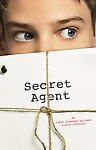
Secret Agent


I don't know if Robyn Freedman Spizman, or Mark Johnston, or the two of them together realized it would be fun to play with the words "secret agent," but as a team they have penned a fun, clever middle grade novel. I don't want to give away the story of Secret Agent
(Simon & Schuster, 2005), but suffice to say there is mystery, a touch of romance, and a bunch of very smart kids who work hard to help the main character, Kyle Parker, find a way to get his dad's much-rejected manuscript published. I enjoyed the clues which the authors dropped along the way, the red herrings, and the unique ways they described what was going on inside the characters. Check out this description of how Kyle's father feels when he meets a big time editor who wants his book: "Well, you can imagine the craziness going on inside Kyle's dad's body. It was like all of his organs decided to switch jobs. His belly was beating. His heart was hungry. His lungs felt like they might die of thirst. Something was up. Something big." p. 219

I'd recommend that teachers use this book to teach voice since the narrator has a very distinctive way of telling the story. It may be a quick read for some students, but both boys and girls will enjoy the plot twists and humor. Writers of all ages will enjoy the inside references to the publishing world. I look forward to reading Spizman and Johnston's next collaboration, Secret Agents Strike Back (Atheneum, January, 2008).

Technorati Tags:
,

Never say “No”


Once I refused to write about a particular glass artist for a prestigious children's magazine because I wanted to write about a different glass artist. I was consequently totally bummed when I held the published article (written by someone else!) in my hands, and thought, "I could have written this!" Ever since that day, I've tried to live by my "Never say 'No'" rule.

So, when my publisher, Julie Graddy of Maupin House, called a month ago and asked me to write 60 mini-lessons for their Craft Plus® Writing Program, I listened. It wasn't what I had thought that I would be writing next, but I remembered my rule and agreed. Maupin House had recently decided to add fictional narrative to the new sixth, seventh, and eighth-grade middle school Daily Writing Lessons portion of the program. And, although I have been working on a tight deadline, I have enjoyed the challenge of adapting the approach in Teaching the Story and for the Craft Plus® writing program.

If your school is looking for a comprehensive set of writing lessons, check out this series which is successfully used by teachers across the country. The innovative K-8 writing curriculum has been around for a few years, with improvements and additions made every year. This year, the teacher packs will be sold separately from the staff development/reference videos. Schools can buy a $199 teacher pack (which includes the grade-level Daily Writing Lessons, Curriculum Guide, and an integrated professional resource), for just one teacher, several teachers, or school-or district-wide. All assessed genres are covered with a spiraling, differentiated writing curriculum that emphasizes explicit instruction and authentic practice, includes assessments, and which incorporates writing process and conventions skills, too.

I am proud to be a part of a series initially developed by Marcia S. Freeman, and that now includes lessons by Sarah Stafford, Jeannie Keaton, Suzanne Wilkinson, Candice Allen Ray, Carol Winger, Susan Koehler, Susan Davis, Sheila Veatch, Allie Tyler, Tim Clifford, and pretty soon…me!

Technorati Tags:
, ,

Tuesday, March 25, 2008

Old Schoolhouse Magazine Review

Homeschool parents check this out! My book, Teaching the Story, recently received a great review from Susan Marlow of Old Schoolhouse Magazine. According to her, Teaching the Story is perfect for those of you who are working together in co-ops. If your group is looking for a fun way to teach writing and engage students from 4-9th grade (and practice all of those necessary writing conventions at the same time) then check out this review and click on Maupin House's website for ordering information.

Technorati Tags:

Saturday, March 22, 2008

The Red Pencil is Avi’s Best Friend Too


As many of you who have taken my "Red Pencil" workshop know, I believe that teachers must communicate to their students that real writers revise. This was confirmed when I heard Avi, one of my favorite authors, say at the South Carolina Reading Association that he revises each of his books 60-70 times! That's a fact to dangle in front of all your students. Here are other gems I gleaned that day; I hope you will share them with your colleagues and in your classroom:

  • "Your primary means to teach writing is to teach reading."
  • "Kids are impatient. They don't want to do the hard work of revision. It may look OK on the computer, but in fact it's not."
  • "Unless the writing is clear, engaging & interesting, the reader won't turn the page."
  • "At some point a person begins to think like a writer…when they have the capacity to see what's missing and add to it."
  • "No surprises for the writer? No surprises for the reader."
  • "Teaching reading and writing is like teaching a second language. When kids begin to write, they write like they speak; the grammar of talking is different than the grammar of writing."

And my favorite:

  • "Want to get higher grades? Read a book every week. Guaranteed."

This picture is proof that I can't go to a reading conference without buying a book—especially when signed by the author!


Technorati Tags:
, , ,

Wednesday, March 5, 2008

Aren’t teacher appreciation days when you receive a stack of homemade thank-you cards from your students the best? On Saturday night when I came home tired and bleary-eyed from my drive back from Myrtle Beach and SCMSA, I found a large white envelope in the mail. My exhaustion turned to excitement when I read the stack of colorful thank-you notes from the Holy Family University students who I had taught two weeks ago. I knew I had enjoyed my first opportunity to teach graduate education students about writing fiction in the classroom and thought that my audience did too, but these cards took away any remaining doubt. Ann Fedum wrote inside this card: “Dear Carol, I took a lot away from your workshop. I hope I can get students excited about fictional writing like you do. Thank you for sharing your insights of writing.”

I know April Fox was pleased because she wrote, “Your presentation was very helpful. The real-life examples were wonderful and will be engaging to the students. It was engaging to me and I went home and told my husband all about it!”

Mary Beth Dillon gushed, “It was great working with groups and brainstorming…illustrates the fun and the difficulty that students must feel too!”

Not to be out done, Jameson Atkinson wrote, “Thank you for taking the time to come and speak to us. It was very informative and I really enjoyed working in groups to do the writing. The book is proving to be very helpful and useful.”

I hope I’ll see Karen Grant again since she wrote, “Thank you for coming to Holy Family University to share your insight and expertise in writing instruction. I especially enjoyed the piece you did on character development! I hope to attend another one of your workshops in the future- maybe in my district!”

But, I have to admit that my favorite came from Ben Workman who drew this on his card and wrote: “Thank you for bringing Pompeii out of me.” He is an 8th grade social studies & science teacher’s aide for learning disabled students and that day had watched a film on Pompeii. In our class he had written the following description of a setting:

“The stench of the fuller filled the air as the hustle and bustle of Pompeii carried on its usual activities. The earth tremored quietly all morning. Items tumbled from rudimentary shelves and the people grew uneasy. The people felt the gods were angry. A great pressure was building under the mountain as the volcano roared to life. Suddenly, a giant explosion shattered the quietness of the day. The day turned to night instantly.”

That kind of writing makes a teacher VERY happy.

Here I am with Katherine Ruppell, Learning Resource Center Coordinator; Lori Schwabenbauer, Library Director, Holy Family University; and Dr. Lynn Orlando, Professor of Education.

Technorati Tags:
, , ,


Author Visits by State

If you are an author who is available for school visits, check out Author Visits by State written by Kim Norman. On the other hand, if you are a school administrator and want a "real, live" author to inspire your students, this is a handy tool to find those of us who love teaching young readers just as much as writing books. Technorati Tags:
,

Friday, February 29, 2008

My visit to Plumsteadville, Pa.

Despite icy roads and a 2 hour delay, my workshops at Plumstead Christian School on February 13 & 14th were well received. First, I taught the middle school faculty “How to Teach the Short Story” and we discussed the application to science, math, social studies, and Bible curriculums. That afternoon the faculty observed me lead the 7th graders through the process of creating an historical fiction character. The combination of first teaching the faculty and then allowing them to observe me working with their students reinforced the principles which I had just taught. I highly recommend this process for other upper elementary and middle schools which are looking for ways to improve their students’ writing.


The next day the their imaginations and created original science fiction characters. After some initial “Are you guys awake?” shyness, they ended up having fun 8th graders stretched as they worked in small groups and wrote descriptive paragraphs that were consistent and yet, out of this world. After a short break, I led the 6th graders through the process of creating a “non-criminal/everyday” mini-mystery. I had the opportunity to work/play with an Intelliboard for the first time; students had fun showing how their suspect was the “Whodunit”; and their teachers were impressed with their students’ ability to assimilate lots of material and write a short mystery in 90 minutes. What fun!
Technorati Tags:

, ,


A Small White Scar


If boys can keep reading beyond the first few chapters which tell the back story of "A Small White Scar", they will find rattlesnake bites, a dangerous flash flood, and a rodeo that is so real you can hear the calves bawling in their pens. Boys who like action from the first paragraph will have to wait for the story to unfold. But, it’s worth it. Readers will identify with Will, the 15-year-old protagonist who itches to carve a life out for himself separate from Denny, his mentally retarded twin brother. Both characters are well developed; Will’s anger is consistent with his life experiences and Denny’s thoughtful yet child-like responses are consistent with a person who has Down Syndrome.

My favorite line is towards the end of the book when their father reveals that although Will sees himself as Denny’s surrogate parent, Denny is the one who has taught Will about self-sacrifice, responsibility, and love. K.A.Nuzum
uses beautiful figurative language to describe Colorado in the 1940’s; teachers could use this book as a mentor text and ask students to find the similes and metaphors, as well as to identify the various types of conflicts which confront Will and Denny. Recommended for boys and girls from 6th grade and upwards. (Harper Collins, 2006).Technorati Tags:
, , , , ,

Monday, February 18, 2008

Charlotte Mecklenburg English Teachers Make Front Page News

On February 16 The Charlotte Observer ran a feature article about GranVille Caldwell and Ryan Marshall—two high school English teachers who have recently written and self-published a book of poetry about their experiences in the classrooms. According to the Observer,"Thoughts & Lamentations of Urban Education" is a "quirky 178-page saga of a year in the inner city schools, told through poetry, news flashes and takeoffs on pop songs."

A sample poem may make you want to purchase the book yourself:

Hair pulling, weave flyin'

Chairs broken, teachers cryin'

Security called, no one comes,

Got the teacher lookin' dumb

Fists flyin'—ooh la la!

Full-fledged brouhaha


This is from the book description on the website accurately reflecting Marshall's (and unfortunately other educators') experiences:

"Student bites teacher; student spits into administrators face; students openly swear at teacher; teachers are told to raise test scores or look for employment elsewhere." More information on the book is on Harding High School's website; Caldwell's school.

So far, Caldwell's assistant principal has been supportive of the book; I hope it stays that way. I applaud Caldwell and Marshall for not only voicing their thoughts about the problems they see in the school system, but trying to make a difference in their students' lives. They are examples of teachers who care about their students and are also modeling another important precept: "Your voice, expressed through written language, matters." Kudos to them.


Friday, February 15, 2008

Who reads for pleasure anymore?

According to International Reading Association president Linda Gambrell in a her recent column in Reading Today, the number of teens and young adults who are reading just for fun is decreasing. Citing data from a National Endowment for the Arts report released in November 2007, Gambrell recounted these unsettling statistics:

  • Nearly half of all Americans ages 18-24 read no books for pleasure.
  • From 1984-2004 the percentage of 13-year-olds who reported that they read for fun declined from 35% to 30%.
  • For 17-year-olds the decline was from 31% to 22%.

I know there are a lot more media options competing for a young adult's attention than when I was in high school and college, but as a lifetime reader, I find these results disturbing. A student who doesn't escape into a world of science fiction, fantasy, or history; or doesn't seize the opportunity to read poetry, plays, or biographies; or never ventures into Aztec ruins, Scottish castles, a coral reef, or the internal mechanisms of a modern machine-- is missing out on a galaxy of worlds found in the pages of books.

But not only that, students who don't take the time to read "just for fun" will most likely perform lower in school and on the job.

Consider Gabrell's insightful observations: "Individuals who engage in reading for pleasure are better readers and writers than nonreaders. Children and teenagers who read for pleasure on a daily or weekly basis score better on reading tests than infrequent readers. Frequent readers also score better on writing tests than infrequent readers."

And as I've mentioned on this blog previously, Gabrell points out that poor reading skills are surfacing in the marketplace also. "Employers now rank reading and writing as top deficiencies in new hires. One in five U.S. workers reads at a lower skill level than his or her job requires."

Although I may be preaching to the choir on this one, consider the impact we'd have if we each recommended a book a day to a child, adolescent, or young adult. It doesn't have to be something fancy or heavy duty—just a book that would pique their interest. I suspect we'd all enjoy the effects which would boomerang back to us in the classroom and work place.

Technorati Tags:
,

THE NIGHT WAR: A MG Historical Novel Review

  By now you should have received an email from my new website about my review of THE NIGHT WAR by Kimberly Brubaker Bradley. (It'll com...