Monday, November 4, 2013

Of Violins and Orchestras


Congratulations to Joyce Hostetter, who recommended Yankee Girl to me. She won her very own autographed copy! 

Many years ago my husband and I spent time and money on violin lessons for my daughters. By the time they hit middle school, other activities became more important and they lost interest. Everyone realized that there was a lot more involved in playing a violin than listening to Suzuki tapes in the car every day.  
Lisa, Lori, & Lydia Baldwin
fiddling around 17 years ago

But that experience probably was the reason why, when my brother emailed me recently and asked, “So, when is your book coming out?” I wrote back with the following answer:

 “Thanks for your interest, but I am a long way from holding a hard copy of Half-Truths in my hands. Think of it this way: you don't sit down to learn how to play a violin and automatically start playing in the orchestra.

“I have learned a tremendous amount in the years I have been working on this book, but still have a way to go. It's like I created my own master's degree in writing. I am start a new draft which has potential to be "THE" story. Remember, I made my job much more complicated by deciding to tell the story from two points of view; that’s very hard to pull off for a brand new novelist. 

“WHEN I am done with this draft I will need to polish it before submitting it to an agent. Hopefully by then it will be in great shape and I’ll find someone to represent me. But then that agent will shop it around to publishers. After a publisher accepts it (and who knows how long that process will take!)  it’ll be two more years before the books come out. That will be the time for edits, cover design, and creating a marketing plan. 

"It's a long process, but by the end, I hope to be playing in the symphony!”
The Charlotte Symphony
My brother, like many who aren’t in the writing/publishing industry, had no idea how long it takes to birth a book--especially a first one when a novelist is learning so much about characterization, point of view, plot, etc. To be honest, I didn’t either. But as I look back on the conferences, writing workshops, and classes I have taken I recognize that in fact, I have been teaching myself how to write a novel. No small task.

Now, pardon me, while I get back to work. 

Anybody seen my rosin?


Wednesday, October 30, 2013

Yankee Girl and a Giveaway


My apologies if you receive this blog post twice. I am reposting it since it didn't seem to get sent out  the first time and I wanted you to have a chance to win this fantastic book.

Two girls. One white, one black. The South and civil rights. Given my own work-in-progress, Half-Truths, how could I not read Yankee Girl?


Drawing upon her own childhood experiences, the author, Mary Ann Rodman, writes in her author's note: "Like Alice (the protagonist), I was the daughter of an FBI agent. In the summer of 1964, my family moved from Chicago to Jackson, Mississippi. My father was one of 150 special agents ordered to Mississippi by President Lyndon Johnson." These agents were assigned after three young civil rights workers who were helping African Americans register to vote, disappeared.

As the title suggests, Yankee Girl is 6th-grade Alice Ann Moxley's story. Her "new normal" opens with the moving truck unloading her bike in front of her new home. Fresh from Chicago, she encounters the Southern drawl, pimento cheese, and whites who call colored peoplenigras. Her parents are sympathetic to civil rights and Alice is torn between her concern for Valerie, the lone African American girl who integrates her school, and wanting to make friends with the kids in her class who ostracize and mock Valerie. 

Alice's internal struggles make up a good part of the novel as the reader sees Alice's awakening to what Valerie experiences. After Alice doesn't stop her classmates from sending Valerie mean Valentines, Valerie stays home from school. When she calls Alice ostensibly to get their math homework, Valerie shares some of her anxiety about her father's upcoming civil rights event with Dr. Martin Luther King. After Valerie shares some of her painful childhood experiences, Alice dreams thatEmmett Till challenges her to stand up for her friend. 

After Valerie's father dies, she moves out of town and Alice regrets never telling her that she was sorry for not befriending her. But in the final image, Alice moves on to junior high where she meets Valerie's cousin. Despite the whispers of "Nigger lover, nigger lover" all around her, Alice brings the new girl to her cafeteria table, where two of her friends are waiting.

Mary Ann Rodman did such a wonderful job of integrating historical fact with fiction, that I tried googling Valerie's father, Reverend Claymore Taylor. When I couldn't find anything about him, I checked with Mary Ann. She wrote:

"Reverend Taylor is a combination of Medgar Evers and a man named Wharless Jackson, who was my dad's last unsolved case (and never will be solved since all the informants and witnesses are dead or deep into hiding so they will never be found.) Medgar Evers was killed in front of his three children in the driveway of his home (he was the Ms. state president of the NAACP). Jackson was a civil rights activist who worked at the Goodyear Tire plant in Natchez, Ms. Mr. Jackson was promoted to a supervisor's position, the first for a black man in that plant. That night when he got in his truck to go home, he discovered that 'someone' (most likely the KKK) had wired his ignition with dynamite. There was nothing left of him."

At the end of the author's note Mary Ann writes: "My mother once said, 'You know, someday you'll be glad you lived in this time and this place. You are seeing history in the making. You can tell your children and grandchildren about it.'

She was right."
Mary Ann Rodman at 10-years-old


**************

Ms. Rodman is giving away an autographed copy of Yankee Girl. Leave a comment and I'll enter your name in the drawing. I'll pick a winner on Monday, November 4. Please leave your email address if I don't have it.

Congratulations to Lisa Fowler who won last week's giveaway, Hill Hawk Hattie.

Monday, October 28, 2013

Yankee Girl and a Giveaway!

Two girls. One white, one black. The South and civil rights. Given my own work-in-progress, Half-Truths, how could I not read Yankee Girl?


Drawing upon her own childhood experiences, the author, Mary Ann Rodman, writes in her author's note: "Like Alice (the protagonist), I was the daughter of an FBI agent. In the summer of 1964, my family moved from Chicago to Jackson, Mississippi. My father was one of 150 special agents ordered to Mississippi by President Lyndon Johnson." These agents were assigned after three young civil rights workers who were helping African Americans register to vote, disappeared.

As the title suggests, Yankee Girl is 6th-grade Alice Ann Moxley's story. Her "new normal" opens with the moving truck unloading her bike in front of her new home. Fresh from Chicago, she encounters the Southern drawl, pimento cheese, and whites who call colored people nigras. Her parents are sympathetic to civil rights and Alice is torn between her concern for Valerie, the lone African American girl who integrates her school, and wanting to make friends with the kids in her class who ostracize and mock Valerie. 

Alice's internal struggles make up a good part of the novel as the reader sees Alice's awakening to what Valerie experiences. After Alice doesn't stop her classmates from sending Valerie mean Valentines, Valerie stays home from school. When she calls Alice ostensibly to get their math homework, Valerie shares some of her anxiety about her father's upcoming civil rights event with Dr. Martin Luther King. After Valerie shares some of her painful childhood experiences, Alice dreams that Emmett Till challenges her to stand up for her friend. 

After Valerie's father dies, she moves out of town and Alice regrets never telling her that she was sorry for not befriending her. But in the final image, Alice moves on to junior high where she meets Valerie's cousin. Despite the whispers of "Nigger lover, nigger lover" all around her, Alice brings the new girl to her cafeteria table, where two of her friends are waiting.

Mary Ann Rodman did such a wonderful job of integrating historical fact with fiction, that I tried googling Valerie's father, Reverend Claymore Taylor. When I couldn't find anything about him, I checked with Mary Ann. She wrote:

"Reverend Taylor is a combination of Medgar Evers and a man named Wharless Jackson, who was my dad's last unsolved case (and never will be solved since all the informants and witnesses are dead or deep into hiding so they will never be found.) Medgar Evers was killed in front of his three children in the driveway of his home (he was the Ms. state president of the NAACP). Jackson was a civil rights activist who worked at the Goodyear Tire plant in Natchez, Ms. Mr. Jackson was promoted to a supervisor's position, the first for a black man in that plant. That night when he got in his truck to go home, he discovered that 'someone' (most likely the KKK) had wired his ignition with dynamite. There was nothing left of him."

At the end of the author's note Mary Ann writes: "My mother once said, 'You know, someday you'll be glad you lived in this time and this place. You are seeing history in the making. You can tell your children and grandchildren about it.'

She was right."
Mary Ann Rodman at 10-years-old


**************

Ms. Rodman is giving away an autographed copy of Yankee Girl. Leave a comment and I'll enter your name in the drawing. I'll pick a winner on Friday, November 1. Please leave your email address if I don't have it.

Congratulations to Lisa Fowler who won last week's giveaway, Hill Hawk Hattie.

Monday, October 21, 2013

Hill Hawk Hattie and a Giveaway!


Hill Hawk Hattie by Clara Gillow Clark, fiction for upper elementary school girls, tells the beautiful story of 11-year-old Hattie Belle in the late 1800's. With her mother dead, Hattie is left alone with her father, a rough logger who makes his living by rafting the logs down the Delaware River. 

One day her father comes home and announces that Hattie is going to pass as his son and join him on the river. Concerned that she's no longer "his girl," Hattie still settles into the logging routines and befriends 13-year-old Jasper, another logger's son. 

Clara Clark describes the trip down the Delaware in vivid detail. The reader gets to experience the perils of riding through rapids on a raft that can break apart any minute and how fearful Hattie is that the other men will discover her identity and turn against her father. 

Towards the end of the book Clark uses the metaphor of Hattie's journey to show Hattie's inner life. In reflecting on her mother's death Hattie confides to Jasper, "I think my ma got stuck in her mind somewhere between her fine home in Kingston and our hills. Somehow, I think it just pulled her apart, like a raft breaking apart on rocks you can't see." (p. 146)  

After they get off the river, Hattie discovers that her father has a different plan for her life.  A river of thought spun around in my head, floated together, fit into a pattern like logs and lash poles, pieces that shaped the story of our journey, mine and Pa's. "You taking me to Kingston, Pa?"
Young and old enjoy Hattie's adventures! This is
the infamous Uncle Bob devouring the novel in
two days. 

When I received this book several years ago I thought I'd give it away on this blog. But after my husband's uncle read it and recommended it, I fell in love with it too. Now I have a 7-year-old granddaughter who I think will also love it. Fortunately, Clara is willing to give away an autographed copy herself.  

Clara also now makes felt dolls of her characters! This set of Hattie and Jasper dolls, plus the teaching guide sells for $19.95 plus postage.


And last, but not least, Clara, who is presently teaching at several Highlights workshops, also offers critique services at reasonable rates. You can best reach her at this email address.  


**********
To enter this contest, just leave me a comment and your email address if I don't have it. Clara and I would love it if you shared this on Facebook or Twitter too.  And since my blog followers now number 99, if you become a new follower, I'll enter your name twice, and I'll reach the 3-digit mark! 

I'll draw a winner on Friday, October 25th. Thanks in advance for entering!

Monday, October 14, 2013

I'm On Tour!

Last week Becky Shillington tagged me on her blog tour and as you'll see at the bottom of this post, I'll tag three more writers. I hope you'll enjoy this post and check out my fellow bloggers.


What are you working on right now?
As many of my faithful blog readers know, I'm writing my first work of fiction, Half-Truths. This link will take you to a list of posts about the evolution of my book.

Although I've been working on the story for at least six years--my first blog post about researching the novel was in 2007--the story actually started out as a picture book about Wing Haven.  I fell in love with this bird sanctuary and the history surrounding it when  my youngest daughter and I visited when she was 5. (She will turn 22 soon, so you do the math!!). 

There were too many stories to fit into a 2000-word-picture book (that was before picture books had a 6-800 word count) and the book morphed into a book for boy readers. I spent months devising a book based on a real story of a young boy rescuing a robin and bringing him to Wing Haven. When my son-in-law informed me that no boy would read a story about a robin--I went back to the drawing board.  

This time, I started imagining a young woman (Kate Dinsmore) who moved from Cheraw, South Carolina into the high society of Myers Park. Her world radically changes when she meets the light-skinned granddaughter (Lillie Harris) of her grandmother's cook. After writing the book from Kate's POV, Mary Kate Castellani an editor at the 2011 SCBWI-Carolinas conference, recommended writing it from both girls POV. I completed that draft this summer and have begun the third "major" draft (there were many starts and stops that I haven't counted in that number!). I am deepening the characters and working on both girls' story arcs. 


How does Half-Truths differ from other works in its genre?
As far as I can tell, there isn't another book that is set in Charlotte on the eve of the civil rights movement. In addition, I am hoping that the alternating points-of-view will deepen both white and black readers' perspectives on race, prejudice, and privilege. 

Why do you write what you do?
Initially, I was intrigued with the challenge of finding the story in my own backyard that Carolyn Yoder posed to my friend, Joyce Hostetter. I also love seeing how the actions, thoughts, and decisions of previous generations influence a person's "now." And I think it's pretty cool to visit places that in Charlotte and think, "My story happened here."

How does your writing process work?
Research (reading books about the era, civil rights, Charlotte history, dialect, fashion) and interviewing experts--folks who lived during this time period--are intermingled with my writing. I actually do less research now, but still find libraries I need to visit and people I want to talk to. I like to write for a few hours in the morning, but my days don't always unfold like that.  

Any departing words of wisdom for other authors?
Don't give up, seek and receive input from writers who you trust, and believe in your story. But most of all, 
      PERSEVERE!

A path in Wing Haven that Kate and Lillie probably walked on
as they persevered in their goal of friendship.
Here are three more bloggers who I hope you will visit as they go on tour next:

Janice Green whose blog combines family entertainment with Bible lessons. 
Becky Levine who has a blog full of writing tips. 
Janie Sullivan who is the director of the Center for Writing Excellence, runs writing contests, and sponsors writing classes.  


Tuesday, October 8, 2013

Guest Blogger for Write2Ignite

Last year at this time I attended the Free Expressions seminar, Your Best Book. If you missed my recap of that great writing workshop, today I am guest blogging about it at Write2Ignite. I hope you'll click on over to learn more about "Creating Voice and Deep Point of View."

Lorin Oberweger, Brenda Windberg, Emma Dryden, and me!

**********************************************
Congratulations to Gail Hurburt who won Lisa Kline's book, Season of Change and thanks to all who entered. Stay tuned for more giveaways later this month: Hill Hawk Hattie by Clara Gillow Clark and Birmingham, 1963 by Carole Weatherford. 

Tuesday, October 1, 2013

"What Else Do You Have?'" - Part II and a Giveaway

Last week Lisa Kline explained the editorial process behind creating her Sisters in All Seasons series. Today she shares more of that process as well as her own personal adventure writing the books. 


In the past, I have focused on my characters, let their actions and dynamics unfold, and shaped the story as I have gone along. In Write Before Your Eyes, for example, I had the idea of a girl who found a magic journal in which everything she wrote came true, and when I started writing all I knew was that what she wrote would get messed up and cause lots of trouble. I worked out the exact nature of that “trouble” as I wrote. I practically wrote myself into a corner, in fact, and my fearless writing buddies, Chris Woodworth and John J. Bonk, helped me brainstorm my way out of it!

I was not able to work that way on the Sisters in All Seasons series. I simply did not have the luxury of time. Each book had to be written in about seven months, and one I ended up having to write in less than five. I had to write synopses and plan the story ahead of time. I had to know where Stephanie and Diana would be at the end of each book before I started writing. In some series, the characters don’t age, but in mine, they do, so that was a complicating factor. I determined that to finish I would need to write at least two pages a day. On the last book, I wrote three. It was stressful, but also very good training.

Of course, I wasn’t in it alone. I had a lot of help. My editor and I had a great email relationship, and I sent questions to her as I was writing, and she’d always answer promptly. We did quite a bit of brainstorming via email. She was always encouraging and supportive. My agent helped navigate the business part of it. And I was so grateful to have Chris Woodworth, my loyal writing friend, read and comment on each book as I finished it. She came to know my characters really well. I also asked my mentor from Vermont College of Fine Arts, Ellen Howard, to coach me on the last book, and her help was invaluable. Another resource for me was Martha Alderson, who calls herself “The Plot Whisperer.” She has made a series of videos and I watched them over and over as I produced my daily pages.

Working on the series was a real adventure. With each book, I discovered new aspects of my characters – I discovered, for example, more about Stephanie’s difficult relationship with her mother. Stephanie had a telephone conversation with her mother in the first book, but she didn’t appear. She was in only one flashback. However, in a later book, Stephanie’s mother became a more prominent character, and I had a chance to flesh her out more. This was a lot of fun. It was as though I’d had a brief glimpse of her at an earlier time but now had a chance to study her more deeply. It was like walking through a foggy wood and gradually having the fog clear in various places.

While I initially panicked, working on this series ended up being a gift in so many ways. I loved my two characters; each of them was a piece of me, I suppose. I got to send them to my favorite places in North Carolina, and let them have adventures with wildlife that as an animal lover, I’ve always wanted to have. Several young readers have told me how much they love the books, and that has warmed my heart. This series has truly been a labor of love.  

***********

Lisa is sharing this love by giving away a copy of the fifth book, Season of Change

Leave me a comment by Saturday, October 7, and I'll enter your name in this contest. If I don't have your email address, make sure you leave that too!


Friday, September 20, 2013

"What Else Do You Have?" A Conversation with Lisa Kline


In the next two blog posts Lisa Kline, author of the Sisters in All Seasons books shares how this five book series was born. 

I imagine that many series first come into being as a proposal with a synopsis for each book. Mine didn’t come about that way.

Several years ago, I wrote a book about two stepsisters, Stephanie and Diana, on vacation at a mountain ranch with their newly married parents. My publisher wasn’t interested. I sent it to a few more publishers, and they weren’t interested, either. With great sadness, I put those characters behind me, wrote some other books, and a couple of years went by.

After my agent sold Write Before Your Eyes, she said, “What else do you have?” And I told her I had this manuscript about two stepsisters. “Send it to me,” she said. I had a rush of emotion.  I wanted the manuscript to have another chance, but didn’t want to get my hopes too high. But after she read it, she suggested I change it from third person to first. I balked. I had so carefully chosen third when I wrote it. But I decided the change was worth a try. This was a fairly extensive process, much more than just changing pronouns. It involved “revisioning” everything and working to differentiate the girls’ voices better. Making that change brought me closer to both characters. It seemed to open channels of understanding for me. Only a few months later, my agent sold the manuscript to Zondervan. But they didn’t just want Summer of the Wolves. They also wanted three more books about Stephanie and Diana. And their schedule called for me to write each of the books in about seven months.

It was a surreal feeling. I was exhilarated and panicking at the same time. I’d never written a book that fast before. Eleanor Hill, my first book, which was historical fiction, took about three years. The others had taken about two years apiece. But wasn’t this what I’d always dreamed of? And the hardest part, the character development, was already mostly done. No matter how intimidated I was, how could I say “no?”

The pub board immediately asked me for ideas for settings and plotlines. I spent several weeks feverishly brainstorming. I knew that I didn’t have time to actually visit locations for the books, so I decided to write about places I’d already been. There was a wildlife adventure in Summer of the Wolves, so I decided each book should have a wildlife adventure. And somehow the idea that the books might take place in different seasons formed. So my editor and I hit on the title for the series – Sisters in All Seasons.

I bombarded my agent and writers’ group with scenarios and they helped me refine them. After I submitted these ideas to the pub board, they chose their top three. My editor then told me that the covers for all of the books would be shot over a two-day shoot so that the girls they’d chosen as models for Diana and Stephanie wouldn’t age too much between covers. So, the covers were shot before I had written the first words of the books. I’ll be honest, I was freaking out!

Lisa will continue her story next week and will also be giving away a copy of the last book in this series, Seasons of Change


If you are attending the SCBWI Carolinas annual conference, Lisa and her good friend Chris Woodworth, are co-presenting a workshop on "Characters we Care About."

Monday, September 9, 2013

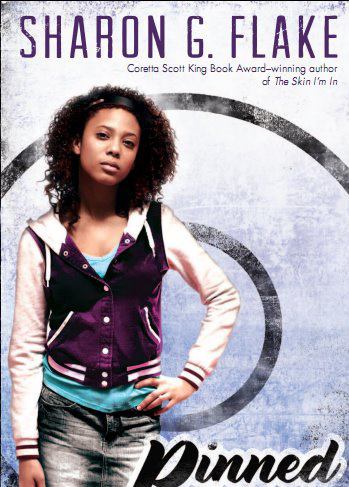
Character + Plot = Pinned

Congratulations to Jeannie Smith who won Deanna Klingel's book, "Cracks in the Ice."

Writers have ongoing debates as to which is better, a character-driven story or one that is plot-driven. Obviously, both well developed characters and engaging plots are vital for a successful novel. As Rebecca Petruck said in a recent post, "Character and plot are Siamese twins. We must have plot to navigate so that we can experience how it would feel, but we only care about plot in how it reveals a character’s experience and feelings (her reactions)." 

I've been working on my two protagonists' character arcs for Half- Truthsdeepening my knowledge of who they are, and asking them each about what they want and why (yes, novelists do "talk" to their characters!).  In the process, I am discovering just how much character influences plot and visa versa.

So, when I read (or listen) to a book, I am trying to figure out how the author has brought her characters to life and what their journey--or character arcs--are. 

Enter the latest book I have listened to:  Pinned by Sharon Flake. I thought as an exercise for me and to give you a taste of this excellent young adult book, I'd give a brief description of the characters and their arcs. But don't worry, I'll try hard not to include any spoilers. 


Adonis Miller is a brilliant 9th-grader who manages the school's wrestling team, tutors fellow students, and volunteers at the library--all from his wheelchair. He values honesty, hard work, and has little patience for students who don't apply themselves in school. 

Autumn Knight is the only girl wrestler on the school team, reads below her grade level, hates math, dreams of opening a restaurant, and loves Adonis. She is attractive, friendly, and brutally honest. 

The book opens by showing each character's normal: Adonis is busy with school work and managing the wrestling team and is annoyed by Autumn who will not leave him alone. Although Adonis detests girls who aren't smart, Autumn plagues his dreams. Adonis wants to do well in high school so he will be admitted to an excellent college. 

Autumn lives to wrestle; she is good at it and knows it. She dismisses her academic struggles although in the background, her parents (who also have difficulty reading) are beginning to pressure her to bring up her grades. Autumn wants to excel at wrestling, get Adonis to like her, and wishes that her failing grades wouldn't matter. 

Told from alternating points-of-view, Flake shows how both Adonis and Autumn seek to obtain their goals and are frustrated either by themselves (Autumn's inability to focus on her work leads to poorer grades and removal from the wrestling  team) or by each other (Adonis wants not to like/be seen with a girl like Autumn but is drawn to her). 

Although Adonis feels as if he is perfectly adjusted to the fact that he was born without legs, memories of a time when he was totally helpless plague him. Autumn matter-of-factly accepts his disability and texts him,

"Disabled is me not being able to read. And you with out legs. So (u+me) = perfect. Right?"

Her honest observations about how they are both "stuck" in their predicaments helps Adonis get out of his friendless world. Flake avoids the simple solution of Adonis becoming Autumn's tutor, but allows Autumn to figure out how (and why) she will learn how to read.  

Read this book to enjoy a powerful novel with wonderful, authentic voices. And after you do, you'll understand the title of this blog.

Tuesday, September 3, 2013

Putting Your Best Query Forward--and a Giveaway!

As promised, this week's blog is brought to you by Deanna Klingel. When I read Deanna's Facebook post about how a query letter resulted in a contract for three picture books that "had been in her drawer for 25 years," I asked her to be a guest blogger. Without further ado, here are Deanna's thoughts about writing a query, followed by a portion of her winning query. 
Deanna lives and writes in the mountains of western North Carolina, with husband Dave, and golden retriever, Buddy. Her blog "Selling Books" chronicles her adventures while selling books.

There’s always a short cut. You can steep a perfect cup of tea, or you dunk a bag in microwaved water in 45 seconds. Not a perfect cup, but you can drink it. You can let your yeast dough rise under a damp cloth or you can pop a freezer loaf into the oven. It tastes like bread. But it won’t have that memorable lasting aroma. Some things just take longer if you want perfection.


For writers who spend months perfecting their manuscript, the short cut is often the query letter.  Recently I received a reply from a submission. It was rejected because they have that line through 2015. However, the letter raved about the query letter. Her opening line was congratulations on a very nice query letter. Well done, she said; a pleasure to read; an excellent query letter. I felt like I’d won the lottery. What made this query stand out and get this publisher’s attention? I compare it to many others I’ve written, and see hardly any difference; nearly the same, yet not quite.

Two weeks later a publisher accepted a three-book series for children based only on the query letter. She hadn’t seen the manuscript. When I compare this query to previous ones, I don’t see any one thing stand out.

It’s the overall package I think makes the difference. It’s the difference between a steeping and rising or a quick trip to the microwave that makes a difference. It’s all the small, seemingly insignificant things, including format and tone. It’s following to the minuscule guideline, and the same amount of polish as you use on a manuscript.

Most submissions are electronic. The email habit is a quick memo, no proofing, no format, no formality; the short cut. The query is not the place to short cut. Everything depends on its perfection.

**************
(Please note that Deanna mentioned an illustrator because the publisher had requested input on illustrations, she had previously worked with him, and he was known to the publisher. It's VITAL that you play by the rules--and completely follow a publisher's guidelines.)

Dear __________Publishing: 

Please consider the following works which are completed and edited for line and content.

Little Beth Books

This is a series of storybooks for very young children. Beth's Birds is a "bird identification" book with little Beth physically displaying the various bird's attitudes. Beth and the Night is an explanation of the night noises that are frightening until she knows what they really are. Beth's Backyard Friends is an identity book of the small mammals that frequent backyards, told by Beth, of course.

Beth's Birds has been illustrated by an artist in Melbourne, Australia. They are beautiful chalk drawings and remarkable birds. However, if the books are to be done as a series, they should have all the same artwork done by the same artist. I do have an illustrator to work with. He's also created two of my covers.

***********
To celebrate her winning query, Deanna is giving away a copy of her young adult book, Cracks in the Ice

Leave me a comment with your email address (if you don't think I have it) and I will put your name in the hat. Winner will be drawn on Saturday, September 7. 


THE NIGHT WAR: A MG Historical Novel Review

  By now you should have received an email from my new website about my review of THE NIGHT WAR by Kimberly Brubaker Bradley. (It'll com...