Monday, March 28, 2016

The Hired Girl: A Review and an Audio Giveaway

One of the highest compliments you can give an author is to finish their book and want to read it all over again. In the case of The Hired Girl, by award-winning author Laura Amy Schlitz, that's exactly what I did; happily spending hours on a recent car trip reliving the world of Janet Lovelace, hired girl. 
Pour yourself your favorite beverage and take a few minutes for this review. I'll try hard not to include too many spoilers. 

Fourteen-year-old Janet, who changes her name from Joan Skraggs when she arrives in Baltimore in July, 1911, is a character female readers of all ages will enjoy. Raised on a Pennsylvania farm, there is little she cannot do-- pluck chickens, beat rugs, or put up food for the winter. But her insatiable desire to become educated, "noble and courageous" irritates her father. When he burns her books because he believes reading takes up too much of her time, Janet receives the catalyst she needs to leave home.  

Janet's beloved school teacher's end-of-the-year gift is a journal. This diary becomes Schlitz's vehicle to tell Janet's story. Although some readers might find this contrived, I loved it. I was totally immersed in her deep POV. Janet's longing for her dead mother; frustration over her father and brothers' rejection; desire to be a "proper young lady" who frequents the opera, museums, and fashionable department stores; her head-over-heels infatuation for a most unsuitable love interest; her melodramatic observations about herself and other characters; plus her plucky and hopeful attitude, create a totally authentic and often humorous young woman.

She comes to Baltimore to find employment as a hired girl. She arrives too late to find a room in a boarding home and resigns herself to having to spend the night on a park bench. Fortunately for her, she meets a young gentleman, Solomon Rosenbach, who brings her back to his home with the hopes that his mother will allow her to stay. One of my favorite lines is when Janet waits outside their home and she hears Mrs. Rosenbach say to her son, "Oh Solly, it used to be cats and dogs." That gentle, motherly reproof tells the reader a lot about Solomon and his mother; and is in fact, something which haunts Janet later.

The Rosenbach's elderly housekeeper, Malka, is most loved by the family but can no longer do heavy housework. Although Janet is Catholic and Solly's parents are concerned she might "have anti-semitism" (despite the fact that Janet has no idea what the word means but is willing to learn it if that would make her a more desirable worker) she is hired to help Malka. Mrs. Rosenbach warns her that she'll need to be tactful so Malka (who Janet initially thinks of as a "black fly of a woman") doesn't feel old and unwanted; Janet admits that tactfulness might not be one of her strengths. 

Alas, this is true. Janet's lack of tact (sprinkled with a healthy dose of hired girl eavesdropping) gets her into trouble. 

She finds an ardent supporter in Mr. Rosenbach to whom she pleads, "I want to better myself." He admires her drive and supports her by giving her access to his library. "Edifying" books "take her into another world" where she imagines seeing the cities, monuments, and architecture pictured in The Picturesque World. 

Janet battles with the fact that she is seen only as the hired girl and her own desire to be more than that. Recounting a scene where she attempts to intercept Solly so she can thank him for rescuing her she says, "I tried to express my gratitude in elegant phrases so he would see that even though I am a hired girl, I am not just a hired girl." She adds, "I could tell he wanted me to stop talking."
 Later in the book she observes, "I don't think of myself as a hired girl. After all, I'm not going to be a servant all my life. I plan to be a teacher someday." 

I loved Janet's evaluation of her world: "The best thing about my servitude is that people are pleased with me...So different than life on the farm where no one was pleased and things never stayed clean."

And I appreciated her observations of the people around her. This is her description of Mimi, the Rosenbach's youngest daughter: 
How can that child look pretty when she is not? It's partly the way she moves, I guess. She's so light on her feet. She's like a bit of bright paper being blown over the grass. I wish I were like that. 
 As a young Catholic who has never met a Jew ("except for Rebecca in Ivanhoe," as she tells the Rosenbachs), she is introduced to the world of a different religion. Since I am a Jewish Christian, I thought readers would get an interesting window into a religious Jewish household--complete with a young Catholic's perspective on the High Holidays, keeping kosher, and yiddish idioms (shiksa, anyone?). Although I am not Catholic, it appears that Schlitz did her homework in portraying that part of Janet's background and practices accurately. 

I could go on and tell you about how Janet's love for romance leads to her "eternal embarrassment" and "mortification" or how the reader glimpses the fulfillment of Janet's desire to become an educated woman. But, I don't want to spoil the book for you. Let me just say that despite Malka's grim and at times sullen exterior, she is the secondary character whose love for Janet brings me to tears, even now as I write this review. 

Homeschool educators and teachers would find this an interesting book for studying the time period, comparative religions, as well as for analyzing the author's world view.

This audio book is performed by talented Rachel Botchan who does an outstanding job with all the different characters. Even though I was tempted to keep this book and listen to it again, I'm going to give it away courtesy of Recorded Books  (valued at $88.00) to one fortunate blog reader. I will pick a winner on Friday, April 1. I will enter your name for each time you share this on social media, and an additional time if you become a new follower. MAKE SURE you leave me your email address if you are new to my blog and tell me what you have done. 

Monday, March 21, 2016

Plotting," Pansting", and the Act of Discovery

Congratulations to Linda Phillips who won WONDER and Mary Jane Nirdlinger  who won ORCHARDS. Thanks to all of you for leaving comments here and in Talking Story. More great giveaways coming up!

In the ongoing conversation about plotter vs. panster I've discovered that I work somewhere in between these two camps. On the one hand, I can't work without an outline next to my computer.


My current 33 page
chapter-by-chapter outline

Perhaps this is because Half-Truths is my first novel. Or maybe it's because it's from 2 POVs and I needed to create character arcs for each girl, plus an arc for their friendship. How in the world could I do that without a road map?

My outlining process two years ago.
(I guess I've come a long way since then...)

Given the state of my brain, I am happiest when I can open Scrivener, consult my outline, and see where I'm supposed to go.
But... in the last few weeks I've discovered the joy of not knowing everything ahead of time. I've been surprised by the things my characters do, say, feel, and remember within the confines of each chapter.

A few months ago I realized that after my daily writing time, I enjoyed reviewing in my mind what I had discovered that day. I started posting these discoveries on Facebook and thought I'd share several of them here--just in case you missed them. 

In no particular order:

http://www.retro-fashion-history.com/html/1948_fashion_and_vintage_clothing.html 
  • Kate's grandmother bought her this tweed suit and hung it in her wardrobe. Kate hates the suit but wears it in order to wheedle something out of her grandmother. (Author's note: I just figured out she was wearing this in the scene I wrote today while I was composing this post!)
  • Lillie represents the New South where women aren't necessarily maids and servants to whites. But as much as her grandmother, Big Momma, supports Lillie's dreams of making something of herself, she is still grounded in the Old South where blacks serve whites and white is right. 
  • "This quilt is soft with washing and at night sometimes I still curl up and hug it to my chest." Kate
https://www.etsy.com/listing/104509779/vintage-ohio-star-quilt-with-blue?utm_source=OpenGraph&utm_medium=PageTools&utm_campaign=Share
  • Kate's first "half-truth" covers up one of Lillie's secrets.
  • Lillie's realization that Kate lives in a family divided by the Civil War.
  • Kate's realization that her father (an engineer in the US Army in Korea) is making money in a job involving killing people. She associates that with Lillie's father, an undertaker, making money off people dying.
  • From Lillie's POV: "The library is quiet. The only sounds are Mr. Dinsmore turning the pages of his paper and tapping his pipe occasionally into the ashtray and Miss Anna Katherine scribbling in her notebook. Every so often she pauses with the pencil by her mouth, looks over at me, smiles, and starts writing again. We’re certainly nowhere near being friends like Big Momma’s frets about. But there’s a thread between us that I think we both feel. Maybe it’s that we both want Eileen to get better. Or, maybe it’s just because we’re both teenage girls. Either way, when I imagine working here without Miss Anna Katherine being around the place, it wouldn’t be the same.
  • When Kate doodles she draws open and closed eyes. 
  • Kate loved hearing The Ugly Duckling read to her and Granddaddy has some half-truths of his own.
"The Ugly Duckling"
The original uploader was LaSylphide at English Wikipedia - Transferred from en.wikipedia to Commons., Public Domain, https://commons.wikimedia.org/w/index.php?curid=401801

This is my FIFTH full draft of Half-Truths and I'm still finding out new things. And you know what? This act of discovery is one of the most fun and rewarding parts of writing. 

At least...until I get a publishing contract! 

For more of my WIP discoveries, friend me at Carol Federlin Baldwin on Facebook. Meanwhile, are you a plotter or panster? Have you found any recent discoveries in your WIP? Please share them in the Comments section. 

Did you ever stop to consider if you are a plotter or panster in "real" life? In this recent blog post by Becky Levine she considers some of the surprises she's discovered in her life as a writer. 

Wednesday, March 16, 2016

Orchards: A Review and a Giveaway

This is a two-for-one week as I review and give away two books on the theme of bullying which Joyce Hostetter and I tackle in the spring issue of Talking Story.

From the number of novels-in-verse that I review, you may guess this is a genre close to my heart. Ever since I was in high school and poured my heart out in free verse, I've admired this genre. But there is more than a world apart from my attempts and beautifully written novels such as THE GOOD BRAIDER, BLUE BIRDS, CRAZY, THE KISS OF BROKEN GLASS. I am consistently impressed with these authors' ability to tell well-plotted stories using succinct, figurative language.

Let's add ORCHARDS by Holly Thompson to this list.  

(Please note that the line spacing in the following excerpts are not an exact replica of the book's poems. I had difficulty formatting these poems for this blog.)

Half-Japanese, half-Jewish American, Kana Goldberg is sent to her mother's ancestral home in Japan for the summer. A bullied eighth grade classmate (Ruth) committed suicide at the end of the school year and although Kenna wasn't the bully, she didn't stop it from happening. Working in her mother's ancestral mikan orange grove, she deals with her anger, guilt and grief and comes home a stronger young woman.

because of you, Ruth
I'm exiled
to my maternal grandmother, Baachan,  
to the ancestors at the altar 
and to Uncle, Aunt and cousins 
I haven't seen in three years-- 
not since our last trip back 
for Jiichan's funeral 
when Baachan  
told my sister Emi 
she was just right 
but told me I was fat 
should eat

less fill myself eighty percent 
no more each meal
                    but then I was small
                    then I didn't have hips
                    then was before this bottom inherited from my father's 
Russian Jewish mother  (p.9)

Initially, Kana experiences problems fitting in.

I try to learn fast 
make up for my 
non-Japanese half 
but Uncle makes  
remarks like after I set the breakfast table-- 
how are we supposed to eat... 
with our hands?

I rush to set out chopsticks...  
seconds  
too late
they seem to think 
I can just switch
          one half of me
       on and leave the other 
       half of me 
       off but I'm like
       warm water
       pouring from a faucet
       the hot
       and cold
       both flowing
       as one (p. 24-5)

In Japanese school, Kana tries to reach out to a girl she perceives is an outsider, because that's what her school counselor had said she and her friends should have done for Ruth. 
but instead of opening up to me 
instead of warming to me 
instead of reaching out 

in return
she pivots 
and walks away.
after that 
not everyone is so eager 
to get to know this New Yorker not everyone so hot 
to try their English 

I don't care 

groups don't matter 
so much to me now 
maybe because I know 
most atoms aren't as stable
as they seem (p. 53-54)
She has a negative opinion of her deceased grandfather, but when she realizes he was operating out of his own hurt over her mother's leaving Japan, she recognizes there are two sides to every story.
I think 
there must be at least 
two sides 
to your story, too, Ruth,
and maybe knowing 
more of Lisa's side
          how she lived 
       with her godparents
       not her parents
       who were I don't know where
       might help explain
       why she was so mean to you

       and why we all 
       followed 
       her lead (p.96)

When school ends Kana works long days in the family orchard. There she thinks about Ruth:
everyone knows 
Lisa didn't mean it 
everyone knows 
when a person says certain things 
they don't mean the words 
they say 
really
in the note you left 
for your parents
         and brother
      you said
      life was too hard
      they could never know
      what it was like
      for you at school
      where you were ostracized                           
                                 left out                           
                                 despised
and where 
just that day 
in front of all us girls 
after Jake handed you 
a piece of paper 
Lisa had given you 
a look  
and said 

I hope you die


I saw you glare  
at Lisa 
hard, I thought 
mean, I thought 
bitch we all said


hurt, I now realize 
as you crumpled that note into a  
tiny ball that was still 
in your jeans pocket
         when you were found in Osgood's orchard (p.110-111)

Kana's grief doesn't stop there; her world continues to painfully unravel. But by the time she returns to New York she has found a new home with her mother's family and a new way to go on living. 


Joyce Hostetter and I are giving away this book in conjunction with Talking Story's current issue on bullying. You can leave a comment either here, or through the newsletter. Do both, and your name will be entered twice. 

Monday, March 14, 2016

WONDER: A Review and a Giveaway

Congratulations to Clara Gillow Clark who was over-the-top excited to win Darcy Pattison's book, 30 Days to a Stronger Novel.
******
I am late to the party celebrating WONDER’s impact on the literary world. I’d heard of the book but didn’t cross paths with it until I received a copy at last year's mid-year SCBWI-Florida conference. It was unopened on my “To Be Read” shelf until I saw it on a list of recommended books about bullying. Since that is the topic of the spring issue of Talking Story coming out this week, I decided it was time to finally read it.


I’m not sure what I am more impressed with: R. J. Palacio’s blunt portrayal of a courageous young boy, August, with extreme facial deformities; her spot-on ability to show the eight different point-of-view perspectives on August (including his own); or, the additional ending, “The Julian Chapter” which Palacio added two years after publication giving the back story behind Julian’s bullying August. All are equally superb.

Born with mandibulofacial dysostosis (also known as Treacher Collins syndrome) August had twenty-seven operations to try and repair his facial deformities. You get a glimpse of his strength of character on the first page:
I feel ordinary. Inside. But I know ordinary kids don't make other ordinary kids run away screaming in playgrounds. I know ordinary kids don't get stared at wherever they go.....I won't describe what I look like. Whatever you're thinking, it's probably worse. (p.3)
After being homeschooled, his family decides that it is time for him to enter school. Although he's used to being stared at, after his first day he breaks down:
"Why do I have to be so ugly, Mommy?" I whispered. 
"No, baby, you're not...." 
"I know I am." 
She kissed me all over my face. She kissed my eyes that came down too far. She kissed my cheeks that looked punched in. She kissed my tortoise mouth. She said soft words that I know were meant to help me, but words can't change my face. (p. 60)
Normally Halloween was August's favorite holiday since he could hide his face and blend in with other trick-or-treaters. But hidden in his costume he overhears a conversation between his one friend, Jack, and Julian, the leader of the popular crowd. He is crushed when Jack says, "if I looked like him, seriously, I think that I'd kill myself." (p.77)

Each change in point of view begins with backstory showing how the secondary character knows August. Using this device, R. J. Palacio not only shows how August impacts other people's lives, but creates a more complete story. August's POV weaves in and out if the other characters' accounts.

The second section is from Olivia, August's older sister, POV. It is obvious that Via loves her little brother but as she enters high school, she has her own set of problems to deal with: a broken friendship with her best friend; miscommunication with her mother who always puts August first; and generally figuring out where she fits in. 

Plus, there is the added stress of knowing she carries the mutant gene which is the partial cause of August's deformity. But Via shines through as a truth speaker in August's life. When August decides not to return to school after the Halloween incident with Jack, she confronts him. "Now unless you want to be treated like a baby the rest of your life, or like a kid with special needs, you just have to suck it up and go." (p. 115) Her tough love works, and despite his fears and misgivings, August returns to school.

The third point of view is Summer, a girl in August's class who befriends him for no other reason than she wants to. Initially she feels sorry for him, but eventually she concludes he's funny. She gets up her courage to ask him about his face and he answers:
"The main thing I have is this thing called man-di-bu-lo-facial-dys-os-tosis--which took me forever to learn how to pronounce, by the way. But I also have this other syndrome thing that I can't even pronounce. And this things kind of just morphed together into one big superthing, which is so rare they don't even have a name for it. I mean, I don't want to brag or anything, but I'm actually considered a medical wonder, you know." 
He smiled. 
That was a joke," he said. "You can laugh." 
I smiled and shook my head.
"You're funny, Auggie," I said
"Yes, I am," he said proudly. "I am cool beans." (p. 129-30)
The fourth POV belongs to Jack. Readers get a glimpse into his initial motivation for becoming August's friend, how he ends up enjoying him ["he laughs at all my jokes,...I can tell August anything...if all the guys in the fifth grade were lined up against a wall and I got to choose anyone I wanted to hang out with, I would choose August" (p. 143)], why he lets Auggie down, and then how he comes to his defense and they are re-united as friends. I was touched by how Palacio authentically portrayed the boys' friendship and conflicts. August is the target of more bullying from Julian after Christmas break, but this time Jack is on his side and they weather it together. 

The next POV is from Justin, Via's boyfriend. A shorter section, but poignant. Justin's parents are divorced and he sees Via and August's family in a totally different light. 
for as long as I can remember, i've felt like my parents could hardly wait for me to be old enough to care of myself. "you can go to the store by yourself." "here's the key to the apartment." it's funny how there's a world like overprotective to describe some parents, but no word that means the opposite. what word do you use to describe parents who don't protect enough? underprotective? neglectful? self-involved? lame? all of the above? 
olivia's family tell each other "i love you" all the time. 
i can't remember the last time anyone in my family said that to me. 
by the time I go home, my tics have all stopped. (p. 192)
Miranda, Via's best friend, provides a different outsider's perspective on Via and August in the sixth POV. 

Without giving a spoiler, circumstances shift during the spring and Julian finds himself on the outside rather than being the kid everyone wants to be friends with. August experiences a triumphant close to his first year in public school and with that, the original text ended. But two years later R. J. Palacio added The  Julian Chapter which shows why Julian was mean to August. He spends a vacation with his grand-mere in France, hears her family secret, experiences remorse over his attitude towards August, and apologizes to him.  

Including this last section is a stroke of genius. Every bully has a back story: pain in his or her life which leads to picking on others. WONDER is a triumphant story of a young boy who is courageous in the face of his deformity. It is also a story about taking responsibility for oneself and forgiveness. 

I am giving away my copy of the updated version of WONDER through the spring issue of Talking Story. Leave a comment here and I'll enter your name once. If you are interested in subscribing to the quarterly newsletter which Joyce Hostetter and I publish, leave your email address and I'll send you the link to the newsletter. Leave a message through the newsletter and your name will be entered twice. If you are new to this blog, PLEASE leave me your contact information in case you win. Winner will be drawn on March 21. 

Monday, March 7, 2016

An Interview with Darcy Pattison and a Giveaway: 30 Days to a Stronger Novel

As a blogger and former attendee at a Highlights Writing workshop, I received an email assessing my interest in hosting one of their instructors. Always on the lookout for interesting blog material, I checked out The Highlights Foundation schedule and contacted Darcy Pattison. Darcy is not only a prolific author, but also the instructor for the upcoming Highlights "Master Class in Novel Writing." Read on to find out more about this workshop and about her book she's giving away. 


1. What are your goals for your students for this workshop? What are you hoping they will leave with? 
Since 1999, I’ve traveled and taught The Novel Revision Retreat, one of the first whole-novel retreats. It targets beginning writers who needed to understand their craft better, as well as intermediate writers who are close to breaking into publication, but just need a small boost. I’m pleased that the retreats have helped dozens of writers find acceptance for a debut novel.

But I’ve always had a passion for the intermediate to advanced writer, the target audience for the Master Class in Novel Writing 2016.

In every craft, the top artists say that they are constantly learning new things, even after they’ve achieved a level of success. Yet in writing, it seems we find fewer ways to do this than in other crafts. I want to challenge successful writers to try something different, to see a technique a different way, to stretch their craft, to go home excited and hopeful that they can at last try the novel they scares them silly, scares them because they worry that they can’t do the story justice.

This isn’t a workshop for the faint at heart! We’ll be looking at The Rules and challenging them—for good reasons—and finding times when breaking The Rules better serves the story. We’ll role-play the editor’s and reader’s roles and how you might answer objections. We’ll talk and argue and laugh and pour words onto the page. I hope we’ll have writers with different strengths, opinions and challenges because it will force us out of our comfort zone.

Cynthia Oznick once said, “Writing is an act of courage.” We’ll find the courage to tell our stories—our way. That’s my goal: for writers to find the courage necessary to write their stories, their way. And in learning to control their voice, they’ll find a wider acceptance for their stories.

2. Looks to me as if you have a mixture of fiction, nonfiction, and writing resources under your belt. That’s very cool! Do your different projects feed one another? Which came first—nonfiction or fiction? (I’m asking because I started with nonfiction and am moseying over to fiction now. :) 

For me, fiction came first. Nonfiction came along because I wanted to be like Arnold Schwarzenegger. If you look at Arnold’s career, he had successful action movies that alternated with successful comedies. From “Terminator” to “Kindergarten Cop,” it seems like a big stretch. I admired his ability to find a very different second genre in which to work. It widened his career, and it stretched him as an actor.

I thought about what sorts of books I could write as an alternate career and decided to try science/nature picture books for kids. It’s been a happy place for me. Wisdom, the Midway Albatross received a Starred Publisher’s Weekly review, and Abayomi, the Brazilian Puma was named a 2015 NSTA Outstanding Science Trade Book. But my first love is still fiction.

3. Pretend you are talking to a perspective workshop student. How would you sell him or her on taking your class? 
Are you complacent with your career and the direction it’s going? Then this workshop isn’t for you. This is for the brave-at-heart who wants to be challenged to go beyond their best, to surprise even themselves.

4. Can you give some details about the morning lectures or activities?  
I’m excited with the two topics we’ll discuss this summer, plot and point of view. The topics will be interwoven with alternating activities that challenge writers to reach beyond their present understanding. Articles that challenge the traditional understanding of point of view and its implications for stories should stimulate discussion and experimentation. Tight plots, loose plots, plot twists, subplots, three-act structure, four-act structure—we’ll attack plotting from many directions until writers find a unique way through the maze of connecting scenes in meaningful ways. We won’t find one answer, but many answers to the question of how to plot. One of those answers, though, will feed a particular story for each writer in unexpected ways. I’m planning readings, discussions, role-playing, writing, sharing writing, lively and interactive group activities. It should be fun, exciting and challenging. I expect the writers to challenge ME to think and to write something new. And that makes me very excited.

5. What is your current project and how does it feed your teaching?
My current novel is a science fiction trilogy with this high concept as a starting point:

Earth finally gets a message from space. “You only live on the land; allow us to live in the seas.”

This story is challenging me in new ways as I connect a plot across a trilogy and experiment to find the right point-of-views for each scene. I often say that the only reason I can teach writing is that I’m in the trenches myself, struggling to tell a compelling story that won’t leave me alone. In spite of many family upheavals, I come back and come back to this story. It won’t leave me alone. That struggle—even if I ultimately fail—is what allows me to reach out and encourage other writers with the stories that haunt them.

I hope you take a minute to visit Darcy's website and blog. The Highlights description says that attendees for her workshop "must have either attended one of her previous Novel Revision Retreats or be a published novelist to attend. Our aim is to challenge the established writer to step out and take new risks, to work in a new direction. Some advance reading required before the workshop." 

I asked Darcy if writers who like myself have not previously attended her workshop or published a novel may attend. She said, "I'm glad to consider anyone's writing. If you've been seriously working for a couple years on your craft, you'll be a good candidate."
*******
As I mentioned, Darcy is generously giving away a copy of her book, 30 Days to a Stronger Novel, which she uses in her video course.

To enter this giveaway, please leave me a comment by noon on Thursday, March 10. If you are new to this blog, make sure you leave me your email address. If you decide to follow my blog, or share this giveaway on social media, I'll enter your name twice. Just make sure you tell me what you do.


Monday, February 29, 2016

Where Are They Now? Joyce Hostetter's Cover Reveal + Giveaway


I am pleased to announce a new series of posts following up on my You Heard it Here First series. In these Where Are They Now? posts I'll share follow-up publication news from authors and illustrators I have featured on my blog. 

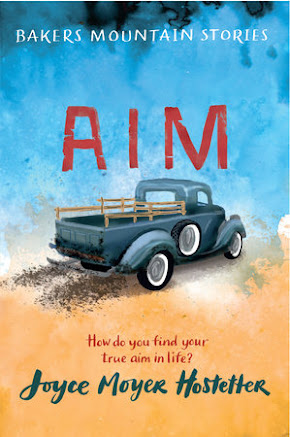
My first success story comes from North Carolina author Joyce Hostetter, who happens to be my extremely talented writing buddy and co-publisher of Talking Story. I'm honored that she's chosen my blog as her cover reveal for her next book, AIM, scheduled to be published by Boyds Mills Press fall, 2016. Since tomorrow, March 1, marks the 10th anniversary of BLUE's publication, this is a very special occasion for Joyce.

I know some of you won't be able to stand the suspense and will scroll down to see AIM's beautiful cover (caught ya!). Just make sure to come back and read the amazing backstory of how this book was conceived and written in under a year.

Take it away, Joyce! 


CAROL: I know Boyds Mills Press (or was it Carolyn Yoder?) approached you about writing a prequel to Blue and Comfort. Can you tell us a little about that process? What did they ask for?

JOYCE: My editor, Carolyn Yoder, suggested the prequel but the idea was generated in committee—a prequel to begin with the letter A - so we’d have an ABC set. I thought that was the oddest idea ever!! (to start with a letter of the alphabet for a title before I had a story concept) I joked with my hubby that I’d call it Annoyed! Or Aggravated!

Carolyn explained. It was a marketing thing and would look good on bookshelves! Oh. Okay. Who was I to argue with people who know marketing? Or to pass up a chance at a book contract?

I was just getting into the story when Carolyn gave me a specific date to submit the proposal. So, I stopped writing chapters and spent two weeks on an outline.  Thanks to you, Carol for being part of my brainstorming process. Did you actually suggest that Junior Bledsoe could steal a car? I guess it was an okay idea. The committee liked my proposal and offered a contract.  

CAROL: How hard was it to come up with an idea for the prequel? How about the title? Did that come to you early on in the process?

JOYCE: I’d had an idea to write about a protagonist whose father was dead and at his funeral everyone made him out to be a saint. (I’ve been to such funerals!) But my story would reveal the father’s true character.

So I took a seed from Blue in which Ann Fay says that Junior Bledsoe’s father’s heart gave out a few years ago. I decided to explore Junior’s relationship with his dysfunctional father.  As it turned out, his father wasn’t actually a scoundrel.  Few people ever are.  Mostly, they/we are just broken. In AIM, I explored that brokenness and Junior’s response. 

For the title, I started collecting A words. Alligator was out. Allspice was too. I made a list of words that had potential for preceding Blue and Comfort—one that suited Junior Bledsoe. I considered Aspire but it sounded more like a word his school teacher would use. AIM became the obvious choice.

CAROL: What were the challenges of writing a prequel? 

Being consistent from one book to the next—in characters, speech, and small details. If I’d known there would be a prequel I’d have set it up in Blue and Comfort. Ann Fay was fairly self-absorbed in those books. But she did have opinions about Junior Bledsoe.  He knew everything and everybody and when it came to helping people he didn’t know how to say no.  It was a fun challenge for me to portray him at fourteen as opposed to how she saw him at seventeen.

CAROL: What was the most thrilling/exciting/fun part about writing this book?

JOYCE: The publisher asked me for a book.  What’s not to love about that?  For them to offer a contract based on my proposal was a tremendous emotional boost when I especially needed it. Having just spent seven years researching and writing on two “failed” speculative projects, I was grateful for the focus that AIM gave me.

CAROL: I know you had a stiff deadline for AIM. How was this different than Blue or Comfort?

JOYCE: I wrote Blue and Comfort on spec.  My editor put me through multiple revisions before offering contracts. I had lots of time for research.

With AIM, I wrote the first draft in six weeks, revised it (multiple times with beta reader feedback) in another six. I submitted and AIM went into intensive care with my editor probing for depth, clarity and history. I used my beach vacation and every spare minute to revise. The book, from idea to Advanced Reader Copy evolved in ten months. 

I don’t recommend writing a book that quickly. I like more time to research, live with ideas and think about many possibilities. Time enriches a story. But my chapter-by-chapter outline enabled me to write fast.  Somehow, with help from Heaven and my insightful and patient editor, I pulled it off and we now have a great story waiting to make friends with readers.

CAROL: Any thought about a “D” book? 

JOYCE: I’m always Dreaming…  And I do have an idea.  I’m working on a WWI story right now, however. So the potential “D book” is on hold for the moment.

CAROL: And last, but not at all least, can you give my readers a brief summary of the book? 

JOYCE: Junior Bledsoe’s father dies, leaving him and Momma to piece together some respect for the family name. Overwhelmed with extra responsibilities and questions about his family’s dysfunction, Junior makes some unfortunate choices. His mistakes get him into trouble but also enable him to discover new aims for his life.

Here is the wonderful cover!


Since I read one of the early drafts, I can authoritatively say that you will love this book!

GIVEAWAY-- 2022


Welcome to all my new readers who came here via Always in the Middle. I'm glad you found me and hope you'll return- I give away lots of books! 

Astra Publishing has agreed to give away a copy of AIM to one fortunate reader. Please leave your name and email address (or send me an email) and I'll put your name into the giveaway. Share this on social media and tell me what you do, and I'll enter your name twice. Librarians and educators--tell me where you work and your name will go in another time! Giveaway ends Feb 2, 2022 at 6 PM. 

Monday, February 22, 2016

Juba! A Novel- A Review and ARC Giveaway

Congratulations to Linda Andersen and Monica M., a new Twitter follower, who each won a copy of OF BETTER BLOOD on last week's blog.

********

Writing historical fiction is hard. You read shelves full of books, study documents, interview experts, ponder maps, photographs, and data. You work really hard to insert authentic details (what color dress would she have worn to the dance? What did he eat for lunch? What bus would she have taken to work?) and then plunge forward to create as authentic a character as possible.

But when you're writing a story about a young man who lived over a hundred and fifty years ago to whom you want to pay tribute, but yet there is little "real" data, your task becomes even more difficult. You have a few bones to build your story around-- perhaps a death certificate and a few photographs. If you're lucky, maybe you'll find a few newspaper articles you can dig up to authenticate your story.

Such was Walter Dean Myers challenge when he wrote Juba! (Harper Collins, 2015)


This book for middle grade or young adult readers, is based on the true story of a talented young black dancer considered to be the inventor of tap dancing. While performing in New York City, he was noticed by Charles Dickens who wrote about him in American Notes:


"Single shuffle, double shuffle, cut and cross-cut; snapping his fingers, rolling his eyes, turning in his knees, presenting the backs of his legs in front, spinning about on his toes and heels like nothing but the man's fingers on the tambourine; dancing with two left legs, two right legs, two wooden legs, two wire legs, two spring legs - all sorts of legs and no legs - what is this to him?" 
"And in what walk of life, or dance of life, does man ever get such stimulating applause as thunders about him, when, having danced his partner off her feet, and himself too, he finishes by leaping gloriously on the bar-counter, and calling for something to drink, with the chuckle of a million of counterfeit Jim Crows, in one inimitable sound!"
Engraving from American Notes by Charles Dickens (1842) showing 
Master Juba being observed by Dickens and an associate.
www.masterjuba.com


Walter Dean Myers, in his last book before his death, told the story of William Henry Lane (Juba's real name) using just a few resources: Dickens' writings, a smattering of newspaper articles and images, and Juba's death certificate. Here are a few of my favorite quotes.

Initially Juba seeks dance instruction from an Irish teacher named Margaret. (This particular passage reminded me of a comment my current dance partner--my husband's 85-year-old uncle--made. "When you see old people dancing, they're imagining themselves as teenagers.")
"If you weren't so thickheaded, you'd know they [the audience] were watching you because they want to enjoy themselves, not marvel at you. You ever go to an Irish dance and see the young people swinging themselves around and kicking up their heels and the old people watching them? The old people are thinking back on a time when they were young and they could do the same thing the young people are doing. But you have to give them something they can do, if only on the floor between their ears, if you get my drift." (p. 44)
The reader hears Juba's despondency and realism in the following line. He has just auditioned as a dancer and thinks he won't get the job. 
"My dancing didn't mean a thing. The only thing they see in a black man is a clown or a slave. "(p. 55)
www.masterjuba.com

Juba finally gets a few gigs as a dancer but when Mr. Charles Dickens comes to New York and watches him, he dances as he never has before. This quote begins with Mr. Dickens speaking.


"...There's a freedom about the way you move that makes me wish I could dance. Have you ever had a difficult time in your life?" 

"At times, everything seems hard," I said. "I'm not sure what tomorrow is going to be like. I'm just hoping it's something good." 

"I imagined--and I know I'm talking too much--that you must have had some difficult times along the way. I think that's the mystery of greatness and of people who achieve wonderful things," Mr. Dickens said. "That somewhere in their lives they have felt the cold winds of despair, but have kept their hearts warm themselves." (p. 104)


In order to make a small living Juba is forced to make compromises.

Jack [his "fair minded" white landlord] knew how black people were treated in New York. We were second-class people every day and third-class performers when we tried to exercise our talents outside of the black community. What he did was to needle me so I wouldn't give up all together, and in a way, I appreciated it. In a way, I didn't, though, because sometimes he made me feel that when I accepted a job with a minstrel band or put on blackface I was betraying my people. To me, putting on blackface was the strangest thing in the world. I was born black, and yet the promoters wanted me to dress up like some kind of strange image of a black person that really wasn't a true Negro. It was as if a lot of white people had a place in their heads for black people and you had to fit in that place in a certain manner or they didn't want you. They wanted black performers to talk bad, say stupid things, and be like pets. Jack said a lot of white people were afraid of real black people. (pp. 123-4)
Even after Juba was well received by Londoners who had read accounts of him by Charles Dickens, he still encounters this same prejudice from fellow performers.  
Huff [another performer] walked across the room and put his nose an inch from Gil's. "What I see with my own two eyes is that I'm not going to make no kind of steady living working for a nigger. And that's what I'm doing over here, working behind Boz's Juba or whatever it is he's calling himself. In America you make a living working with white men, and for white men. And I aim to go back to America, back to Mableton, Georgia and make a living. And if I want any coloreds around me, I'll buy a few!" (p. 157)

Possibly depicting Juba performing in England
www.masterjuba.com


 Walter Dean Myers did an excellent job of bringing this forgotten, yet important, performer to life. Juba's life was full of sorrow, yet it also held love and accomplishment. I hope whoever wins my gently read ARC, will pass it along to a young person who can be encouraged by an inspirational story of a man who, despite many obstacles, followed his dreams.

To enter this giveaway, please leave me a comment by noon on Thursday, February 25. If you are new to my blog, please leave your contact information also. For extra chances to win this ARC, post on Facebook or Twitter and let me know what you have done.  


Monday, February 15, 2016

Of Better Blood: A Review and TWO Giveaways

Last April I reviewed Susan Moger's book, Teaching the Diary of Anne Frank. When she contacted me and asked if I would read and review her debut novel, OF BETTER BLOOD (Albert Whitman and Co. 2016), I agreed. After reading it I can tell you one thing for sure: Susan used all of her research about Hitler and the events leading up to World War II in order to write this young adult historical novel.

Teenage polio survivor Rowan Collier is caught in the crossfire of a secret war against “the unfit.” It’s 1922, and eugenics—the movement dedicated to racial purity and good breeding—has taken hold in America. State laws allow institutions to sterilize minorities, the “feeble-minded,” and the poor, while local eugenics councils set up exhibits at county fairs with “fitter family” contests and propaganda. - Albert Whitman and Co.


Four times a day I drop the baby.
It's not a real baby, but for a stunned heartbeat the audience believes it is. That's enough to get some of them on their feet, screaming, Stupid, clumsy, gimp. The words slide into my skin and stay there.
When I ask Mr. Ogilvie, the director, if just once I can catch the baby before it hits the stage, he frowns and puts his hands on my shoulders. I squirm away, but he holds on. "I love your sensitivity, Ruthie," he says, showing corn-yellow teeth. "But sadly a cripple like you can't be a hero."  (p. 1)
Thus the reader is thrust into the life of Rowan Collier, an unwilling actress in a "fitter family" drama reenacted four times a day at the Springfield, Massachusetts county fair. In the beginning of the novel Moger uses alternating chapters to show Rowan's life before this humiliating summer. In these flashbacks the reader meets her father, an engineering consultant for the Navy, and an advocate for the Betterment fight. He and Rowan's older sister, Julia, are dedicated to the proposition that society is best advanced having the fittest people marry and produce large families. The unfit, those who are physically, emotionally, or intellectually substandard, should be eliminated from society. 

In one of these flashbacks Rowan recalls how one of her doctors wanted her to be sterilized.  Rowan refuses but is shaken afterwards:
Father believed, as Dr. Pynchon did, that a weakness inherited from Mother caused me to get polio. But would he want me to be sterilized? (p. 51)
Rowan's world--already dramatically changed due to polio--continues to fall apart when she is forced to do "educational work" for the New England Betterment Council at the Expo. There she develops a friendship with a fellow worker, orphaned Dorchy, whose parents worked county fairs. In these simple explanation to Rowan, Dorchy shares one of the underlying themes of the book:
Rubes are ignoramuses; carnies know everything. Rubes come to the fair with their eyes starry and their pockets full; carnies take them for what they're worth.....
Your Unfit Family Show does the same thing. You trick rubes into paying money under false pretenses. (p. 33)
 As Rowan hears the stories of her fellow "actors" and how they were tricked into being sterilized, Rowan starts questioning what she had believed to be true about her father. Dorchy is a major catalyst in Rowan's increasing self-awareness.
When I left Bellevue and went to the Home, all thoughts of Dr. Friedlander and nursing school were driven out of my head by the effort of surviving. But here at the Expo, the memories are starting to come back. Dorchy is bringing me back to life. (p.64)

Following a dramatic escape from the Expo, Dorchy forces Rowan to question her assumption that her mother's bloodline was weaker since she died giving birth to Rowan:
Dorchy jumps up. "Listen to yourself," she shouts, angrier than I have ever seen her. "How can you sit there and say that about your own mother? After weeks with the awful Ogilvies and the Council cows you still don't question that 'better blood' garbage? she punches her fist against her palm. "You still think people are fit or unfit because of their family bloodlines? You know as well as I do that Gar and Jimmy and Minne are as fit as you and your precious father. (p. 117) 
Despite Dorchy's misgivings, she considers working at the Camp for Unfortunates in Maine with Rowan.  
"I'll bet you anything the camp is a con," she says stubbornly. "Miss Latigue is the carney; you and me the unfortunates are the rubes. You'll see." (p. 136)
Sadly, Dorchy's predictions prove to be true. I don't want to spoil the rest of the book, but the girls' lives become painfully difficult when they realize the camp is a facade for weeding out the "unfit."

Although the ending is triumphant as Rowan begins her journey towards nursing school, it is not without great personal loss. But she has matured from a dependent "cripple" to a young woman who has purpose, resolve, and determination.  
This is not an easy book to read. But as Susan Moger relates in her Notes, "Eugenics was a popular pseudo-science in the United States from the early 1900's to the late 1930s. The double aim of eugenics was (1) to keep Americans with a "strong" heredity (family backgound) having children and (2) to prevent those with a "weak heredity" from having children....The popular method of preventing reproduction among the unfit was to sterilize men and women." Necessary Lies, which I previously reviewed has a similar theme. 

As you may know, American eugenics principles were adopted in other countries, most notably Germany before and during WWII. Adolf Hitler praised American eugenics in his book, Mein Kampf and thus laid groundwork for a master race. 

Although the Unfit Family show and the New England Betterment Council are fiction, "Fitter Families" exhibits and contests were a popular feature at state fairs starting in 1920. This book would be an excellent supplement in high school classrooms studying WWII. 
********
If you are interested in winning my ARC, please leave me a comment by 6 PM on February 18. If you are new to my blog, please leave me your contact information. If you join my blog or share this on social media, please let me know what you do and I'll add your name twice. Susan also offered to giveaway an autographed copy of the hardback edition, so this time around I'll have TWO winners to announce next week! PLUS-- Susan is willing to send a book overseas, making this my first giveaway open outside the U.S.!


Monday, February 8, 2016

Julius Lester on Multiple POV, Backstories, and Finding the Right Publisher

After reading Guardian, which I blogged about last week, I was curious about some of the choices Mr. Lester made while writing this thought-provoking book. I contacted him through Facebook and he graciously allowed me to post his answers here.

Carol: How did you decide to write this in the omniscient point-of-view? Or maybe it’s the narrator’s POV—I’m not sure. All I know is that it works incredibly well. As I struggle to write a book from two POV I wonder about the process you went through in writing this story. How did you determine that you would write it in such a way that you showed the thoughts, motivations, and fears of all the characters? You must have created intricate backstories for each, yet you convey them all in such simple sentences.

Julius Lester: 
Point of view. That's always the question, isn't it? But you're right. In this instance it is the narrator's point of view. If I'd told it from the point of view of just one character, what the reader would have thought about the other characters would have been from the point of view of the one character. I wanted to be fair to all the characters. I wanted the reader to experience each character as she or he saw themselves. I didn't want to take sides against any of my characters. And that was how I conceived the book from the outset. While the characters were presented from their points-of-view, their actions lead the reader to decide if they're good or evil. But I, as narrator/author, do not present them as good or evil.

Interesting that you mention doing back stories for the characters. I didn't. I worked out a chronology of how old they were and when, since the novel moves back and forth in time, and I may have made some notes about their physical appearances, but I tend to carry the back stories in my head, which is not something I recommend. It would be to my benefit to write down the back stories, but that takes time I'd rather spend working directly on the novel.

I'm pleased that you like the novel. Many years ago I wrote a piece for the Sunday Times Book Review in which I mentioned that I wished a white writer would write about a lynching from the point of view of the lynchers. None ever did, so I did. I may have mentioned this in the Afterword. Of course, the lynching in the novel is tame compared to many actual lynchings that took place. I could have made the novel unreadable if I had stayed just with the facts. It's ironic that people would find it revolting to read what black people actually suffered. Seems to me that the least we could do is read about it. But the book would not have been published. 

For your information, I gave Guardian to a black editor first. She wouldn't even present it to the publishing editorial board because she knew they'd turn it down. What disappointed me was that she wouldn't even fight for it. But, interestingly, the next editor who read it and accepted it was of Asian descent.  

For more information about Mr. Lester, see this interview. My review of Incognegro portrays another view of lynching. The art exhibit Without Sanctuary is a chilling exhibition of postcards about lynching in the United States. 


Guardian's "Author's Note" includes statistics on lynching (plus an interesting note about the etymology of the word); how that threat lived in Mr. Lester's consciousness as a young boy; how he was impacted by Emmett Till's brutal murder; and the history of how he came to write and publish Guardian (Harper Collins, 2008).  


Here is a line from a letter Mr. Lester wrote to George Woods, the children's book editor in the New York Times Book Review in 1970: "White writers are so dishonest. Seldom have they written what they could have and should have, which is the white side of racism. I'd like to see a children's novel about a little white boy who goes with his father to a lynching." (p. 125)

Lester goes on to say, "While the subject matter is a lynching, on a deeper level, this is a novel about identity. Whom and what we identify ourselves with determines our characters, determines who we are, and what we do. Whose opinion matters to you the most? When you know that, when you know whom it is you most care about pleasing, you know who are. We make choices every day that shape the content of our characters." (p. 127)
Mr. Lester's most recent
Facebook profile picture.
Besides being a prolific writer, Mr. Lester
is also a photographer and musician.

THE NIGHT WAR: A MG Historical Novel Review

  By now you should have received an email from my new website about my review of THE NIGHT WAR by Kimberly Brubaker Bradley. (It'll com...